











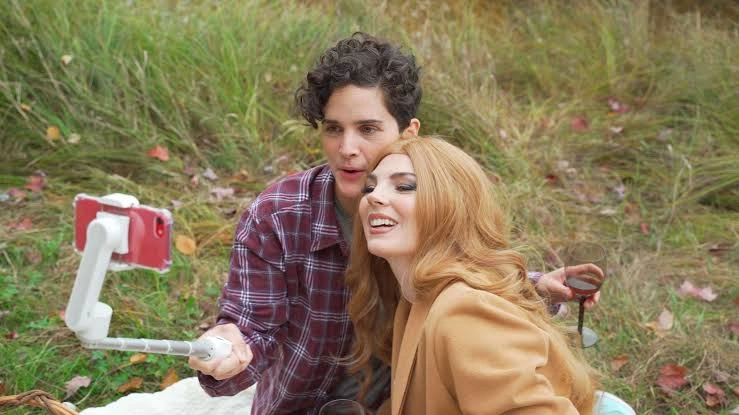

Thistle and Blair have already discovered the central rule of influencer culture: public disgrace is survivable if the comeback has better production values. Their answer to cancellation is a documentary, filmed inside their secluded luxury home, where carefully arranged affection can replace any meaningful reckoning with the transphobic comments that cost them followers and sponsors.
Kaye Adelaide’s feature debut frames their attempt through an episode of Crime Queens, an LGBTQIA+ true-crime programme hosted by Tranna Wintour. The device reveals that something happened to Nicole, the bisexual videographer hired to record the couple’s rebirth. She is eight months pregnant, short of money, and willing to accept extra payment for an overnight stay. Thistle and Blair see vulnerability and immediately draft a content strategy.
Adelaide and co-writer Nancy Webb build the film around a sharp idea: people who have spent years selling access to their private lives may no longer understand privacy, sincerity, or other people. They understand camera placement perfectly.
Sponsored Authenticity
The found-footage format works because each camera serves a different version of the truth. Nicole’s shoulder-mounted footage captures what Thistle and Blair want their future audience to see. The house’s security cameras record the pauses, glances, and territorial gestures that would never survive the final edit.
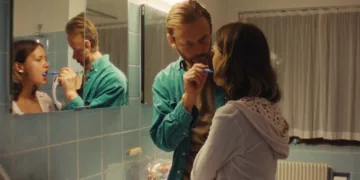
The home itself functions like a permanent set. Every room is clean, expensive, and oddly vacant, with decorative objects arranged for visibility rather than use. When Blair tours the property while carrying a large pair of gardening shears, the scene does not need a sudden musical sting. The mismatch does the work. She points out baby supplies with the casual manner of someone explaining a new kitchen appliance, while Nicole tries to calculate how quickly the conversation has left normal human territory.
The couple’s possible pregnancy becomes another unstable part of their performance. Thistle drinks champagne. Blair appears unclear about pregnancy timelines. Neither woman offers an explanation that survives a second question. The screenplay signals their intentions early, which weakens the mystery, yet the clumsiness of their deception has comic value. These women have built careers on manufacturing intimacy, and they remain surprisingly bad liars once the ring light is switched off.
The Crime Queens framing extends the satire beyond the house. Thistle and Blair’s downfall becomes material for another brand, repackaged with graphics, narration, and a host ready to convert tragedy into episodic entertainment. The media ecosystem does not punish exploitation. It changes who receives the advertising revenue.
Three Women, One Bad Contract
Nancy Webb gives the film its most forceful performance as Thistle, the dominant half of the couple and the person least capable of hiding her instability. Her introduction already marks her as dangerous, robbing later revelations of surprise. Webb compensates through behaviour. Thistle can stare past a conversation, register jealousy a few seconds too late, then recover with the polished smile of someone who has practised being watched.
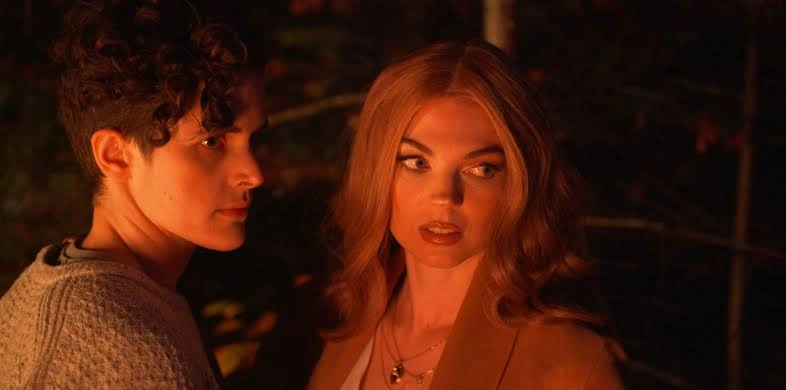
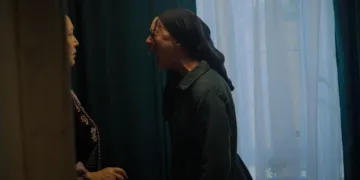
That rhythm makes her frightening. The threat lies in the speed with which irritation is converted into hospitality. When Nicole raises a concern, Thistle answers with warmth, money, or another reason to remain in the house. Her later violence feels theatrical because the performance has been theatrical from the start. The mask does not fall away. It becomes louder.
Andi E McQueen gives Blair a cooler register. Her deadpan delivery supplies many of the film’s strongest laughs, while her relaxed physical presence initially suggests that she may be the sensible partner. The house tour punctures that assumption. Blair carries gardening shears, discusses baby items, and treats Nicole’s discomfort as a minor social misunderstanding. McQueen lets each line sit for half a beat too long, allowing menace to grow inside the joke.
Naomi Silver-Vézina has the less flamboyant role, yet Nicole provides the structure with its necessary resistance. Her pregnancy raises the danger, while her financial situation explains choices that would look foolish in a standard horror screenplay. She stays because she needs the payment. Each additional offer strengthens the trap. Her reactions remain grounded when the film around her grows increasingly absurd, giving Webb and McQueen something solid to push against.
The Joke Arrives First
The horror rarely develops beyond the threat established near the beginning. Thistle is suspicious immediately, the baby supplies are plainly ominous, and Nicole’s pregnancy gives the couple an obvious interest in keeping her close. Instead of a gradual descent, the film holds its tension at a steady level until the violence begins.
That creates a soft middle stretch. Nicole considers leaving, the couple persuades her to stay, another inconsistency appears, and the pattern repeats. Adelaide keeps the cycle from collapsing through the film’s 79-minute runtime and the shifts between Nicole’s camera and the security footage. The visual language remains controlled, avoiding the blurred movement that often turns found footage into an endurance test.
The repeated coercion also reveals the film’s strongest structural instinct. Nicole is trapped through politeness before she is trapped through force. Blair and Thistle respond to resistance with extra money, flattery, staged vulnerability, and mild social pressure. The danger grows from Nicole’s reluctance to appear rude or unprofessional. By the time physical escape becomes necessary, the social exit has already been closed.
Once the final escalation arrives, Adelaide lets the performances carry the tonal shift. Webb pushes Thistle into slasher theatrics, McQueen preserves Blair’s dry calm, and Silver-Vézina keeps Nicole’s panic recognisable. The mystery may have expired early, yet the satire remains sharp. A flawless personal brand requires constant maintenance. In this house, it also requires a victim.
This satirical comedy series premiered on HBO and Max on June 7, 2026, targeting the absurdities of modern corporate culture. The story follows a team of high-priced consultants brought in to overhaul a failing tech company, only to find themselves embroiled in chaotic office politics and bizarre marketing stunts.
Where to Watch The Rebrand (2025) Online




Full Credits
Title: The Rebrand
Distributor: HBO, Max
Release date: June 7, 2026
Rating: TV-MA
Running time: 30 minutes per episode
Director: Mike Judge
Writers: Mike Judge, Alec Berg
Producers and Executive Producers: Mike Judge, Alec Berg, Tom Lassally, Michael Rotenberg
Cast: Kumail Nanjiani, Ayo Edebiri, Dan Stevens, Billy Magnussen, Zazie Beetz, Paul Walter Hauser, Greta Lee, Randall Park
The Review
The Rebrand
The Rebrand builds its best material around performance: influencers manufacturing sincerity, a filmmaker trapped by financial need, and a relationship whose glossy surface barely conceals its hierarchy. Kaye Adelaide’s found-footage construction gives the satire several useful angles, while Nancy Webb, Andi E McQueen, and Naomi Silver-Vézina keep each exchange tense and funny. The horror reveals its intentions too early, leaving the middle stretch with limited room to escalate. At 79 minutes, the film escapes before repetition requests a sponsorship deal.
PROS
- Sharply targeted influencer satire
- Three finely balanced performances
- Effective found-footage construction
- Brisk 79-minute runtime
CONS
- Predictable central mystery
- Horror tension plateaus early
- Repetitive middle stretch