

















![Kingdom Hearts Collection [I-III] Review](https://gazettely.com/wp-content/uploads/2026/10/Kingdom-Hearts-Collection-I-III-1-360x180.webp "Kingdom Hearts Collection [I-III] Review: KHII Holds Steady as Newer Entries Fluctuate 33")







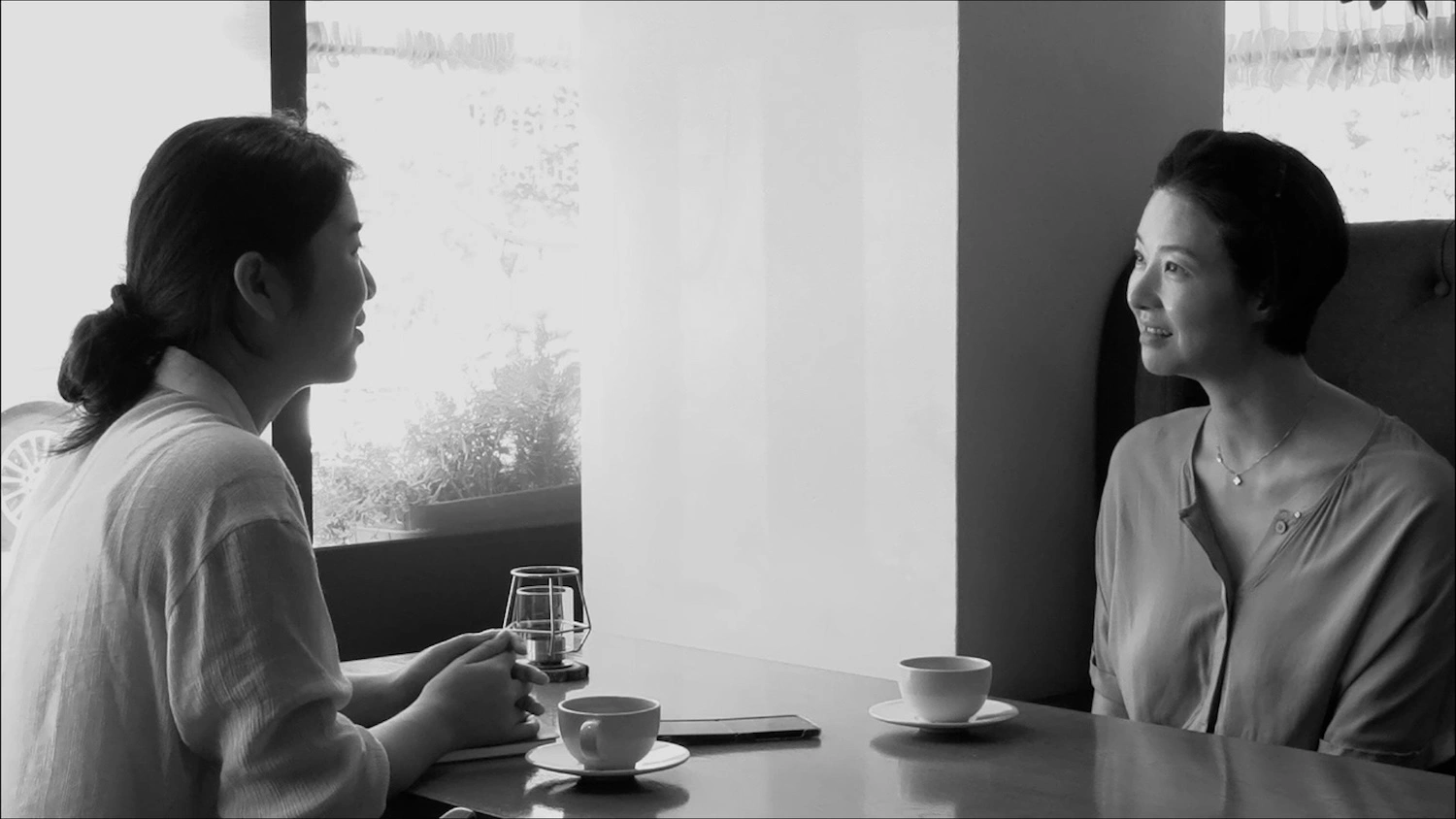

Bae Jeong-su, played with quiet grace by Song Sun-mi, inhabits a life shaped by absence. After twelve years away, a period marked by marriage and divorce, the middle-aged actress returns to appear in a small independent production.
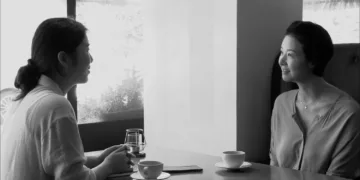
The film observes one day of professional duty, staged almost entirely inside a subdued German restaurant in Hanam. On the edge of Seoul, that room becomes a chamber of re-entry. Jeong-su sits through three consecutive interviews with young journalists, each one seeking the proper language for her return to the screen.
The restaurant carries its own cultural displacement. Familiar green soju bottles are gone, replaced by mugs of German beer and plates of sausages. That change in texture matches the film’s careful attention to ordinary exchanges, where muted conversation takes the place of dramatic escalation.
The camera watches the press junket with patient curiosity, tracing the courteous tension beneath each question. Every exchange carries the pressure of a woman learning again how to speak in public. The still room sharpens the small rituals of professional return, giving Jeong-su a reflective arena as she moves from private life back into the image.
The Malleability of Recalled Moments
The narrative unfolds through five chapters, tracing a movement from public composure to private reflection. The first three sections remain with the interviews, where questions about scripts gradually open into talk of personal strain and the slippery character of honesty.
Jeong-su begins to reveal how difficult it is to preserve a steady account of the self once others begin asking for explanations. The final two chapters follow her to an acting class, where she tries to memorize and reenact the conversations the audience has already seen.
That design turns memory into unstable material. The film suggests that people revise their histories within hours of living them. Rehearsal exposes the distance between speech and recollection, transforming a plain day into a study of subjective truth. The dialogue offers a clear philosophical position: endless interpretation of life produces anxiety.
Peace, for Jeong-su, comes from accepting things as they appear. This belief shapes the later rehearsal scenes, where the tone becomes reflective and instructive. The actress struggles with the shifting nature of her own words, revealing how swiftly lived reality becomes performance, editing, and chosen memory.
A Technical Study in Restraint
The monochrome cinematography has a precise function. Black and white softens the daylight entering through the restaurant windows and clears the visual field. Character interaction takes priority. Static long takes ask the viewer for a different form of attention.
The seventeen-minute opening sequence creates an immersive position, placing the audience at the table as a silent witness. These extended shots catch the weight of pauses, glances, and the physical distance that forms between people in conversation.
Brief zooms serve as visual punctuation. They sharpen attention inside otherwise still frames, guiding the eye toward an expression or a subtle shift in dialogue. The sound design keeps the setting grounded through kitchen noise. The repeated chopping in the background gives the restaurant scenes a lived-in texture.
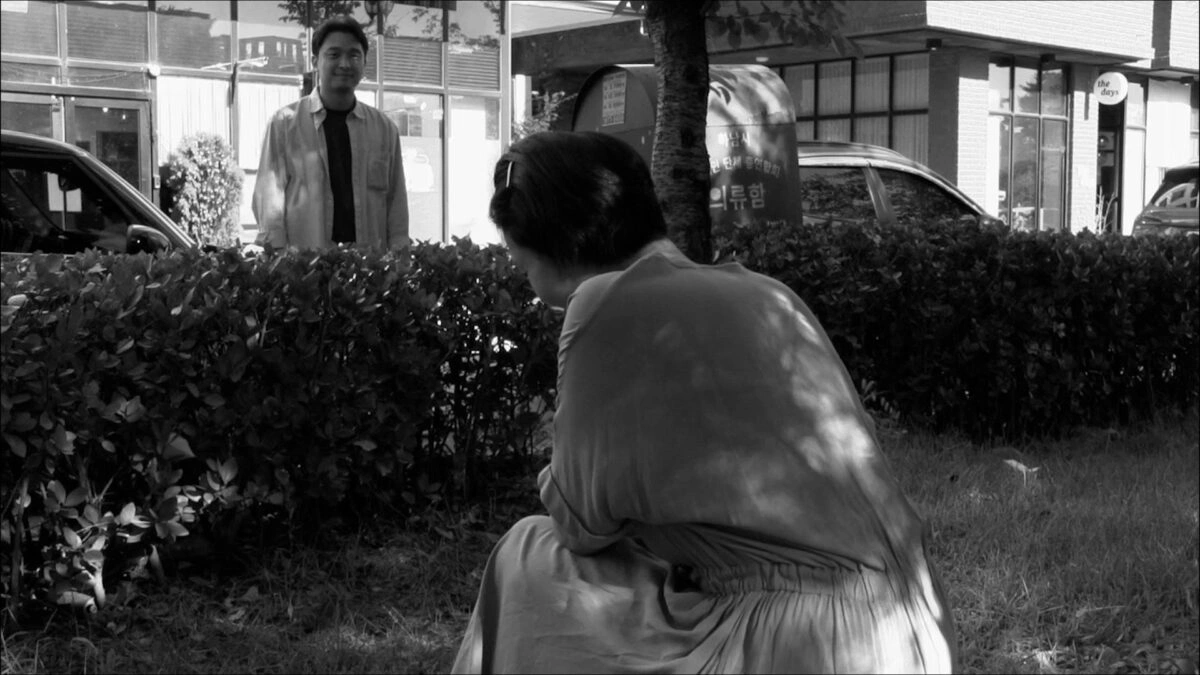
A sparse musical score, built from simple guitar or ukulele chords, enters between chapters. Paired with images of Jeong-su vaping beside a hedge, these transitions form a melancholy, contemplative rhythm. The director’s control over editing and music gives the film a clean aesthetic shaped by simplicity, discipline, and direct observation.
The Performance of Presence
Song Sun-mi gives a performance about acting from within the act itself. Her Bae Jeong-su appears as a woman who keeps performing long after leaving the set. She sustains a surface of smiles and careful politeness, while fatigue becomes visible during the pauses between interviews.
The body tells what the professional mask keeps managed. Jeong-su also guards her privacy with firm precision. She refuses to let details about her ex-husband or daughter become material for publication, preserving a private identity within a public setting.
The film gains quiet force from the echo between Song’s career and Jeong-su’s situation. That resemblance gives the character’s search for authenticity a sharper emotional charge. During the interviews, Jeong-su appears polished and controlled. During the acting class, she becomes an unsteady student of her own life.
This split examines the strain of speaking truthfully when language feels limited and performance has become second nature. Jeong-su says she wants no fake love in her life, reaching for a plainer form of existence. Song’s performance locates that desire in small gestures, unguarded pauses, and the unrecorded spaces between public events.
The Day She Returns premiered at the Berlin International Film Festival on February 18, 2026. This festival debut preceded its domestic theatrical release in South Korea on May 6, 2026. The film is currently screening in several independent and arthouse cinemas. Viewers can anticipate its arrival on specialized streaming platforms like MUBI as the distribution cycle continues.
Full Credits
Title: The Day She Returns
Distributor: Jeonwonsa Film Company, NEW Contents Panda, Finecut
Release date: February 18, 2026
Rating: 15
Running time: 84 minutes
Director: Hong Sang-soo
Writers: Hong Sang-soo
Producers and Executive Producers: Hong Sang-soo, Kim Min-hee
Cast: Song Sun-mi, Cho Yun-hee, Park Mi-so, Ha Seong-guk, Shin Seok-ho, Kim Seon-jin, Oh Yun-su, Kang So-yi
Director of Photography (Cinematographer): Hong Sang-soo
Editors: Hong Sang-soo
Composer: Hong Sang-soo
The Review
The Day She Returns
The film succeeds as a meditation on the instability of memory and the performative nature of the self. By stripping away visual clutter through monochrome cinematography and long takes, it forces a direct engagement with the protagonist’s quiet struggle for authenticity. While the later chapters shift toward a more didactic tone, the strength of the lead performance and the technical restraint create a layered study of a woman returning to the frame. It is a work that finds profound meaning in the gaps between spoken words and remembered truths.
PROS
- Nuanced lead performance by Song Sun-mi.
- Effective use of monochrome cinematography to prioritize character interaction.
- Rigorous technical execution through immersive long takes and signature zooms.
- Intelligent exploration of memory fragility and subjective truth.
CONS
- Final chapters adopt a slightly didactic or lecture-like tone.
- The minimalist pacing might feel slow during the rehearsal segments.
- Narrative repetition reveals less in the final act compared to the initial interviews.