
























![Kingdom Hearts Collection [I-III] Review](https://gazettely.com/wp-content/uploads/2026/10/Kingdom-Hearts-Collection-I-III-1-360x180.webp "Kingdom Hearts Collection [I-III] Review: KHII Holds Steady as Newer Entries Fluctuate 37")



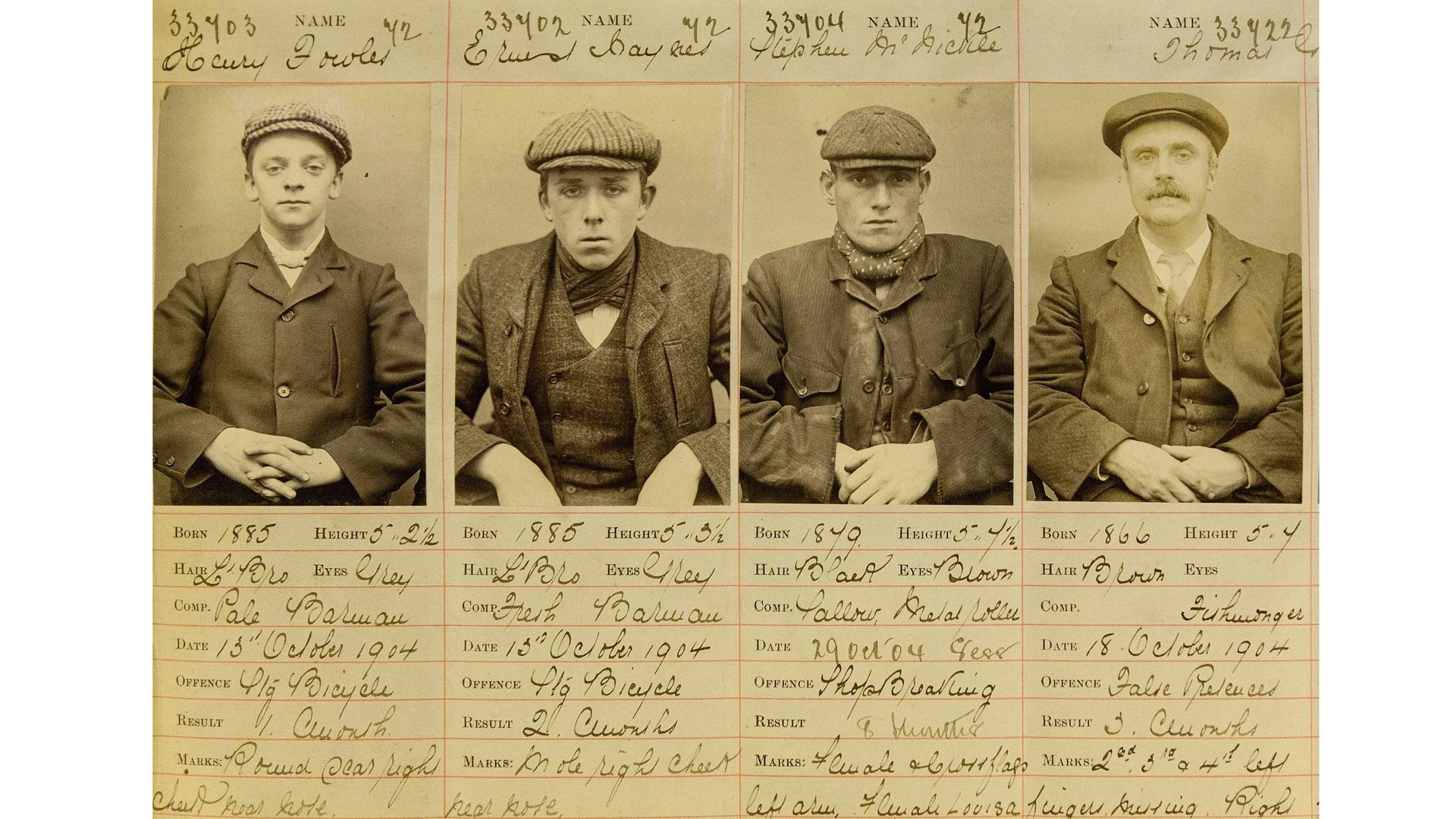

Peaky Blinders: The Real Story arrives as a one-hour documentary with a clear task: to look past the flat caps, razor folklore, and cigarette smoke, then ask how a Birmingham gangland story became a global symbol of style, violence, masculinity, and regional pride. Directed by Robin Bextor, the film works as a companion to Steven Knight’s series while turning its gaze toward the real men, streets, pressures, and myths that shaped the legend.
The documentary moves between production history, social history, pop culture analysis, and local memory. It uses interviews, archival material, clips from the series, Birmingham location footage, and commentary from Steven Knight, crime historian Carl Chinn, production designer Grant Montgomery, and Michael Hogan. Its structure is clean and direct, sometimes a little too tidy for a subject this morally messy.
Its strongest instinct is corrective. The film admires the show’s seductive style, yet it keeps tugging viewers back toward the dirt under the fingernails. The result is accessible, fan-friendly, and historically curious, with enough grit to keep it from becoming a branded souvenir mug.
The Shelby Shadow and the Machinery of Cool
The documentary is most immediately engaging when it examines how Peaky Blinders turned from a BBC period drama into a cultural code. The series had many obvious hooks: postwar trauma, gangland hierarchy, Cillian Murphy’s carved-from-stone performance as Tommy Shelby, sharp tailoring, smoky rooms, and men walking in formation as if Birmingham itself had become a runway for beautifully doomed criminals.
Bextor’s film understands that the show’s power came from visual contradiction. It looked backward through modern eyes. Its period setting carried the weight of post-First World War ruin, yet its music choices struck with the force of a contemporary needle drop. Rock and pop tracks did not decorate the drama; they acted like internal weather, giving violence rhythm and grief a pulse.
The documentary also places the show inside a wider genre lineage. The Godfather, Heaven’s Gate, Rio Bravo, and the western tradition hover over the discussion, helping frame Steven Knight’s creation as a kind of West Midlands frontier myth. That comparison is useful. The Shelby world often behaves like noir carved into industrial brick: chiaroscuro faces, smoke as moral atmosphere, corridors that seem to narrow around every choice. Expressionistic framing turns rooms into traps. Nobody enters a doorway in Peaky Blinders without looking like fate has already sent the invoice.
The film also tracks the series’ commercial afterlife: haircuts, flat caps, themed bars, festivals, whiskey, baby names, and the strange migration of working-class history into marketable swagger. This is where the documentary touches its sharpest question. What happens when rebellion becomes merchandise? The answer is rarely flattering, but the hats do sell.
Birmingham Before the Legend
The historical passages give Peaky Blinders: The Real Story its moral charge. Carl Chinn becomes the film’s most vital presence, bringing expertise, local feeling, and family connection through Edward Derrick. His commentary pulls the film away from stylized menace and toward the social conditions that made gangs possible.
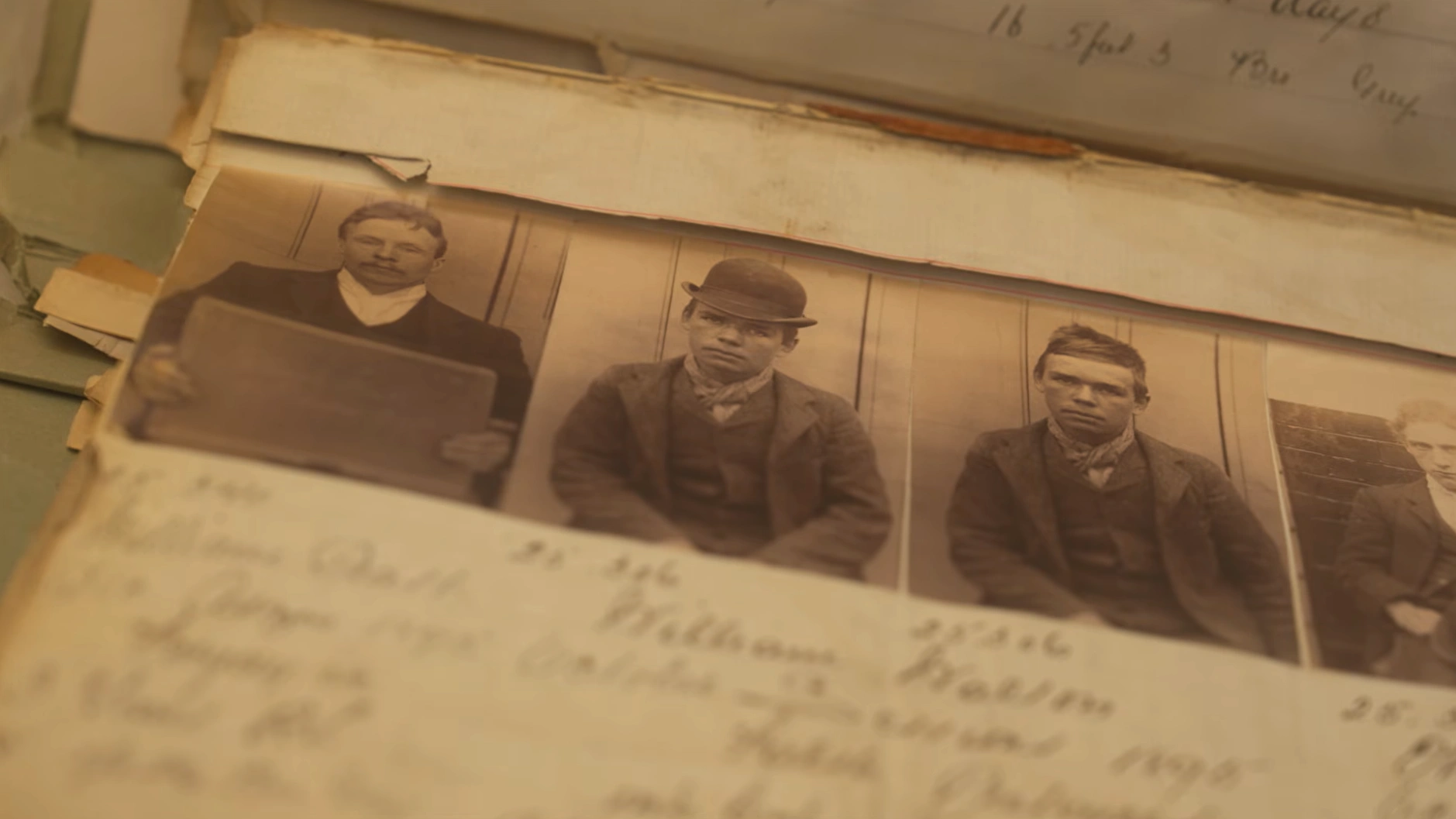
The documentary roots the real Peaky Blinders in poverty, class pressure, street violence, and early twentieth-century Birmingham. These were not mythic antiheroes sculpted for slow-motion entrances. They were young men formed by deprivation, resentment, and local power struggles. The distinction matters. Fiction can refine violence into iconography. History leaves bruises.
Chinn’s sections examine names, clothing, criminal structures, class identity, and the distance between the historical gang and the Shelby mythology. The film also addresses the debated origin of the “Peaky Blinders” name, pushing back against some of the cleaner, sharper myths that have clung to the gang. The famous razor-blade imagery may be useful drama, but history has a habit of ruining a good marketing hook. Very inconsiderate of it.
This section benefits from a strong philosophical undercurrent. The documentary asks how identity is shaped once public memory begins editing the past. Were the Peaky Blinders products of choice, circumstance, or performance? The film resists a simple answer. It sees agency and environment locked together, each one feeding the other. That tension gives the documentary depth, especially when it refuses to let style erase hardship. The real Birmingham here is a place of pressure, survival, and social fracture, not a costume party with better cheekbones.
A Straightforward Frame for a Complicated Subject
Formally, the documentary favors clarity over visual daring. Its tools are familiar: talking-head interviews, archival footage, series clips, comparison clips from classic films, narration, Birmingham drone shots, canal imagery, and visits to locations such as the West Midlands Police Museum. The packaging has a modest television quality, with little of the cinematic menace that defined the series it studies.
That limitation is also part of its function. Bextor is not trying to imitate Knight’s operatic style. The camera often observes rather than seduces. Movement is practical. Composition is readable. Lighting is plain, which can feel visually underpowered next to a show famous for turning smoke and shadow into theology. Still, the simplicity keeps the film from drowning in fan-service fog.
The interviews carry much of the weight. Knight’s reflections on family stories and creative invention help clarify why the series chose myth over strict realism. Grant Montgomery’s comments on early production limits, including set recycling, add welcome texture. Hogan’s media analysis gives shape to the film’s discussion of genre and cultural reach.
The weakness lies in scale. The documentary sometimes feels split between celebration and investigation. Its historical passages invite a harsher, deeper study of class violence and social damage, then pull back before the wound is fully examined. As a primer, though, it is thoughtful and sincere. It clarifies how fiction, history, regional identity, and commercial mythology became bound together through Peaky Blinders, leaving the viewer with admiration sharpened by unease.
Peaky Blinders: The Real Story is a 2026 British documentary directed by Robin Bextor. Released digitally on February 23, 2026, the film explores the real Birmingham gangs that inspired Steven Knight’s Peaky Blinders while tracing how the TV series became a major cultural phenomenon. The documentary features contributions from Andrew Insol, Steven Knight, Michael Hogan, Grant Montgomery, Carl Chinn, Corinne Brazier, and John Dickie. It is available through digital platforms, including Apple TV and Prime Video, with Reel2Reel Films credited as the releasing company.
Where to Watch Peaky Blinders: The Real Story (2026) Online









Full Credits
- Title: Peaky Blinders: The Real Story
- Distributor: Reel2Reel Films, Digital United Studios – Trinity Content Partners
- Release date: February 23, 2026
- Rating: PG-13
- Running time: 1 hour 1 minute
- Director: Robin Bextor
- Writers: Robin Bextor
- Producers and Executive Producers: Robin Bextor
- Cast: Andrew Insol, Steven Knight, Michael Hogan, Grant Montgomery, Carl Chinn, Corinne Brazier, John Dickie
The Review
Peaky Blinders: The Real Story
Peaky Blinders: The Real Story is a thoughtful, accessible primer that gives the series’ mythology a sharper historical frame. Its modest format limits its visual force, yet the interviews with Steven Knight, Carl Chinn, Grant Montgomery, and Michael Hogan give it clear value. The film works best when it strips away the glamour and returns the legend to Birmingham’s streets, class pressures, and bruised social memory.
PROS
- Strong historical insight from Carl Chinn
- Useful context from Steven Knight
- Clear link between the series and noir, gangster, and western traditions
- Accessible for fans and newcomers
- Smart focus on myth, memory, and cultural branding
CONS
- Familiar talking-head format
- Limited visual invention
- Historical sections could go deeper
- Slight tension between fan tribute and serious investigation
- Some production details feel too brief







