



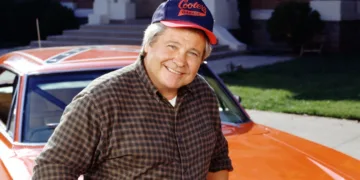





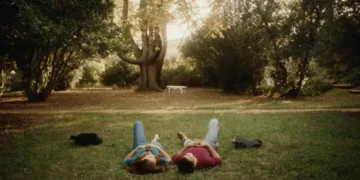


















Next Life turns one ordinary London train ride into a quiet metaphysical crisis. Ivy Bettencourt, played by Emilia Clarke, is late, frazzled, and still carrying the emotional bruises of a recent breakup. A spilled coffee sends her into conversation with Diego, Édgar Ramírez’s Venezuelan jazz musician, and the moment opens one version of her future. In another, the spill never happens, Diego remains a stranger across the carriage, and Ivy drifts back toward Noah, played by Jack Farthing, her ex-boyfriend and former boss.
Writer-director Drake Doremus treats the premise less like science fiction and closer to romantic speculation. The film wonders how much of a life can turn on timing, and how much of identity depends on the person sitting beside us at the right second. Ivy’s two futures carry different promises: artistic freedom, domestic security, motherhood, music, professional comfort, and the ache of roads she can sense without fully naming.
Two Lives, One Emotional Map
The film’s dual-timeline structure is its sharpest narrative tool. In the Diego timeline, Ivy enters a warmer, looser existence shaped by jazz clubs, records, children, pregnancy, and the rediscovery of her own voice. Diego’s home, with its brick walls, plants, art, and slightly impractical openness, signals a life of creative mess and emotional exposure. It is the kind of apartment where you expect someone to leave a half-finished melody on a table beside a wine glass.
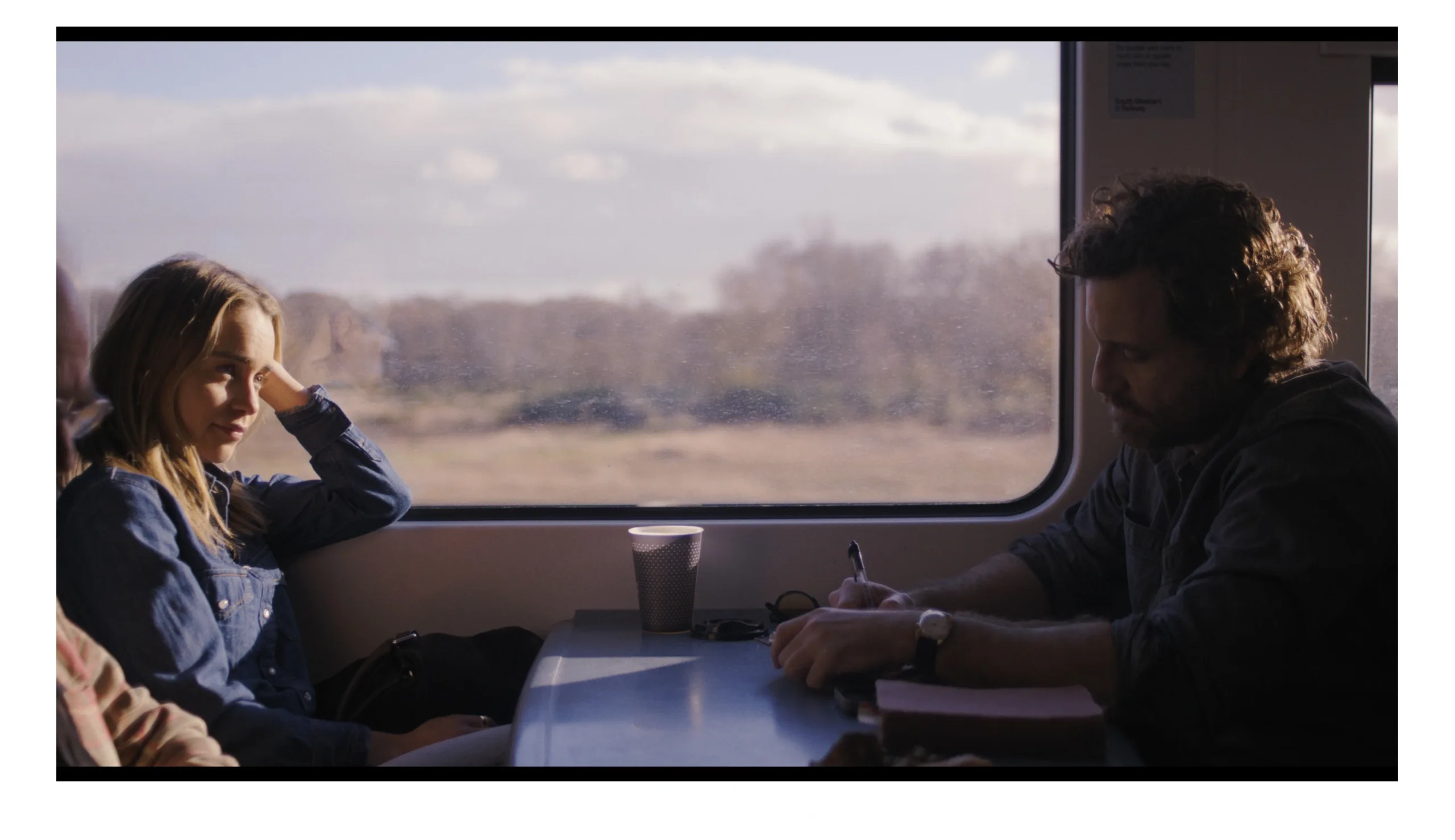
The Noah timeline has a cleaner rhythm. Ivy returns to a polished world of offices, glass surfaces, engagement plans, IVF, and professional momentum. Noah’s life promises stability, but the film smartly avoids making him a simple emblem of dull compromise. There is affection there. There is history. There is a version of adulthood that makes sense on paper and, at times, in the heart.
Doremus moves between these paths with clear visual signposts, using wardrobe, lighting, and interior design to keep the viewer oriented. The editing gives the film a pleasing, almost musical alternation, like two standards played in different keys. Still, the structure can feel overly arranged. The Diego path glows so richly, and Noah’s world looks so chilled, that the film sometimes answers its own question too early. Its better moments come when both lives feel viable rather than diagrammed.
Also Read





Ivy, Diego, Noah, and the Problem of Designed Lives
Emilia Clarke gives Next Life its most persuasive emotional texture. Ivy could easily become a device, a woman placed between two symbolic men and asked to represent every anxiety about love, work, art, and motherhood. Clarke resists that flattening through warmth and alertness.
She lets Ivy be funny, scattered, wounded, and self-protective without turning her into a romantic-comedy bundle of quirks. Small shifts in her gaze and speech help separate the timelines while keeping Ivy recognizably the same person.
Ramírez gives Diego an appealing sensuality and a convincing musical presence. His philosophy of art is direct: create because the need exists inside you, not because life has made space for it. Farthing brings surprising gentleness to Noah, a character who might have been written off as the corporate option. His Noah can be selfish and stiff, yet he can also seem sincere in his desire to build a future with Ivy.
The film stumbles when it lets lifestyle stand in for inner life. Diego’s loft and Noah’s sleek flat tell us what category each man belongs to before they fully tell us who they are. Ivy’s office work remains hazy, and her dormant musical ambition sometimes feels assigned by the script rather than rooted in lived detail. For a film so devoted to choice, it needed sharper evidence of what Ivy has already chosen, lost, and hidden from herself.
Jazz, Light, and the Fantasy of a Perfect Path
The strongest pleasures in Next Life are sensory. Cinematographer Marianne Bakke gives the Diego timeline a golden, autumnal warmth, filling rooms with lamplight, texture, and musical intimacy. The Noah timeline turns cooler and harder, shaped by glass, metal, corporate space, and expensive calm. These contrasts are obvious, but they are effective, especially in a romance built on emotional weather.
Dan Romer’s score leans into old-fashioned romantic melancholy, and the jazz setting gives the film its richest pulse. I have always loved how jazz in cinema can make hesitation feel alive, since the music itself thrives on variation, missed beats, and return. Here, that quality suits Ivy’s fractured life. Her singing scenes with Diego are meaningful because they give her something beyond romantic reaction. They suggest a buried self trying to breathe again.
Doremus is working inside a familiar alternate-life framework, yet his interest lies in emotional consequence rather than puzzle mechanics. The film speaks to a culture obsessed with paths not taken, career reinvention, fertility clocks, romantic timing, and the suspicion that some other version of life might contain the missing answer. Next Life is sincere, attractive, and sometimes too curated for its own good. Its images of love can feel polished to a fault, but its central idea still carries a sting: no timeline grants Ivy freedom from longing.
Next Life premiered at the Tribeca Festival on June 5, 2026. Since the British distribution rights were recently acquired by Vertigo Releasing, a wider theatrical and platform release is expected later in 2026, though a specific streaming platform or wide release schedule has not yet been rolled out to the public.
Where to Watch Next Life (2026) Online
Full Credits
Title: Next Life
Distributor: Vertigo Releasing
Release date: June 5, 2026
Running time: 112 minutes
Director: Drake Doremus
Writers: Drake Doremus
Producers and Executive Producers: Elika Portnoy, Gleb Fetisov, Ben Pugh, Kate Buckley, John Palfery Smith, Drake Doremus, Emilia Clarke
Cast: Emilia Clarke, Jack Farthing, Édgar Ramírez, Femi Koleoso, Molly Gromadzki, Manuela Mora, Diana Noris Smith, Triana Terry
Director of Photography (Cinematographer): Marianne Bakke
Editors: Avner Shiloah
Composer: Dan Romer
The Review
Next Life
Next Life is a sincere, visually graceful romance that turns a split-second encounter into a meditation on love, art, timing, and self-invention. Emilia Clarke gives the film its emotional pull, while the jazz-soaked atmosphere and dual-timeline structure create a wistful charm. The writing can feel too polished and schematic, with some character details treated like lifestyle labels, yet the film’s warmth and melancholy linger.
PROS
- Emilia Clarke’s warm, emotionally layered performance
- Strong use of jazz, lighting, and London locations
- Clear and engaging dual-timeline structure
- Thoughtful themes of fate, love, motherhood, and artistic longing
- Édgar Ramírez and Jack Farthing both bring distinct romantic energy
CONS
- Some character writing feels underdeveloped
- The two timelines can feel visually over-signposted
- Ivy’s career and musical past need sharper detail
- Certain emotional beats feel too curated
- The Diego path is framed with far greater warmth than Noah’s