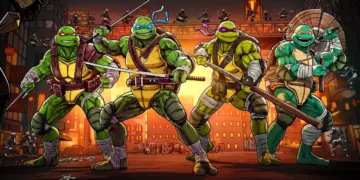


















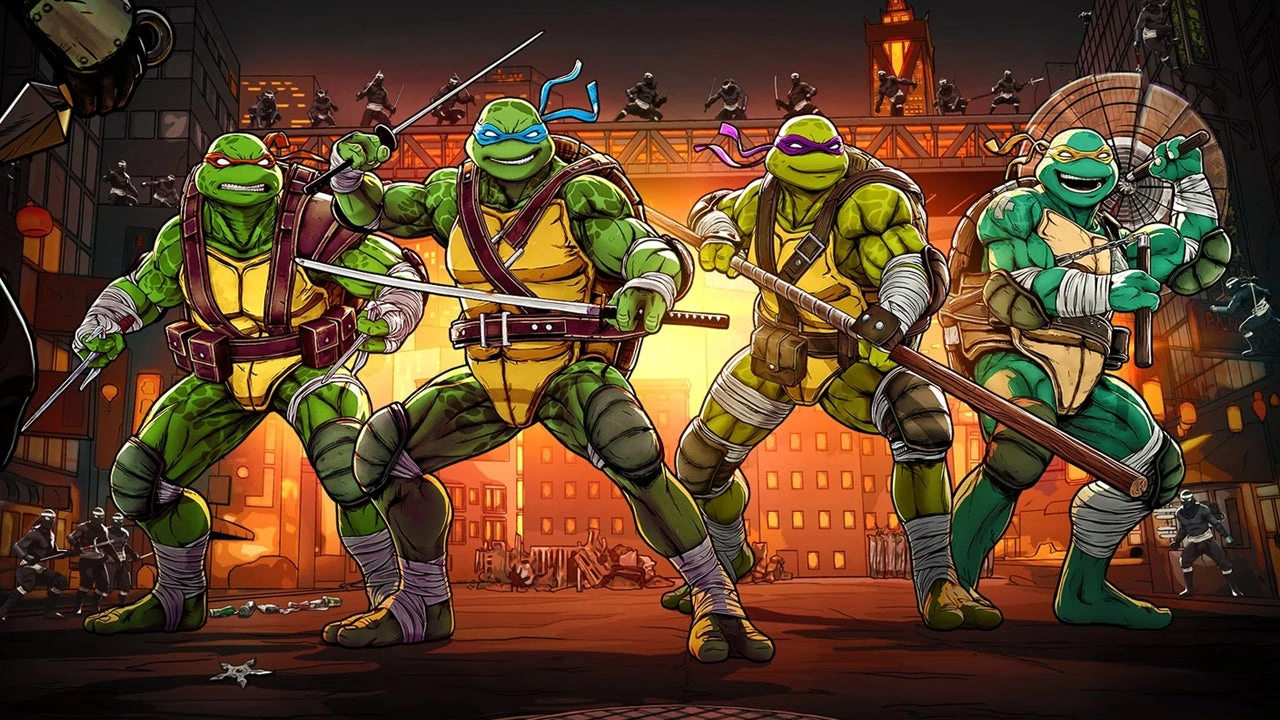

Teenage Mutant Ninja Turtles: Empire City sounds like the kind of pitch VR was built to serve: four players stepping into the bandanas of Leonardo, Michelangelo, Raphael, and Donatello, bounding across rooftops, brawling with the Foot Clan, and hanging out in a sewer hideout packed with pizza-scented nostalgia. Available on Meta and Steam, it gives the Turtles their first major VR action-adventure treatment, complete with co-op for up to four players.
The appeal is immediate. You can climb pipes, leap between buildings, toss ninja stars, smash crates for scraps, and return to the lair to upgrade your chosen Turtle. The game understands the surface pleasures of TMNT: sibling banter, goofy villain energy, fan-service details, and a sense of cartoon chaos.
Its best moments come from movement and multiplayer play. Rooftop traversal has a breezy physicality, and watching friends gesture wildly as giant talking turtles is frequently hilarious. Yet Empire City also struggles with repetitive mission design, thin urban spaces, inconsistent combat, and technical problems that interrupt the fantasy far too often.
A Familiar TMNT Story With Lively Banter
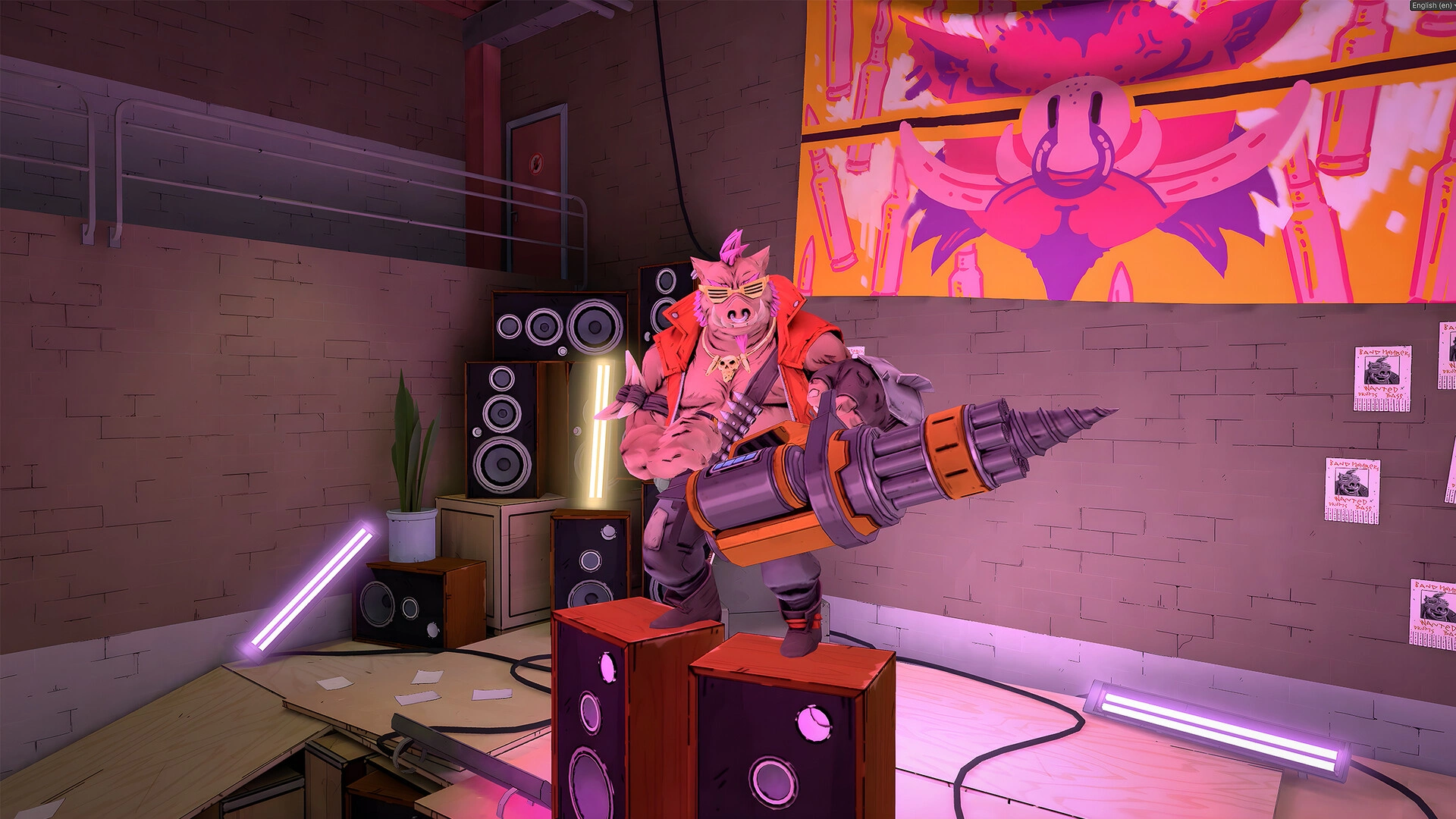
The story follows a simple post-Shredder setup. With Shredder gone, Empire City has become a battleground for rival factions, while the Foot Clan tightens its grip across the streets. Karai enters the picture with unclear motives, Bebop and Rocksteady bring their familiar brute-force silliness, and April O’Neil, Casey Jones, and Master Splinter help frame the Turtles’ fight to reclaim the city.
Structurally, the narrative is clean, direct, and easy to follow. It gives players enough reason to move from district to district, clear enemy pockets, sabotage operations, rescue civilians, and chase down boss encounters. The game rarely surprises, though. Karai’s morally gray presence has potential, but the story keeps her within expected franchise lanes. Bebop and Rocksteady are amusing rather than threatening. The villains function less as dramatic forces and more as checkpoints on a TMNT attraction ride.
The writing has brighter energy than the plot. The Turtles’ banter captures the rhythm of the franchise, with quick jokes, affectionate teasing, and personality-driven lines that make each brother feel distinct. Michelangelo’s loose comic timing, Raphael’s aggression, Donatello’s tech-brained commentary, and Leonardo’s disciplined tone all fit neatly into the group dynamic.
The issue is repetition. VR games can make repeated dialogue feel especially loud because players inhabit the space so directly. A clever line can lose its charm after several repeats during side missions or combat encounters. The same applies to mission prompts from police scanners and ally calls, which help build the superhero patrol fantasy at first, then start to feel mechanical.
Fan details help give the narrative texture. The hideout, character rooms, collectibles, and references to TMNT history reward players familiar with the comics, cartoons, and films. Those touches give Empire City a stronger sense of affection than its main plot can carry on its own.
Parkour Shines While Combat Struggles to Keep Up
Movement is the clearest mechanical success in Teenage Mutant Ninja Turtles: Empire City. Climbing pipe drains, jumping between rooftops, dashing in midair, and using the grappling hook all suit VR’s strengths. The game works best when it turns the city into a vertical playground. After upgrades such as double jump become available, traversal starts to capture the agile superhero fantasy the license promises.
The parkour lacks the polish and speed of stronger VR movement games such as Stride, yet it feels satisfying enough to become the main reason to enjoy the city. It also fits the Turtles better than a flat open-world structure would. These characters should feel scrappy, acrobatic, and improvisational. Empire City’s rooftop routes, drainpipe climbs, and quick aerial movement understand that.
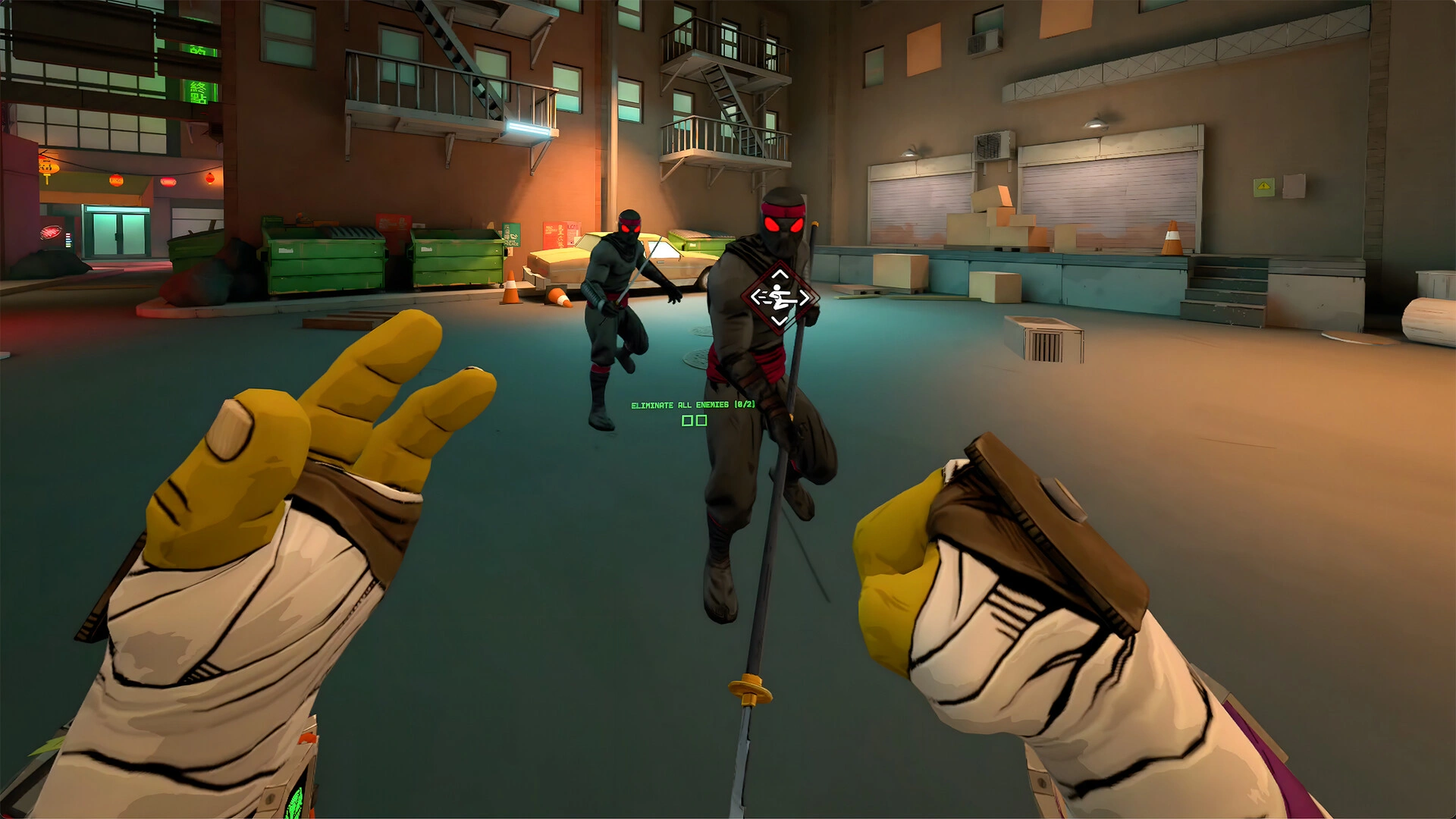
Combat is less successful. Each Turtle uses a signature weapon: Leonardo has katanas, Michelangelo has nunchucks, Raphael has sais, and Donatello has his bo staff. Their base traits create slight playstyle distinctions. Raphael has higher health and damage, Donatello leans toward tech and defensive play, Leonardo feels balanced, and Michelangelo favors close-range unpredictability. Focus Traits add another layer through temporary boosts tied to combos, damage, spinning attacks, blocks, or parries.
On paper, this setup gives the game a solid action-RPG spine. In practice, melee often feels too loose. Strikes can lack impact, hit detection can feel uneven, and blocking or parrying does not always give reliable feedback. The physical act of swinging a weapon in VR should feel tactile, especially in a Ninja Turtles game. Here, too many fights slide into controller-waggling repetition: attack, dash away, repeat. The problem becomes sharper during longer enemy encounters, where the limited combat vocabulary starts to show.
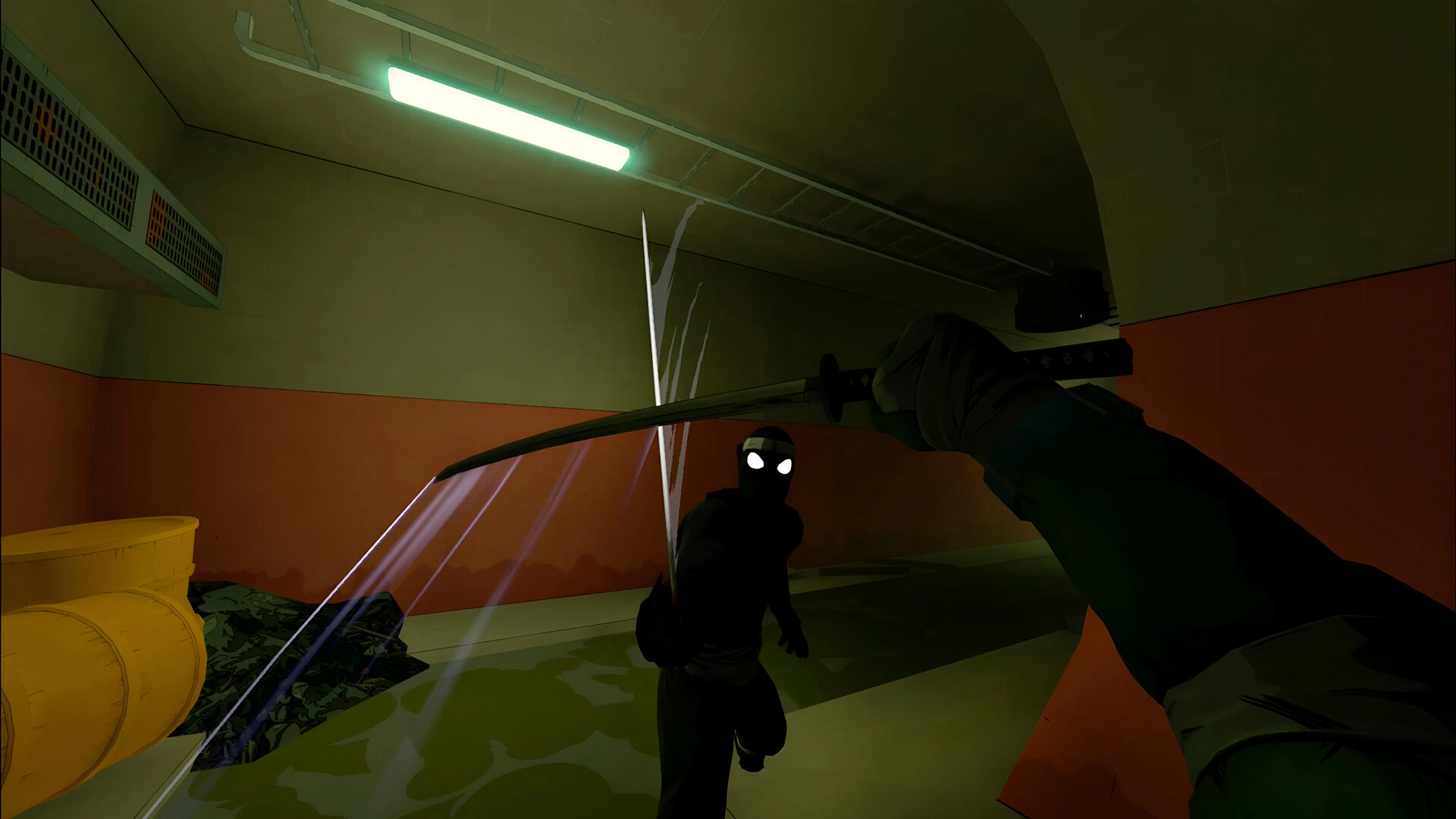
Stealth offers a useful alternative. Players can sneak through darker spaces, drop onto enemies from above, use shurikens, or deploy smoke bombs to thin groups before a direct fight. The vertical design supports this approach nicely. Still, enemy awareness is forgiving to a fault. Guards can miss obvious takedowns or fail to react to nearby threats, making stealth practical but rarely tense.
Progression gives the combat some needed shape. Players collect trash, scraps, blueprints, and tech items to unlock upgrades and craft consumables. Health boosts, collectible detection, movement upgrades, and new item options create a steady trickle of improvement. The lair’s 3D printer and upgrade systems also give players reasons to return between missions.
The biggest frustration is character progression being separate for each Turtle. Experimenting with all four brothers should be central to the appeal, especially in co-op. Starting over on upgrades after changing characters discourages that flexibility. It makes players stick with one Turtle for efficiency, which clashes with a game built around team identity.
Mission design has the same uneven quality. Main quests send players into enemy pockets, hacking tasks, rescues, bomb disposal, camera destruction, and boss fights. Side content includes time trials, basketball challenges, target practice, collectibles, and region-control activities. These ideas fit the tone, but the game repeats them too aggressively across a short campaign. Insomniac’s Spider-Man games made city crimes work through speed, variety, and strong combat feedback. Empire City borrows that patrol structure without enough depth to sustain it.
Co-op softens many of these flaws. Coordinating rooftop approaches, splitting up across enemy camps, tossing ninja stars from different angles, or regrouping in the sewer hideout can create loose, funny stories. Playing solo exposes the thinness much faster. With friends, the game becomes a social VR hangout with missions attached.
Empire City Has Height, But Little Life
The game’s open structure is built around three main districts: East Side, Chinatown, and the Docks. These semi-open hubs connect back to the sewer network and the Turtles’ lair, creating a clear loop between patrol, mission activity, and upgrades. The structure is easy to understand, and the sewer access helps preserve the fantasy of moving through the city from below and above.
Traversal gives these areas their strongest identity. Empire City is most enjoyable from the rooftops, where players can leap, dash, climb, and scout for objectives. Verticality matters here, since it changes how players approach enemy groups and collectibles. A flat city would have made the game feel much thinner. Rooftops give it pace.
The actual districts, however, lack personality. Chinatown, the Docks, and the East Side have visual differences, but they rarely feel like lived-in urban spaces. Streets can feel empty, enemy clusters repeat, and objectives cycle back with little sense of escalation. The story explains some of the emptiness through crime and Foot Clan control, but the result still feels sterile.
Region-control systems are especially weak. Clearing Foot Clan activity should create a satisfying sense of progress, yet reclaimed areas can fall back under enemy influence quickly. That makes player effort feel temporary in the least rewarding way. Instead of giving Empire City a living push-and-pull rhythm, the system turns into repeated busywork.
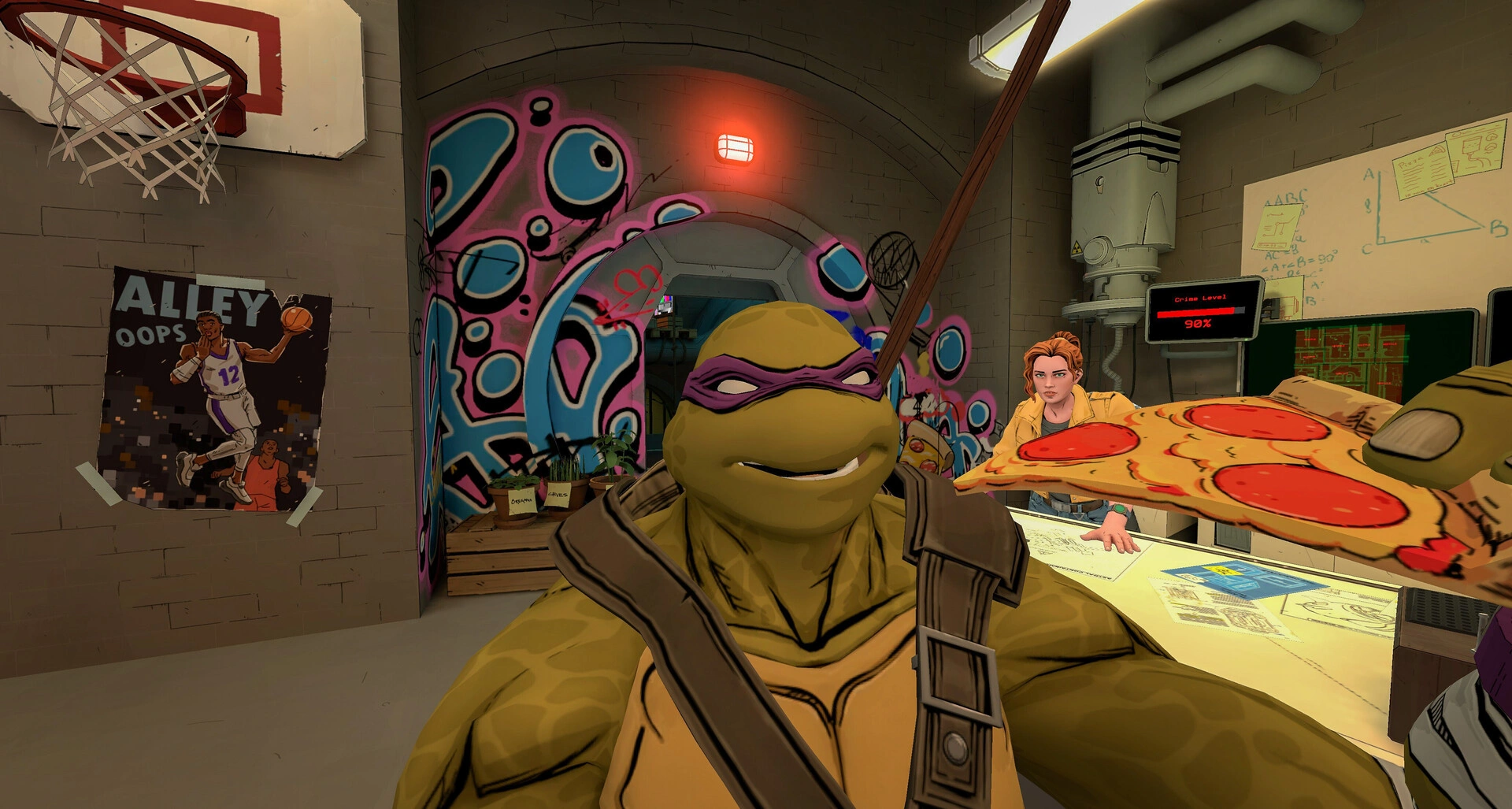
The contrast with the lair is striking. The sewer hideout feels full of care: rooms reflect each Turtle’s personality, props can be handled, Easter eggs reward curiosity, and the space works as a co-op gathering point. Donatello’s messy tech area, Leonardo’s cleaner and calmer space, Splinter’s meditation area, and the central hangout zone carry stronger environmental storytelling than most of the city above.
Mini-games and collectibles add some welcome texture. Basketball hoops, time trials, floating letters, chess pieces, blueprints, and hidden items give players small diversions between missions. These activities do not fix the shallow open-world loop, but they add playful TMNT flavor.
A Strong Comic-Book Look Meets Uneven VR Feedback
Visually, Empire City understands the Turtles. The character designs feel rooted in comic-book and animated tradition, with enough stylization to suit VR. Each brother has a distinct silhouette and attitude. April, Splinter, Karai, Bebop, Rocksteady, and other familiar figures fit the exaggerated world without feeling like flat mascots.
The art direction does its best work in enclosed and character-focused spaces. The lair feels dense, playful, and personal. It invites players to pick up objects, climb around, throw items, inspect rooms, and absorb franchise details. In VR, that sort of interactive clutter matters. It makes a space feel physical rather than decorative.
The city has flashes of atmosphere, especially at night across rooftops and sewer-linked interiors. Yet the wider urban design often feels too sparse to match the energy of the characters. Rooftop movement helps distract from that emptiness, but slower exploration reveals how limited some environments are.
VR-specific immersion is one of the game’s most charming features. In co-op, facial animation syncs with player speech, causing Turtle mouths and expressions to react during conversation. It is cartoonish, silly, and exactly the kind of social detail that makes VR multiplayer memorable. Shooting hoops in the lair or watching a friend flail with nunchucks can be funnier than a scripted joke.
Audio and voice work contribute to the franchise feel. The Turtles’ dialogue has personality, combat effects fit the arcade-style tone, and environmental sounds help sell the sewer-to-rooftop rhythm. The downside is repetition, especially during recurring missions and enemy encounters. Reused lines become hard to ignore.
Combat feedback remains the weak point in the presentation. Weapon hits often lack weight, and the disconnect between physical motion and virtual impact can make fights feel floaty. A sharper comic-book effect, stronger pause on impact, or clearer hit confirmation could have helped the brawling match the visuals.
Bugs, Co-op Value, and the Limits of Replayability
Technical performance is one of Empire City’s biggest problems. Mission triggers can fail, objectives may refuse to update, interactable objects can stop working, and loading issues can force restarts. In VR, these issues carry extra frustration because the player is physically engaged. Having to redo a long mission after a broken interaction is far more irritating than encountering a small visual glitch.
The bugs also damage pacing. A six-hour campaign needs momentum, especially with repeated objectives. Progress-blocking errors, failed loads from the lair, boss glitches, or broken hacking interactions can turn an already thin mission loop into a chore. Co-op sessions can absorb some annoyance through shared humor, but technical disruption still pulls players out of the fantasy.
Replayability depends heavily on multiplayer. With three friends, the game has enough social energy to support repeated district patrols, different Turtle combinations, time trials, collectible hunting, and casual hideout messing around. The ability to split up across rooftops, coordinate stealth attacks, or simply behave like cartoon ninjas gives the game a party-like appeal.
Solo play is harder to defend. Without friends creating chaos, the repetitive mission design, empty hubs, and limited combat feedback become much clearer. The upgrade system and collectibles provide reasons to keep playing, but the separate progression for each Turtle makes experimentation feel costly rather than inviting.
Teenage Mutant Ninja Turtles: Empire City has a strong concept and several genuine pleasures: agile parkour, a lovingly built lair, distinct Turtle identities, amusing banter, and co-op moments that can turn simple missions into slapstick theater. Its weaknesses are equally clear. The combat lacks precision, the open world feels underfed, the story plays safe, and technical issues regularly interfere with the fun.
For TMNT fans with VR headsets and a group of friends, it can deliver bursts of Cowabunga energy. For players seeking a polished VR action game with deep missions and satisfying melee, Empire City feels like a promising prototype that never fully grows into the heroic city-saving adventure it wants to be.
The Review
Teenage Mutant Ninja Turtles: Empire City
Teenage Mutant Ninja Turtles: Empire City delivers playful co-op fun and agile parkour that capture the spirit of the franchise, but combat, mission variety, and technical issues limit its lasting appeal. Fans will enjoy the lair, character interactions, and Easter eggs, yet the open world feels empty and repetitive, making solo play less engaging. The game succeeds in VR immersion and social enjoyment but struggles to maintain consistent gameplay quality across its six-hour campaign.
PROS
- Engaging parkour and vertical movement
- Faithful TMNT art and character design
- Fun co-op multiplayer experiences
- Immersive hideout with Easter eggs
- Distinct Turtle personalities and weapons
CONS
- Repetitive missions and districts
- Combat lacks feedback and depth
- Technical bugs and VR glitches
- Solo play feels thin
- Progression separate per Turtle limits experimentation