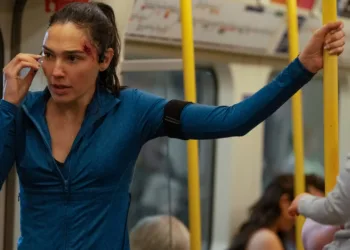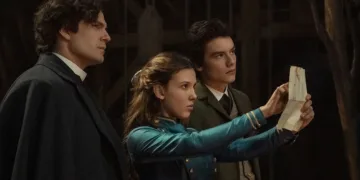



















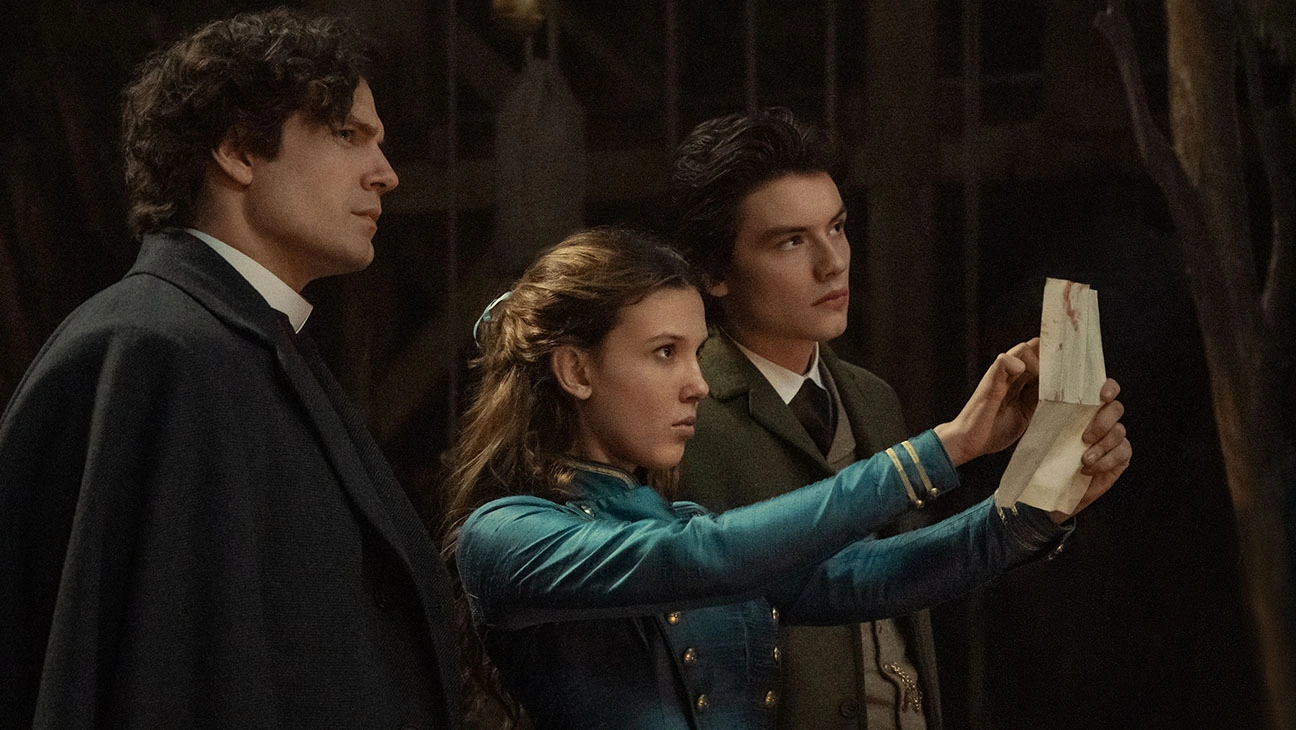

Netflix has found a rare thing in Enola Holmes: a young-adult film franchise that can survive without pretending every entry is a universe-expanding event. The third film, directed by Philip Barantini from Jack Thorne’s script, understands the value of a heroine who has aged on screen with her audience. Millie Bobby Brown’s Enola is no longer the runaway girl proving she can stand beside Sherlock. She has clients, a reputation, a fiancé, and a wedding dress that becomes one of the film’s funniest visual traps.
The ceremony is set in Malta, where Enola is supposed to marry Lord Tewkesbury. The location gives the film sunlight, blue water, stone streets, and the pleasing novelty of seeing a Holmes mystery outside London’s fog and drawing rooms. Then Sherlock vanishes, Lady Tewkesbury is dragged into the conspiracy, Dr. Watson arrives with alarm in his eyes, and Enola abandons the wedding before society can decide what kind of scandal she has become.
That setup gives Enola Holmes 3 its sharpest question. Can a character built around refusal, independence, and self-authorship enter marriage without being absorbed by it? The film’s answer is tender, occasionally clever, and frequently buried under plot machinery. Streaming franchises do love a good machine.
A Heroine Learns the Shape of Adulthood
The strongest drama in Enola Holmes 3 is not Sherlock’s kidnapping. It is Enola staring at marriage as if it were a locked room mystery built by patriarchy with excellent floral arrangements. Sherlock’s resistance to the wedding is not framed as petty sibling control. He sees the institution as a legal and social cage, a Victorian contract with romance painted over the bars. For a franchise that has always sold liberation in jaunty montages and fourth-wall winks, this is a useful complication.
Brown plays Enola’s uncertainty with enough steel to keep it from turning into bridal panic. In the carriage sequence, she climbs onto the roof in her white gown and points a shotgun at a pursuing rider. It is a comic action beat, a character statement, and a costume gag in one. The dress is built for display, yet she uses it inside a chase scene. That is the film’s best visual argument about womanhood: the symbols meant to decorate Enola keep getting dragged into work, danger, and self-defense.
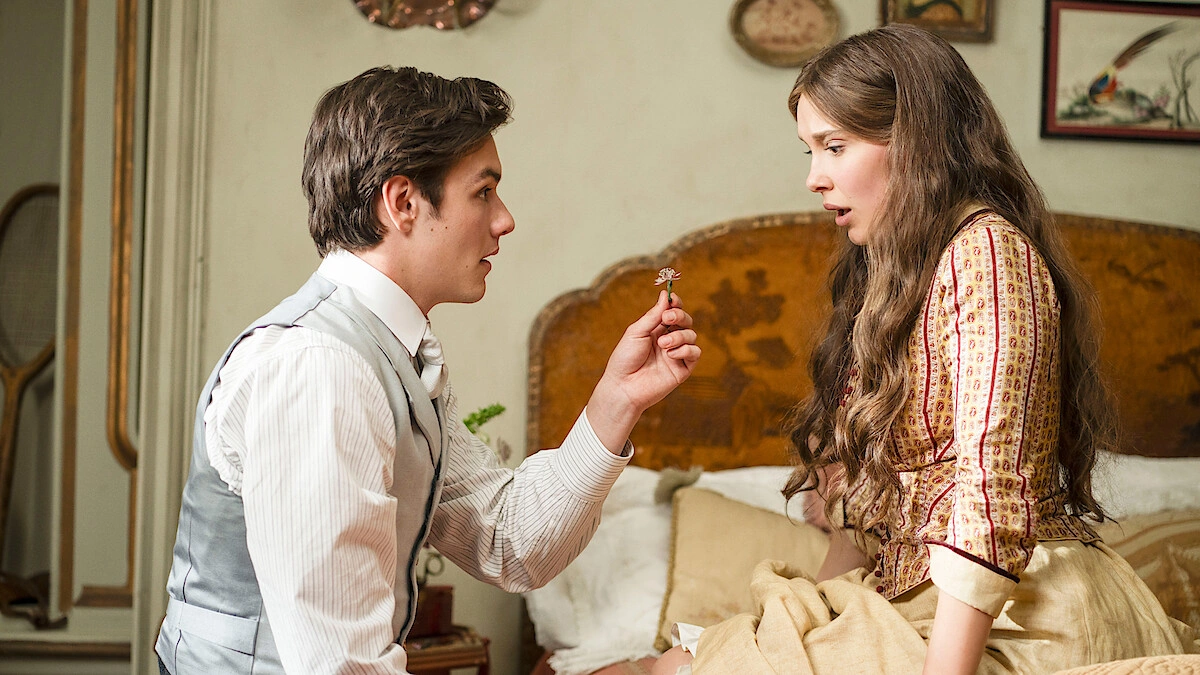
Louis Partridge remains an important softening force as Tewkesbury. The character can still seem written as a very handsome apology for aristocracy, but Partridge gives him real hurt after Enola leaves the ceremony. Their oceanside reconnection in Malta works because it slows the film’s pulse. Brown and Partridge play the scene without trying to modernize the romance into snark. They let affection sit beside injury. Tewkesbury is not asking Enola to shrink. He is asking to be chosen without becoming a prison.
That distinction matters. Many recent screen heroines are written as if love itself were a branding hazard. Enola Holmes 3 makes the smarter choice by letting Enola want intimacy without surrendering her intellect. The film’s feminism is at its best in that space, where independence is not confused with emotional austerity.
The Case Explains Too Much
The mystery begins with a promising absence. Sherlock, played again by Henry Cavill, has been kidnapped from his room, leaving behind clues meant for another Holmes to read. Cavill spends much of the film offscreen, which turns Sherlock into a puzzle box rather than a partner. That choice gives Enola room to lead, but it also asks the audience to accept that the great detective could be taken so cleanly by forces the film later handles with uneven logic.
Some clue scenes deliver the old pleasure. Enola finding Morse-coded fingerprints on a mirror in front of Himesh Patel’s Watson has the bright little snap the series needs. Watson looks baffled, Enola reads the surface, the room shifts from ordinary space to coded message. The scene respects her mind.
Too many other deductions are staged as camera-assisted homework. A clue is pushed forward by a zoom, a flashback fills in material Enola could not plausibly know, and the voiceover arrives to tidy the room before the audience has had a chance to inspect it. The sequence explaining Lady Tewkesbury’s obsession with a Maltese wedding is a clear example. Instead of letting Enola uncover motive through behavior, documents, or contradiction, the film hands over a retrospective explanation and calls it revelation.
The plot keeps adding pressure: Lady Tewkesbury’s abduction, a hotel fire, Maltese freedom fighters, Watson’s wartime past, Moriarty’s return, and imperial crimes circling beneath the wedding scenery. The film moves quickly enough to avoid dullness, but speed is not the same as mystery. At its weakest, Enola Holmes 3 resembles a detective story where every locked door has been helpfully labeled by production design.
The fourth-wall narration, once one of the franchise’s liveliest devices, now creates its own problem. Enola still turns to the camera with wit and confidence, and Brown remains good at making those glances feel conspiratorial rather than smug. The device starts to strain when it explains each clue, each feeling, each reversal. A heroine this capable should be allowed to leave some silence behind her deductions. Trusting Enola also means trusting the viewer.
Barantini Darkens the Room
Philip Barantini brings a different physical grammar to the series. Harry Bradbeer’s earlier films had a skittering charm, built around comic timing, direct address, and the thrill of Enola making the world rearrange itself around her. Barantini keeps the graphics and brisk editing, but he gives the third entry a harder body. Fights land with more force. Chases feel less decorative. The camera has a heavier appetite for movement.
The shift is clearest in the action scenes. Enola on the carriage roof is playful danger. The horseback chase broadens that danger into spectacle. The violent fight with the female villain pushes the film closer to adult bruising, with Brown selling the pain rather than gliding through choreography as an invincible YA mascot. The hotel fire gives the middle stretch a burst of visual panic, while the Maltese standoff near the end lets the location become a pressure chamber instead of a postcard.
The craft helps. Matt Lewis’ cinematography gives Malta a polished brightness without flattening the image into travel advertising. Interiors have texture, and the film benefits from lighting that remembers faces need shape. This should not feel like an achievement in the streaming age, yet here we are. Consolata Boyle’s costumes carry their own narrative function, especially Enola’s bridal gown and the tailored Victorian looks that keep class, gender, and performance visible in every room.
The darker style does not always fit the franchise’s comic habits. Barantini’s more mature instincts pull toward violence, empire, and trauma, while the script still wants the zing of animated notes and peppy asides. At times, the film feels like two Netflix tabs playing at once: one a sprightly Holmes adventure, the other a prestige-adjacent colonial reckoning with better lighting.
Empire as Backdrop, Not Engine
The Enola Holmes films have always used history as part of their appeal. The first two entries tied Enola’s personal rebellion to women’s rights, factory labor, class pressure, and political reform. Their social lessons were not subtle, but they often had narrative purpose. Enola’s cases taught her how power operates.
This time, Malta brings the British Empire into view through freedom fighters, violence linked to occupation, and Watson’s memories of the Anglo-Afghan Wars. The film deserves credit for refusing to treat Malta as a neutral vacation backdrop. The island’s beauty is placed beside histories of extraction and control. That matters in a franchise aimed at young viewers, because children’s adventure cinema has long borrowed colonial locations while editing out colonial responsibility. Imagine the industry learning that scenery has politics. Radical stuff.
The problem is integration. The anti-colonial material has weight, but the film often keeps it beside the main case instead of inside it. The freedom fighters enter the story with urgency, then compete with wedding anxiety, Sherlock’s disappearance, Lady Tewkesbury’s kidnapping, and Moriarty’s scheme. Watson’s wartime past suggests a richer reckoning with British violence, yet the film does not give Patel enough space to make that history feel lived rather than assigned.
Sharon Duncan-Brewster’s Moriarty gives the third act its sharpest jolt. Her return supplies Enola with an adversary who can challenge her mind and body, and Duncan-Brewster plays the villain with theatrical relish. She can push too hard in places, but the film needs her heat. The climactic clash works because Moriarty sees Enola clearly: as a threat, as a rival, and as a young woman still deciding which systems she can enter without being remade by them.
Helena Bonham Carter’s Eudoria cuts through the respectable surfaces with her usual sardonic precision. Her scenes remind the film that Enola’s education began outside official structures, in a home where rebellion was curriculum. Eudoria’s presence also clarifies the generational argument. Enola is not rejecting her mother’s radicalism by marrying Tewkesbury. She is testing if radicalism can survive contact with love, law, and family expectation.
A Franchise Waiting for Its Adult Case
The first Enola Holmes had the freshness of discovery. The second grew bigger and risked bloat. Enola Holmes 3 is shorter, brighter in setting, darker in incident, and still too crowded for its own good. Its best scenes are the ones that let Enola’s adulthood complicate the franchise formula: the abandoned wedding, the hurt between her and Tewkesbury, the mirror clue with Watson, the carriage sequence where bridal symbolism meets shotgun practicality, the moments when Moriarty drags the film into real threat.
Its weakest scenes reveal the limits of a franchise trying to mature by adding violence, history, and speed without fully redesigning its mystery engine. The film wants to discuss marriage as a social contract, empire as buried violence, and girlhood as a role Enola has outgrown. Then it panics and explains the clue board again.
Brown remains the reason the series still works. She has enough command now to play Enola as a young woman rather than a novelty sister in Sherlock’s shadow. The next film should trust that growth. Give her a case with moral difficulty, fewer explanatory shortcuts, and enough silence for deduction to become drama again. Enola is ready for a harder mystery. The franchise keeps asking for one too, sometimes louder than it realizes.
The mystery adventure film Enola Holmes 3 premiered globally for digital streaming on Netflix on July 1, 2026. Audiences can watch the feature-length production exclusively with a platform subscription. The third installment follows the brilliant young detective Enola Holmes as she heads to Malta to investigate her darkest and most complex conspiracy yet while her famous older brother Sherlock deals with a dramatic structural twist of his own.
Where to Watch (2026) Online


Full Credits
Title: Enola Holmes 3
Distributor: Netflix
Release date: July 1, 2026
Rating: PG-13
Running time: 105 minutes
Director: Philip Barantini
Writers: Jack Thorne, Nancy Springer
Producers and Executive Producers: Mary Parent, Alex Garcia, Ali Mendes, Millie Bobby Brown
Cast: Millie Bobby Brown, Louis Partridge, Himesh Patel, Sharon Duncan-Brewster, Henry Cavill, Helena Bonham Carter, Susan Wokoma, Jason Watkins
Director of Photography (Cinematographer): Matthew Lewis
Editors: Tommy Boulding
Composer: Aaron May, David Ridley
The Review
Enola Holmes 3
Enola Holmes 3 gives Netflix’s young detective a sharper adult dilemma, then surrounds it with a mystery too busy to trust her intelligence for long. Malta, Moriarty, and Enola’s fear of marriage give the film real charge, while Millie Bobby Brown and Louis Partridge keep the romance tender. The anti-colonial thread has bite, yet the script often treats history like curriculum garnish. A charming sequel, yes, but one still asking its heroine to mature faster than the franchise around her.
PROS
- Strong Malta setting
- Brown and Partridge’s chemistry
- Sharper adult stakes
- Moriarty’s menacing return
- Handsome costumes and lighting
CONS
- Overcrowded plot
- Too much clue narration
- Sherlock underused
- Anti-colonial material feels thin
- Mystery lacks real cleverness