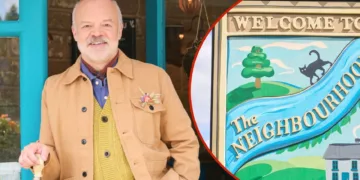








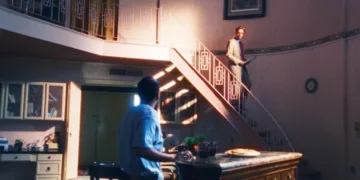
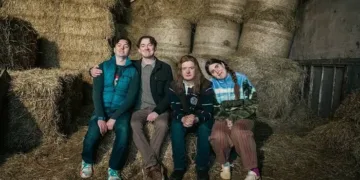








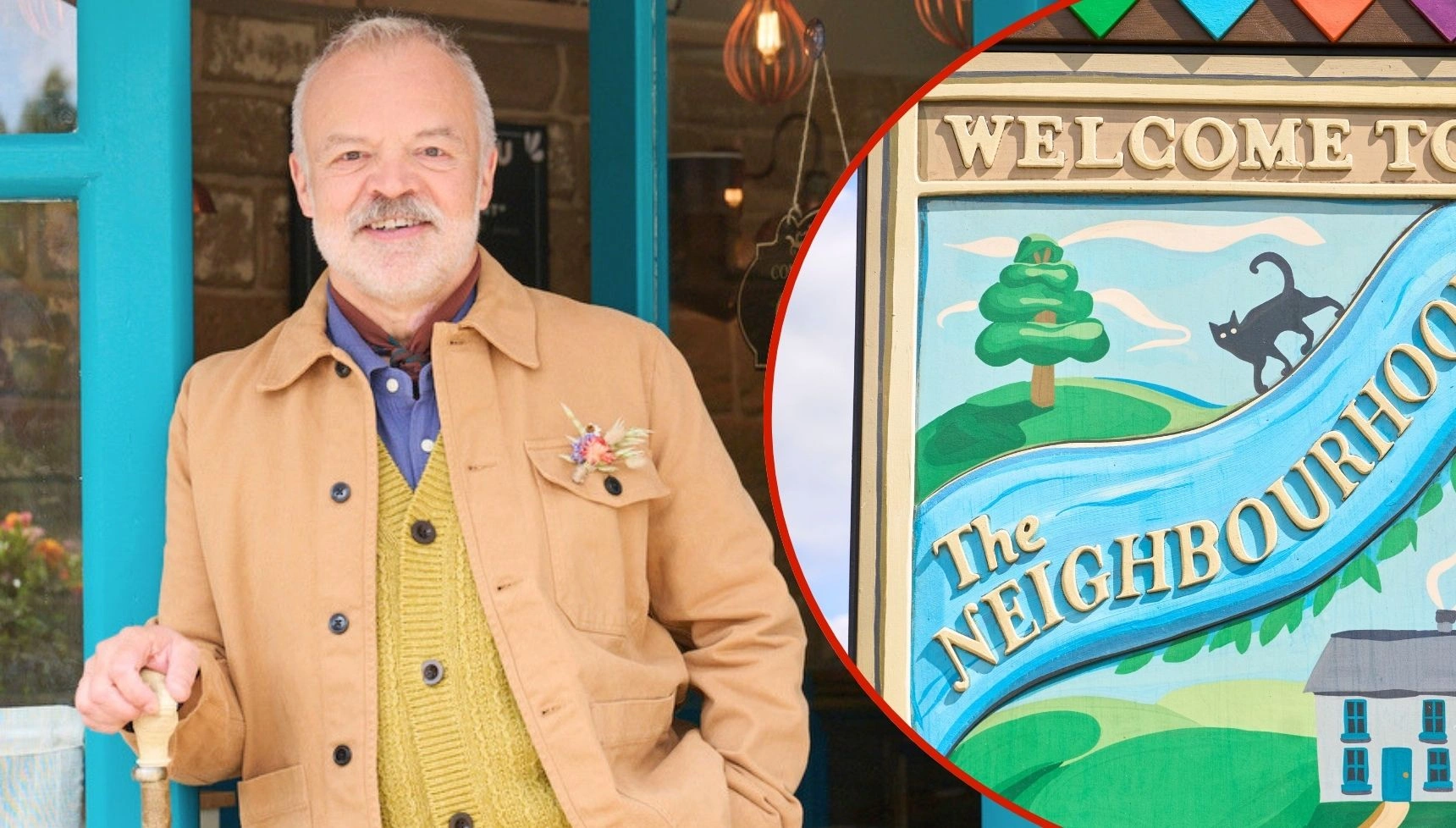

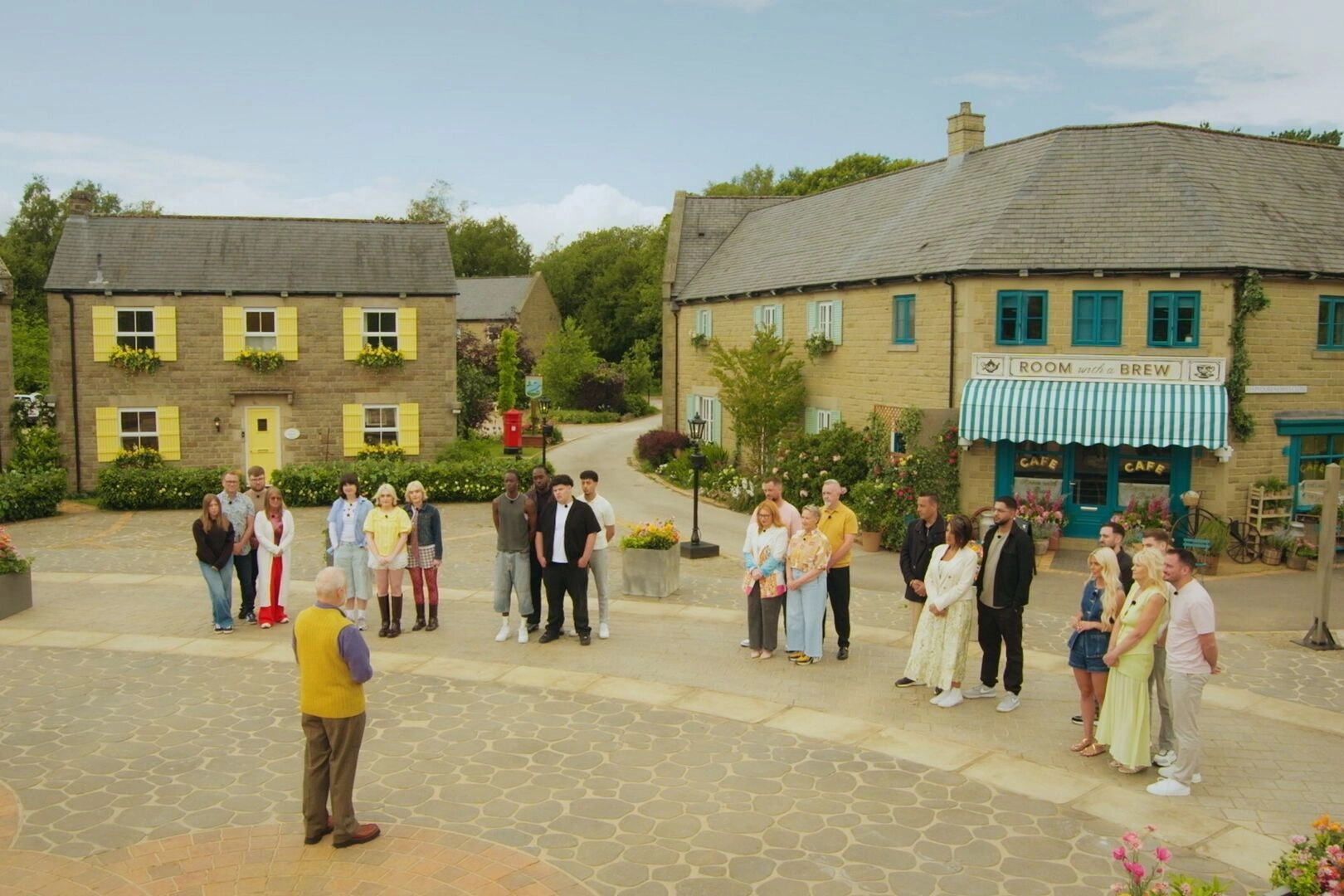
Six households, one fake Peak District street, and a quarter of a million pounds should make gossip feel radioactive. The Neighbourhood has the raw materials for a satisfyingly nosy reality competition: Graham Norton at the gate, families peering through curtains, alliances forming over garden fences, and a voting ritual that turns suburban property anxiety into public humiliation.
The setup is clean. Six groups move into a purpose-built cul-de-sac, charm the people next door, compete for immunity, then try to avoid being “removed” by their fellow residents. Instead of a secret ballot, the vote arrives with a front-lawn flourish: each household plants a “For Sale” sign outside the home they want gone. It is a terrific little visual joke, petty, cruel, and instantly readable.
That sort of detail makes the show look smarter than it often plays. The street has pastel cottages, front gardens, a local pub called the Uppin Arms, and the sort of expensive cosiness that suggests ITV has spent real money making fake neighbourliness look market-ready.
The problem is that suspicion takes time to ferment, and the early episodes keep serving it raw. Nobody has been around long enough to hate the bins, the noise, or the way number four parks. A cul-de-sac can trap people beautifully. This one keeps leaving the emotional doors open.
The Washing Line of Destiny
The first immunity challenge says plenty about the show’s instincts. A volunteer from each household is strapped onto a giant washing line, lifted high, zapped with mild static shocks, and asked to grab laundry containing facts about other contestants. They must then match each fact to the right household. This is called airing dirty laundry, because television commissioners are legally required to write the pun down once they see it.
As spectacle, it works for a few minutes. People scream, Norton quips, contestants wobble in mid-air, and the edit keeps cutting to the other families reacting with that particular reality-TV blend of horror and delight. As a game mechanic, it is thinner. The facts are too mild to really detonate anything. Someone dislikes cats. Someone has been married several times. Someone once needed an urgent McDonald’s toilet stop. These details can create conversation, but they do not yet create danger.
The gnome-hunting challenge fares a little better because people running around looking foolish has an ancient comic purity. Still, the challenge structure feels decorative rather than strategic. Winning immunity matters, but the tasks themselves rarely shift the social map in a way that changes how people vote.
That is where the shadow of The Traitors hurts the show. A round-table banishment works because every glance feels weaponised. Here, the “For Sale” signs should sting, yet the ceremony in the early episodes feels closer to a residents’ association exercise with better lighting. Never underestimate the power of a gnome, but never build a format on one either.
Families, Fronts, and One Loose Wire
The casting has range on paper. The Bradons arrive as a five-strong Essex unit and quickly worry that their size makes them look like a threat. Sunita Kandola turns friendliness into a tactical sport, sending samosas across the fence with the confidence of someone who knows hospitality can be sharper than a vote.
The Pescuds bring the oddity of a hidden astrophysicist now working at Greggs, which the other houses treat with the suspicion normally reserved for espionage. Scousa Haus brings Liverpudlian twins Lyndsey and Louise plus Rosie, while the Uni Boys bounce through the street with such open-faced cheer they could be prescribed by the NHS.
Then there is Jordan Lozman-Sturrock, the show’s most useful early irritant. His backstory matters: military service, PTSD, stand-up work for men’s mental health charities, and a family shaped by stepdad Dave’s recent health troubles. The edit gives him space to be vulnerable, then watches him swerve into sabotage with almost comic impatience.
He announces that he is tired of playing happy families barely after the happy-family act has warmed up. His tirade about cats gives the show one of its few properly spiky personality moments, mostly because it sounds less like strategy than a man deciding to declare war on soft furnishings.
The backstories create a tricky tonal balance. The twins wanting the money for their terminally ill mother’s bucket-list wishes is sincere, and the show handles that material with care. Then it cuts back to people plotting over who seems threatening because they own too many relatives. Reality television has always made feeling and tactics share a sofa, but The Neighbourhood has not yet worked out who gets the remote.
The early removal of one lively presence also drains energy at exactly the wrong moment, particularly because the vote carries an uncomfortable hint of racial bias that the room seems determined to politely step around. Nothing kills tension faster than a show noticing something and then pretending it merely saw a shrub. Jordan may be messy television, but at least he understands that a street without friction is a brochure.
Norton at the Kerb
Graham Norton is the show’s safety rail and its missed chance. He gives the welcome ceremony a lift, steadies the challenge scenes, and makes the removal process feel less silly than it has any right to be. His timing is intact. A raised eyebrow from Norton can still do the work of three confessionals and a bass drop.
The trouble is that he is used sparingly, more master of ceremonies than neighbourhood menace. This format needs his mischievous side. It needs someone to prod the soft spots, notice the hypocrisy, and turn a bland “we’re here to win” speech into something with teeth. Too often, Norton is left near the edges while the contestants repeat the same reality phrases: they are kind people, they are competitive, they came to win, their great strength is being underestimated. Reality contestants have become fluent in sounding like LinkedIn posts trapped in tracksuits.
The Neighbourhood may yet grow nastier once the prize feels closer and the families stop confusing civility with safety. The design team has done its job. The voting gimmick is strong. The host is right. The Uni Boys are a renewable energy source. What is missing, so far, is the delicious sense that a cup of tea might ruin someone’s game. For now, the street is tidy, the lawns are clipped, and the curtains twitch on cue. Somebody needs to lower the property value.
The high-stakes reality game show premiered in the United Kingdom on ITV1 and its digital platform, ITVX, on April 24, 2026. Hosted by the popular broadcaster Graham Norton, the series follows multiple distinct households moving into a purpose-built neighborhood block where they compete in physical challenges and social popularity contests to avoid elimination. Viewers can watch all eleven episodes of the competition streaming on demand via ITVX.
Full Credits
Title: The Neighbourhood
Distributor: ITV1, ITVX
Release date: April 24, 2026
Rating: TV-MA
Running time: 60 minutes
Director: Not Applicable
Writers: Laura Claxton
Producers and Executive Producers: Lifted Entertainment, The Garden
Cast: Graham Norton, Donna Campbell-Graham, Ken Campbell-Graham, Thai Campbell-Graham, Grace Pescud, Harrison Pescud, Paul Pescud, Wendy Pescud, Christine Lozman-Sturrock, Dave Lozman-Sturrock, Jordan Lozman-Sturrock, Katie Lozman-Sturrock, DJ, Fahad, Hadi, Kevin, Louise, Lyndsey, Rosie, Alicia Bradon, Faye-Marie Bradon, Lucas Bradon, Nathan Bradon, Zach Bradon, Iman Khan, Maryam Khan, Tara Khan, Ruben Kandola, Sunita Kandola, Tony Samra
The Review
The Neighbourhood
The Neighbourhood has a tidy pitch, a handsome fake street, and Graham Norton parked at the curb with better timing than the format around him. The washing-line challenge and “For Sale” signs give it clip-friendly oddity, yet the early episodes mistake proximity for pressure. The families talk strategy before the game has earned suspicion, so the removals feel like admin with bunting. A sharper second half may yet move in. For now, the tenancy is shaky.
PROS
- Graham Norton’s hosting presence
- Strong visual gimmick with “For Sale” signs
- Uni Boys bring easy charm
- Jordan creates early friction
- £250,000 gives real stakes
CONS
- Thin early jeopardy
- Derivative post-Traitors structure
- Challenges lack strategic bite
- Too much padded game chat
- Norton feels underused