
























![Kingdom Hearts Collection [I-III] Review](https://gazettely.com/wp-content/uploads/2026/10/Kingdom-Hearts-Collection-I-III-1-360x180.webp "Kingdom Hearts Collection [I-III] Review: KHII Holds Steady as Newer Entries Fluctuate 37")



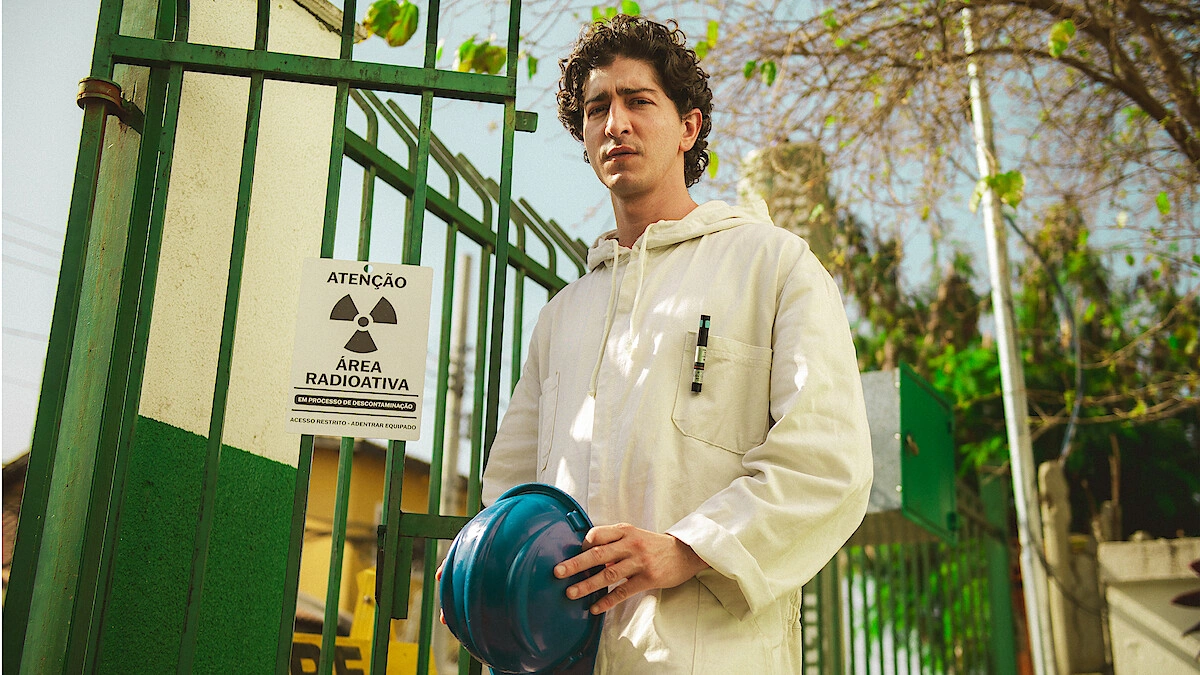

September 13, 1987, opens this story with a disaster that begins in silence in Goiânia, Brazil. Two men enter an abandoned radiotherapy clinic in search of scrap metal. They come across a heavy lead canister and sell it to a neighborhood scrap yard. Inside is cesium-137, a radioactive powder with an eerie blue glow.
The series follows the stretch of time before government officials understand the scale of the danger. Four people die soon after exposure. Doctors screen 110,000 residents and identify 240 contaminated people. This drama examines the collapse of nuclear oversight and the human cost inside a dense urban setting.
The script moves from the initial theft to the declaration of a state of emergency. The governor and national nuclear authorities are pulled into a crisis they cannot contain. Radioactive Emergency presents this history as a portrait of institutional collapse. Its attention stays on the plain, frightening reality of the accident, and that choice gives the material its force.
Poverty and the Radiant Toy
The tragedy begins with curiosity. Evenildo, a junk dealer, and his wife Antônia view the blue powder as something beautiful. Evenildo tells his workers to pry open the lead cylinder, and the glowing dust spills into their lives. His family touches it, shares it, and treats it like a novelty.
That ignorance fills their home with illness. The show is very clear about the role of class in determining who gets protected and who gets left exposed. The abandoned clinic stood for years in a poor neighborhood. Wealthy institutions had already stopped paying attention to that building. The implication is painful and direct. Poor communities lived close to danger, and powerful people had already looked away.
The scrap yard workers carry deep mistrust toward the state. Evenildo fears the scientists have come to arrest him. That fear keeps people from asking for help, and the series understands how that kind of suspicion grows. It comes from long experience, from being ignored or punished, from living near authority and never feeling served by it.
Through sick children and panicked parents, the disaster becomes personal. Those stories hold the emotional weight of the series. The writing places intimate suffering beside the hard facts of radiation exposure, and the result feels immediate and painful.
What I found especially effective here is the way the series treats daily life. The camera seems drawn to ordinary gestures, to rooms, tables, hands, faces, the texture of a family home before everything changes. I kept thinking of the sort of patient observation that often gives independent cinema its power, where routine itself becomes charged.
That slow, attentive rhythm turns the discovery of the canister into something frightening precisely because it first feels so ordinary. The writers also stress how little people understood about the technology in front of them. That detail gives the story a bitter clarity. The tragedy feels preventable, and it also feels baked into the conditions these people were living under.
The image of the glowing powder resting on a table is hard to shake. It lingers because the people handling it have no way to grasp the threat. Their place in the social order leaves them invisible to the agencies meant to regulate risk. By the time those agencies notice them, the damage has already spread.
Bureaucracy Against the Invisible
The scientists in the series are trapped inside layers of bureaucracy from the start. Márcio, a young physicist, emerges as a steady presence, and his work with Dr. Orenstein gives the plot much of its motion. Orenstein stands for a nuclear industry more concerned with protecting itself.
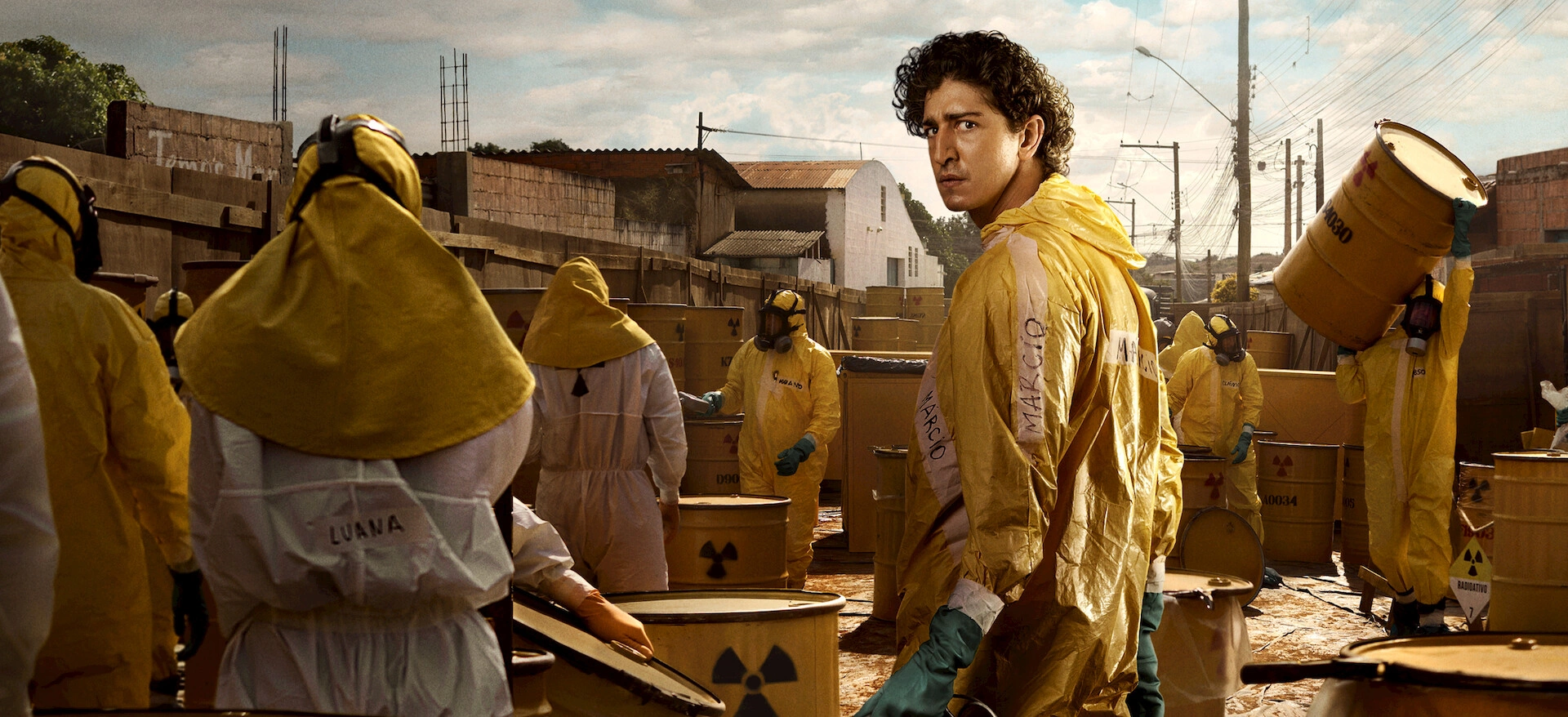
The friction between the two men gives the show much of its dramatic energy. The National Nuclear Energy Commission carries a heavy burden of blame because it failed to secure the radioactive source years before the accident. The governor tries to suppress the news out of fear that the public will panic. That hesitation deepens the crisis.
The medical scenes are harsh and difficult. Doctors work in cramped hospitals with very limited supplies. They improvise treatment areas for patients suffering from radiation poisoning. These scenes understand the terror of a technological disaster that cannot be seen with the naked eye.
Contamination becomes a race against time because people who handled the powder have already moved through the city. That produces a real sense of dread. Watching it now, it is hard to miss the echo of recent global health crises. The script captures the difficulty of containing a silent threat and the frustration of experts forced to battle both the danger itself and the delays of the state.
This is where the series becomes especially strong. Its power comes from the technical and logistical work of tracing exposure, locating people, and trying to measure something that has already slipped through everyday life. I was especially taken by the scenes involving the scintillometer.
The device gives shape to something otherwise abstract. It creates a link between invisible contamination and the physical world people move through. That detail lands because it reflects a basic truth about crisis: the public depends on experts, and those experts often work under terrible pressure, with incomplete information, in institutions that move far too slowly.
The show also captures the gulf between scientific understanding and political decision-making. That gulf leads to suffering again and again. The physicists are presented as exhausted workers struggling through a puzzle with missing pieces. The healthcare workers are stretched thin, under-equipped, and emotionally drained. The series treats their labor with seriousness and respect. That portrait of institutional failure feels plainspoken and credible. It has little interest in the glossy surfaces that many mainstream thrillers lean on.
The Aesthetics of 1980s Dread
Directors Fernando Coimbra and Ibere Carvalho give the series a strong visual identity rooted in 1980s Brazil. The color grading carries warmth and dust, and the cinematography conveys the heat pressing down on the city. Production design does careful work with period clothing and hairstyles, which helps the setting feel inhabited instead of arranged. Because that world feels so grounded, the arrival of men in yellow hazard suits becomes deeply unsettling. They seem alien in the middle of familiar streets. The image has real force.
The performances keep the story anchored. Johnny Massaro plays Márcio with calm intensity, giving the character a steadiness that holds the procedural elements together. Bukassa Kabengele gives Evenildo a stubborn, believable presence. He feels like a man shaped by his surroundings, his instincts, and his fear. Those performances keep the technical material connected to human behavior and human cost.
The sound work is especially sharp. The repeated clicking of the Geiger counter becomes a warning signal that never lets the viewer relax. It builds tension without leaning on an oversized score. That choice works beautifully. The editing keeps its attention on the people touched by the radioactive dust. Scenes are allowed to breathe. Time feels heavy, stretched, and difficult. That pacing fits the material because contamination spreads quietly, almost casually, long before the full horror is recognized.
Lighting plays a major role in how the blue glow is presented. It feels tangible, frightening, and present in the room. It never comes across like a decorative effect. I admired the way the camera stays close to faces, allowing sweat, exhaustion, and fear to register in small details. The sets feel crowded and lived-in, full of objects and traces of routine life. For me, that care with space and texture recalls the strongest period pieces, the ones that trust rooms and surfaces to carry memory.
The sound design is equally attentive in quieter passages. Silence has weight here. In those pauses, the threat seems even nearer. The technical team keeps everything restrained and lets the inherent fear of the situation do the work. That restraint makes the radiation feel frightening in a direct, physical way. The series remains faithful to the time and place of the accident, and that fidelity gives it real seriousness.
A Modern Mirror of Systemic Failure
The story unfolds across five episodes, each running about an hour. That structure gives the series room to examine the accident in detail. The pacing is slow and deliberate. There are stretches in the middle where the repetition may test some viewers, especially in scenes built around policy discussions. Still, the writing uses that repetition to create a mood of fatigue and defeat. The show argues that societies often fail to learn from their disasters and that safety rules can exist as paperwork without real protection behind them.
Some of the personal subplots feel less focused. Márcio’s strained relationship with his father carries emotional intent, though it does not hit with the same force as the central nuclear crisis. The subplot involving his pregnant girlfriend also occupies time that could have tightened the main line of the story. Those scenes are the weakest material in the script because the disaster itself is already rich with human drama and institutional tension.
Even so, the series speaks very clearly to the present. In 2026, industrial risk still shapes public life. The show presents a world where one small failure can harm an enormous number of people. Its anxieties about safety and government honesty feel current. The writing sidesteps familiar television formulas and settles into a grim study of systems failing the people who depend on them. The final stretch leaves the viewer with the sense that this sort of negligence remains possible.
I found myself thinking about the decision to tell this story as a miniseries. A feature film might have delivered a tighter sense of pressure. This longer form, though, gives the contamination room to spread through institutions, homes, and bodies. You feel the scale of it. You feel how long it takes for damage to be seen, counted, and acknowledged. The series questions the comforting belief that technological progress moves hand in hand with responsibility. Here, responsibility is shown as something fragile, uneven, and often absent.
That bleak tone feels earned. Too many real disasters have followed similar patterns for the series to frame this story any other way. Radioactive Emergency leaves viewers with caution and unease, and it earns both through patience, detail, and a steady focus on the people forced to live inside an avoidable catastrophe.
Radioactive Emergency premiered on Netflix on March 18, 2026. This Brazilian limited series dramatizes the 1987 Goiânia radiological accident. Viewers can watch all five episodes exclusively on the streaming platform. The narrative explores how a discarded medical device led to widespread contamination in an urban center. It captures the frantic response of scientists and the struggles of affected families.
Where to Watch Radioactive Emergency Online


Full Credits
Title: Radioactive Emergency
Distributor: Netflix
Release date: March 18, 2026
Rating: TV-MA
Running time: 53 to 65 minutes per episode
Director: Fernando Coimbra, Iberê Carvalho
Writers: Gustavo Lipsztein, Fernando Coimbra, Stephanie Degreas, Rafael Spínola, Joe Peracchio
Producers and Executive Producers: Caio Gullane, Fabiano Gullane, Pablo Torrecillas, Ana Saito
Cast: Johnny Massaro, Paulo Gorgulho, Tuca Andrada, Antonio Saboia, Bukassa Kabengele, William Costa, Clarissa Kiste, Douglas Simon, Ana Costa, Alan Rocha, Marina Merlino, Leandra Leal, Emílio de Mello
Director of Photography (Cinematographer): Adrian Teijido, Rodrigo Carvalho
Editors: Karen Harley, Vicente Kubrusly
Composer: Gustavo Ruggeri
The Review
Radioactive Emergency
Radioactive Emergency provides a grounded look at industrial negligence. It succeeds as a period piece and a commentary on class vulnerability. The performances and technical authenticity provide a heavy emotional center regardless of some pacing issues. It remains a sobering reminder of systemic failure.
PROS
- Authentic 1980s Brazilian production design.
- Strong lead performances by Johnny Massaro and Bukassa Kabengele.
- Tense sound design centered on the clicking of the Geiger counter.
- Honest portrayal of the gap between scientific knowledge and political action.
CONS
- Slow episodic pacing across five hours.
- Personal subplots that distract from the central disaster.
- Repetitive policy discussions in the middle chapters.







