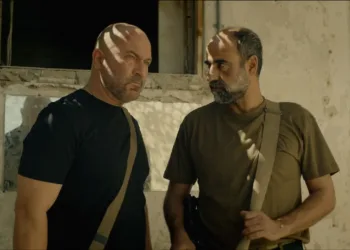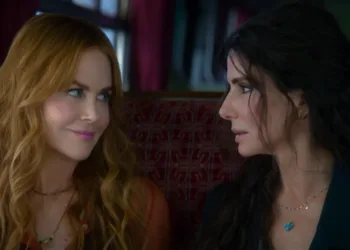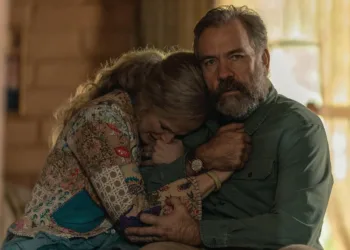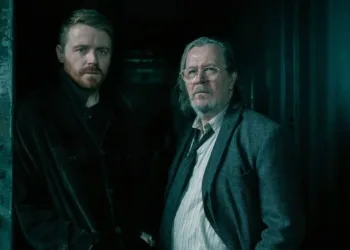























Hollis Shaw receives news that her husband has died in a car accident, then remembers the candy cane meringue kisses still sitting in the oven. The sequence is almost absurd in its discipline. Death has entered the house, yet the kitchen timer remains an obligation.
That tension gives The Five-Star Weekend its sharpest idea. Jennifer Garner’s Hollis has built a career from making domestic life look warm, ordered, and edible. She writes cookbooks, appears on television, and leads an online food community whose followers treat her recipes as fragments of friendship. Six months after Matthew’s death, the machinery of that identity is still running. Hollis is simply no longer capable of keeping pace with it.
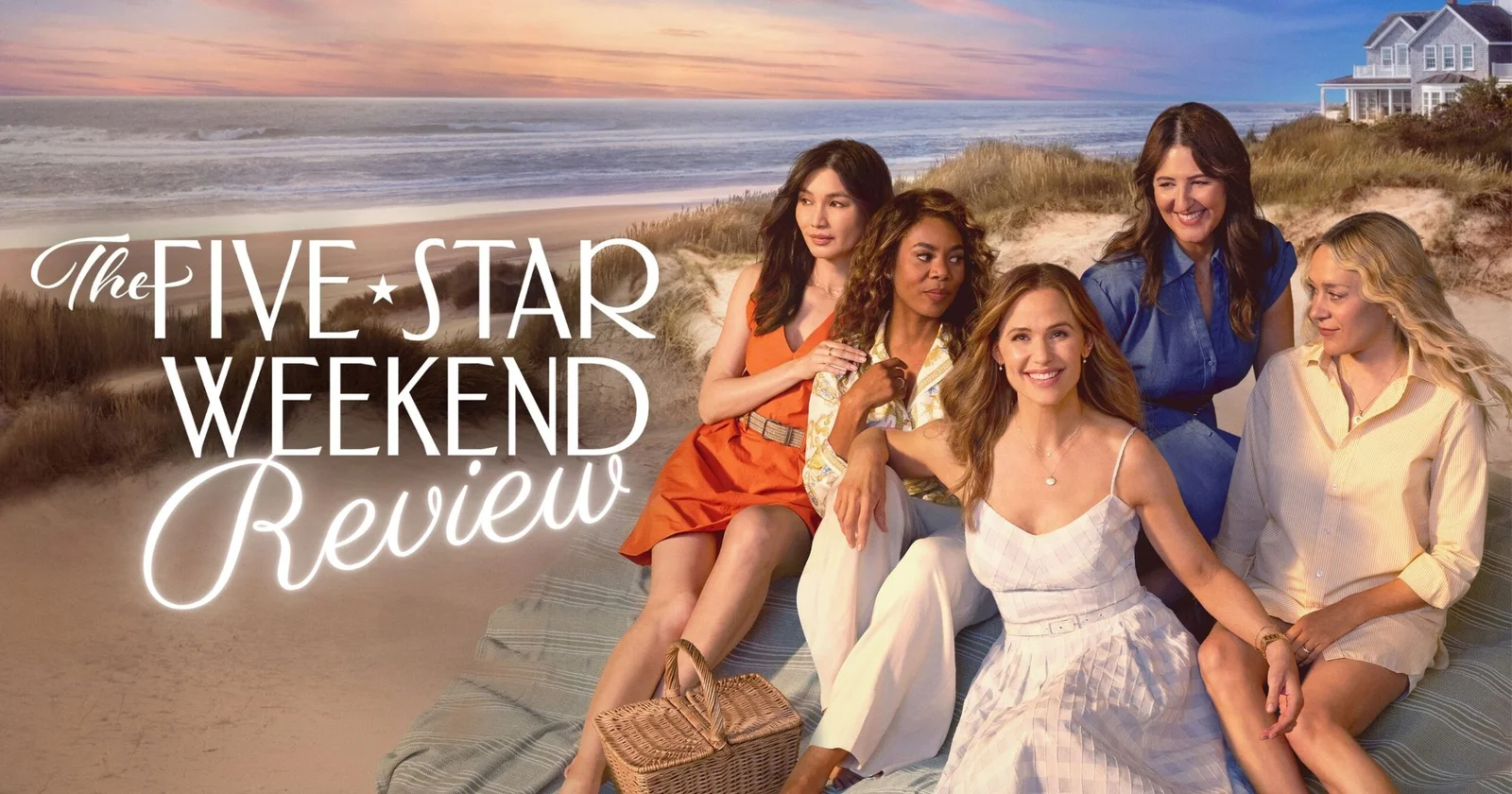
Created by Bekah Brunstetter from Elin Hilderbrand’s 2023 novel, Peacock’s eight-episode limited series sends Hollis to her Nantucket home after she breaks down during a television cooking appearance. Her solution is characteristically managerial. She will host a restorative weekend and invite one friend from each era of her life: childhood companion Tatum McKenzie, college roommate Dru-Ann Jones, fellow mother Brooke Kirtley, and Gigi Ling, an online confidante Hollis has never met in person.
There are illustrated itineraries. There are oysters on ice. There are matching activities. Grief, regrettably, has failed to check the schedule.
Buttercream Over the Cracks
The cultural fantasy surrounding Hollis is familiar because television has spent years refining it. The immaculate kitchen, tasteful coastal home, artisanal food, and soft-focus public persona offer an image of affluent womanhood where labor has been edited into lifestyle. Someone arranged those flowers. Someone shucked those oysters. Hollis’ brand depends on making the effort disappear.
Her grief operates through the same mechanism.
During her television appearance, Garner holds Hollis upright until the performance becomes physically impossible. Her face keeps attempting the familiar public smile while her voice starts refusing cooperation. Later, at Nantucket, Hollis responds to difficult conversations by finding another task. A pizza needs attention. Guests need organizing. The next activity is approaching.
Garner has played tightly controlled women before, and her posture does much of the work here. Hollis often stands like a person trying to prevent one loose emotion from knocking over the rest. When friends ask direct questions about Matthew, she reroutes the room toward food or entertainment. She is generous, loving, and frequently exhausting.
The series is wise enough to let that generosity contain selfishness. Hollis wants her guests to have a beautiful weekend, yet beauty becomes a condition she imposes on them. Tatum and Dru-Ann are expected to behave. Brooke is expected to enjoy herself. Caroline, Hollis’ grieving college-age daughter, is asked to help document the gathering for social media. Everyone must protect the atmosphere because Hollis cannot.
Caroline’s fury works best when it collides directly with that emotional management. Harlow Jane plays her anger as something tangled with guilt, and Garner refuses to make Hollis automatically wiser because she is the mother. Their arguments concern Matthew, yet the deeper fracture sits in their incompatible methods of surviving him. Caroline withdraws and lashes out. Hollis produces.
The writing occasionally pushes their grief toward familiar television beats. Tears arrive where expected, confessions wait for the proper dramatic hour, and healing remains reassuringly legible. Garner gives those scenes friction by allowing Hollis’ control to look less noble each time she reaches for it.
Perfection, here, is simply avoidance with better lighting.
The Guest List Is the Real Drama
Hollis’ five-star concept works because these women are not a friend group. They are four separate witnesses to four separate versions of the same person.
Brooke arrives at Hollis’ ocean-view house and reacts with the naked awe of someone who cannot believe she belongs there. Tatum, raised on Nantucket and still living on the island, eyes the luxury with considerably less reverence. Dru-Ann enters carrying the assurance of a successful sports agent accustomed to expensive spaces. Gigi walks into a gathering of strangers already possessing months of intimate knowledge about their host.
The social discomfort in these early episodes has greater tension than several of the series’ engineered secrets. Anyone who has watched old friends from unrelated eras meet understands the problem. Each relationship developed its own vocabulary, hierarchy, and acceptable version of Hollis. Put them around one table and every private mythology becomes public.
Regina Hall immediately grasps the useful contradictions in Dru-Ann. Her sports-agent storyline places her under professional scrutiny after a viral video captures her pressuring a young Angel City player to continue competing during a mental health struggle. The writing around generational attitudes and workplace expectations can sound assembled from recent discourse rather than spoken by people living inside the conflict. Hall finds sharper material elsewhere.
Watch Dru-Ann with Brooke. Her teasing initially has enough bite to make Brooke shrink, then gradually develops into affection. Hall changes the temperature without announcing it. A joke that might have humiliated Brooke in the first episode becomes an invitation several episodes later.
Dru-Ann’s rivalry with Tatum carries a similar precision. Chloë Sevigny makes Tatum’s resentment visible before the character explains any of it. Hollis left Nantucket, became wealthy, and built a public identity. Tatum remained, runs a dry-cleaning business, and knows the island without needing to photograph it. Dru-Ann represents another life Hollis chose away from her.
Their hostility is territorial. Both women believe history gives them seniority.
Tatum’s health scare is less successful. The storyline sometimes feels like an efficient mechanism designed to crack her sarcasm and force vulnerability. Sevigny is stronger in quieter scenes with her longtime husband and in Tatum’s attachment to her grandchild. Those moments reveal her fear of change through behavior rather than diagnosis.
D’Arcy Carden gets the cleanest character progression. Brooke’s nervous chatter comes with a wonderful delayed self-awareness. She says too much, recognizes that she has said too much, and then creates fresh damage trying to repair the previous sentence. Carden understands the comic rhythm of people-pleasing.
Brooke’s marriage to the spectacularly unpleasant Charlie has trained her to seek permission before trusting her own judgment. Her change during the weekend appears in small social choices. She stops checking faces after she speaks. She accepts Dru-Ann’s affection without immediately apologizing for receiving it. Tatum begins looking at her with something approaching respect.
The script could easily label this empowerment and send Brooke toward a triumphant speech. Carden gives the arc a better texture. Brooke seems surprised by herself.
Gigi, played by Gemma Chan, belongs to a more unstable register. She first connected with Hollis through the Hungry by Hollis community and became a private source of support after Matthew’s death. Her arrival is already unusual: four days in a luxury home with an internet friend she has never physically met.
The revelations surrounding Gigi’s past intensify that oddness until her storyline starts drifting toward a pulpy thriller. Chan’s reserve suits the character’s uncertain status inside the house, yet Gigi is repeatedly treated like a sealed envelope the series plans to open later. Her strongest scenes arrive after suspicion has set in, when small attempts to speak with the other women allow Chan to play someone trying to become a person in their eyes rather than a secret.
A Kitchen Built for Escapism
Nantucket has been sold so aggressively as shorthand for tasteful coastal wealth that it risks becoming less a place than a throw pillow. The Five-Star Weekend avoids that problem through specificity.
The women visit the waterfront setting of Cru, move through the cobblestones of Main Street, and enter the less manicured social atmosphere of the Chicken Box. Tatum’s relationship with these spaces differs from Hollis’ because the island is home to one woman and part of a beautifully curated life to the other.
That distinction matters. The series does not interrogate wealth with much appetite, yet it understands class as a source of friendship tension. Tatum does not need Hollis’ house explained to her. Brooke practically wants a guided tour.
The production design turns Hollis’ home into an extension of her personality. Whites, creams, restrained florals, and nautical details create a coastal fantasy built around the idea that nothing ugly has happened there. Then Hollis repeatedly cooks inside it.
The kitchen is far richer as behavioral space than visual indulgence. Hollis shucks oysters before the guests arrive. She assembles pizzas while conversations become uncomfortable. Galettes, charcuterie, and elaborate meals give her hands a sequence of manageable problems. Dough can be corrected. Grief cannot.
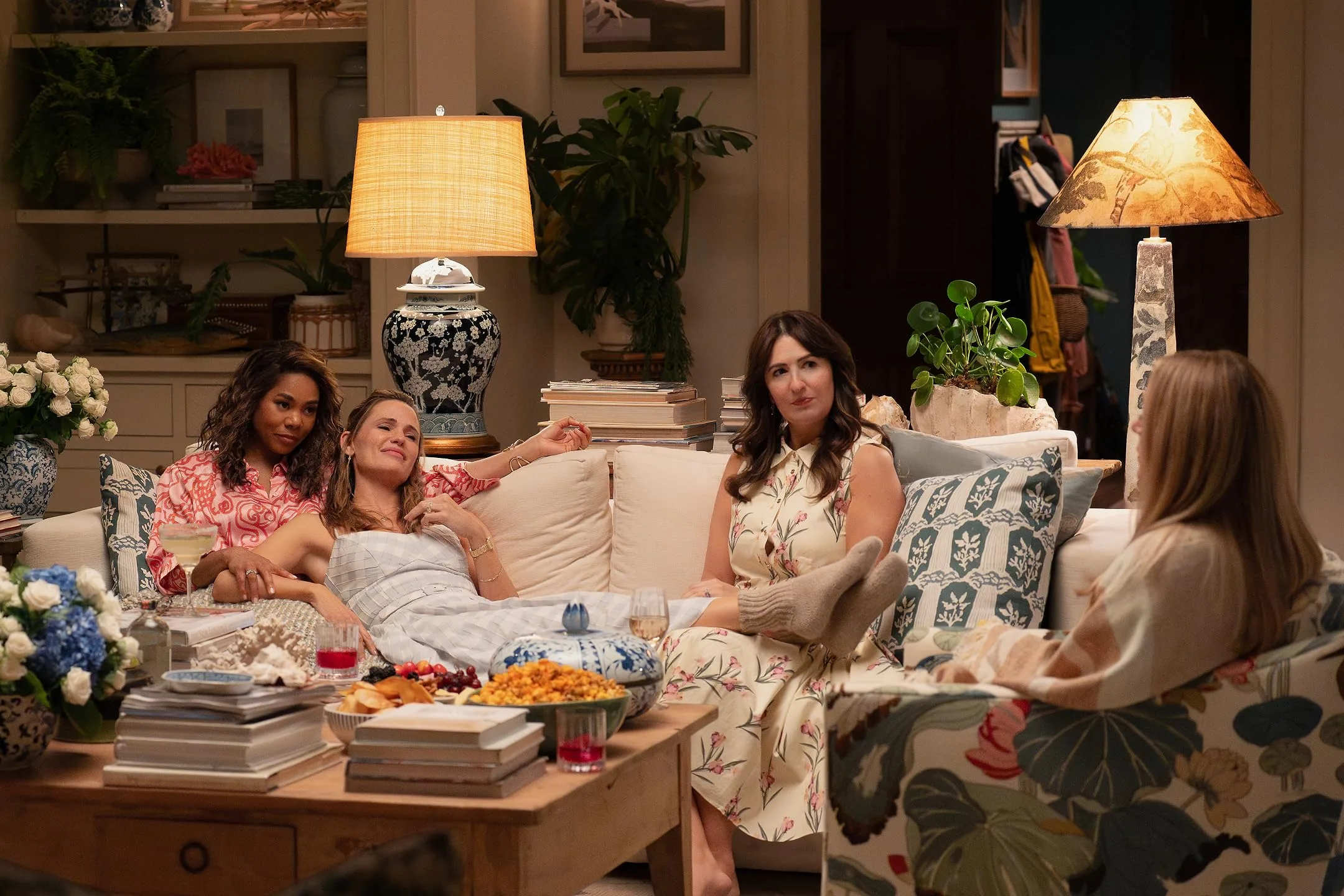
Directors Minkie Spiro and Jennifer Morrison maintain the warmth of the beach-read setting without stripping arguments of intimacy. The camera often lets the five actors occupy a shared space during dinners, drinking games, and the pajama dance party. Their interruptions matter. A glance from Tatum can undermine Hollis before dialogue catches up. Brooke talks into a silence and realizes too late that nobody planned to rescue her.
The spa excursion, aided by weed gummies and Judy Greer’s wonderfully poisonous Electra, shows what the series can do when plot loosens its grip. The actors are allowed to be silly, impaired, irritated, and socially misaligned. Hall and Carden are especially good at finding jokes inside reactions rather than punchlines.
These sequences suggest a version of the series willing to trust five women in a room. Then another subplot arrives.
The Itinerary Gets Crowded
Hollis plans every hour of the weekend because unstructured time terrifies her. The series shares her condition.
Caroline is essential when she confronts her mother. Her separate island romance is less persuasive, drawing attention away from the older women’s sharply differentiated problems. Her developing friendship with Tatum’s daughter Audrey has a funny beginning when the two connect over complaining about their mothers, yet Caroline’s later cruelty complicates the attempted emotional repair.
The material does give Harlow Jane room to show how grief can make a person selfish without making that selfishness admirable. The problem lies in proportion. Every extended detour from Hollis and the four guests spends time the central gathering desperately needs.
Timothy Olyphant’s Jack Finnigan creates another structural distraction. As Hollis’ high-school sweetheart, he represents an earlier life and an imagined route Hollis might have taken before Matthew, motherhood, and her food empire. It is a sensible symbolic role attached to a thin person.
Jack is handsome, kind, available, and still emotionally interested in Hollis. Television has built entire networks from less.
Olyphant brings his natural ease, yet the romance has surprisingly little heat. Jack often feels positioned as proof that Hollis can still possess a romantic future rather than as someone capable of disrupting her present. Her friendships are already forcing her to reconsider every version of herself. The series hardly needs a charming local man standing nearby to underline the point.
Electra presents a similar case of narrative promise exceeding narrative purpose. Judy Greer enters with the energy of a woman capable of destroying a brunch by selecting the correct sentence. Her encounters with Brooke and Hollis hint at a sustained social antagonist. The series uses her intermittently, another plate added to a table already running out of space.
Dru-Ann’s career crisis, Tatum’s health fears, Brooke’s marriage, Gigi’s secret, Caroline’s grief, Jack’s romance, Electra’s interference, and Hollis’ widowhood compete across eight episodes. The constant movement makes the series easy to binge. It also places a ceiling over several emotions. A difficult conversation gathers specificity, then the story remembers someone else has a crisis waiting.
Hollis invited four women because she believed the right arrangement could produce healing. The Five-Star Weekend keeps arranging, too. Its finest scenes are the ones where the itinerary fails, dinner stretches too long, resentment escapes, and five women finally stop behaving like the people Hollis invited them to be.
The television miniseries The Five-Star Weekend premieres on July 9, 2026, and will be available to stream exclusively on Peacock. Based on the bestselling 2023 novel by Elin Hilderbrand, the drama follows a popular food influencer and cookbook author who attempts to navigate immense grief after the sudden loss of her husband. To heal, she orchestrates a luxurious, emotionally charged getaway at her Nantucket home with a group of close friends curated from different chapters of her life.
Where to Watch The Five-Star Weekend Online





Full Credits
Title: The Five-Star Weekend
Distributor: Peacock
Release date: July 9, 2026
Rating: TV-MA
Running time: 8 episodes (approx. 45–60 minutes per episode)
Director: Minkie Spiro, Jennifer Morrison
Writers: Bekah Brunstetter, Beth Schacter, Fernanda Coppel, Mackenzie Yeager, Vivian Barnes, Aja Gabel, Bixby Elliot, Isabella A. Rodriguez
Producers and Executive Producers: Bekah Brunstetter, Jennifer Garner, Beth Schacter, Sue Naegle, Ali Krug, Elin Hilderbrand, Minkie Spiro, Merri Howard, Jennifer Morrison
Cast: Jennifer Garner, Chloë Sevigny, Regina Hall, Gemma Chan, D’Arcy Carden, Harlow Jane, Timothy Olyphant, Josh Hamilton, David Denman, Judy Greer, West Duchovny, Rob Huebel, Tory Devon Smith, Henry Eikenberry, Roberta Colindrez
- Composer: Jake Staley
The Review
The Five-Star Weekend
The Five-Star Weekend understands the cultural seduction of curated womanhood: perfect kitchens, disciplined grief, and friendships expected to heal what public performance cannot. Jennifer Garner gives Hollis' composure visible strain, while D'Arcy Carden and Regina Hall find richer human contradictions in material that keeps threatening to become lifestyle television. The crowded subplots dilute those tensions, especially whenever Jack or Caroline pulls the series away from its central gathering. Still, five women sharing food, resentment, and history prove far harder to resist than the show's polished surface suggests.
PROS
- Strong female ensemble chemistry
- Garner's controlled grief performance
- Carden's rewarding character arc
- Specific Nantucket atmosphere
- Food used as character behavior
CONS
- Overcrowded subplot structure
- Thin Jack romance
- Uneven Caroline material
- Gigi's pulpy tonal shift