


















Faith can survive the person who taught it to you. It can survive rejection, humiliation, distance, even the discovery that obedience had been mistaken for love. Jude Chehab’s Q lives in that terrible afterlife.
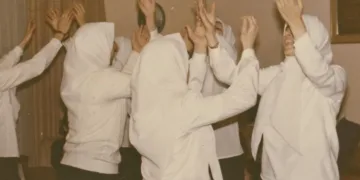
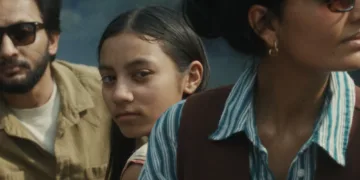
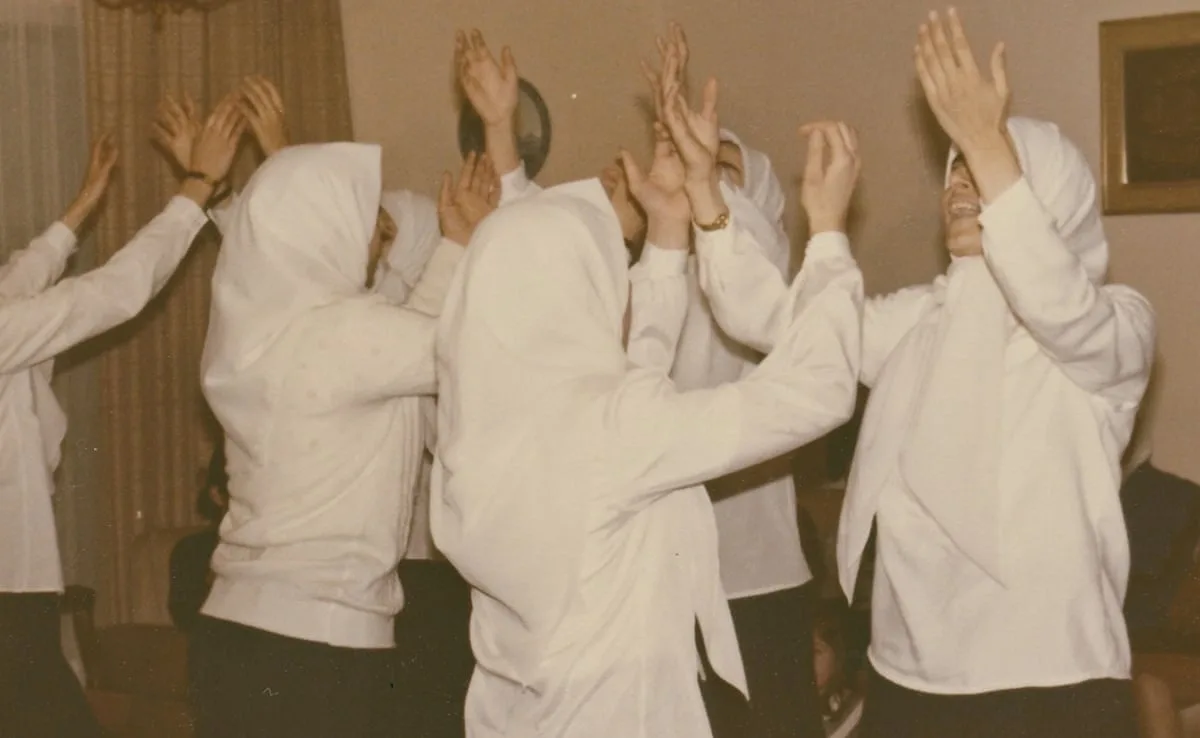
Chehab’s feature documentary debut returns to her family’s connection with al-Qubaysiat, a secretive all-female Muslim religious order active in Lebanon and Syria. Her mother, Hiba, spent decades devoted to the group’s leader, the Anisa, or Teacher. Her grandmother Doria also belonged. Chehab herself was initiated as a girl. Three generations entered the same spiritual architecture, though each now stands in a different room.
Hiba is the film’s wounded axis. Expelled for transgressions that remain unclear, she speaks as someone abandoned by the authority around which she arranged her inner life. Q does not chase scandal. It watches what happens when certainty is removed and the person beneath it is still standing, barely.
When Belonging Becomes Submission
Hiba’s poems and letters to the Anisa carry the weight of love letters, and Chehab lets her read them without an explanatory voice telling us how to feel. The words are enough. So is Hiba’s face.
Details of the order arrive gradually. Followers might pray for extraordinary stretches of time. Hiba recalls being steered away from medical school and toward complete dedication to the movement. “Their dreams become your dreams,” she says. The sentence is simple, almost gentle. Its horror arrives late.
Control rarely announces itself as control to the person inside it. It can feel like purpose, clarity, being seen for the first time. Doria remembers acceptance, companionship, poetry, Quran recitation, laughter, and collective joy. Hiba remembers these things too. The damage did not erase the happiness that made the system persuasive. Then came expulsion.
Hiba’s grief after the Anisa’s death is among the film’s hardest moments because it refuses psychological neatness. She knows she was hurt. She also mourns. Chehab does not force those feelings to fight until one wins. There is no ceremonial liberation, no sudden speech in which the former follower becomes a perfectly lucid witness against her past. Hiba remains attached to the person who wounded her. Some wounds keep the shape of the knife.
Secrets Without an Interrogation Lamp
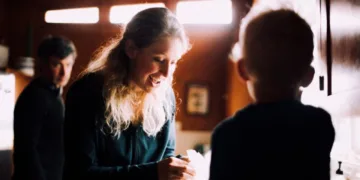
Chehab films her family from within its daily rhythms. Conversations unfold in rooms that feel lived in rather than prepared for testimony. The close-ups are tight, yet the camera seldom behaves like an intruder. Hiba teaches the Quran. A question is asked, paused over, partly answered. The film listens to hesitation with unusual patience.
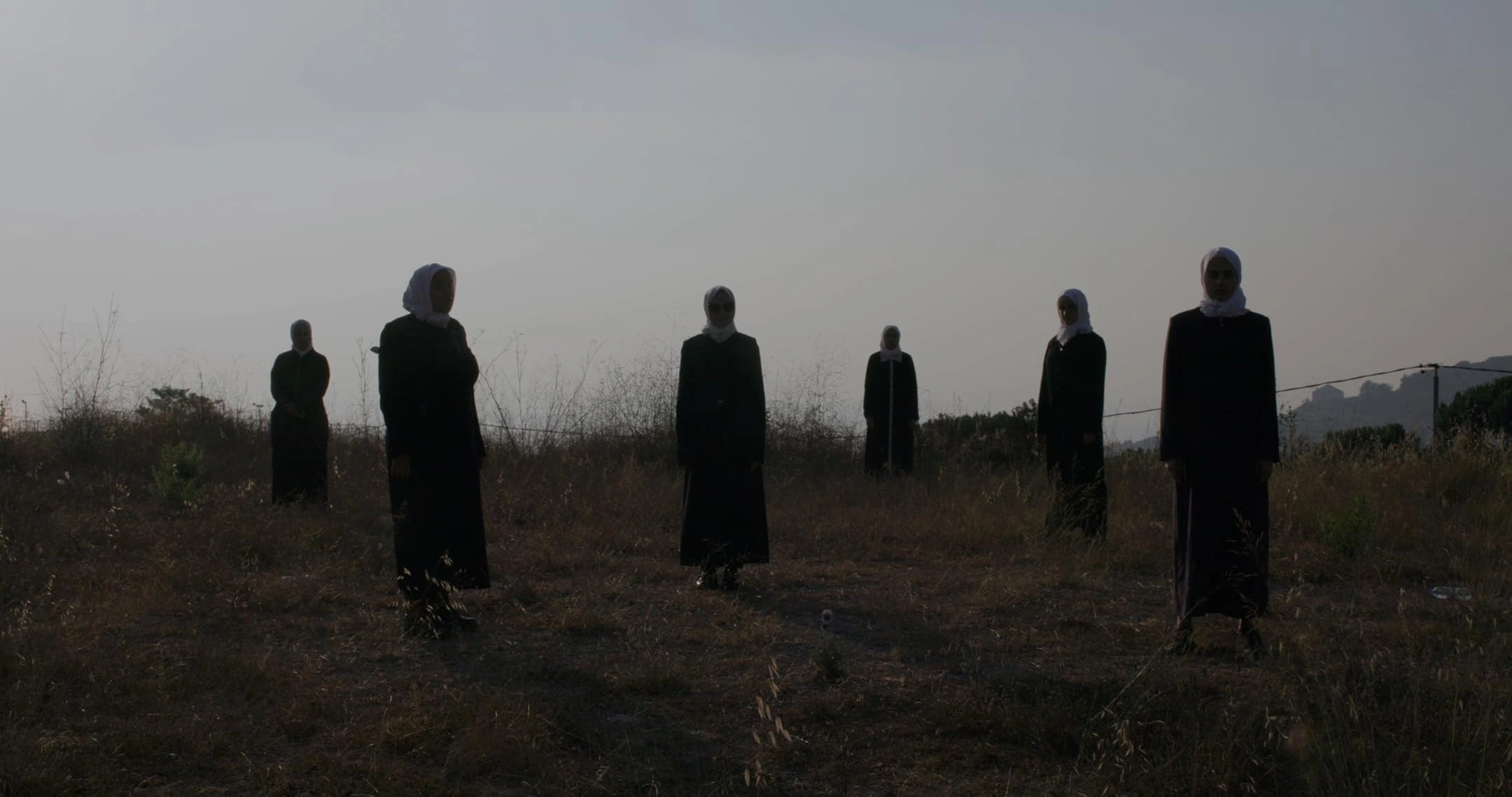
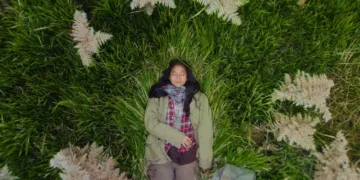
Its nonlinear editing moves among archival footage, poems, childhood material, present-day conversations, and abstract images of Muslim women on grassy hills. William Ryan Fritch’s score drifts through these passages with melancholy, while warm, airy images preserve the seduction of belonging.
A colder documentary might have recut Hiba’s memories as evidence in a case already decided. Chehab leaves beauty inside them. The visual softness becomes painful because we understand why anyone would want to stay.
The secrecy surrounding al-Qubaysiat also creates the film’s main weakness. Hiba and Doria offer fragments rather than a coherent account of the organisation, and Q occasionally circles a locked door without deciding what to do next. The family wound is intimate. The institution that produced it remains foggy.
The absence of a fully visible villain shifts attention toward consequence. The Anisa is powerful because so much of her presence survives in other people’s behavior, memories, and silences. She becomes almost theological: everywhere in the room, nowhere in the frame.
What Remains After Blind Faith
Chehab’s father, Ziad, complicates the film because he refuses to become the angry husband the documentary might have found easier to organise around. Hiba once delayed plane tickets to Syria so she could remain close to the Anisa. The Teacher later cut her off after Hiba moved to the United States.
Ziad receives these revelations with visible hurt, yet tenderness keeps interrupting resentment. Their roughly 30-year marriage contains scars left by a devotion that sometimes placed another authority above him. His love for Hiba has survived this knowledge. Survival is not the same as repair.
Chehab sometimes seems to press her father toward a harsher judgment and receives something messier. The camera becomes a tool of family therapy, except families rarely follow scripts, and therapy rarely produces the clean sentence a filmmaker may be hoping for. She can ask. She cannot dictate what memory must mean to someone else.
The film finds its clearest image of Hiba’s changing relationship with faith when she leads Muslim study groups of her own. She asks students to approach scripture with curiosity and understanding rather than blind obedience. The distinction is small in wording and enormous in consequence.
Chehab never frames Islam, the veil, or female religious community as the source of Hiba’s suffering. Her subject is the surrender of interpretive power, the moment when another person’s voice becomes louder than one’s own conscience. Hiba still believes. She still teaches. What has changed is the direction of the question. For years, faith reached her through the Teacher. Now Hiba speaks, pauses, and leaves room for others to think. The silence after a question sounds different when no one is waiting to punish the answer.
The award-winning international documentary Q made its official world premiere at the Tribeca Film Festival on June 9, 2023, before securing major prizes on the global festival circuit and moving to streaming platforms. Audiences can watch the film online through the MUBI streaming platform or via PBS’s POV documentary broadcasting service on demand. The intimate, multigenerational narrative tracks a filmmaker as she chronicles the profound, decades-long influence that a secretive matriarchal Muslim religious order in Lebanon exerted over her grandmother, her mother, and herself.
Where to Watch Q (2023) Online
Full Credits
Title: Q
Distributor: POV, Tribeca Film Festival, Sheffield DocFest, MUBI
Release date: June 9, 2023
Running time: 91 minutes
Director: Jude Chehab
Writers: Jude Chehab
Producers and Executive Producers: Jude Chehab, Fahd Ahmed, Rita Baghdadi, Tom Drew
Cast: Hiba Khodr, Doria Mouneimne, Jude Chehab, Chehab Family Members
Director of Photography (Cinematographer): Jude Chehab
Editors: Fahd Ahmed
Composer: William Ryan Fritch
The Review
Q
Q understands that leaving a system of devotion does not mean the system leaves you. Jude Chehab watches Hiba carry love, grief, resentment, and faith in the same wounded body, while the camera stays close enough to catch every contradiction. The secrecy around al-Qubaysiat occasionally leaves the film floating without firm ground, yet this uncertainty suits a story about lives shaped by answers that were once forbidden. Hiba teaching others to question scripture is quiet, almost ordinary. After everything, it feels seismic.
PROS
- Intimate family cinematography
- Hiba's complex emotional portrait
- Patient nonlinear editing
- Sensitive treatment of Muslim faith
- Haunting score
CONS
- Group details remain frustratingly vague
- Secrecy sometimes weakens narrative direction
- Abstract imagery can feel detached