




























The first parcel feels good in your hands. You check its destination, press on the correct stamp, place it on the scale, and hear the soft response of a job completed properly. Cat Mail Co. understands the pleasure hidden inside small acts of order. Maracas Studio turns a cat-run post office into a first-person management game built around sorting, weighing, scanning, storing, and shipping mail across Cat Island.
The previous postmaster has left shelves and back rooms buried under unsorted deliveries. Your role is simple: serve customers, prepare outgoing parcels, recover requested packages, and handle the boat arriving between day and night shifts.
The mess gives every early action a visible purpose. Each cleared pile makes the building feel closer to becoming yours. That feeling carries the opening hours. Trouble begins when the post office fills faster than your sense of progress can keep up.
Stamp, Scan, Stack, Repeat
Processing a package has a pleasant rhythm. You read the destination, attach the location stamp, weigh the box, and add enough postage for its size. The scanner later reveals special requirements. Some parcels are fragile or heavy. Others need cold, heat, light, or darkness. Heavy boxes can crush whatever sits beneath them on the boat, while fragile deliveries need space above them.
These rules create the game’s best moments. A crowded loading deck becomes a small spatial problem, and arranging it correctly produces quiet satisfaction. The first-person view helps. Boxes are objects you lift, rotate, carry, and place, so the work feels tactile rather than abstract.
Customer collection requests introduce a different puzzle. A visitor may offer a surname initial, a family relationship, or a vague description of the wrapping. Early on, scanning a few shelves for the matching parcel feels playful. Once the warehouse holds dozens of similar boxes, the search becomes exhausting. Some names fail to match the dialogue, and missing information can turn a short errand into several minutes of guesswork.
You can decline a request without serious consequence, removing much of the pressure. The repair room has a similar problem. Damaged parcels exist, yet the game explains the process poorly and rarely makes damage matter. A mechanic that should inspire care becomes another box left for later.
Linked packages, identified with a special lamp and heart stickers, provide a welcome change. They ask you to notice relationships between objects, though the familiar cycle soon takes over again.
Building Order Without a Rulebook
The warehouse is where Cat Mail Co. feels most personal. No shelf comes with a prescribed purpose. You can organize mail by destination, name, size, weight, storage type, or any private logic that makes sense. A neat row of outgoing parcels can feel like a tiny victory because the system belongs to you.
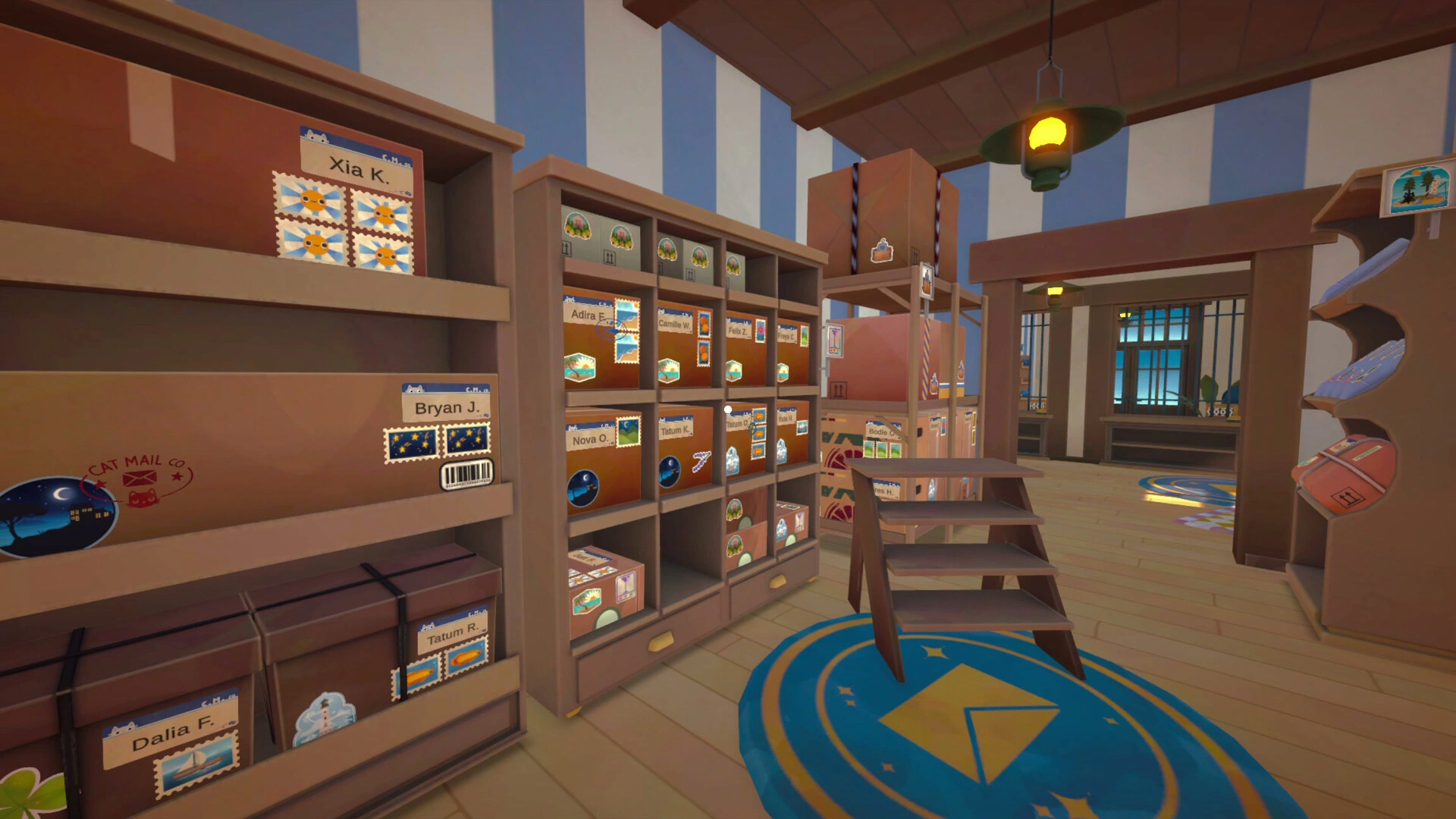
That freedom can also feel invisible. The game does not measure the quality of your layout. A carefully planned warehouse earns little beyond convenience, while a chaotic pile remains mechanically acceptable. The reward comes from your need to see disorder become legible.
Progression introduces new routes, tools, scanners, and climate-controlled rooms. The pace keeps the opening manageable, yet the unlock structure is unclear. Points accumulate without showing what threshold will open the next room or repair the next device. “Make the number rise” is a weak emotional hook when the player cannot see what the number is pulling toward.
The boat creates a larger problem. It may unload many new parcels while accepting only a few outgoing deliveries for its current destinations. Shelves fill, floors disappear beneath boxes, and an early sorting plan becomes harder to repair. The postmaster’s abandoned clutter begins as a mystery and a challenge. Later, the player risks recreating the same disaster through no clear failure of their own.
Cozy Work With No Deadline
Nothing rushes you. Customers wait. The boat waits. Shifts move forward after tasks are completed, and mistakes cause small deductions or returned parcels rather than lasting damage. This calm gives the game an inviting softness. The music stays gentle, the office hums quietly, stamps land with a satisfying thud, and scattered cat toys give the building warmth.
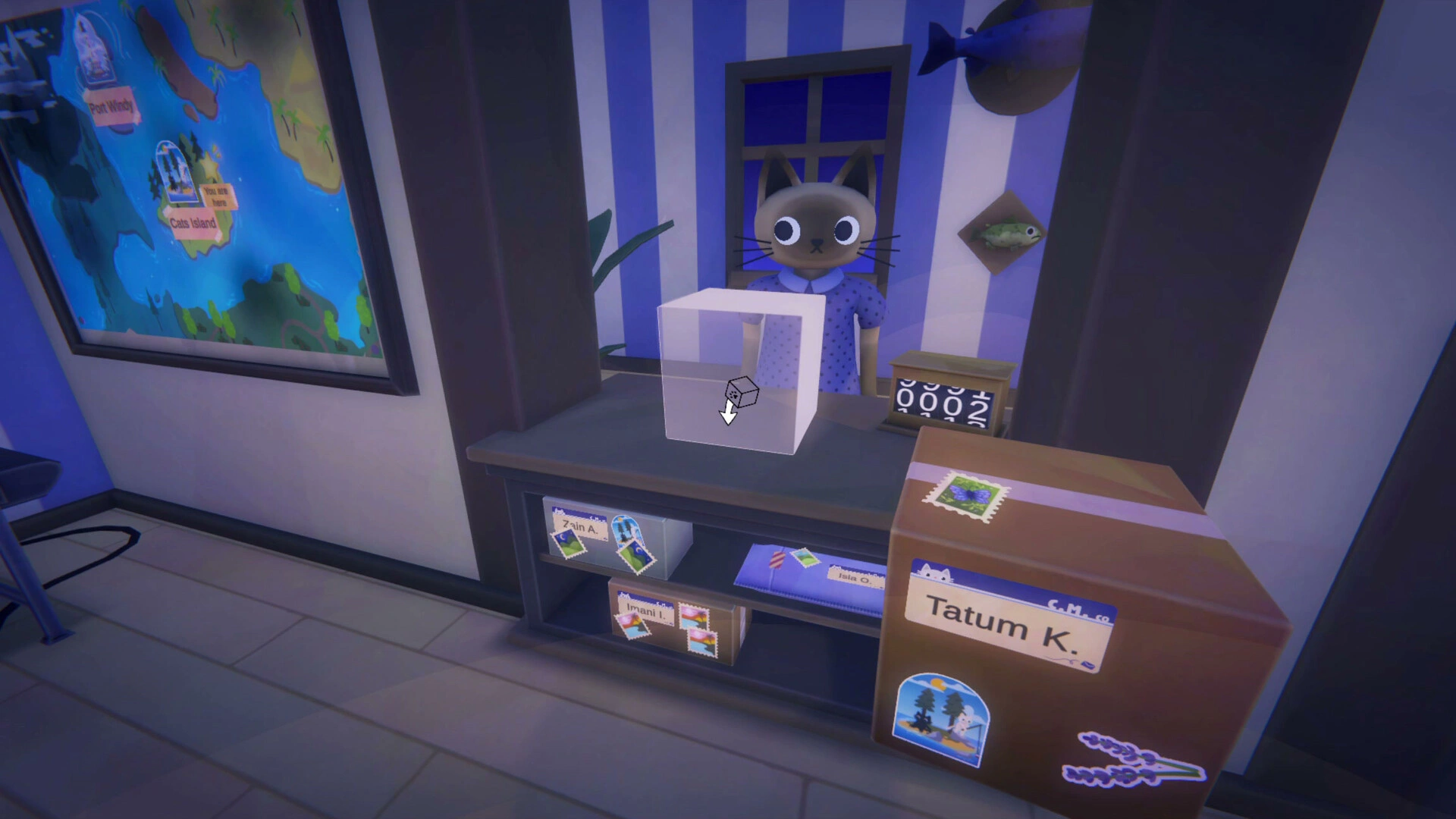
Yet relaxation needs variation. Without deadlines or meaningful consequences, each shift asks for the same emotional response. Retrieve a parcel. Stamp a box. Scan it. Carry it to storage. Unload the boat. Reload the boat. The routine can soothe, but it rarely surprises.
Busier shifts, equipment failures, delivery windows, impatient customers, or destination-specific events could have changed the mood without turning the game harsh. Cat Island looks ready to support stories, yet repeated dialogue and thin customer personalities keep interactions transactional. The cats are charming designs waiting for sharper writing.
Co-op may provide the missing energy. Four players can split customer service, stamping, weighing, sorting, and dock work into a shared production line. Good coordination could make the post office sing. Conflicting filing systems could produce cheerful disaster. Either outcome creates a social feeling the solo loop struggles to sustain.
Cat Mail Co. is happiest when a shelf finally looks right and your hands already know which tool comes next. The question is how long that satisfaction survives once the boxes stop feeling like mail and start feeling like inventory.
The Review
Cat Mail Co.
Cat Mail Co. finds genuine comfort in the weight of a parcel, the thump of a stamp, and the quiet satisfaction of turning crowded shelves into a system that makes sense. That calm survives longer when organization itself feels rewarding to you. Weak penalties, vague customer clues, uneven tutorials, and an endless buildup of boxes gradually drain purpose from the routine. Its cat-run post office remains warm and pleasant, yet the work rarely develops enough to sustain that first spark of satisfaction.
PROS
- Satisfying hands-on parcel handling
- Flexible warehouse organization
- Warm visual and audio design
- Relaxed, pressure-free pacing
- Promising cooperative task division
CONS
- Repetitive shift structure
- Mail quickly overwhelms storage
- Poorly explained mechanics
- Frustrating customer clues
- Little consequence for mistakes