



























Judith Burton can clear a room with a handgun, yet the prospect of Debbie Claybourne walking away leaves her visibly helpless. That imbalance gives Ride or Die its best material. Prime Video’s eight-episode action comedy has secret agencies, stolen mob money, Interpol pursuit, old vendettas, and enough armed professionals to make airport security feel understaffed. Its real tension sits between two women who have spent twenty years calling each other family.
Debbie Claybourne is a former lawyer living in London with her politician husband, David. Judith, her closest friend, appears to be a forensic accountant who joins family dinners, antique trips, and book clubs. The fiction collapses when Judith’s assignment intersects with David’s political world. Debbie learns that Judith is Whiptail, an assassin employed by a clandestine organization, while David has stolen millions from criminals who expect his wife to cover the bill.
Creator Tessa Coates and showrunner Matt Miller wrap that betrayal in a European chase story. The conspiracy is familiar, but Hannah Waddingham and Octavia Spencer give the friendship enough specificity to keep the series from becoming anonymous streaming pulp. The bullets are plentiful. The silence after Debbie learns the truth does greater damage.
Best Friends, Worst Disclosure
The early domestic scenes earn the relationship before the plot starts testing it. Judith knows the rhythms of Debbie’s house, speaks to the children like an aunt, and slides into meals without the formality of a guest. Waddingham and Spencer share loose timing. One finishes a thought while the other is already reacting, the conversational equivalent of passing a baton without looking.
That ease makes Judith’s confession feel less like a twist than a contamination. Debbie must reconsider every ordinary memory attached to the false identity. Book club becomes cover maintenance. Holidays become possible operational gaps. A forensic accountant who happened to understand weapons now looks, in hindsight, like a warning everyone politely ignored.
Spencer plays the first wave of betrayal through short glances and held pauses. Debbie’s anger grows from humiliation. She defended Judith, welcomed her into the family, and trusted her near the children. The script returns to partial truths too often, yet Spencer keeps changing the emotional temperature. One confrontation carries fury, the next embarrassment, then grief over the possibility that the friendship meant something different to each woman.
Waddingham works from the opposite direction. Judith is physically assured in danger and emotionally clumsy in conversation. She can identify an exit, disarm an attacker, and shoot under pressure. Asked why she lied for twenty years, she folds into pleading. Her joke that paid killing makes her an assassin rather than a serial killer captures the comic method, a moral crisis delivered with the rhythm of a drinks order.
A flashback to 2001 gives their bond a starting point. The middle episodes repeat the cycle of accusation, confession, and fresh discovery, but affection keeps appearing in the margins. Judith shields Debbie before thinking. Debbie insults Judith with the fluency reserved for someone she expects to forgive eventually. Twenty years can survive a secret. The eighth version of the same argument has a tougher assignment.
Two Women, Two Fight Styles
Peyton Reed directs the first two episodes around a clean contrast. Judith’s opening mission has the polished control of a spy fantasy. Her movements are economical, her clothing immaculate, her decisions made before opponents realize a decision is required. Minutes later, she is back inside Debbie’s domestic life, where the greatest threat appears to be social awkwardness. The cut supplies the joke without announcing it.
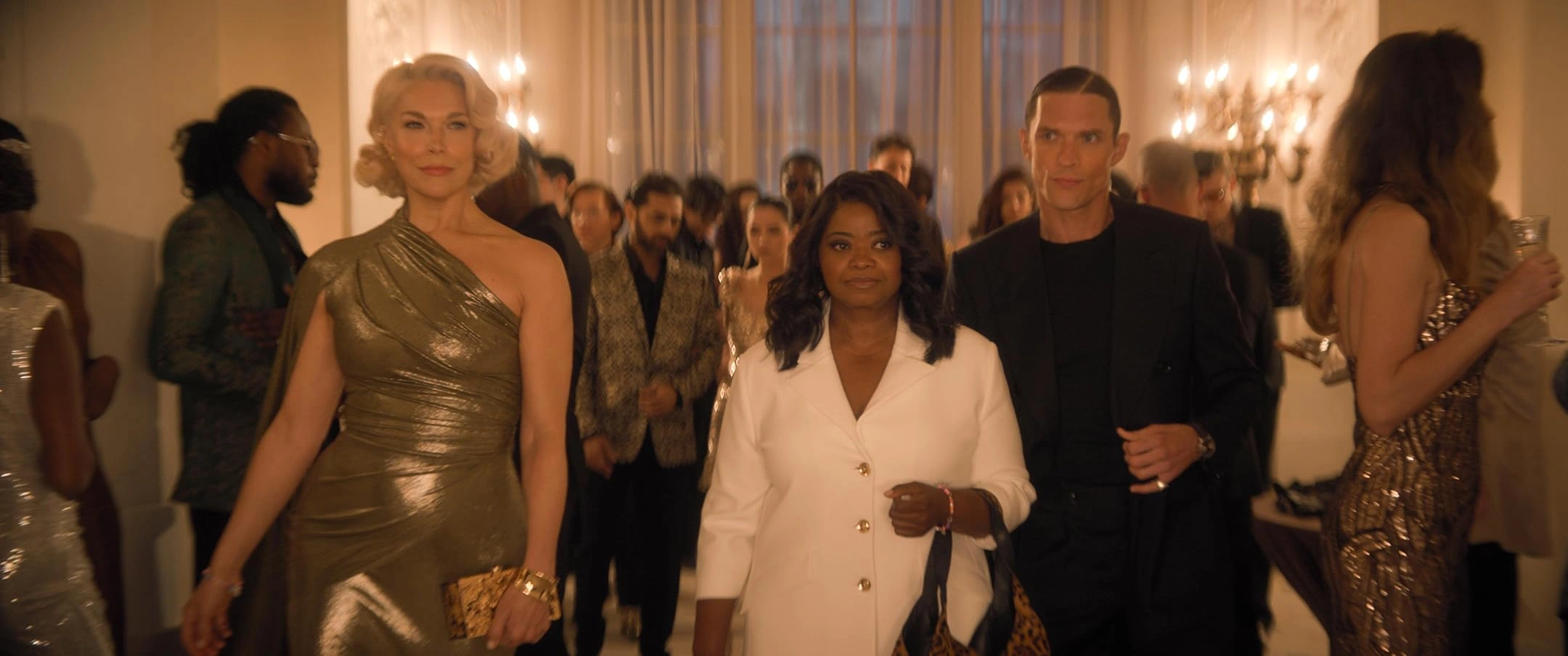
The action stays readable because Judith and Debbie never move through danger in the same way. Judith anticipates angles, handles weapons efficiently, and treats each room as a map of threats. Debbie ducks late, grabs whatever is nearby, and survives through observation or nerve. Her legal mind, social intelligence, and habit of being underestimated become her tools.
That distinction pays off during gunfire in moving vehicles, fights inside ornate buildings, and escapes conducted in formal clothes chosen for a different evening. Judith creates space. Debbie searches for it. When they leap from a moving train with assassins closing in, the stunt expresses their relationship: Judith commits first, while Debbie’s trust arrives half a second later and screaming.
Waddingham sells the role through posture before the choreography asks for impact. Judith enters rooms as if she already knows where everyone will fall. Her sleek black and gold outfits support that control, while Debbie’s coordinated blazers and dresses reflect a public life built around her husband’s career. Those polished surfaces deteriorate as both women lose command of their identities. Nothing says personal collapse like expensive clothing becoming deeply impractical.
Later directors DeMane Davis, Allison Liddi-Brown, and Lauren Wolkstein preserve the pace. Logic takes several holidays. Characters survive attacks that appear final, killers repeatedly lose visible targets, and useful coincidences arrive with timing. The show survives those leaps when a set piece changes the relationship. When it merely changes the country, the passport gets the character development.
The Conspiracy Needs a Seating Plan
Ride or Die assembles nearly every object in the modern spy-thriller cupboard. Judith serves a secret organization. David has stolen criminal money. Interpol pursues the fugitives. An old ally carries hidden motives. A figure from Judith’s past wants revenge. The Director knows far too much, which is less a twist than part of his job description.
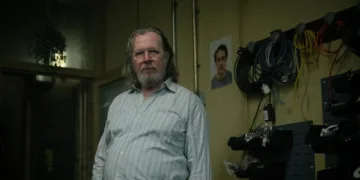
Bill Nighy plays the Director with minimal movement and dry authority. He gives orders to the nervous Sam as if arranging a mildly inconvenient lunch. That calm makes the organization’s history uglier. The Director recruited vulnerable girls, stripped away ordinary attachments, and trained them to kill. Judith’s friendship with Debbie becomes an escape from that system, while Judith continues taking its assignments.
The supporting network offers stronger material than the criminals chasing Debbie. Sam’s uncertainty gives Calam Lynch room to make obedience look exhausting. Amanda supplies equipment, while her daughter Queenie handles forged documents with enough confidence to suggest another series happening just outside the frame. Their family tension receives texture the Albanian mob never gets.
Ed Skrein’s Billy Donovan enters as Judith’s target, then shifts through suspect, ally, romantic possibility, and professional nuisance. Skrein and Waddingham give their exchanges a playful edge without confusing flirtation for the central relationship. Billy works because his loyalties remain slippery while his charm stays consistent. He may betray everyone, but he will probably enjoy the administrative challenge.
Sylvia Hoeks gives Ana a sharper purpose. Ana emerged from the same machinery that produced Judith, yet she treats attachment as ownership and pain as permission. Her revenge can feel inflated when one grievance must support an international bloodbath. Hoeks counters that excess with unnerving stillness. Ana watches Judith’s bond with Debbie as proof that another life was possible, then tries to destroy it for existing.
By the midpoint, the series is servicing Interpol, the mob, David’s ambitions, Billy’s secrets, Queenie’s family, the Director’s agency, and Ana’s campaign. The final episode and a half tighten the machinery by forcing hidden motives into direct conflict. Before that, several red herrings receive better travel arrangements than actual characters.
No One Stays in the Passenger Seat
Debbie’s progression gives the season shape when the conspiracy loses it. She begins as a former lawyer whose intelligence has been redirected into supporting David’s career and performing the calm expected of a politician’s wife. David’s theft exposes his criminality, along with his low estimate of her judgment. He has treated competence as a household resource.
Spencer refuses to play Debbie as comic cargo. Her panic during the first attacks is credible, yet she keeps noticing what trained operatives overlook. She reads motives, identifies weak points in a story, and understands how powerful people disguise self-interest as procedure. Each escape gives her another chance to use abilities domestic life had pushed aside.
The change does not turn Debbie into Judith’s duplicate. She does not suddenly win hand-to-hand fights through determination. She becomes harder to manipulate. Her attraction to Interpol officer Jacques offers a glimpse of freedom beyond David, though the decisive relationship remains her friendship with Judith.
Judith has the inverse problem. She possesses money, mobility, lethal skill, and professional autonomy, yet she cannot tolerate emotional uncertainty. Debbie’s anger frightens her in a way armed opponents do not. Billy can offer flirtation and an understanding of the assassin’s life, but he cannot replace the ordinary belonging Judith found inside Debbie’s family.
Their friendship carries the language of a love story without becoming romantic. It has jealousy, betrayal, loyalty, shared history, reckless sacrifice, and the terror of being known badly by the person who knows you best. Television has spent years giving male antiheroes endless room to age badly. Letting two women in their fifties be ridiculous, dangerous, needy, and furious should not feel novel. Television has been strangely busy.
The premise still has the clean shape of a feature caper stretched across eight episodes. Several middle chapters restart the same movement: Judith withholds information, Debbie discovers the omission, they argue, and an attack postpones the emotional bill. A shorter run could have removed one criminal faction and compressed the repeated confrontations.
The final stretch improves once the story stops collecting possibilities and starts choosing among them. Billy, Ana, the Director, Interpol, and Debbie’s family crisis begin affecting one another instead of occupying parallel lanes. A late surprise and the closing cliffhanger leave the friendship damaged but active, with another crisis ready to test secrecy against trust. Ride or Die has too much plot and exactly the right pair to complain about it while jumping from a train.
The action-comedy television series Ride or Die premieres globally on Amazon Prime Video on July 15, 2026. The story follows two lifelong best friends, Debbie and Judith, whose lives are thrown into absolute chaos when Debbie suddenly discovers that Judith is secretly a highly trained international assassin. After a critical hit goes disastrously wrong, the duo is forced to go on a high-stakes run across Europe to escape dangerous criminals and law enforcement.
Where to Watch Ride or Die Online



Full Credits
Title: Ride or Die
Distributor: Amazon Prime Video
Release date: July 15, 2026
Rating: TV-MA
Running time: 45 to 60 minutes per episode
Director: Peyton Reed, DeMane Davis, Allison Liddi-Brown, Lauren Wolkstein
Writers: Tessa Coates, Matt Miller, Katherine Kearns, Liz Friedman, Laura Jacqmin, Alison Barton, Bonnie Dennison
Producers and Executive Producers: Octavia Spencer, Hannah Waddingham, Tessa Coates, Matt Miller, Peyton Reed, Andy Muschietti, Barbara Muschietti, Irene Yeung, Ben Spencer, Brian Clisham, Stephanie Kluft
Cast: Octavia Spencer, Hannah Waddingham, Bill Nighy, Ed Skrein, Sylvia Hoeks, Calam Lynch, Savannah Steyn, Jamie Parker, Jacky Ido, Kathryn Drysdale, Adnan Haskovic, Laura Baranik, Thiago Braga de Oliveira, Youssef Kerkour, Marco Leonardi
Director of Photography (Cinematographer): David Luther
Editors: Roderick Deogrades
Composer: Photek
The Review
Ride or Die
Ride or Die spends eight episodes proving that chemistry can outrun plotting, at least until the red herrings catch up. Hannah Waddingham sells Judith’s lethal precision, Octavia Spencer turns Debbie’s hurt into the sharper weapon, and their rapport gives every chase a pulse. The conspiracy grows cluttered, the middle repeats itself, and several twists arrive wearing name tags. Still, the character-specific fights, Bill Nighy’s dry menace, and the central friendship keep the caper alive. The season could lose an episode. The duo could carry three more.
PROS
- Spencer and Waddingham’s chemistry
- Character-specific action choreography
- Debbie’s convincing emotional arc
- Waddingham’s action-star presence
- Bill Nighy’s dry menace
CONS
- Predictable conspiracy plotting
- Repetitive middle episodes
- Too many competing subplots
- Thin criminal antagonists
- Feature premise stretched too far