





























A perfect swing arrives too cheaply in this revival. The batting aid marks the ball’s exact destination inside the strike zone, so moving the reticle and connecting becomes routine after a few innings. Older entries, especially the 1997 original, gave players a wider landing area and forced them to judge the final path themselves. Misses were common, yet a clean hit felt earned. Here, Pablo Sanchez, Keisha Phillips, or any strong batter can turn a season into a sequence of home-run animations.
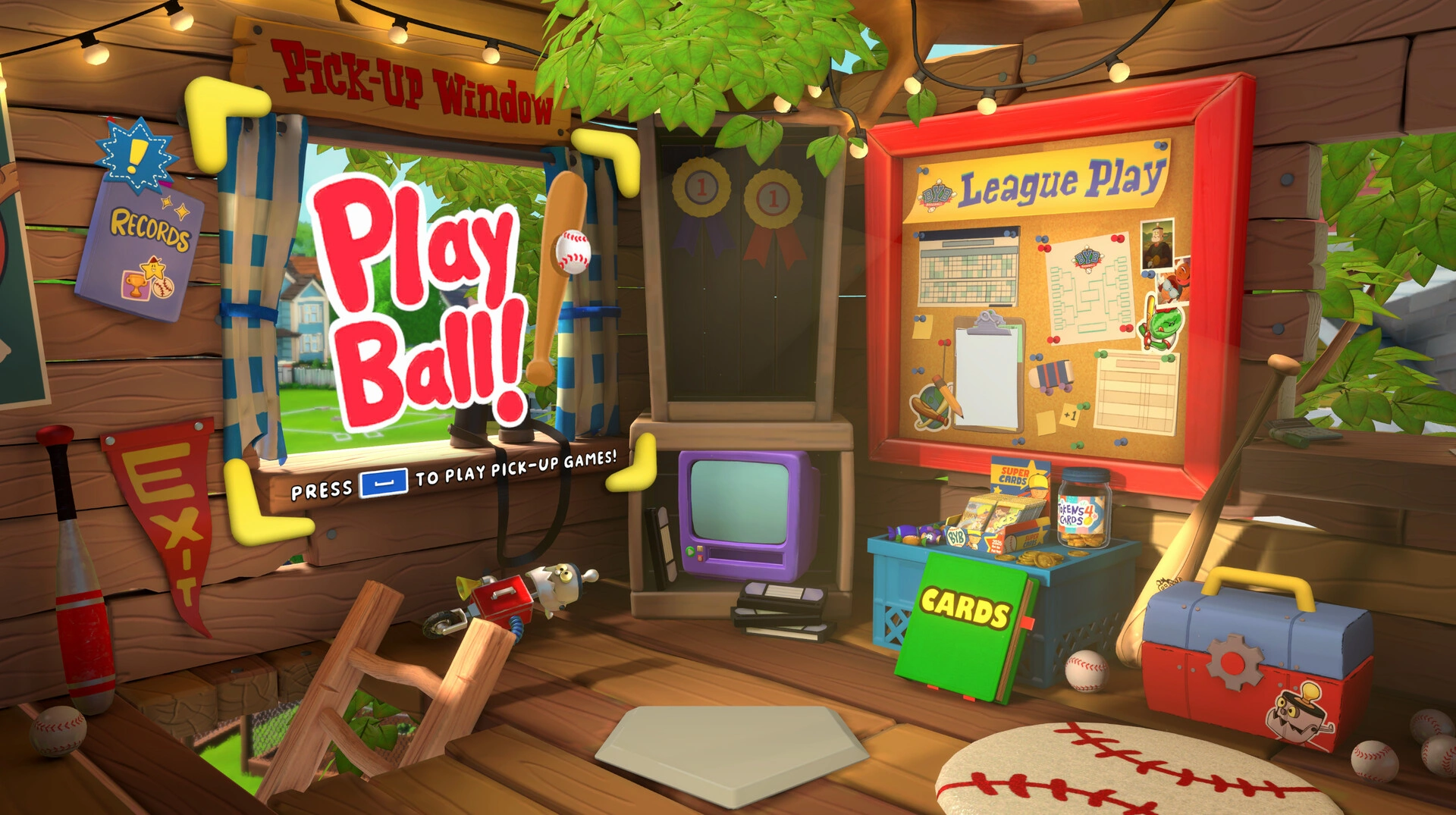
Mega Cat Studios and Playground Productions have rebuilt the neighborhood in full 3D, bringing back all 30 original kids with personalized stances, celebrations, and walk-up routines. The intent is clear. This is still a children’s arcade game, not a rival to MLB The Show or Super Mega Baseball 4. Accessibility belongs in this series. The problem is that the new assistance removes the small amount of uncertainty that once gave its simple baseball shape.
Turning the marker off does not solve the issue. Breaking pitches become difficult to read, creating two extremes: easy contact with the guide, or guesswork without it. Backyard Legend raises pitch speed, but mouse control on PC can erase much of that pressure.
Pitching Past the Competition
Pitching initially suggests a better modernization. Each throw asks for a pitch type, target, and timed release, while player ratings still decide which options are sensible. Asking a fastball specialist to bend a curve toward the corner can end with the ball drifting into a hitter’s preferred zone. That connection between roster knowledge and execution fits the franchise.
The ceiling arrives quickly. Once the release timing settles into muscle memory, ordinary pitchers begin producing shutouts and lopsided victories. Scores such as 26–0 or 19–3 expose how little the computer changes its approach after repeated failures. Earlier Backyard games could be simple, but their uncertainty kept seasons moving. This edition often reveals the result well before the final inning.
The lack of a mercy rule makes those failures harder to ignore. A fourth-inning double-digit lead still demands that every remaining out be recorded, so the player may start deliberately grounding into defenders just to finish. League Play is designed as the main attraction, with adjustable season lengths, playoffs, team statistics, and drafted rosters. Its structure promises a long relationship with one squad. The match balance struggles to support that commitment.
Defense Without a Highlight Reel
Fielding is where the reboot falls furthest behind its predecessors. The game chooses the defender under direct control, leaving the player to push a sluggish child toward a line drive that may already be rolling past. Outfield throws float toward the infield, infielders hesitate before routine relays, and would-be double plays dissolve into extra bases.
The older 1997, 2001, and 2003 versions gave defense a sharper sense of agency. A strong throw from right field could still beat a runner to first. This game lets baserunners sprint and slide on command, yet defenders have no comparable burst when chasing a shallow fly ball. Offense produces the spectacle. Defense handles the paperwork.
Errors and awkward collisions can be funny once. Across a full season, delayed reactions and weak throws make good pitching feel disconnected from its reward. Local multiplayer can create stronger competition because another player may exploit the same systems with greater imagination. Online head-to-head play was absent at launch, leaving Home Run Derby leaderboards as the main competitive connection outside the room.
Repeated entrances and commentary sequences create another drag. Each batter has a tailored animation, and the announcers frame every match with the energy of a televised event. After several innings, holding a button to skip the same presentation becomes part of the control scheme.
The Roster Remembers
Team selection still carries the old pleasure. League and Pick-Up modes let both sides draft from the familiar cast, encouraging lineups built around speed, power, pitching, or personal favorites. Pete Wheeler can pressure the bases, Jocinda Smith can anchor an order, and Pablo remains the obvious all-purpose threat. Auto-fill keeps quick matches accessible for players who do not want to compare every rating.
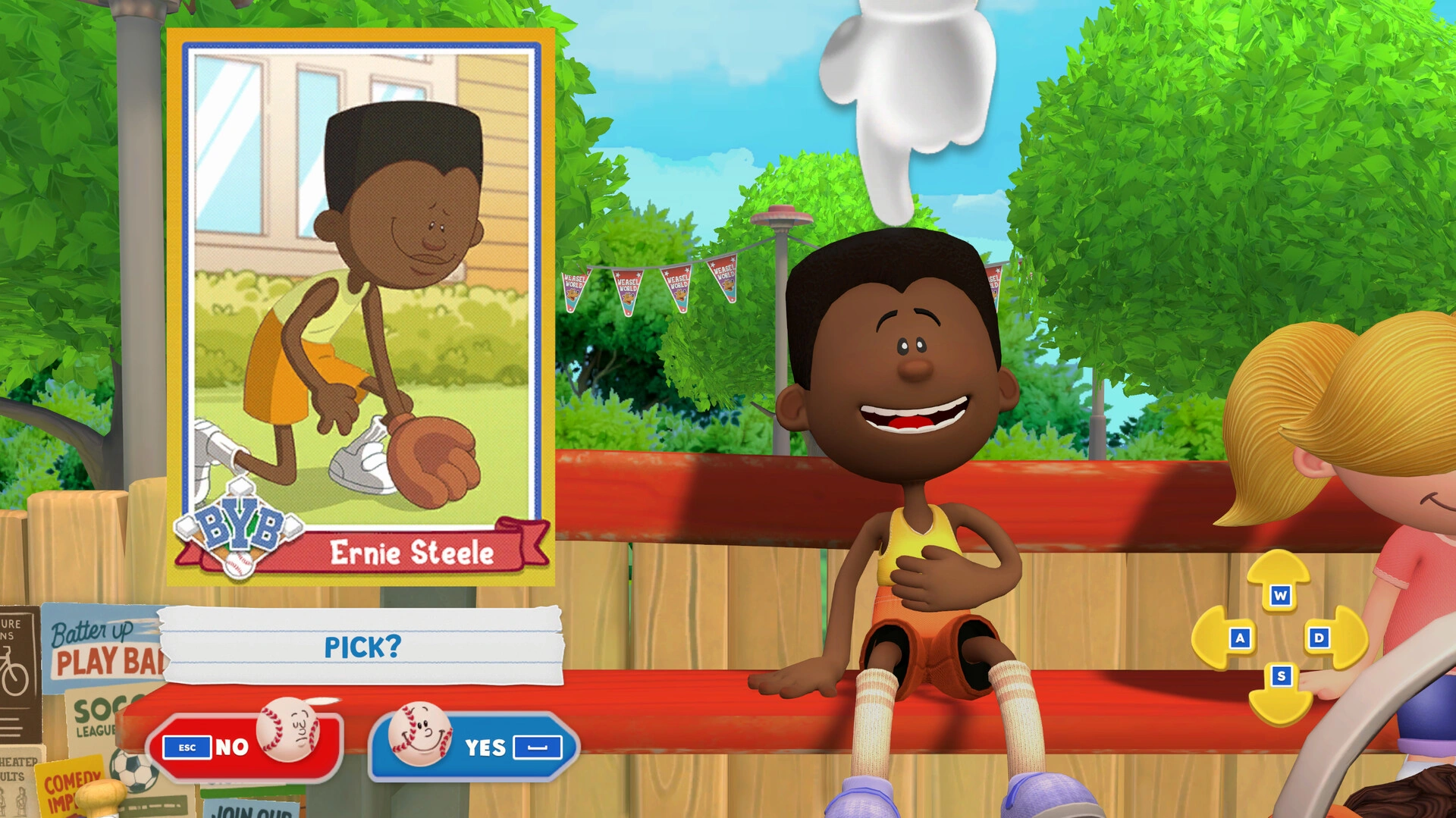
Wiggle Ball shrinks the teams and gives the ball erratic movement, producing shorter matches with a looser rhythm. Home Run Derby turns the forgiving batting into a cleaner score chase, where repetition suits the mode. The Card Shop provides Tokens through play, then trades them for character cards, personal items such as Achmed’s headphones or Reese’s inhaler, and REMIX artwork. There are no real-money purchases interrupting the collection.
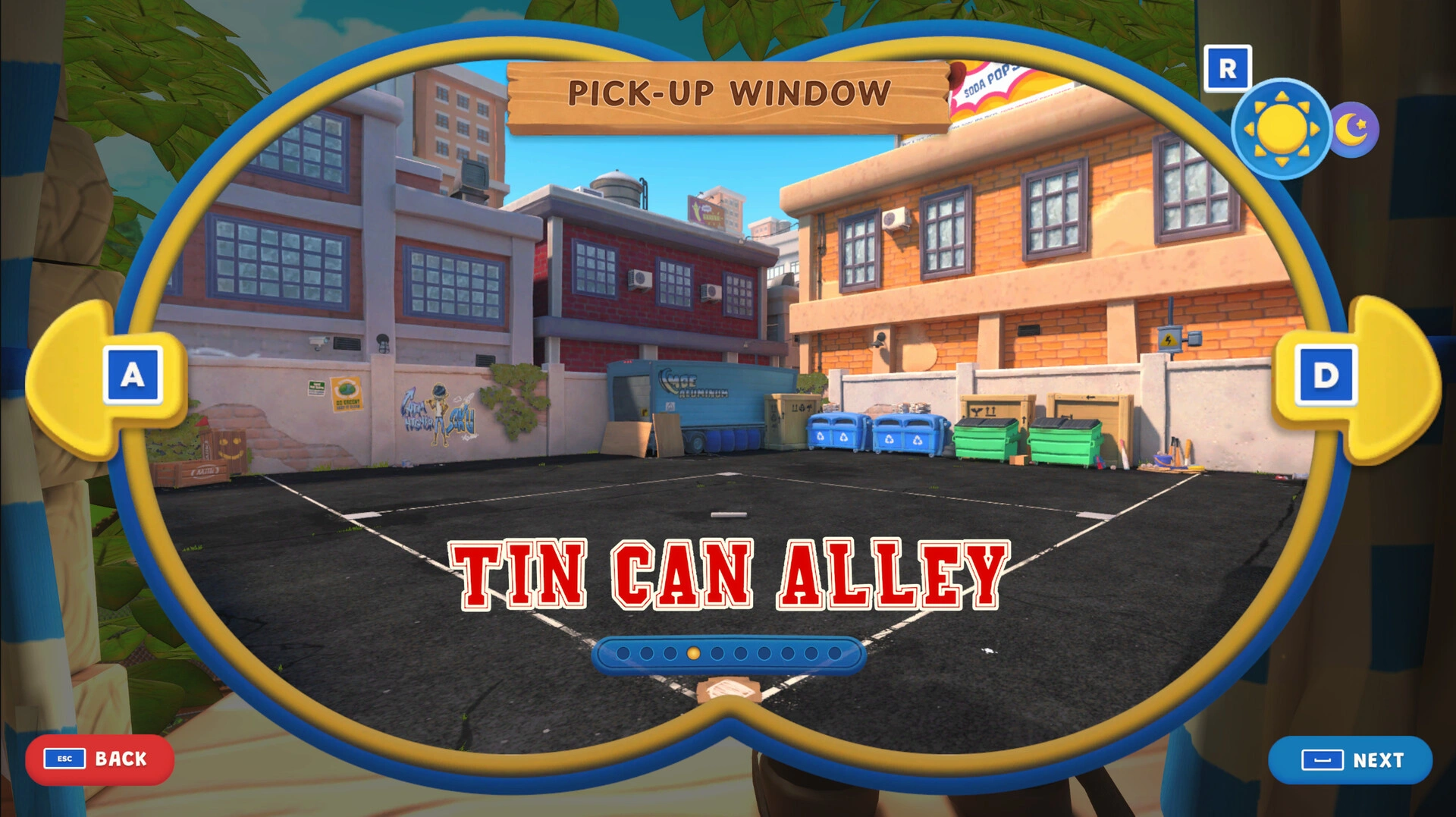
The 3D conversion works because the characters have not been sanded into identical mascots. Distinct pitching motions, batting poses, musical cues, and celebrations preserve the individuality that made the series memorable. Neighborhood fields are filled with fences, bikes, houses, chatter, and small background movements instead of professional stadium spectacle. Then the next inning begins, a slow fielder fails to reach another routine ball, and the careful restoration runs directly into the systems meant to carry it.
The Review
Backyard Baseball
Backyard Baseball preserves the character of its 1997 ancestor through a complete kid roster, expressive animation, playful fields, and team drafting that still makes every lineup feel personal. The trouble begins once the first pitch is thrown. Precise batting assistance turns power hitters into automatic run producers, mastered pitching creates lopsided scores, and sluggish defenders rarely deliver the satisfying plays found in earlier entries. The revival remembers how the series looked and sounded, yet loses some of the balance that made its simplicity rewarding.
PROS
- Expressive 3D character animation
- All 30 original kids return
- Enjoyable roster drafting
- Strong neighborhood presentation
- No microtransactions
CONS
- Batting assist removes tension
- Sluggish, restrictive fielding
- Frequent one-sided matches
- Missing online head-to-head play
- Repetitive entrances and commentary