

























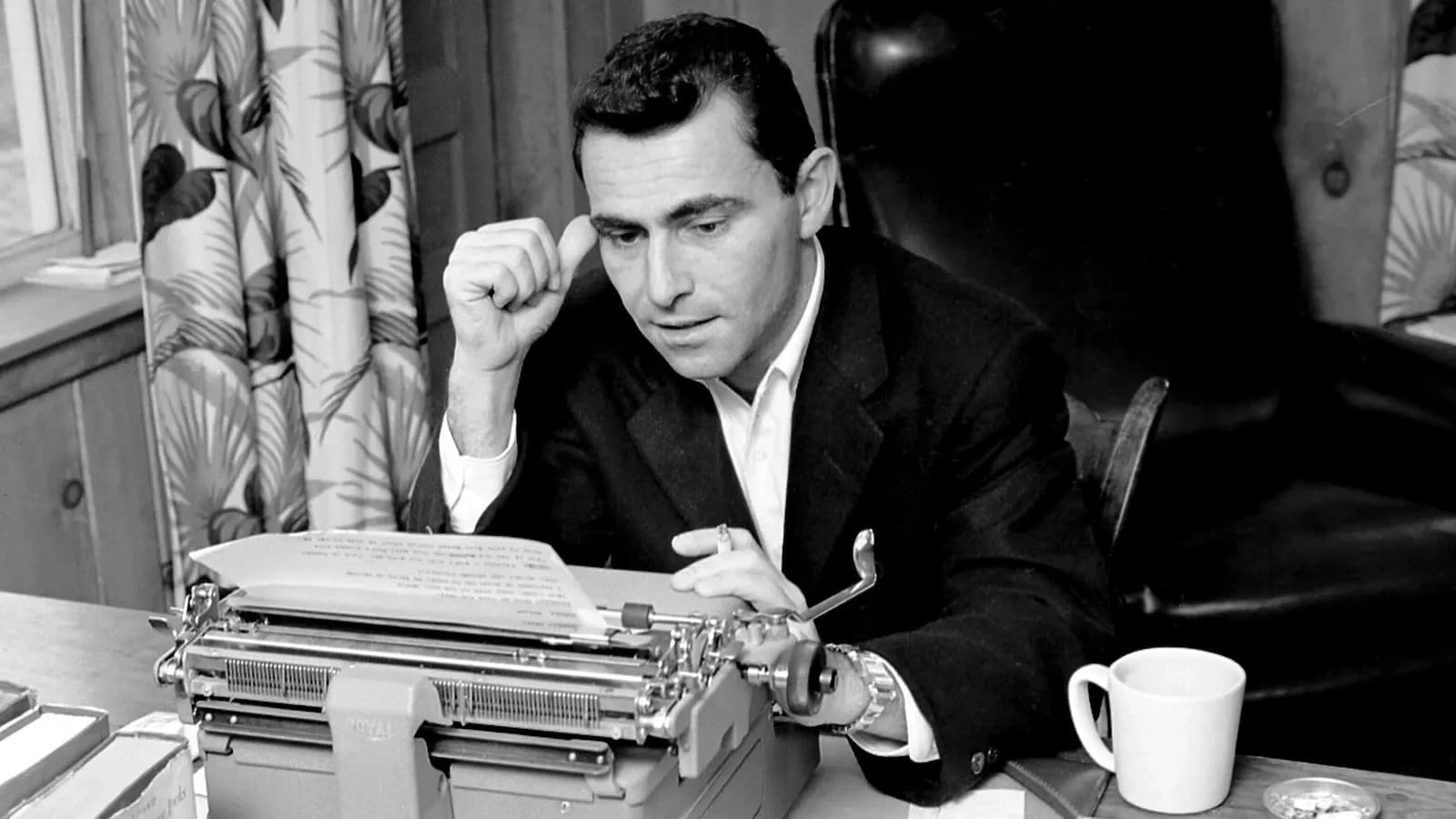

Rod Serling speaks through Jonah Tulis’ documentary with the strange authority of a man dictating from the other side of death. His cadence remains clipped, urgent, almost impatient. Every sentence sounds like it has already survived an argument.
Serling builds its portrait from television interviews, private recordings, audio diaries, dictated letters, family memories, home movies, and clips spanning his career. Tulis largely rejects present-day talking heads, allowing Serling to describe his childhood in Binghamton, his military service, his entry into radio, and his ascent through live television. The result feels less like an inquiry than an extended transmission.
It is an inspired choice, and a limiting one. Serling can explain what he believed with extraordinary precision. He is less capable of describing what it felt like to live beside him. His wife Carol and daughters Anne and Jodi fill several gaps through audio testimony, yet the husband and father remain somewhere outside the frame, working late while the Dictaphone turns. The voice is vivid. The life around it flickers.
A Man Preserved in Smoke
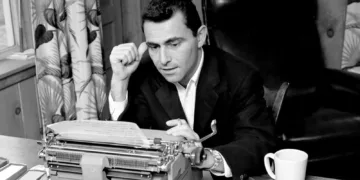
Tulis repeatedly recreates Serling at his desk, seen from behind or reduced to a smoking profile. The images are handsome in isolation: black suits, hard light, curling smoke, fingers hovering above paper. Placed beside the rich grain of mid-century television footage, their clean digital surfaces feel curiously weightless. They imitate the period without inheriting its shadows.
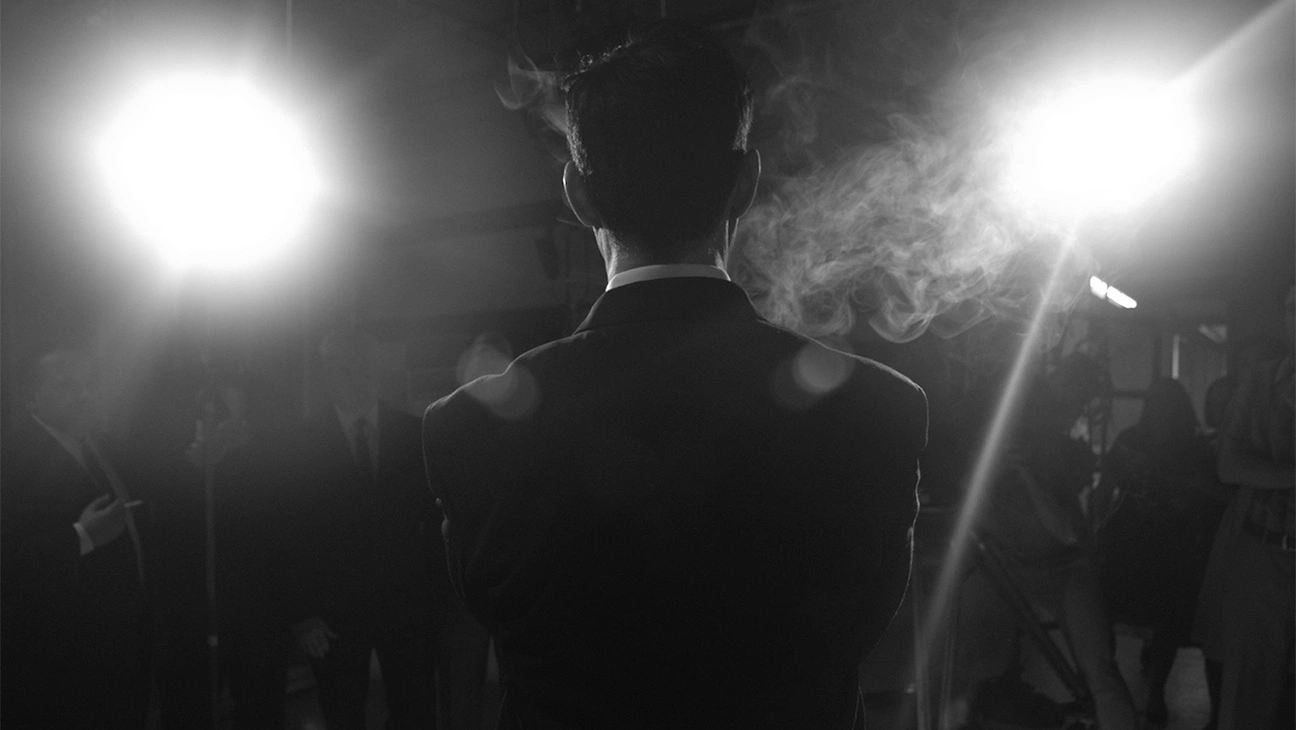
This visual distance shapes the documentary’s portrait. Serling appears as a silhouette even during scenes meant to bring him closer. His cigarette, immaculate hair, and narrow figure become sacred objects, pieces of the television iconography that trapped him long before the film arrived.
Also Read





The archive offers warmer glimpses. Home movies show the family houses in Pacific Palisades and Interlaken, New York. Childhood photographs reveal the boy before the severe face appeared. Carol explains that his famous tight-lipped delivery emerged partly from nervousness when he began presenting The Twilight Zone. Accounts of his extroverted humor and love of pranks briefly disturb the familiar image of the grave narrator warning America that disaster waits behind the next door.
Those fragments invite a fuller portrait that never quite forms. We hear that Serling worked 12 to 14 hours a day during The Twilight Zone, often seven days a week. We see the rooms in which his family lived. We rarely feel the silence left when he returned to his scripts.
Television Against Cowardice
Serling understood television as a moral instrument before the industry learned to describe itself as one. His early success with Patterns, a drama about corporate cruelty, earned him an Emmy at 30 and proved that institutional violence could be staged in living rooms without losing its teeth. The lesson did not survive contact with advertisers.
His teleplay Noon on Doomsday began as a response to the murder of Emmett Till. Network interference stripped away its racial specificity, relocated its setting, and softened its accusation. Serling discovered that realism could be censored by people who called fear prudence. Science fiction gave him another route.
The Twilight Zone turned abstraction into camouflage. “The Monsters Are Due on Maple Street” watches suspicion transform neighbours into a mob. “The Invaders” withholds perspective until the viewer’s assumptions become part of the trap. “Time Enough at Last” grants its lonely reader the world he desires, then breaks his glasses. These stories endure because their mechanisms are cruelly exact. Serling offers a wish, exposes the hunger beneath it, and closes the door.
The documentary is strongest when following the anger that fed this work. His opposition to racism, censorship, political hypocrisy, and the Vietnam War did not sit apart from his scripts. It supplied their pulse. His statement that he was “intolerant of intolerance” has the bluntness of someone who had grown tired of watching cowardice dress itself as moderation.
Tulis also traces the political pressure surrounding CBS, where executives connected to Republican figures objected to the show’s liberal convictions. The Twilight Zone ended after five seasons, yet its supposed commercial weakness now seems like a minor clerical error committed by history.
The Exhaustion Behind the Prophet
World War II gave Serling the nightmares that followed him for the rest of his life. He enlisted hoping to fight Nazis and was sent to the Pacific, where violence entered his imagination and refused to leave. The documentary links that trauma to his recurring fascination with frightened communities, damaged veterans, authoritarian cruelty, and ordinary people discovering how thin civilization can become.
His Jewish background receives little attention, leaving a notable absence in the film’s account of his moral formation. His attraction to fighting fascism and his sensitivity to persecution are discussed, but the cultural inheritance surrounding those convictions stays mostly unspoken.
Later disappointments pass quickly. The Loner failed to give him lasting control. Night Gallery used his name and face while denying him the authority he had possessed on The Twilight Zone. Footage of Serling promoting the series carries a muted embarrassment, the look of a man introducing a room whose furniture someone else arranged. His film career, including his work on Planet of the Apes, receives similarly brief treatment.
Near the end, his recorded voice changes. The sharpness remains, but fatigue gathers beneath it. Years of relentless work and chain-smoking had reduced the distance between ambition and self-destruction. Serling died at 50, leaving behind stories filled with people who recognize the truth moments before time runs out.
Tulis preserves that prophetic voice with care. The man speaking into the Dictaphone sounds close enough to touch. The exhausted figure lowering the microphone remains just beyond reach.
Serling premiered at the South by Southwest Film & TV Festival on March 16, 2026, and is available through festival screenings and independent distribution. The documentary explores the life and legacy of legendary The Twilight Zone creator Rod Serling, utilizing never-before-heard dictaphone recordings to tell his story in his own words.
Full Credits
Title: Serling
Distributor: Goodlight Pictures, festival circuits
Release date: March 16, 2026
Running time: 98 minutes
Director: Jonah Tulis
Writers: Jonah Tulis, Blake J. Harris
Producers and Executive Producers: Chad A. Verdi, Leonardo DiCaprio, Jennifer Davisson, Phillip Watson, Michelle Verdi, Chad Verdi Jr., Paul Luba, Jonah Tulis, Blake J. Harris, Anne Serling, Jodi Serling, Taylor DiGilio, Sera C.C. Verdi, Anthony Gudas, Rick Lazes, Gareth West, Maurice Antonio, Aristotle Andrulakis, Nicholas de Graffenreid
Cast: Rod Serling
Director of Photography (Cinematographer): Marcus Friedlander
Editors: Josh Bayer
Composer: Jeff Beal
The Review
Serling
Serling lets its subject speak across the grave, and his voice still carries the impatience of a man who believed television could shame a country into recognizing itself. Jonah Tulis preserves the writer, polemicist, and prophet with extraordinary archival richness. The private man remains blurred, hidden behind smoke, labor, and immaculate silhouettes. The film leaves us with a strange sadness: Rod Serling understood the moral illnesses of his age with frightening clarity, yet the documentary cannot fully reach the exhausted human being who diagnosed them.
PROS
- Remarkable archival recordings
- Serling’s voice drives the film
- Sharp account of network censorship
- Strong political and artistic focus
- Extensive career footage
CONS
- Limited domestic portrait
- Reenactments feel visually disconnected
- Jewish identity receives little attention
- Film career is rushed
- The icon eclipses the person