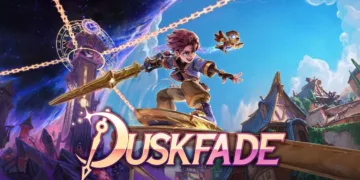














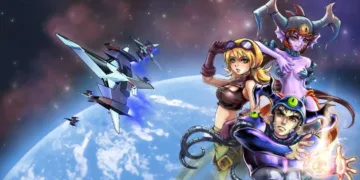

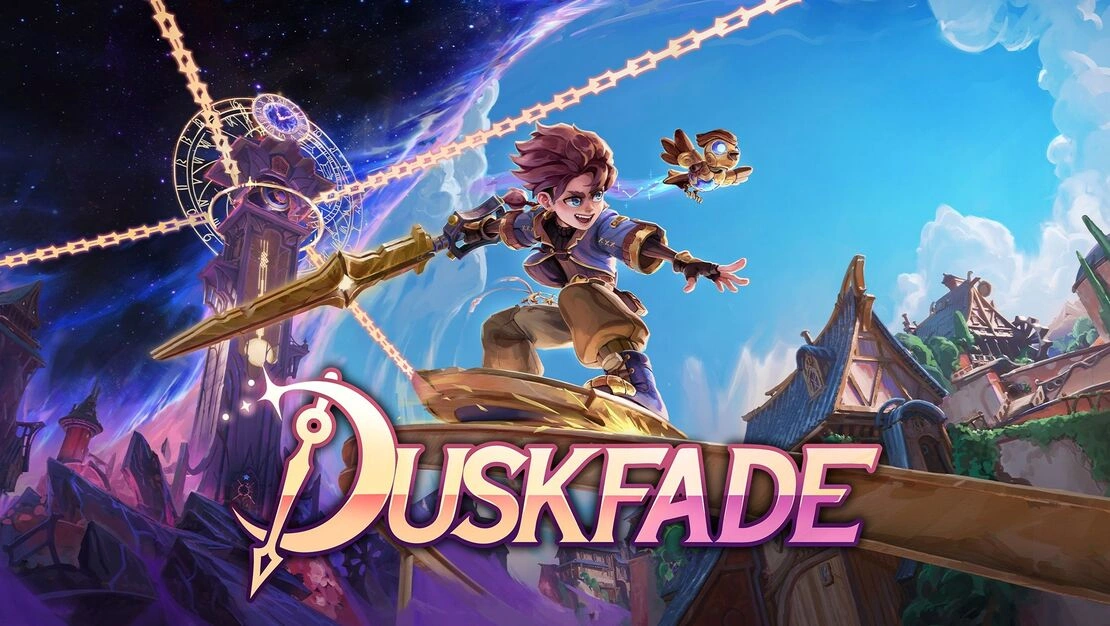

Duskfade feels assembled from a shelf of early-2000s favorites, yet Weird Beluga understands that imitation alone cannot carry a platformer. The familiar pieces are everywhere: Zirian has the spiky silhouette and oversized clothes of a forgotten action-RPG protagonist, his Minutero sword invites immediate comparisons with Kingdom Hearts, and the mixture of jumping, combat, collectibles, gadgets, and eccentric companionship recalls the era of Jak and Daxter and Ratchet & Clank. What saves the game from becoming an exercise in borrowed affection is movement. Once Zirian begins crossing shattered spaces rather than simply walking through them, Duskfade finds a rhythm of its own.
His adventure begins in Tick Town, where he and his sister Allira are still living with the absence of their grandfather, Tristan. A disaster tied to ancient Master Clockmaker technology leaves Allira imprisoned inside a clock tower and covers the surrounding world in supernatural darkness. Zirian takes Tristan’s old weapon and heads out with Cuckoo, a mechanical bird whose chatter accompanies a rescue mission built around restoring the flow of time.
Time, Memory, and Too Much History
The sibling story gives all that clockwork imagery a useful emotional purpose. Zirian is trying to restart a world that has stopped while carrying grief that has done something similar to him. Duskfade does not need elaborate dialogue to make the parallel legible. Its strongest story beats come after major encounters, when new material involving Allira brings the stakes back from ancient mythology to two children dealing with family loss.
Cuckoo keeps the tone light through encouragement and comic exchanges, though the partnership never develops the sharply defined personality associated with the genre’s best hero-sidekick pairings. The limited voice acting also leaves much of their relationship dependent on written banter, and some jokes arrive when a scene could use silence.
The Master Clockmakers create the larger problem. Their history appears through scattered echoes of conversations between characters the player cannot see, turning significant events into fragments of exposition. The information can be interesting, yet the method places distance between the player and the catastrophe. Zirian searching for Allira has immediacy. Listening to disembodied figures explain an older disaster feels like homework from another adventure.
Movement Wins the Fight
Duskfade becomes much stronger when it lets Zirian move. Double jumps, dodges, aerial movement, grappling points, and rail grinding gradually turn straightforward platforming into something pleasantly expressive. A jump performed after a dodge can send Zirian across surprising distances, while grappling points allow aerial sequences to continue after an ordinary jump would have failed. Chaining these actions together gives skilled movement a playful quality that the simpler opening hours only hint at.
Also Read




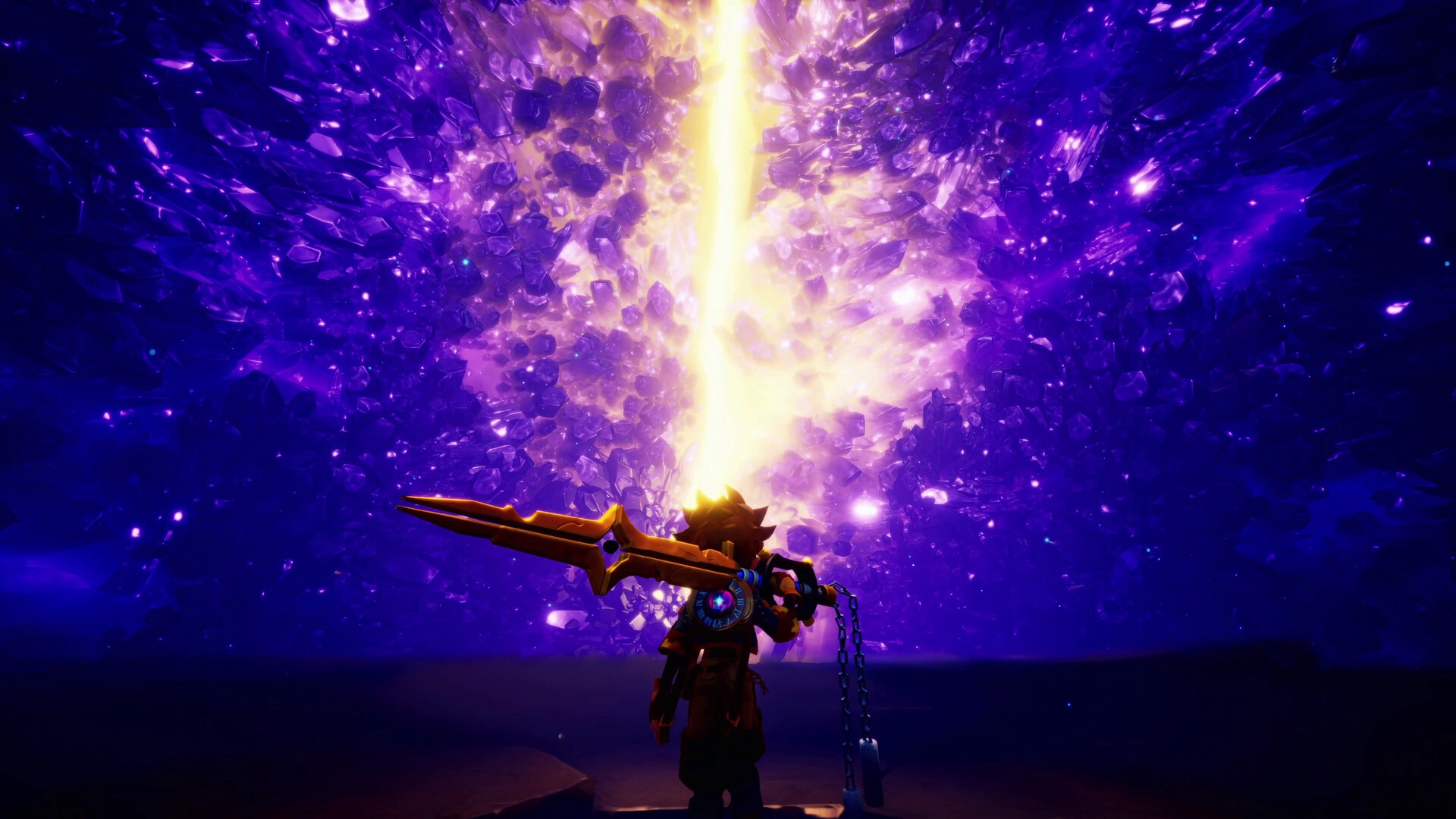
The levels support that freedom through wide-linear layouts. There is usually a clear destination, yet treasure chests, crystals, kittens, Upgrade Gears, and other resources tempt the player toward side routes or distant ledges. Later tools such as the grappling hook and Pendulum transformation unlock previously inaccessible objects, giving earlier areas a mild Metroidvania-style return loop.
That return loop exposes the strange absence of a map. Revisiting an area for missed collectibles becomes less appealing when there is no reliable way to remember which branches have already been searched. The reward economy occasionally creates a similar problem. Upgrade Gears and other materials feed character progression, but stretches where the available upgrades have already been purchased make additional currency feel temporarily pointless.
Combat never develops the same fluency. Light and heavy attacks, dodges, grapples, launchers, projectile counters, and special abilities provide enough tools on paper, yet routine battles lean heavily on basic combinations. Weak hit feedback, loose enemy behavior, an inconsistent lock-on, and limited enemy types make repeated arena encounters increasingly mechanical.
Bosses show how much better the system can work. Their multi-phase structure folds platforming challenges into combat, forcing Zirian to dodge an attack pattern, race through a traversal sequence, then return to the enemy during a vulnerable window. Here, swordplay stops competing with movement and begins serving it.
A Beautiful Machine With Loose Gears
The worlds surrounding Tick Town provide the spectacle the combat sometimes lacks. Ezarus Forest establishes an ominous scale early, while Lantern Port trades gloom for a brighter tropical atmosphere. Snow-covered mountains, volcanic spaces, caves, coastlines, and stranger pocket dimensions continue changing the scenery, often using vertical architecture to make a distant ledge feel like an invitation.
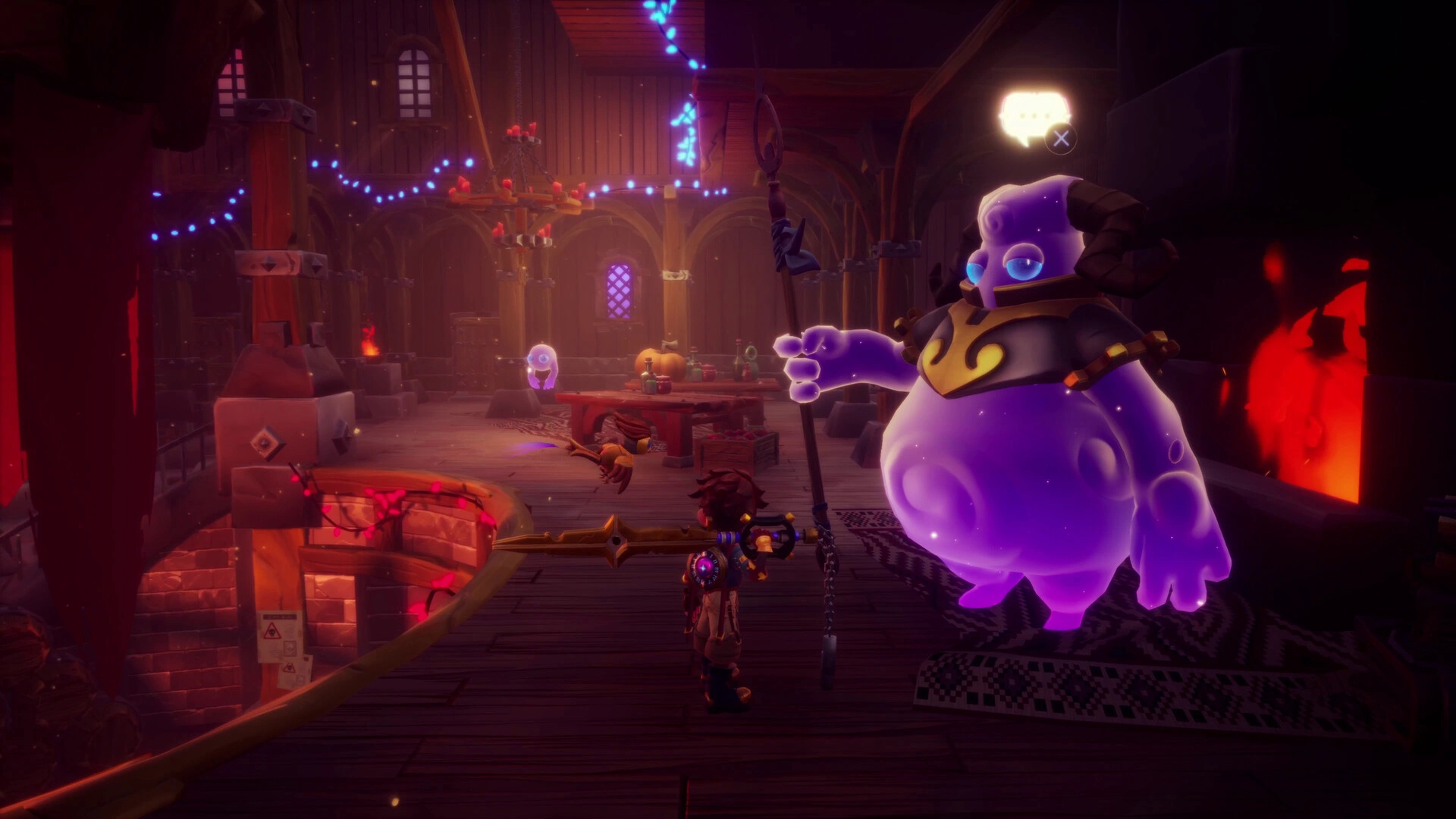
The influence of Kingdom Hearts remains especially visible in Zirian’s design and the Minutero, while the soundtrack carries the same affection for adventurous melodies that can turn whimsical or dramatic between scenes. Pre-rendered cinematics give the family material a polished animated quality, helping Allira and Tristan’s presence carry weight beyond their screen time.
Switch 2 exposes some of the production limits. Docked play targets 60fps and handheld play targets 40fps with VRR, yet busy scenes and long sightlines can cause visible drops. Zirian can snag on scenery, reach places the level clearly did not expect him to reach, or occasionally become stuck. The camera can struggle during crowded fights and extended bosses. Frequent checkpoints keep these incidents from becoming serious setbacks.
Those imperfections matter because Duskfade repeatedly demonstrates how close its strongest ideas are to clicking together. Traversal invites experimentation, the environments reward looking upward and sideways, and boss encounters briefly unite movement and combat into the same design language. The ordinary fights, uneven progression economy, and awkward navigation keep interrupting that flow. Weird Beluga has built a clockwork adventure whose best gears already turn beautifully. Several others still grind against them.
The Review
Duskfade
Duskfade wears the language of Japanese action RPGs and early-2000s Western platformers proudly, then reshapes those influences through Weird Beluga’s Spanish indie sensibility. Zirian’s movement feels expressive once grapples, air dashes, and long jumps start linking together, while the clockpunk worlds give that motion somewhere beautiful to live. Routine combat lacks the precision and personality of its obvious Kingdom Hearts inspiration, and the Clockmaker lore often smothers a stronger sibling story. The boss encounters reveal the sharper game hiding underneath.
PROS
- Fluid chained traversal
- Distinctive clockpunk environments
- Strong multi-phase boss fights
- Affecting sibling storyline
- Excellent musical atmosphere
CONS
- Repetitive regular combat
- Weak enemy variety
- Lore-heavy exposition
- Frustrating map omission
- Uneven Switch 2 performance