
























The killer’s rhyme makes loneliness sound like a lapse in home security. It lists open doors and unlatched windows before reaching the condition that matters: a child who feels sad and alone. The Whisper Man builds its strongest idea around that vulnerability, connecting a child’s isolation to generations of fathers who have mistaken obsession, grief, and silence for protection.
Widowed crime writer Tom Kennedy moves back to Featherbank with his eight-year-old son, Jake, hoping that a new home will help them recover from the death of Jake’s mother. Jake speaks to an imaginary girl. Tom responds with concern that hardens into frustration, especially after drinking. When Jake disappears amid signs that recall an imprisoned child killer, Tom turns to his estranged father, Pete Willis, the retired detective who solved the original case.
The abduction is designed to connect three generations through one wound. Pete’s fixation on the old investigation and his alcoholism helped destroy his family, leaving Tom to grow up resenting the father who gave everything to missing children and little to his own son. Finding Jake offers Pete a chance to repair that history. It also forces Tom to confront how grief and anger have begun damaging his relationship with Jake.
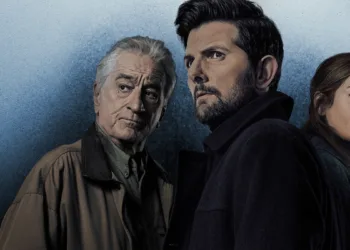
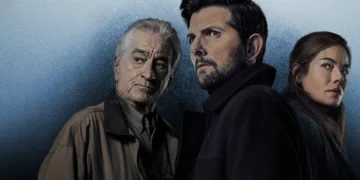
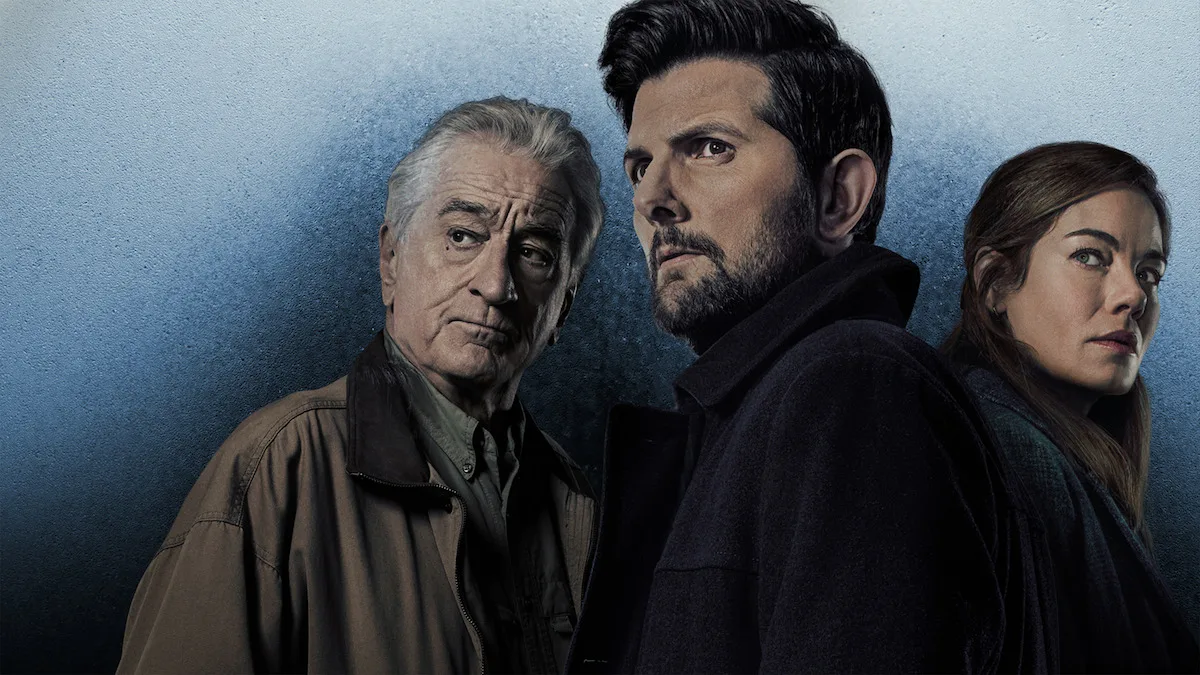
That moral design is stronger than its dramatic development. The investigation reunites Pete and Tom, then repeatedly sends them along separate tracks. Their exchanges carry the burden of decades without receiving enough time or detail to make those years palpable. Adam Scott delivers Tom’s responses with mounting anger and panic. Robert De Niro keeps Pete’s delivery level and his reactions contained. The contrast could have expressed the different forms their damage takes. Thin dialogue leaves much of it suspended between the performances.
Tom’s drunken outburst over Jake’s imaginary friend comes closest to making repetition feel consequential. Tom has spent his life judging Pete’s failures, yet fear pushes him toward the same emotional absence. Jake becomes loneliest when his father is standing in front of him. The subsequent kidnapping gives that failure physical form, but the ticking-clock structure soon reduces Jake’s isolation to the engine of a rescue plot. A troubling pattern briefly becomes visible, then the machinery moves on.
That machinery is crowded with potentially meaningful parts. A blue-gloved hand enters through a mail slot. Recorded voices preserve the final terror of murdered children. Jake’s unseen companion hovers between grief and supernatural warning. A collector of serial-killer artifacts turns violence into memorabilia, and the imprisoned Frank Carter is invited to interpret crimes that have extended his influence beyond confinement. Each element touches the film’s ideas about memory, inheritance, or the uses adults make of damaged children. Few are allowed to alter the others.
Also Read





The early passages inside Tom and Jake’s old house show how effective that integration might have been. Storms, empty rooms, unsafe thresholds, and Jake’s private conversations place domestic grief and approaching violence inside the same space. The threat feels intimate because the house contains everything Tom cannot understand about his son. Once the procedural expands, that pressure is divided among suspects, interviews, misdirection, and explanations. The house becomes another location, and loneliness becomes another clue.
Michael Keaton leans into Carter’s taunts and grandiosity, briefly disturbing the film’s controlled solemnity. His prison scenes suggest a sharper story about how killers preserve power by teaching investigators to think in their language. Hamish Linklater gives the macabre collector a smug, needling manner, though the character feels imported from a more grotesque thriller. Amanda Beck, meanwhile, is used primarily to carry information between these competing strands. The performances generate isolated sparks without creating a common dramatic current.
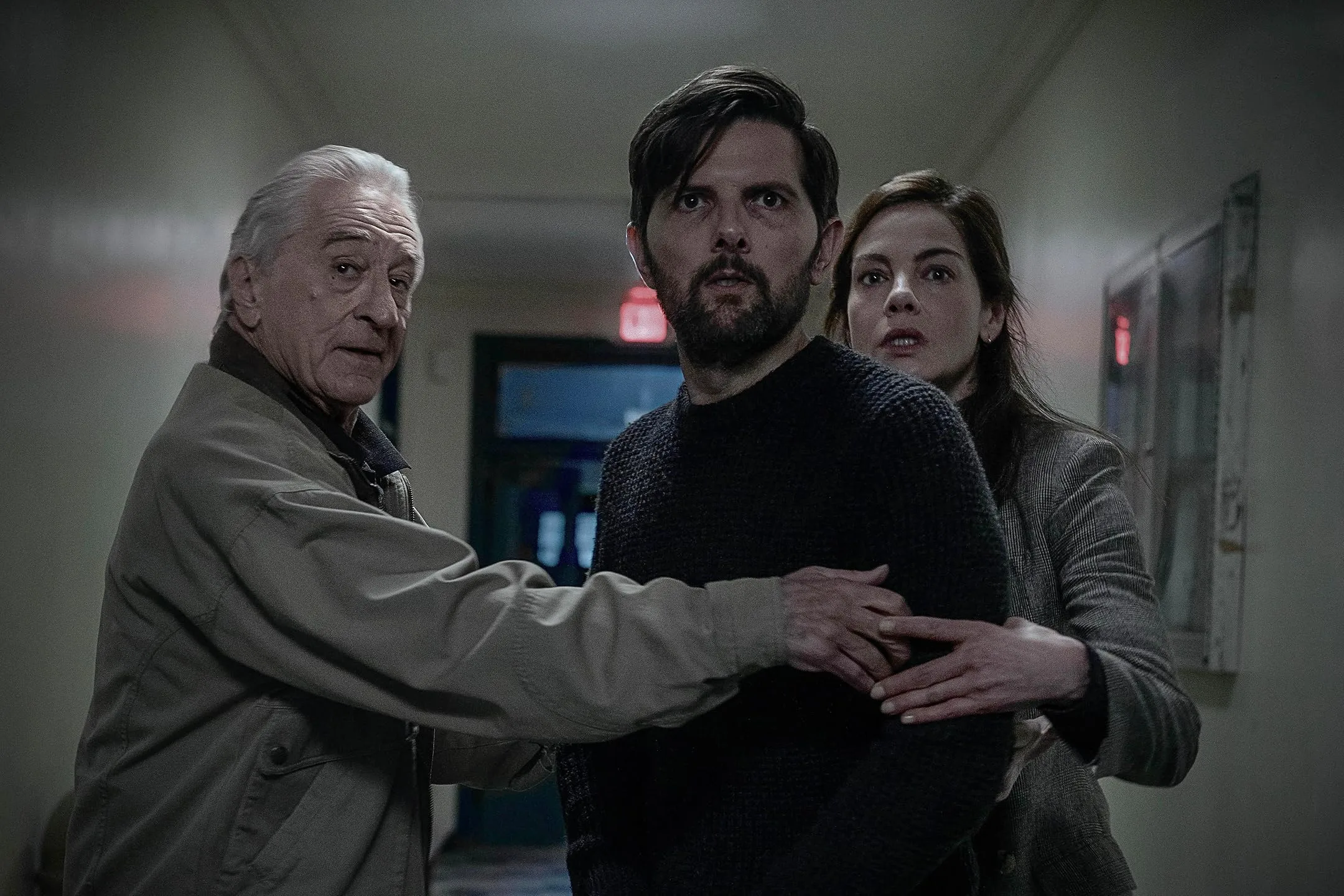
Familiarity is not automatically fatal to a serial-killer thriller. The nursery rhyme, cassette recordings, imprisoned mastermind, and troubled detective all belong to a recognizable tradition. James Ashcroft occasionally arranges them into tense encounters, especially when Carter controls an interrogation or the house turns an ordinary threshold into a point of entry. The problem emerges when borrowed machinery occupies space needed by the film’s central relationships. Every additional suspect postpones the confrontation among Pete, Tom, and Jake. Every eerie suggestion that recedes without consequence weakens the connection between emotional abandonment and physical danger.
A late revelation introduces another father-son relationship inside the criminal plot. Its thematic purpose is clear: violence travels through families, and sons inherit the damage their fathers refuse to face. The revelation makes the film’s pattern easier to see, but it cannot retroactively create the interaction that pattern needed. These fathers and sons reflect one another from separate narrative compartments. They rarely exert enough pressure to change what the other relationships mean.
The rhyme understands the story with greater precision. The Whisper Man reaches children through the openings left by adults, including the emotional openings created by neglect, obsession, and grief. The film repeatedly names those openings and surrounds them with intermittent menace. Its final paternal mirror supplies a diagram of inherited damage. What remains missing is the painful movement of one generation truly answering another.
The Whisper Man premiered globally on Netflix on August 28, 2026. You can stream the crime thriller film exclusively on Netflix. The plot follows a widowed crime writer whose young son is abducted, forcing him to seek help from his estranged father, a retired detective who captured a infamous serial killer decades earlier.
Where to Watch The Whisper Man (2026) Online


Full Credits
Title: The Whisper Man
Distributor: Netflix, AGBO
Release date: August 28, 2026
Rating: R
Running time: 111 minutes
Director: James Ashcroft
Writers: Ben Jacoby, Chase Palmer, Alex North
Producers and Executive Producers: Anthony Russo, Joe Russo, Angela Russo-Otstot, Michael Disco, Robert De Niro, James Ashcroft
Cast: Robert De Niro, Adam Scott, Michelle Monaghan, Michael Keaton, Hamish Linklater, Owen Teague, Acston Luca Porto, Will Brill
Director of Photography (Cinematographer): Matt Flannery
Editors: Luke Doolan
Composer: Jed Kurzel
The Review
The Whisper Man
The Whisper Man finds a strong moral premise in lonely children and damaged fathers. Its procedural machinery scatters the relationships meant to give that premise force. The first act’s domestic dread and Michael Keaton’s prison scenes create isolated tension, yet red herrings and underdeveloped family mirrors keep those strengths from accumulating. The late revelation makes the design legible after the drama has failed to connect its generations.
PROS
- Potent father-son premise
- Atmospheric first act
- Effective prison encounters
- Strong isolated performances
CONS
- Underdeveloped family relationships
- Fragmented procedural structure
- Abandoned horror ideas
- Thin supporting roles