

















![Kingdom Hearts Collection [I-III] Review](https://gazettely.com/wp-content/uploads/2026/10/Kingdom-Hearts-Collection-I-III-1-360x180.webp "Kingdom Hearts Collection [I-III] Review: KHII Holds Steady as Newer Entries Fluctuate 33")








A daughter can carry a father’s silence for decades without anyone else seeing the weight of it. He Calls Me Daughter builds its entire documentary structure around that invisible burden, gathering women who describe abandonment, emotional neglect, abuse, rejection, addiction, self-harm, suicidal thoughts, and the corrosive belief that they were somehow unworthy of love.
Director Rick Altizer, returning to the subject of fatherhood after Show Me the Father, changes the angle of inquiry. Fathers are still the defining presence here, yet many of them appear through absence: a missing parent, withheld affection, an abusive memory, a voice that failed to offer reassurance when reassurance mattered most.
The film calls the resulting damage a “father wound.” It is an inelegant phrase, clinical and devotional at once, but the testimonies give it definition. Comedian Chonda Pierce, actress BJ Arnett, and women without public profiles describe how paternal failure continued shaping adult relationships, self-image, trust, sexuality, and destructive behavior long after childhood had ended. The documentary’s strongest idea is therefore spatial. A father leaves an empty place, and the daughter spends years arranging her life around it.
Testimony Without Spectacle
Altizer understands that testimony becomes weaker when filmmaking announces how devastated the audience should feel. He largely resists that temptation. The interviews are allowed to breathe. Women recount substance abuse, adultery, self-harm, suicidal thinking, and, in one case, work at a strip club.
The film does not reconstruct these experiences through sensational imagery or graphic dramatization. Faces carry the scenes. Pauses matter. The accumulated effect comes from people describing choices they can now trace backward toward wounds they did not understand at the time.
That restraint creates an unusual moral clarity. Trauma is present, yet suffering is never treated as a visual commodity. There is no aesthetic thrill in another person’s collapse. The editing also avoids making every participant sound interchangeable.
Similar patterns emerge across the stories, but individual accounts retain their own rhythms. One woman’s damaged confidence does not become a convenient stand-in for another woman’s addiction or suicidal despair. The repetitions expose patterns rather than flattening experience.
There is still a structural risk in assembling testimony this way. Once the film establishes its central thesis, nearly every subsequent story moves along the same line from paternal injury toward spiritual restoration. The emotional particulars vary. The destination rarely does.
The Father Above the Father
The documentary makes no attempt to disguise its evangelical position. Broken earthly fathers form one half of its theology. God the Father forms the other. Therapists and theologians appear between personal accounts to explain how paternal relationships can affect identity, attachment, trust, and later behavior. Their presence gives the film a framework beyond testimony alone. A woman describes what happened. An expert names the pattern. The documentary then places that pattern inside a Christian interpretation of healing.
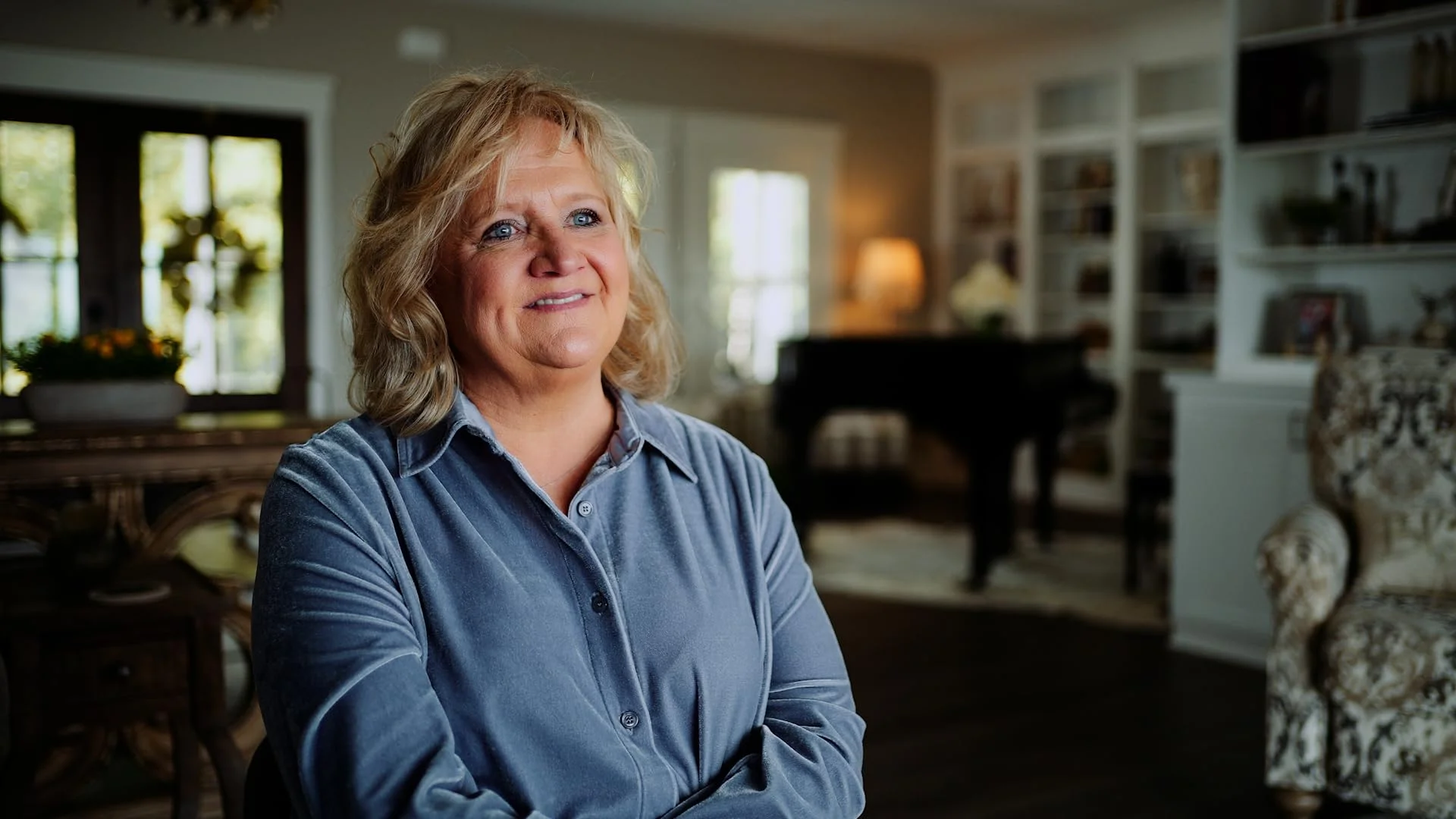
Its argument is specific. A father can disappear, reject, abuse, neglect, or fail to affirm his daughter. Those failures may distort how she understands herself and how she initially imagines God. Christianity offers another paternal relationship, one grounded in unconditional love rather than human inconsistency.
The women describe encounters with Jesus as turning points in that process. Faith is presented as the place where identity can be rebuilt and forgiveness becomes possible. The scriptural idea echoed through 2 Corinthians 6:18, God claiming sons and daughters as his own, functions less like supporting evidence than the film’s governing architecture.
For viewers outside that theological framework, the certainty may feel narrow. Psychological injury here repeatedly reaches a spiritual answer. The film has little interest in competing models of recovery. Yet ideological clarity is preferable to disguise. He Calls Me Daughter states what it believes and arranges every formal element around that belief.
What Fathers Leave Behind
The documentary’s quieter accusation is directed toward fathers themselves. Several testimonies describe women who wanted remarkably ordinary things from their fathers: encouragement, affection, presence, the assurance that they were beautiful, valued, protected, or worth listening to. Their later pain gives those missing gestures enormous retrospective force.
This is where Altizer’s film becomes sharper than a collection of conversion stories. The consequences described by the women expose fatherhood as a series of repeated acts rather than a title granted by biology. Silence becomes an act. Absence becomes one too. So does encouragement.
The experts explain how these patterns can influence later relationships, while the testimonies supply the human evidence. The connection is strongest when a woman describes moving from paternal rejection into destructive adult behavior and can now identify the emotional logic linking the two. Nothing mystical is required to understand that mechanism.
The Christian language of restoration then changes the documentary’s visual and emotional temperature. Accounts that begin in shame or anger gradually move toward forgiveness and recovered worth. Altizer does not erase what happened. The wound remains part of the story. What changes is who gets to name the person carrying it.
He Calls Me Daughter premiered in theaters and streaming platforms like Angel Studios on March 17, 2026. This faith-based documentary explores the lasting emotional impact of the father wound on women and highlights paths toward healing through spiritual faith.
Where to Watch He Calls Me Daughter (2026) Online





Full Credits
Title: He Calls Me Daughter
Distributor: Angel Studios, Fathom Events
Release date: March 17, 2026
Rating: 13+
Running time: 1 hour 20 minutes
Director: Rick Altizer
Writers: Rick Altizer, Tracy Robinson
Producers and Executive Producers: Rick Altizer, Erik Dellenback, Glenn Wagner, Tracy Robinson
Cast: Chonda Pierce, Alex Kendrick, Meg Meeker, Lynsi Snyder, BJ Arnett, Michael Reeves, Kenny Silva, Kia Stephens
The Review
He Calls Me Daughter
He Calls Me Daughter earns its emotional force through restraint. Rick Altizer lets accounts of rejection, addiction, self-harm, and broken trust sit long enough to retain their human weight, while the expert commentary gives those stories a clear psychological frame. Its Christian answer is explicit: damaged relationships with earthly fathers need not define a daughter’s identity, because healing can be found through Christ and God the Father. That theological certainty will limit its reach for some viewers, yet within its chosen framework, the documentary treats pain with unusual care.
PROS
- Patient, respectful testimony
- Emotionally candid interviews
- Strong thematic structure
- Useful expert commentary
- Clear spiritual perspective
CONS
- Narrow evangelical framework
- Heavy material for younger viewers
- Limited space for dissenting perspectives