




















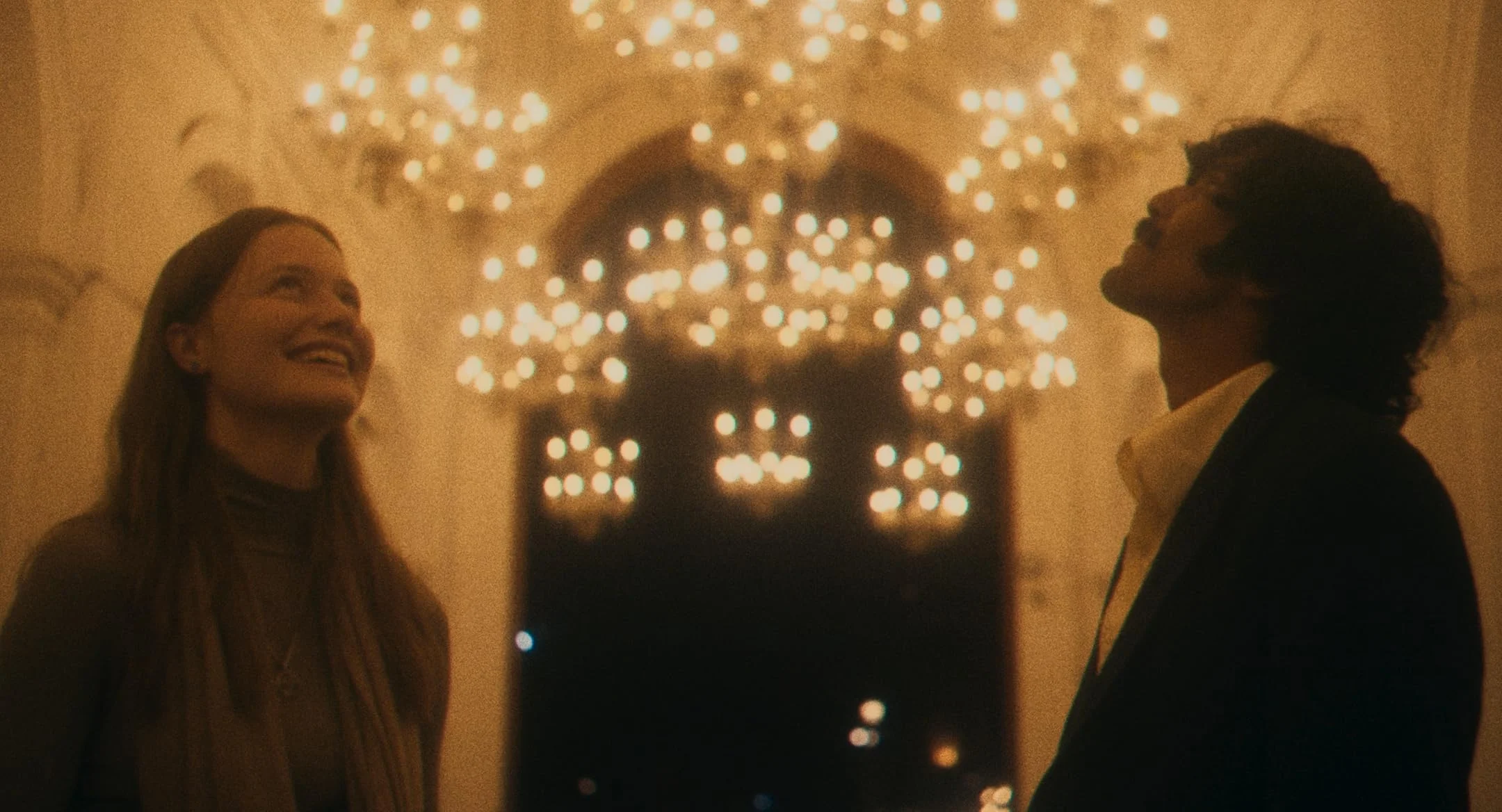

A portrait that takes ten minutes and costs ten rupees becomes the hinge on which an entire life turns. In 1970s Delhi, Pradyumna Kumar “PK” Mahanandia meets Swedish traveler Anne-Charlotte “Lotta” von Schedvin at his street-art stand, and Orlando von Einsiedel builds The Cycle of Love around the improbability of what follows.
They fall for each other, spend a short period together, separate when Lotta returns to Sweden, then continue their relationship through letters until PK decides distance has become intolerable. His solution is wonderfully unreasonable. With little money and a bicycle, PK sets out for Sweden.
The story already carries the shape of folklore, and the childhood prophecy hanging over PK makes it stranger still. An astrologer had predicted that his future partner would come from abroad, be a Taurus, possess musical talent, and have a family connected to a jungle. Lotta appears to satisfy each condition, down to her family’s Swedish forestland. Einsiedel does not demand belief in destiny. He understands that PK’s belief is the important part.
Rebuilding Memory
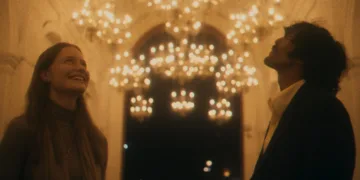
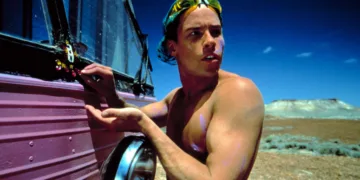
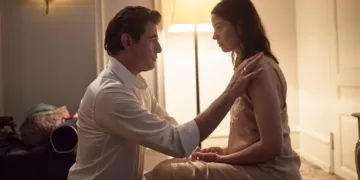
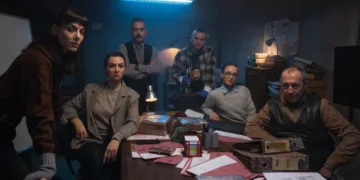
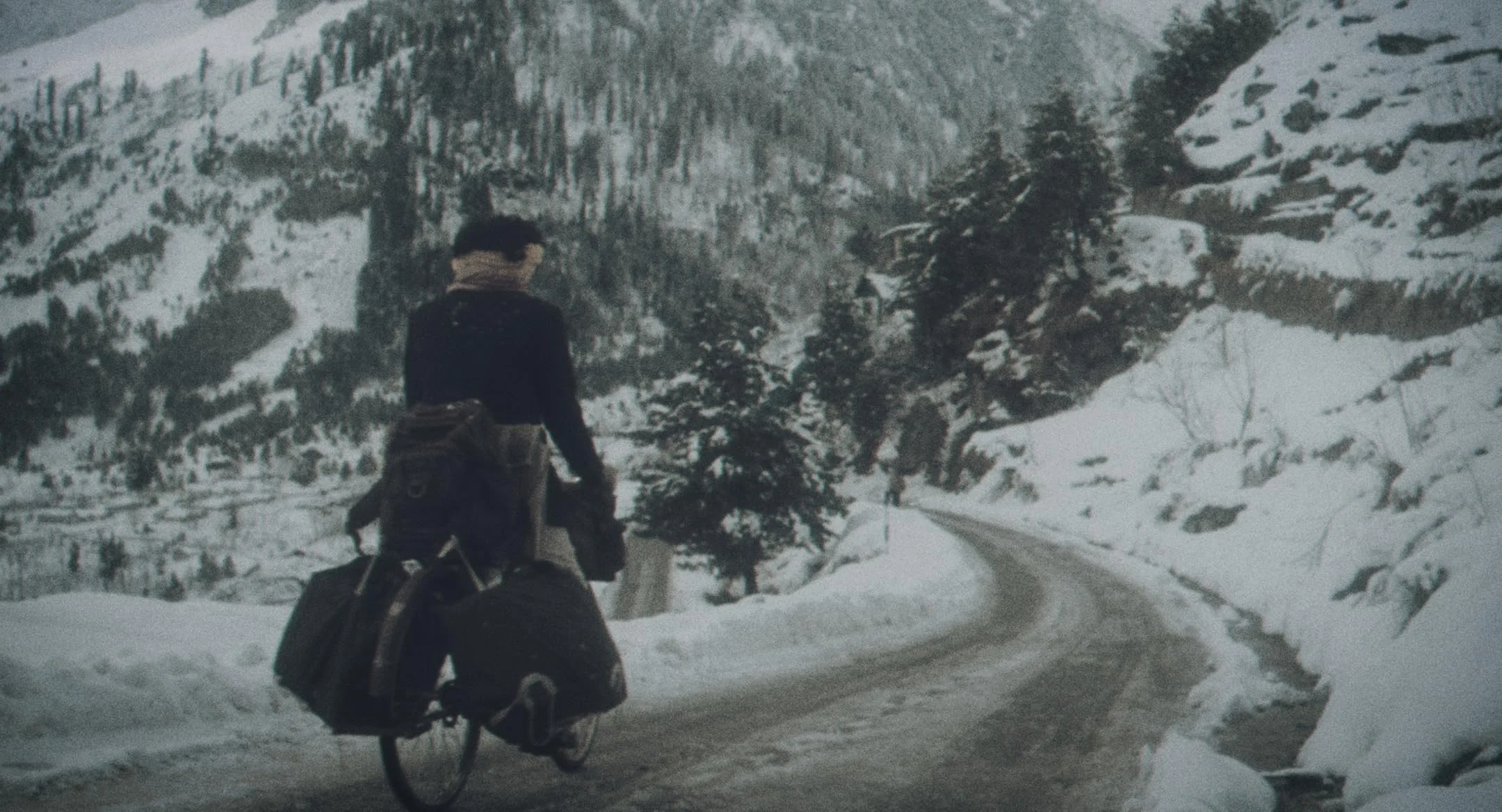
The film’s most distinctive choice is its refusal to leave the past inside photographs and testimony. Chirag Benedict Lobo plays the younger PK, Mina Dale plays Lotta, and Franklin Dow’s cinematography covers their scenes in grain and period texture until the recreations begin to resemble damaged memories rather than conventional dramatization.
That approach works unevenly during the romance itself. Older PK already possesses such expressive force that staged versions of his memories can feel smaller than the recollections. When he describes his first kiss, laughs at his own audacity, or cries while revisiting the separation, there is little an actor can add. Lotta is quieter, yet watching her handle old letters carries a similar intimacy.
Lobo and Dale still find warmth in the courtship. Dale’s smile gives the young Lotta an immediate openness, while Lobo captures the same almost reckless optimism that defines PK decades later. Their scenes become much stronger once the bicycle trip begins because Einsiedel changes the function of reenactment. Lobo starts meeting real people.
Also Read




Those strangers are not performers recreating someone PK encountered in 1977. They are people the production meets during its own passage through the countries PK once crossed. The result is a curious bridge between periods: an actor playing a historical traveler creates new documentary moments while repeating the actions of the man he represents.
Portraits on the Road
PK supports himself partly through portraiture, the same skill that introduced him to Lotta. It becomes the documentary’s finest recurring device. Lobo sits across from strangers in India, Iran, Afghanistan, Pakistan, and elsewhere, sketching faces while conversations develop around him. People speak about relationships, prejudice, loneliness, family, and faith because the act of being drawn gives them permission to remain still with another person for a few minutes.
This has a recognizable place within Indian artistic traditions where portraiture often carries social information, from court painting to street photography, yet Einsiedel uses it in a distinctly contemporary documentary way. The sketch is neither decoration nor biography. It is an invitation.
Those encounters also prevent the bicycle ride from becoming a simple endurance story. PK crosses deserts and mountain regions with inadequate equipment, limited money, and very little sense of the practical enormity of the undertaking. He helps after a road accident and later receives a train ticket that assists his passage from Istanbul toward Vienna. Other strangers offer meals, assistance, transport, or companionship.
The documentary pays surprisingly little attention to bicycle mechanics. Flat tires, repairs, mileage calculations, and the physical routine of four months on the road remain secondary. For a film named after the bicycle, that might appear strange. Yet the omission is deliberate. Einsiedel cares about the human network created around PK’s movement, not the machinery carrying him.
Caste, Distance and Self-Worth
The romantic mythology would be considerably thinner without PK’s place within India’s caste hierarchy. Born Dalit, he grows up inside a social order that tells him certain lives, spaces, relationships, and futures are unavailable to him. The astrologer’s prediction about a foreign partner therefore sounds absurd partly because the social world around PK has trained him to imagine his possibilities as narrow.
His relationship with Lotta challenges that conditioning in concrete ways. She visits his village. She accepts him without reproducing the caste distinctions that have shaped his earlier relationships. Years later, PK still speaks with visible pain about discrimination, while his work as an international advocate for Dalit communities suggests that leaving India never erased the system’s mark on him.
Einsiedel is most persuasive when PK explains these experiences himself. Some archival passages become less precise when British narration describes caste oppression from an external perspective. Images of Western travelers wearing spiritual slogans create a similar difficulty. Their interest in karma and self-determination can sit awkwardly beside PK’s description of a social hierarchy whose consequences cannot be escaped through philosophy printed on a tourist’s arm.
The film corrects much of that imbalance by returning to PK’s voice. His ride toward Sweden is an act of romantic devotion, yet the deeper movement is away from an identity assigned to him by others. Each border crossed makes that old assignment look a little less permanent.
The Cycle of Love premiered theatrically in the United States on August 28, 2026. The documentary chronicles the true story of a Delhi street artist who journeyed six thousand miles by bicycle across continents in 1977 to reunite with the woman he loved.
Where to Watch The Cycle of Love (2026) Online
Full Credits
Title: The Cycle of Love
Distributor: Variance Films, Dogwoof
Release date: August 28, 2026
Running time: 1 hour 38 minutes
Director: Orlando von Einsiedel
Producers and Executive Producers: Priyanka Chopra Jonas
Cast: Chirag Lobo, Mina Dale, PK Mahanandia, Lotta von Schedvin, Harri Grace, Chloe Leland, Karl Mahanandia Von Schedvin, Emelie Mahanandia Von Schedvin
The Review
The Cycle of Love
The Cycle of Love finds its greatest strength where PK Mahanandia’s private romance meets the social history that shaped him. Orlando von Einsiedel’s reenactments sometimes turn feelings that PK and Lotta express beautifully into images too literal for them, yet the improvised encounters along the bicycle route give the hybrid form real purpose. PK drawing strangers across Asia becomes the film’s finest recurring gesture, linking art, hospitality, caste, migration, and affection without reducing his 6,000-mile ride to romantic spectacle.
PROS
- PK and Lotta’s moving testimony
- Inventive documentary-reenactment hybrid
- Wonderful unscripted roadside encounters
- Thoughtful attention to caste
- Strong period cinematography and editing
CONS
- Some romantic recreations feel overly literal
- Western framing occasionally simplifies caste
- Cycling logistics receive little attention