
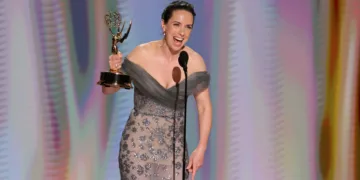



























Delhi Crime has secured a global reputation as a leading Indian police procedural, praised for its stark and realistic treatment of cases drawn from real incidents. Season 3 continues that approach by confronting social horror head-on. This chapter focuses on an interstate human trafficking chain that targets young, vulnerable girls and echoes the 2012 Baby Falak case.
DSP Vartika Chaturvedi (Shefali Shah), now on a punishment posting in Silchar, Assam, discovers a consignment of trafficked girls that triggers her return to Delhi. In the capital, ACP Neeti Singh (Rasika Dugal) handles a separate investigation into an abandoned, severely injured infant named Noor. The season gradually binds these strands, linking Delhi’s immediate crisis to a wider national conspiracy.
Narrative Scope and Structure
Season 3 deliberately stretches beyond the physical and symbolic frame of its title city. The investigation moves through Assam, Mizoram, Rohtak, Surat, and Mumbai, creating a large interstate grid that shifts the show’s emphasis. Repeated on-screen captions identifying each new location highlight the expanding map of the case.
The device reinforces the sense of scale yet also loosens the tightly rooted perspective that once defined the series. What began as a concentrated study of police work inside a single metropolis now plays as a wider procedural that trades some of the earlier intimacy for a pan-Indian stage.
The storytelling style leans toward a chase-driven design. Earlier seasons functioned as a “whydunit,” preoccupied with the social and institutional decay that permits crime to thrive. Here, the series unfolds more as a “cat-and-mouse” pursuit that tracks the police response to traffickers and handlers.
The leaner structure leaves fewer pauses for reflection, which softens the introspective depth associated with Delhi Crime. The opening episodes progress with slower tempo and flow while they establish new characters and intersecting plot lines. Later episodes accelerate and provide surges of tension, with the investigation gaining sharper urgency.
At several points, the writing and staging fall back on familiar patterns. Investigative rhythms and emotional cues from earlier seasons reappear, reducing freshness. Convenient investigative leaps also recur, and these shortcuts thin out the texture of gritty realism. Even with these issues, the season treats its material with care. The human trafficking plot and depictions of child abuse receive an earnest, cautious handling that keeps a respectful distance from spectacle while still conveying the horror of the crimes.
The Faces of Authority and Evil
Shefali Shah continues as the firm spine of the series in the role of Vartika Chaturvedi, carrying assured authority. At the same time, the writing steers her toward recognizable beats such as stunned silence followed by clipped reaction, which hints that this set of scripts gives her fewer new shades to explore. Rasika Dugal’s Neeti Singh offers the season’s most dynamic personal track.
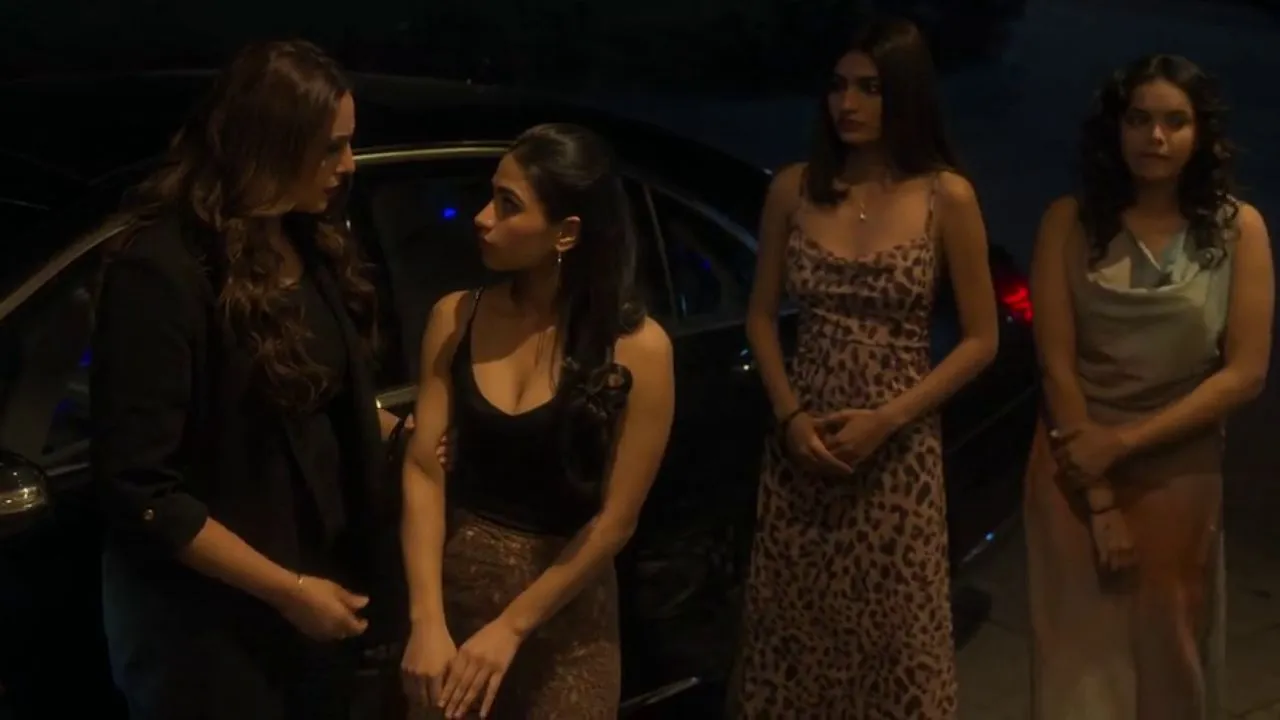
Her attempt to manage a collapsing marriage alongside professional responsibility builds a grounded emotional thread around the casework. The show sketches her work persona with care: confident with juniors yet more tentative and deferential in the presence of Vartika.
This personal story then recedes too quickly, closing off a path that could have deepened both character and theme. The wider team, including Bhupendra Singh (Rajesh Tailang), lends steady support and helps anchor the procedural spine of the series, and the supporting officers receive less space than before to inhabit their inner lives.
Badi Didi (Huma Qureshi) enters the story as the principal architect of the crime network. Qureshi delivers a forceful turn, especially in scenes that lean into the character’s menace, yet the writing around her remains broad. Her arrival feels abrupt, and her aims are rendered so clearly that she never acquires much mystery. Some responses have pointed to the strongly emphasized Haryanvi accent as a distraction that can overshadow other elements of her performance.
The scripts also frame her as both a monstrous figure and a woman shaped by patriarchy, a combination that the season underlines in direct strokes, without letting it emerge with much subtlety. Characters such as Kalyani and Rahul operate as secondary antagonists who keep the immediate tension alive and help bridge the twin cases. The portrayal of the non-Indian players, including figures like John and London, lands far less convincingly, since their writing relies on thin, stereotyped outlines that sit awkwardly inside the larger conspiracy.
Cultural Commentary and Tone
The central thematic line is clear and stark: women and children appear as commodities within India’s underground human trafficking economy. The show faces these brutal cycles of victimization and refuses to soften the scale of the damage.

Previous seasons worked as a concentrated examination of policing and embedded social fault lines. Season 3 adopts a wider canvas. The pan-Indian design feels ambitious, yet this approach also reduces the intense introspection that once defined Delhi Crime. The script touches on institutional breakdowns and social contradictions but often keeps the exploration at the surface, prioritizing exposure of the issue over patient scrutiny.
Even so, the narrative succeeds in spotlighting institutional neglect and systemic gaps. Practical obstacles recur throughout the investigation, including funding constraints and bureaucratic hurdles that slow urgent interstate operations. These sequences underline how police work bends to political and administrative limits and to the strategies of the criminals.
Another tonal shift appears in the reduced emphasis on private lives. Scenes that once dwelled on domestic strain and quiet exchanges between Vartika and Neeti appear less frequently. Those smaller, “tender” beats that softened the harshness of the cases recede into the background. With so much attention placed on case mechanics, the series thins out the emotional attachment that audiences previously formed with its central officers.
Cinematography and Score
Tanuj Chopra’s direction keeps the show aligned with a grounded, realistic register. The images, shaped by cinematographers Johan Aidt and Eric Wunder Lin, retain a gritty texture that fits the crime drama frame. The visual approach sits beside the global wave of high-quality streaming police procedurals, leaning toward stark realism rather than overt visual flourish and echoing the idiom associated with international parallel cinema.

The series continues in a song-less format and depends entirely on its score for musical presence. Ceiri Torjussen’s background music plays a key role. The score threads through the episodes, supporting the procedural rhythm and the gravity of the investigation without calling attention to itself.
Production design stays consistently assured, which reflects the scale of investment behind Delhi Crime. Costuming and sets work together to sustain the credibility of the many locations on screen. Editing remains mostly sharp and energetic, though some early passages feel sluggish. Those stretches suggest that slightly tighter cutting could have preserved a stronger sense of pace across the season.
Delhi Crime Season 3 is the newest installment of the International Emmy Award-winning police procedural series, which premiered exclusively on the streaming platform Netflix on November 13, 2025. This season returns to the gritty streets of the capital, inspired by the real-life Baby Falak case of 2012, and centers on DIG Vartika Chaturvedi as she investigates a horrifying interstate human trafficking network. Viewers can watch all six episodes of the new season, as well as the previous two, globally on Netflix.
Credits
Title: Delhi Crime Season 3
Distributor: Netflix
Release date: November 13, 2025
Rating: TV-MA
Running time: 45–51 minutes per episode (6 episodes)
Director: Tanuj Chopra
Writers: Mayank Tewari, Tanuj Chopra, Anu Singh Choudhary, Shubhra Swarup, Apoorva Bakshi, Michael Hogan
Producers and Executive Producers: Sidney Kimmel, Brian Kornreich, Robert Friedland, Aaron Kaplan, Jeff Sagansky, Florence Sloan, Apoorva Bakshi, Pooja Kohli, Sanjay Bachani, John Penotti, Kilian Kerwin, Michael Hogan
Cast: Shefali Shah, Rasika Dugal, Rajesh Tailang, Huma Qureshi, Sayani Gupta, Mita Vashisht, Anshumaan Pushkar, Kelly Dorji, Adil Hussain, Anurag Arora, Gopal Datt, Jaya Bhattacharya, Sidharth Bhardwaj, Yukti Thareja
Director of Photography (Cinematographer): Johan Heurlin Aidt, Eric Lin
Editors: Parikshhit Jha, Antara Lahiri, Manas Mittal
Composer: Ceiri Torjussen
The Review
Delhi Crime Season 3
Delhi Crime Season 3 retains its foundational strength through its sensitive handling of a horrifying human trafficking case and the committed performances of Shefali Shah and Rasika Dugal. The season struggles, however, to maintain the deep, localized introspection of its predecessors, trading thematic complexity for a broad, interstate chase that feels diluted and occasionally predictable. It remains a gritty procedural, but one that falls short of the high bar set by its own franchise. The show is at a crossroads, needing to recapture its original, sharper focus.
PROS
- Shefali Shah and Rasika Dugal bring gravity and conviction to their roles.
- The series tackles the disturbing topic of interstate human trafficking and child abuse with respect and sincerity.
- The visual style maintains the raw, authentic feel of the procedural drama.
- The latter half of the season delivers compelling, high-stakes procedural action.
- Huma Qureshi is effectively menacing as Badi Didi.
CONS
- The interstate sprawl makes the plot feel disjointed and less intensely focused than previous seasons.
- The storyline sometimes lacks the unexpected twists and deeper thematic layers expected from the franchise.
- The personal lives of the core police team are given minimal time, reducing viewer connection.
- The script occasionally relies on shortcuts, recycled emotional beats, and weakly characterized non-Indian figures.
- The initial episodes feel slow as they establish the wide-ranging plot.