



























Recruiting a second survivor changes the math immediately. A third changes the run. That simple escalation gives Yet Another Zombie Survivors its identity in a genre where automatic fire, experience gems, level-up choices, and swelling enemy counts are practically public utilities.
Awesome Games Studio keeps the familiar survivor-like foundation intact: movement remains the primary input, weapons can aim and fire automatically, dead zombies drop experience, and every level asks which upgrade can keep the build alive for another minute. The distinction is that the build belongs to a squad rather than one hero.
The game arrived at full release after roughly two years in Early Access, entering a field already packed with descendants of Vampire Survivors. Brotato, Halls of Torment, 20 Minutes Till Dawn, and Soulstone Survivors have each found their own answer to the same design problem: how do you add depth without wrecking the immediacy that made this format attractive? Here, the answer is three bodies moving as one unit.
There is no individual squad micromanagement. You pick a leader, find additional survivors during the run, and eventually field a trio that travels together. That preserves the clean movement-first control scheme while shifting much of the decision-making into composition. Suddenly, choosing a character is also choosing which future upgrades will matter.
From Shotgun to Slaughterhouse
The first minutes of a run are deliberately humble. A survivor fires a basic weapon into scattered groups while you steer around approaching zombies and collect the gems left behind. Level up, select an improvement, repeat. Then the build begins misbehaving.
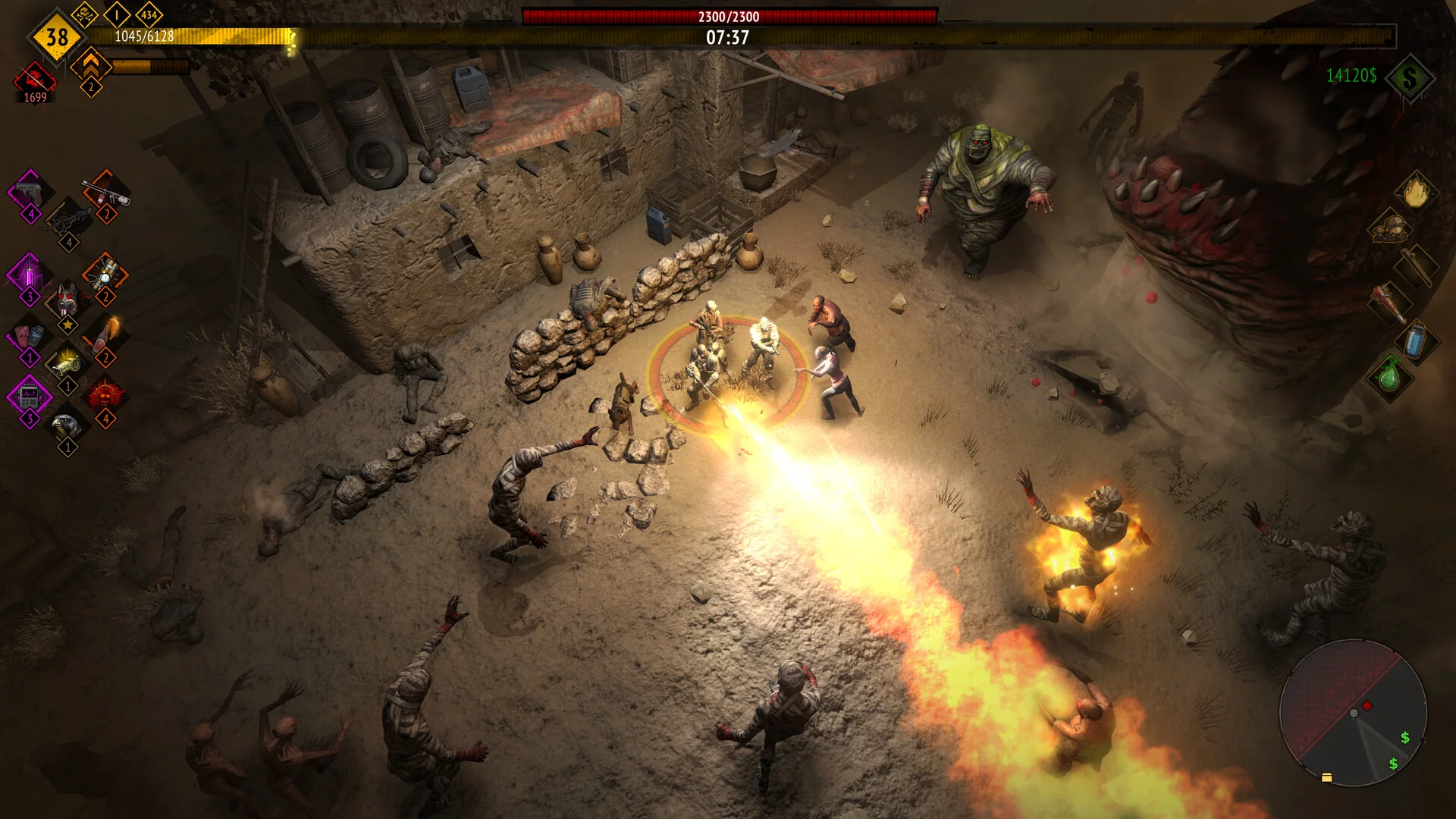
A shotgun can develop into a minigun. Sawblades multiply around the squad. Mines start appearing with enough frequency to shape whole patches of the battlefield. Grenades, air strikes, electrical fields, freezing effects, poison, and other abilities pile onto the same limited space until the game stops looking like three people surviving a zombie outbreak and starts looking like an industrial accident with experience points.
Also Read





That transformation is the central reward system. Individual upgrades matter because their effects become physically visible. Increasing the number of orbiting blades alters the safe area around the squad. Improving electrical attacks lets an Engineer-heavy setup erase groups before they reach close range. Adding status effects changes how quickly advancing enemies can close a route.
The input remains simple, but positioning gains importance as density increases. Early movement asks you to avoid a handful of bodies. High-pressure encounters can put dozens of zombies between the squad and a health pickup, turning a few meters of open ground into a routing problem.
The lack of a conventional dodge action makes those situations sharper. There is no universal escape button correcting every bad line through the mob. If you steer into a narrowing gap at the wrong moment, the punishment comes from the path you chose.
Lower difficulties can let a successful build drift toward automated destruction once enough upgrades stack together. Raising the difficulty changes the value of the same systems. A weapon choice that looked perfectly adequate while casually farming zombies can become a liability when the squad needs to clear space immediately. The game becomes better once its upgrade screen stops asking, “What looks fun?” and starts asking, “What keeps this composition alive?”
The Squad Is the Build
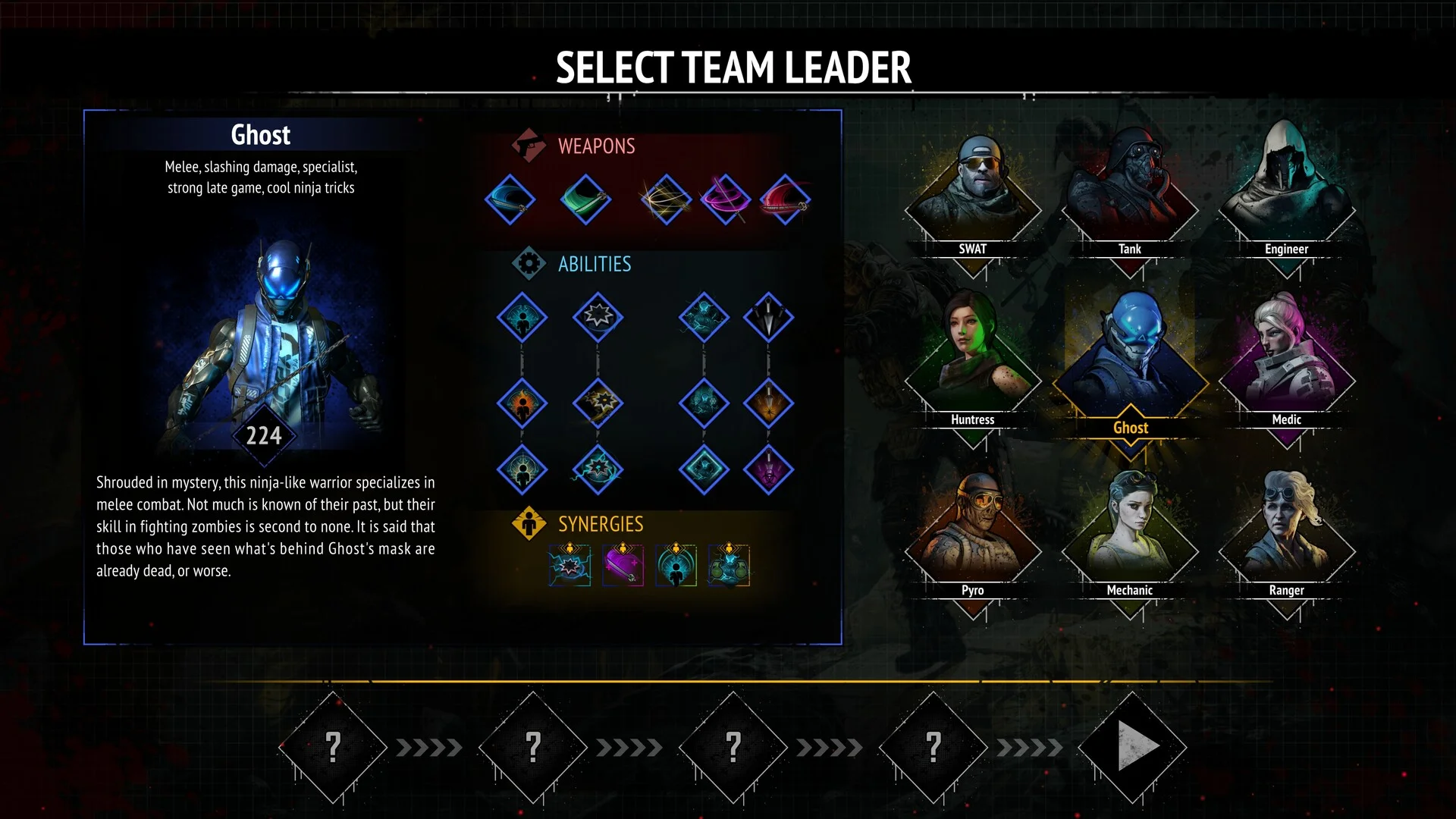
The smartest part of Yet Another Zombie Survivors is that character recruitment does not create three separate control schemes. It creates three overlapping upgrade economies. SWAT leans heavily into firearms and sustained bullet output. Ghost moves toward close-range katana attacks.
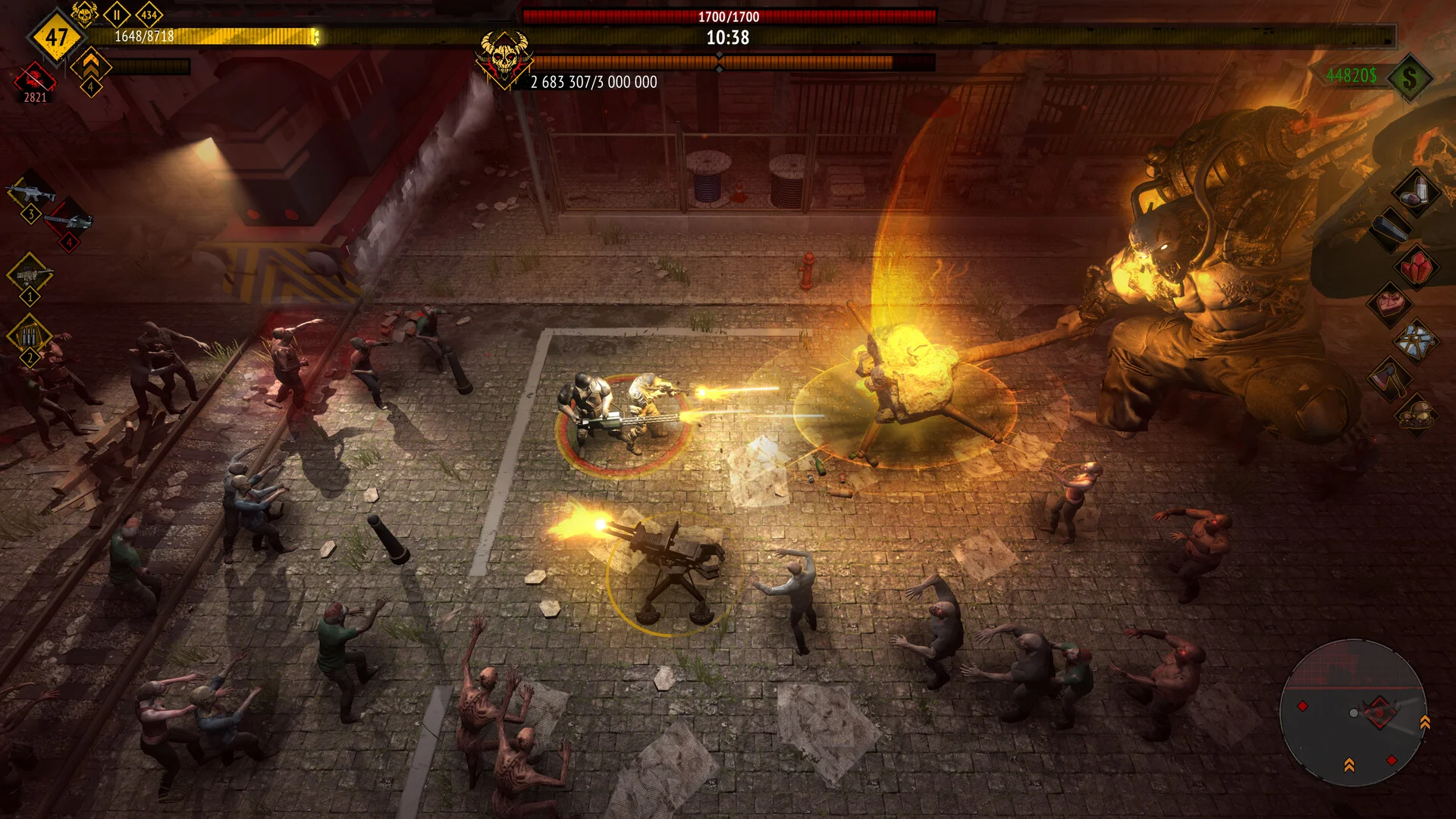
Engineer specializes in electrical damage and gadgets, filling crowded areas with lightning while benefiting from cooldown-focused bonuses. Pyro concentrates on fire and area damage. Tank brings greater durability and heavy weaponry. Hunter occupies the ranged archer space.
Those identities matter because upgrades can apply at different levels. Some strengthen a particular survivor. Others benefit the whole team. Passive items alter the broader setup, while risk-reward choices can raise damage output in exchange for penalties that become increasingly dangerous as enemy pressure climbs.
A run built around SWAT therefore asks different questions from one leaning on Engineer. With SWAT, sustained ranged output can become the backbone while the remaining members cover weaknesses. Engineer can turn ability frequency and electrical coverage into the central plan. Ghost can help handle enemies that breach the outer damage zone and reach the squad. The interesting choice is rarely “Which character is strongest?” It is “What does this character add to the two already here?”
That distinction gives team construction enough flexibility to support several approaches. You can spread resources across three complementary survivors, creating a broad set of answers to different enemy pressures. You can concentrate upgrades into one member and let the others function as support. You can prioritize area control, direct damage, status effects, or close-range protection.
The system stays readable because recruitment does not create formation management or individual orders. The entire squad still responds to one movement input. Complexity sits in planning rather than execution. There are limits. Once dependable combinations reveal themselves, certain upgrade decisions become easier to predict. A highly effective build can start suggesting its own next choice, especially after repeated runs teach you which skills produce reliable damage.
Character combinations keep that problem from settling too quickly. Change one member of the trio and priorities move with them. An upgrade that was automatic in the previous run may now compete with a bonus that supports a different damage source. The best survivor-like progression makes leveling feel like building an engine while somebody keeps throwing zombies into the machinery. This game gets surprisingly close.
One Objective, Many Ways to Suffer
The full release gives that engine plenty of places to run. There are nine unlockable characters or classes, five biomes, seven gameplay modes, three difficulty levels, character progression, skill trees, additional weapons, modifiers, missions, and a large collection of achievements. The fundamental activity remains stubbornly consistent: enter an arena, kill zombies, gain power, survive.
The modes matter because they alter the constraints around that repetition. Hardcore shortens the run and raises the danger, compressing the usual power curve. There is less room for a weak early setup to slowly repair itself. Decisions become urgent sooner because the enemies reach threatening levels before the build has time to wander toward competence.
Extermination attacks the upgrade economy from another angle. Abilities are limited and granted after clearing waves, forcing tighter planning around fewer available tools. The same combat model produces a different kind of pressure because abundance can no longer rescue careless choices. Character missions add another reason to step outside a favorite setup, while difficulty increases push established squad combinations into harsher conditions.
Permanent progression then gives failed attempts some value beyond practice. Characters gain experience separately, and skill trees provide another layer of advancement between runs. Death can therefore feed the next attempt rather than simply resetting the board.
Repetition remains the obvious weakness. Once the player understands the maps, recognizes the strongest upgrade paths, and settles into preferred teams, portions of the decision tree become familiar. No mode completely disguises the fact that almost every problem ends with an enormous number of zombies needing to die. The design succeeds when a new squad combination changes how that familiar problem must be solved.
Readable Carnage
The presentation rarely competes with the mechanics for attention. The 3D zombie-apocalypse aesthetic uses familiar material: urban streets, military survivors, mutated enemies, heavy weaponry, and increasingly dense hordes.
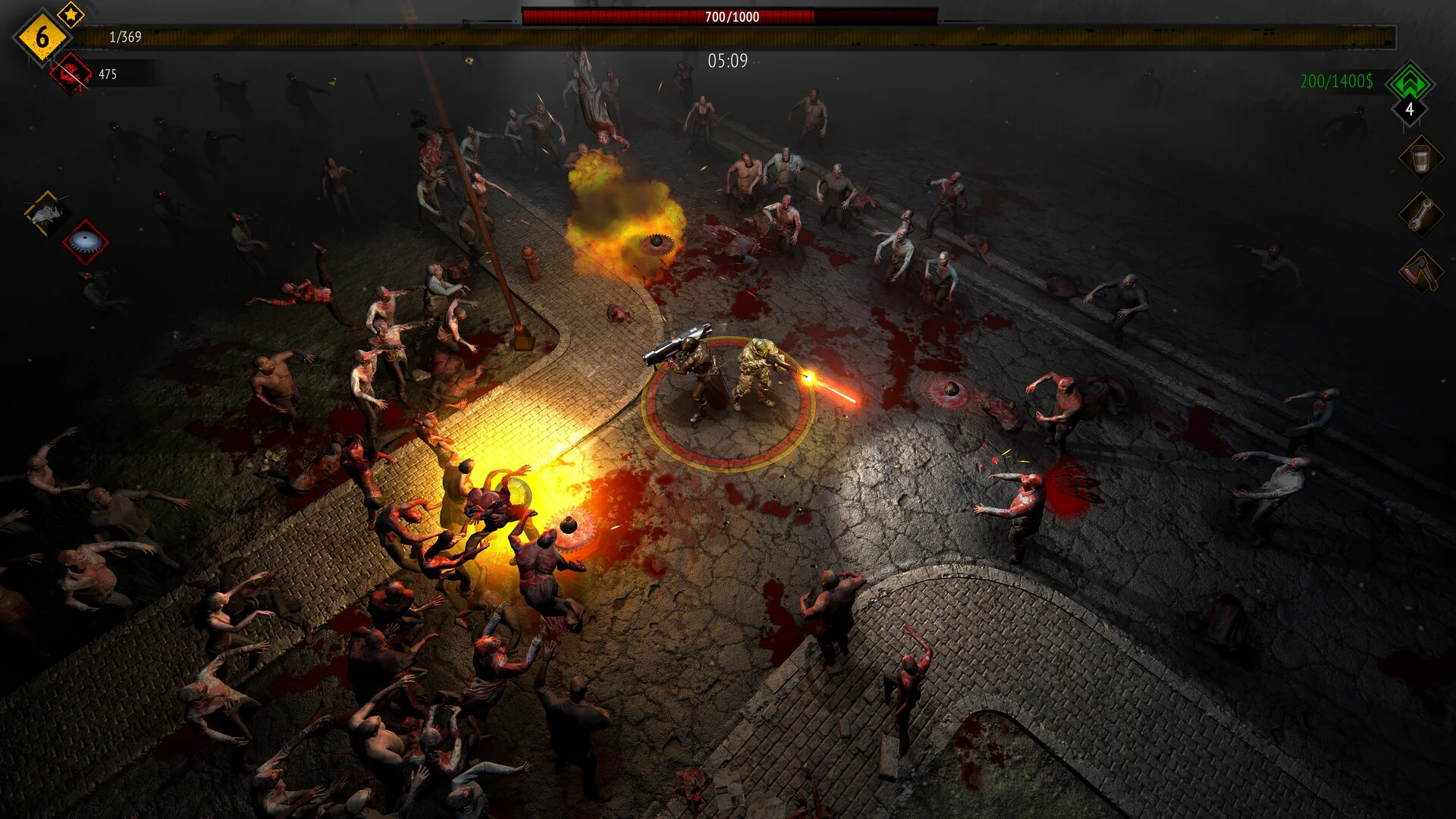
Enemy designs tend toward recognizable zombie archetypes, and the environments lack the strong visual identity seen in survivor-likes built around stranger settings or more stylized art. The five biomes provide environmental variation, though the fighting spaces can feel compact compared with some genre peers. What matters mechanically is clarity, and the game handles that pressure well.
Late in a successful run, the screen can contain bullets, flames, lightning, explosions, orbiting effects, pickups, and a mass of incoming enemies at the same time. The player can still usually identify the squad, locate immediate threats, and read an escape route through the crowd.
Engineer offers the clearest example. Stack enough electrical abilities and the battlefield becomes a chain of flashing attacks cutting through packed enemies. It looks chaotic, yet the effects rarely erase the information needed to move.
Audio serves the systems in a similar fashion. The music maintains forward momentum, zombie groans fill the expected space, and practical cues carry useful information. The S.O.S. sound is especially valuable early in a run because it helps direct the player toward recruitable squad members.
The camp introduced for the full release gives the game a quieter interface between massacres. Permanent skill-tree points can be assigned there, mission parameters checked, and information on weapons, abilities, and enemies reviewed. Unlocked survivors also appear around the space, occasionally exchanging brief lines that establish hobbies, attitudes, and small pieces of personality.
The writing wisely keeps those interactions short. These characters do not need extensive dramatic arcs to justify their presence. Seeing Ghost, SWAT, Engineer, and the rest exist somewhere outside the combat grid gives the roster enough texture that recruiting them can feel like assembling a team rather than adding another damage source. Then the next run begins, the S.O.S. sounds, and they become damage sources again.
The Review
Yet Another Zombie Survivors
Yet Another Zombie Survivors earns its place in the survivor-like crowd through one smart systemic change: building a three-person squad. Recruiting specialists such as SWAT, Ghost, and Engineer changes which upgrades deserve priority, while Hardcore and Extermination expose weaknesses that easier runs can hide. Some upgrade paths become predictable once strong combinations emerge, and the familiar zombie presentation contributes little identity of its own. Still, the progression works because each level-up can alter how the squad handles space, damage, and pressure. Simple controls leave plenty of room for meaningful build decisions.
PROS
- Strong three-survivor squad system
- Satisfying build synergies
- Excellent power escalation
- Varied modes and difficulties
- Clear combat readability
CONS
- Some predictable upgrade paths
- Conventional zombie presentation
- Repetition eventually surfaces
- No dodge mechanic