





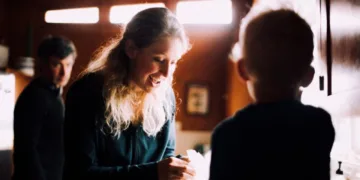














Childhood lasts longer when nobody tells you it has begun to end. Guillermina “Guille” Aranciaga and Belinda “Beli” Stutz spend their earliest years in Alessandra Sanguinetti’s The Illusion of an Everlasting Summer dancing, dressing up, swimming, inventing husbands and funerals, treating the Argentine Pampas as though imagination might permanently protect them from whatever adulthood is waiting to collect.
Sanguinetti began filming the cousins in 1999, after first photographing them for the project that would become The Adventures of Guille and Belinda and the Enigmatic Meaning of Their Dreams. Twenty-five years of footage now form her feature documentary debut. Guille and Beli move from childhood into adolescence, motherhood, work and periods of distance from one another, while Sanguinetti remains somewhere nearby.
Her voice enters from behind the camera. Her still camera clicks during conversations. The women call her Ale. That presence matters. This is never observation from a safe distance. Sanguinetti becomes part of the lives she preserves, and eventually the preservation itself changes those lives.
Games Before Gravity
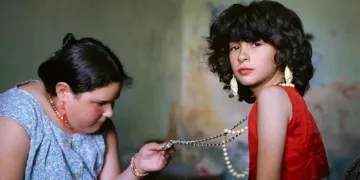
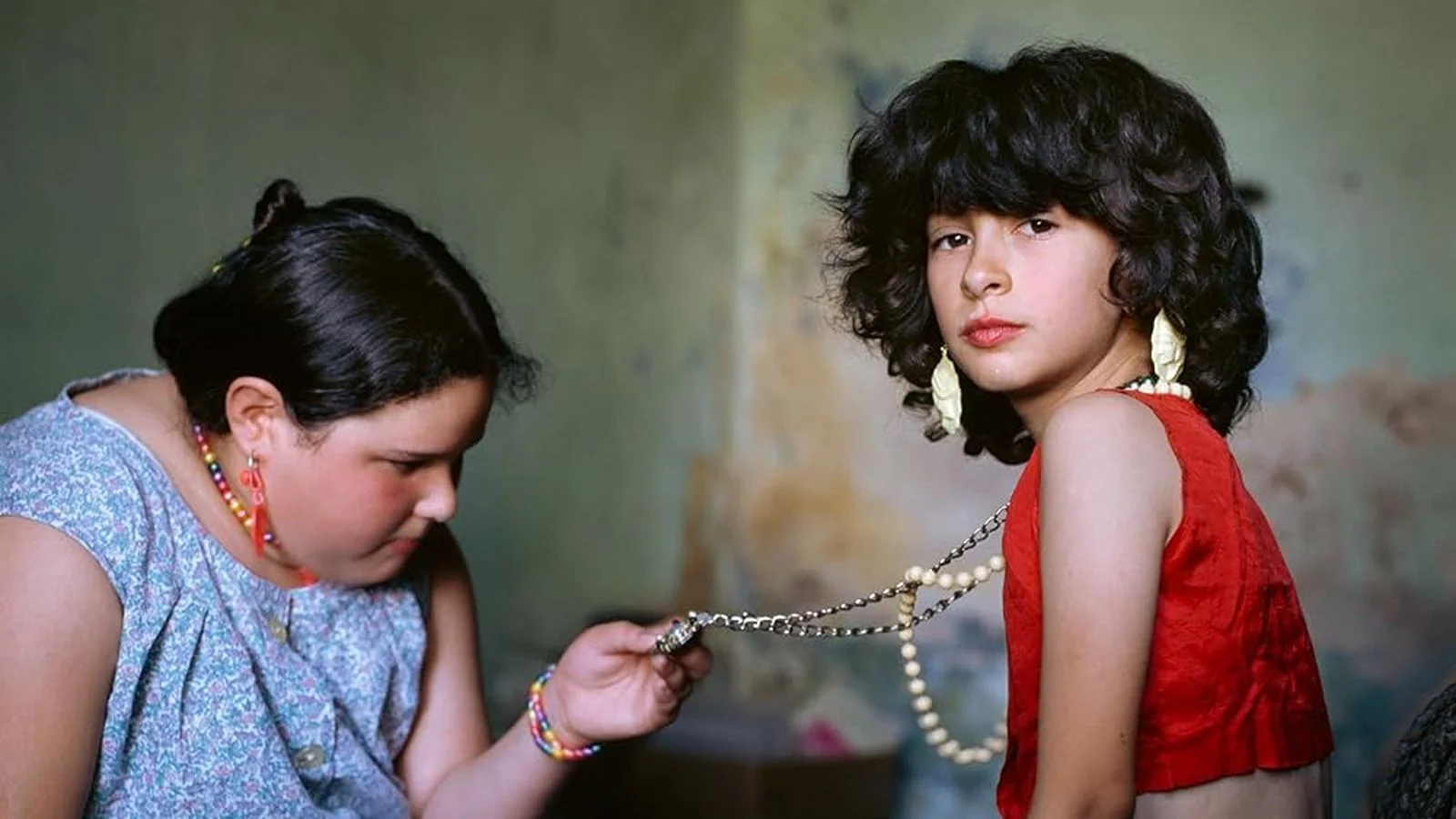
Guille and Beli understand performance before they understand consequence. In one early scene, Beli draws on a mustache and becomes a priest while Guille performs the devastated widow at a funeral. Solemnity survives for only a few seconds before laughter destroys the ceremony. Elsewhere, they dress in adult clothes, imagine glamorous futures and sit inside a broken-down truck pretending they are escaping toward Buenos Aires. Their countryside contains another script waiting for them.
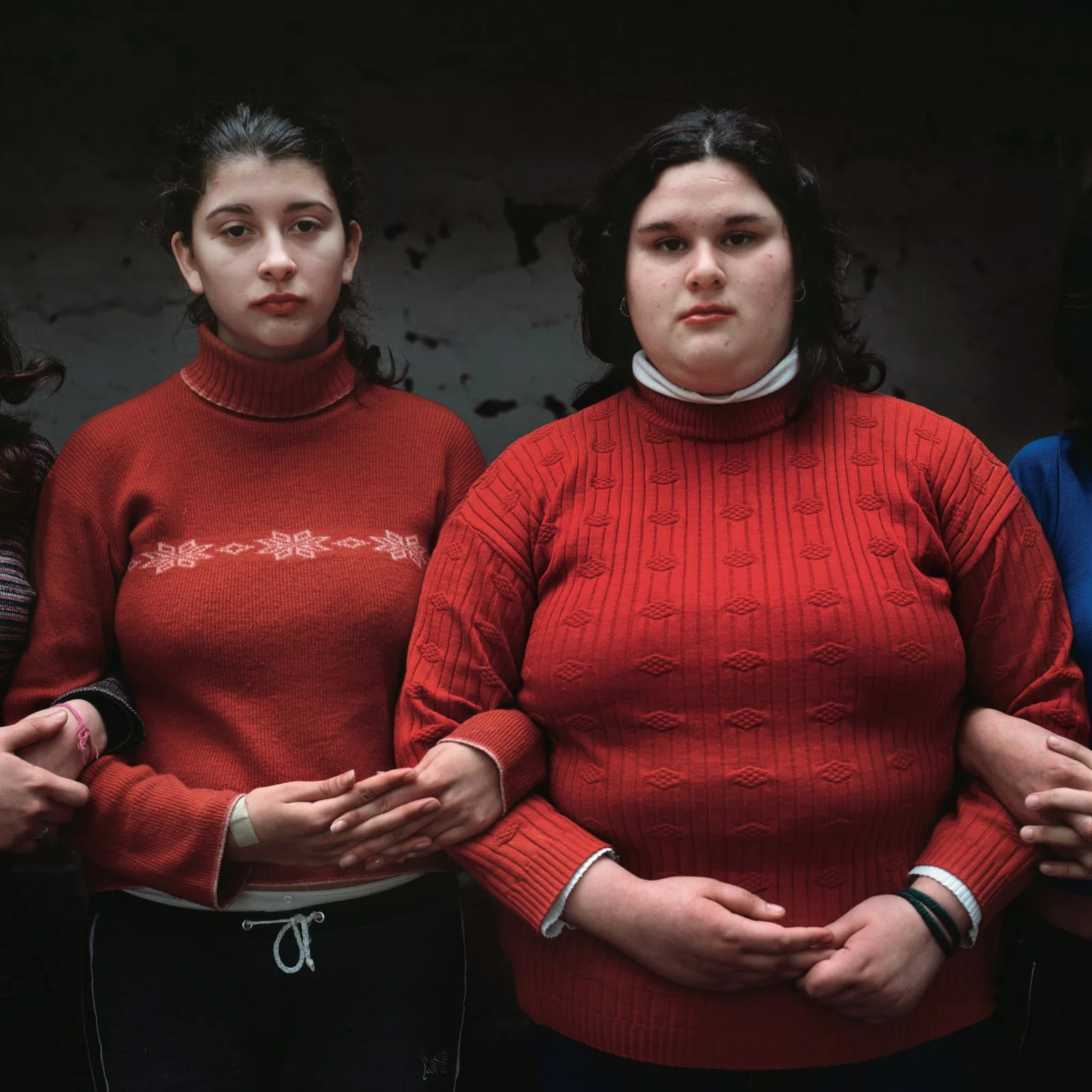
Guille tells Sanguinetti that men are strong and gruff while women are weak and kind. She already suspects that some future boyfriend will abandon her. Beli dreams of dancing and acting, yet her options for remaining in the countryside are presented with agricultural simplicity: work the land or marry someone who does.
The film never turns these statements into sociological lectures. Instead, they remain beside the games like shadows appearing before sunset. One of Sanguinetti’s most striking images finds Beli dancing in a communion dress beneath darkening clouds. In another, shot from above, the cousins examine an animal’s amniotic sac with absorbed curiosity. Fantasy and mortality occupy the same fields.
The repeated dances sometimes become excessive. Sanguinetti allows several sequences to linger after their emotional point has arrived, and the patience demanded by those scenes can become heavier than the childhood rhythm they seek to reproduce. Yet repetition also establishes what will later disappear. Every time the girls dance, the film quietly creates something that adulthood can take away.
Years Lost Between Cuts
Adulthood enters almost without ceremony. Beli has a boyfriend. Soon she is pregnant. Then she has children and a marriage rooted in the countryside. Guille works as a schoolteacher and speaks about how rarely she sees her cousin. Soon she has a child too. Sanguinetti and editor Andrés Tambornino refuse the comfort of constant dates or explanatory captions. Lives change between edits.
The effect becomes almost violent during the compressed passage through the women’s twenties. A baby appears, and within only a handful of cuts that child has grown toward the age Guille herself was when filming began. Ten years can vanish before the viewer has adjusted to the previous face.
This imbalance gives the documentary its deepest formal idea. Childhood receives duration. Adults receive acceleration. Early camcorder images reinforce that sensation. Their grain, imperfect exposure and domestic looseness belong to a period that feels physically distant. Cleaner digital images arrive as Guille and Beli age, stripping away some of the softness that surrounds their childhood performances. Time changes the women and the material recording them.
Beli’s admission that she hardly dances anymore hurts precisely because Sanguinetti has spent so long watching her dance. Nothing announces tragedy. No score needs to insist upon it. A woman simply names something she stopped doing. The loss is small enough to be ordinary. That makes it worse.
The Camera Inside Their Lives
The relationship between filmmaker and subject becomes clearest when Guille and Beli travel to Paris for an exhibition of Sanguinetti’s photographs. Images once created in rural Argentina now hang inside another country, carrying childhood into a space the girls could once reach only through pretend journeys.
Then comes an extraordinary echo. As children, they wore relatives’ clothes and imagined themselves dressed in luxury fashion. As adults, they pose for Vogue Italia in designer clothing. The resemblance is almost too neat, yet Sanguinetti wisely leaves the connection to breathe. A childhood game has somehow crossed decades and become real, though adulthood has changed the people standing inside it.
This is where the film’s artistic relationship becomes ethically interesting. Sanguinetti has documented Guille and Beli, yet her work has also produced exhibitions, travel and experiences that enter their biographies. The camera records their lives while participating in their construction. Artist and subjects keep altering one another.
Sanguinetti never reduces the cousins to picturesque representatives of rural Argentina. Their gestures remain stubbornly individual: Guille’s outgoing childhood confidence, Beli’s gradual withdrawal, their periods of estrangement, their return to easy playfulness in Paris. Their lives resist becoming symbols cleanly enough for that. Later, their own children play with a ferocity familiar from the earliest footage. Bodies change. Cameras change. Generations repeat gestures without knowing they are repetitions. The river keeps moving.
The Illusion of an Everlasting Summer premiered at the 79th Locarno Film Festival on August 8, 2026, and is available for streaming on Mubi. Filmed over twenty-five years, the documentary tracks two inseparable cousins growing up in the Argentine Pampas.
Where to Watch The Illusion of an Everlasting Summer (2026) Online
Full Credits
Title: The Illusion of an Everlasting Summer
Distributor: Mubi
Release date: August 8, 2026 (Locarno Film Festival)
Running time: 1 hour 34 minutes
Director: Alessandra Sanguinetti
Writers: Alessandra Sanguinetti
Producers and Executive Producers: Julia Solomonoff, Efe Çakarel, Laura Jacobs, Zane Meyer, Jason Ropell, Jenny Raskin
Cast: Guillermina, Belinda
Director of Photography (Cinematographer): Alessandra Sanguinetti
Editors: Andrés Tambornino
The Review
The Illusion of an Everlasting Summer
Time does the cruelest work quietly here. Childhood stretches across dances, costumes, river swims and invented futures, then adulthood arrives in cuts that swallow entire years. Alessandra Sanguinetti trusts those absences, allowing Guille and Beli’s changing faces, children and silences to carry the weight. Some early passages linger past their strongest rhythm, and the compressed twenties sacrifice psychological detail. Still, the film turns twenty-five years of observation into something tender, strange and quietly devastating: two lives preserved while they continue moving beyond the frame.
PROS
- Beautifully expressive temporal editing
- Intimate filmmaker-subject relationship
- Striking Pampas imagery
- Childhood performances gain later poignancy
- Remarkably unsentimental treatment of aging
CONS
- Repetitive early dance sequences
- Adult years feel heavily compressed
- Limited psychological interiority