







Sofia Coppola spends much of Making Marie Antoinette proving she can control a $40 million period production, while Eleanor Coppola quietly wonders why she spent so much of her own life recording other people’s work. That tension gives this archival documentary its real subject.
Eleanor shot roughly 80 hours of footage during the making of Sofia’s Marie Antoinette in 2006. Much of it sat unused for years. Mother and daughter began organizing the material during the 2020 lockdown, and after Eleanor died in 2024, Sofia completed the film with editor Aaron Matthews. Eleanor retains sole directing credit, an appropriate decision for a documentary whose most revealing perspective belongs to the person usually standing just outside everyone else’s frame.
Diane Lane reads excerpts from Eleanor’s journals, and those passages prevent the footage from becoming an expensive home movie. They turn production trivia into questions about authorship, motherhood, ambition, and the strange social machinery that decides who gets recognized as an artist.
Versailles Between Takes
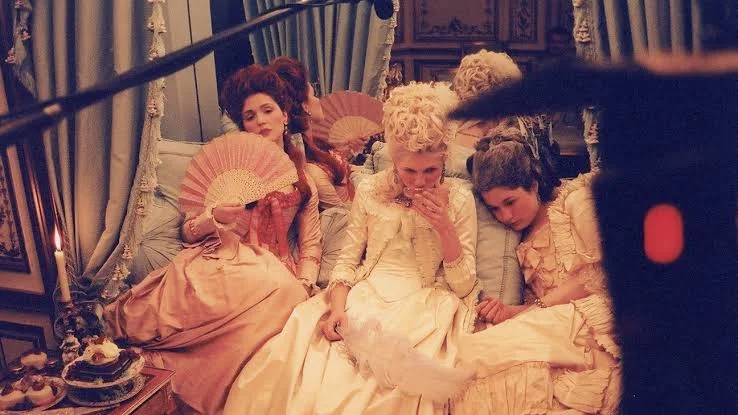
Eleanor’s greatest advantage is one no conventional behind-the-scenes filmmaker could manufacture: everybody knows her. Kirsten Dunst occasionally catches sight of Eleanor’s camera and briefly flinches before smiling. Sofia barely performs for it at all. Cast members sleep between setups. Exhaustion enters the frame without permission. Eleanor is close enough to see when her daughter’s posture changes under pressure, yet unobtrusive enough to capture the industrial absurdity of manufacturing 18th-century splendor on a schedule.
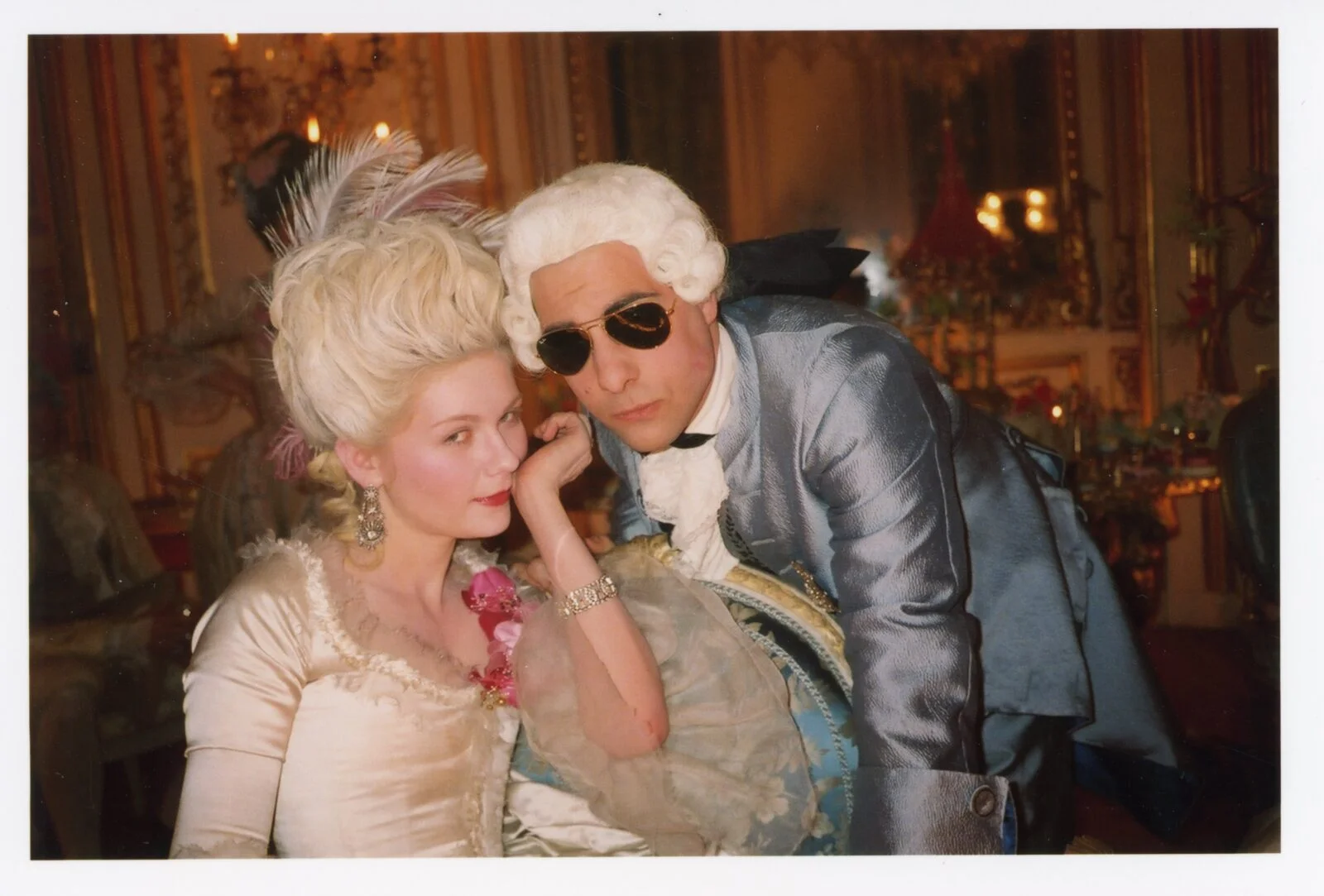
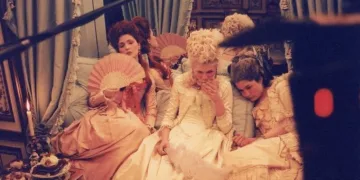
The documentary is particularly attentive to Milena Canonero’s costume department. Dunst receives 72 gowns. Fittings expand, hair and makeup consume precious hours, wigs require endless maintenance, and period dresses sometimes conceal contemporary sneakers. Elsewhere, extras rehearse elaborate bows while elaborate gelatin-covered food waits nearby looking simultaneously luxurious and faintly extraterrestrial.
The fragments are loose by design. Jason Schwartzman plays music between takes. Asia Argento reads palms. Rose Byrne jokes around. Roman Coppola handles second-unit work. Francis Ford Coppola appears with advice. Lance Acord searches for candlelight that can preserve Sofia’s delicate visual plan.
Some of this footage borders on incidental, and that is precisely where Eleanor’s authorship becomes interesting. She films what catches her curiosity rather than what a studio featurette would classify as important. Production hierarchy temporarily collapses. A wig being powdered can receive the same patience as a director giving an actor notes. Call it maternal mise-en-scène, if we must invent a term for the occasion.
Who Owns the Point of View?
The strongest material shows how deliberate Sofia’s supposedly effortless filmmaking could be. During the scene in which Marie is chastised by the Austrian ambassador for caring about clothing while political trouble grows around her, Sofia explains the character by referring to moments when she has needed to make producers understand that she is “not an idiot.” The comment is brief, yet it exposes the autobiographical pressure beneath the film’s powdered surfaces.
Another exchange is even sharper. While discussing the masked-ball sequence, Lance Acord suggests a point-of-view shot for Marie’s prospective lover. Sofia resists because giving him that perspective would temporarily transfer ownership of the scene away from Marie. The decision sounds minor when reduced to coverage. It is actually ideological. Who gets the camera is who gets reality.
Francis Ford Coppola had earlier suggested giving Louis XVI greater narrative attention, and Sofia pushed against that instinct too. Her Marie Antoinette was built around restricted perception. History exists outside the palace, but Marie experiences it through ceremony, gossip, clothing, expectation, and eventually panic. Expanding the men surrounding her might have produced a tidier historical drama. Sofia wanted something stranger.
Dunst understands the logic immediately. She talks about growing up famous and knowing that people formed judgments about her before knowing her personally. Marie’s isolation stops being a museum-piece problem. Celebrity becomes Versailles with publicists.
By the end of production, Sofia looks drained and tells Eleanor she has learned not to make films this large again. The remark is funny given the immaculate spectacle surrounding her, yet the fatigue visible in her face supplies the punchline.
Eleanor Enters the Picture
Eleanor’s journals slowly reveal an uncomfortable asymmetry inside the Coppola filmmaking dynasty. At Sofia’s age, Eleanor remembers raising three children and setting much of her own artistic ambition aside. She had already performed extraordinary documentary work around Francis Ford Coppola’s Apocalypse Now, footage that became Hearts of Darkness: A Filmmaker’s Apocalypse. Yet watching Sofia direct produces a question that prestige and family affection cannot dissolve: why did she so often become the observer?
One diary entry wonders why she is still documenting the creative lives of her husband and children instead of pursuing her own work. Lane reads it gently, which makes the thought sting harder. There is no melodramatic grievance attached. Just recognition.
The generational difference sits everywhere in the footage. Sofia can direct, have a family, argue with cinematographers, dismiss suggestions from her famous father, and insist that a major studio production retain the subjectivity of its young queen. Eleanor looks at that freedom with pride and something harder to name.
Years later, Sofia encouraged her mother to direct Paris Can Wait, Eleanor’s first narrative feature, released when she was 80. Then Sofia returned to these old tapes after Eleanor’s death and finished the documentary her mother had begun. That reversal is almost suspiciously perfect. Eleanor filmed Sofia becoming visible as a filmmaker. Sofia preserved Eleanor’s gaze so that the woman behind the camera could finally remain in the image.
Making Marie Antoinette premiered at the 53rd Telluride Film Festival on September 5, 2026, ahead of its scheduled release by Mubi. The documentary chronicles the behind-the-scenes production of Sofia Coppola’s 2006 historical drama through archival footage captured by Eleanor Coppola.
Where to Watch Making Marie Antoinette (2026) Online
Full Credits
Title: Making Marie Antoinette
Distributor: Mubi
Release date: September 5, 2026 (Telluride Film Festival)
Running time: 1 hour 26 minutes
Director: Eleanor Coppola
Producers and Executive Producers: Lorenzo Mieli, Mario Gianani, Rachel Dengiz, Youree Henley, Sofia Coppola
Cast: Diane Lane, Eleanor Coppola, Sofia Coppola
Director of Photography (Cinematographer): Eleanor Coppola
Editors: Aaron Matthews
The Review
Making Marie Antoinette
Making Marie Antoinette begins as an archival curiosity and quietly becomes a study of authorship passing between generations. Eleanor Coppola watches Sofia command Versailles while questioning the years she spent documenting other people’s ambitions, and Sofia later completes the film after her mother’s death. The gowns, exhausted actors, candlelight tests, and arguments over Marie’s point of view give the documentary texture, yet Eleanor’s journal gives it meaning. Its loose structure can feel slight beside Hearts of Darkness, but that intimacy suits a film concerned with who gets seen, who does the looking, and who finally gets to create.
PROS
- Eleanor Coppola’s intimate access
- Diane Lane’s restrained journal readings
- Revealing footage of Sofia directing
- Rich production-detail observation
- Strong mother-daughter thematic structure
CONS
- Loose, diary-like construction
- Limited appeal beyond Coppola devotees
- Some production footage feels incidental