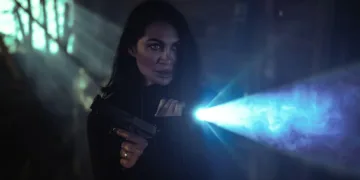









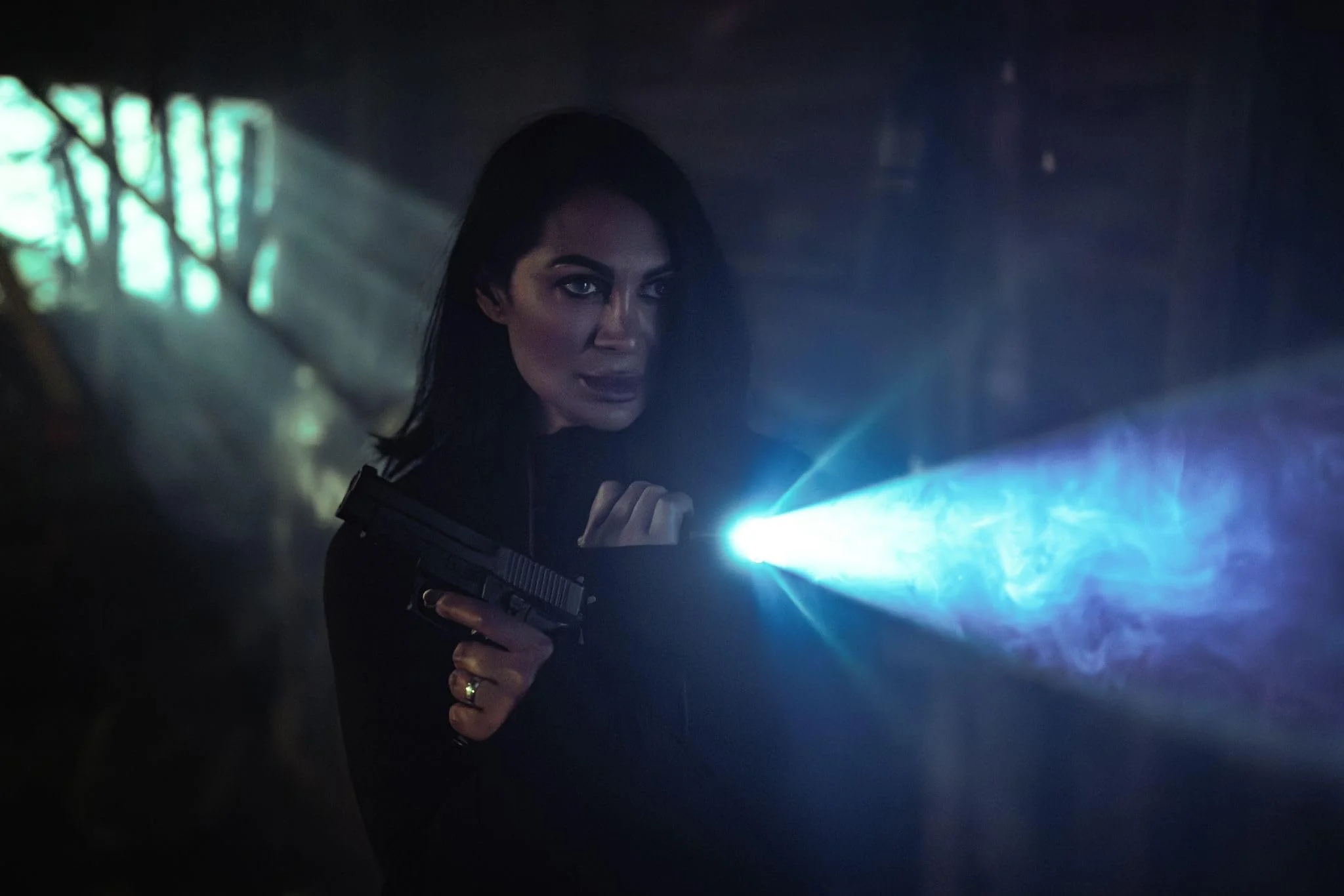

Ros Knight does not enter the intelligence world with the confidence of someone born for fieldwork. Jeanine Nerissa Sothcott plays her as a scientist pushed into danger because her knowledge of CN9, a man-made biological agent capable of killing from inside the body, suddenly makes her indispensable. That vulnerability gives Knightfall its strongest source of tension.
Ben Fortune’s film keeps its espionage story small. An operation involving the stolen weapon goes wrong, Ros becomes a target, and survival sends her toward two men representing different parts of her life: Hugh, her MI5 boyfriend, and Charles, her estranged father and retired spy-catcher. The premise has the usual ingredients of British spy fiction, yet the film rarely chases spectacle. Its better moments come from suspicion, personal history, and the discomfort of deciding whom to trust.
The opening covert operation, complete with a crossbow, briefly suggests something louder. The film soon settles into drizzly roads, safe houses, country rooms, surveillance screens, and conversations where one wrong assumption can matter as much as one missed shot. That scale suits the story when the characters carry the pressure. It hurts whenever the plotting becomes harder to follow than the danger itself.
Fathers, Daughters, and Chessboards
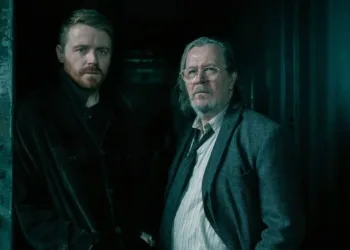
The relationship between Ros and Charles is where the film finds its emotional footing. Ian Ogilvy gives Charles the relaxed authority of someone whose professional habits survived retirement. He does not need a flashy demonstration of competence. His silences, careful observations, and treatment of Ros suggest a man who still thinks several moves ahead, even when family history makes those moves harder to predict.
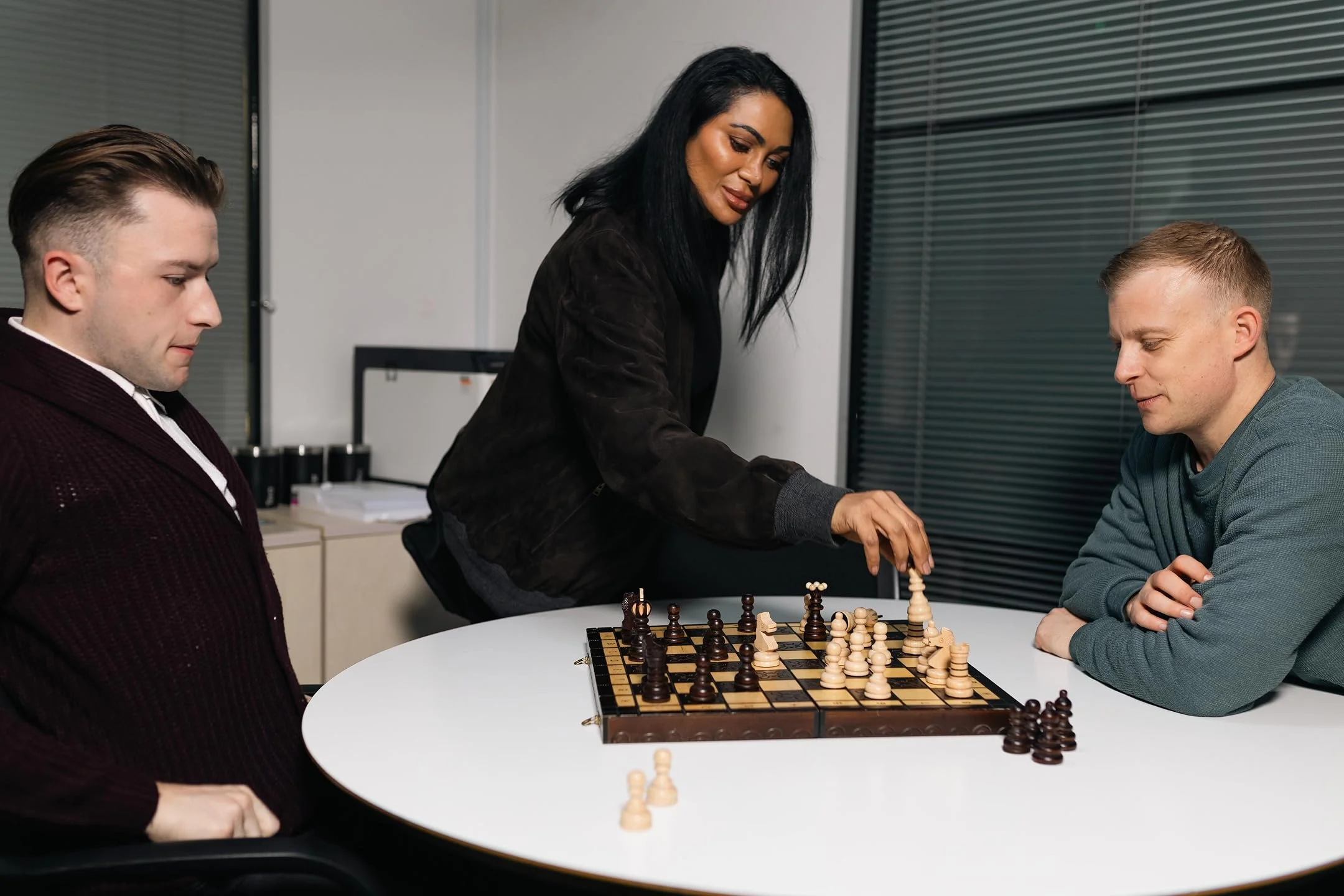
Their chess game captures the film at its clearest. Charles talks through anticipation, positioning, and knowing when to move, while the board turns spycraft into something Ros can physically see. The scene works because the metaphor never feels detached from their relationship. Ros has come to him for protection, yet she is also deciding how much of his worldview she still accepts.
Sothcott keeps Ros grounded during the physical confrontations too. When she faces larger opponents, she relies on movement, leverage, and whatever the environment gives her. Her encounter with Michael Paré’s supposedly American intelligence operative is especially effective because the danger grows from uncertainty first. Ros has to read him before she has to fight him.
Hugh is less convincing as the emotional third point. Geoffrey Moore carries an easy screen charm, and his presence opposite Ogilvy creates a pleasant generational texture, but Ros and Hugh rarely generate the same charge she has with Charles. Hugh works better as a reminder of the intelligence service Ros has entered than as the person she is meant to be closest to.
Danger After Dark
James Westlake’s cinematography gives Knightfall much of its atmosphere. Night scenes lean into deep blue-black shadows, particularly when Ros travels toward Charles and during the rain-soaked marina sequence. Reflections on wet surfaces and the cold darkness make Ros look exposed rather than heroic, which helps the action feel tense when the staging itself stays restrained.
The production design also quietly tells us who these people are. Ros occupies a sparse safe house. Hugh lives among cleaner, sleeker surfaces, including a striking glass fireplace. Charles lives inside wood, staircases, artwork, old fireplaces, and layers of history. Then his surveillance monitors flicker into view. The old spy may prefer an old house, but he has kept pace with the world trying to kill him.
That setup pays off when attackers breach the estate and blow through the front door. Ros and Charles fighting alongside each other gives their reconciliation a physical form, and the manor’s corridors and grounds become part of the encounter.
The action loses some force when it moves outside into the gardens or toward the interior standoff. Gunmen advancing through the property can feel smaller than the biological threat suggests, and several confrontations struggle to build momentum.
.Mike Myshko’s editing keeps events moving, while Logan James’s brassy score occasionally promises a level of danger the images cannot fully supply. The bigger problem is clarity. Shifting loyalties and double-crosses begin to blur, so betrayals sometimes arrive before the audience has fully understood the relationship being broken.
British Espionage Without the Glamour
Geoffrey Moore’s casting inevitably brings Roger Moore into the room, particularly with Hugh working inside British intelligence. Fortune handles that heritage with restraint. There are no gadget gags or obvious attempts to impersonate Bond. Moore is simply allowed to play Hugh.
Ian Ogilvy brings his own history to the film, having followed Roger Moore as Simon Templar in Return of the Saint. Putting Ogilvy opposite Moore’s son gives Knightfall a strange little lineage running underneath the plot, yet the film never stops to wink at it.
That feels appropriate for a thriller defined by reduction. There are no supercars racing across continents. There is a Mini, a marina, a country estate, dark roads, and one front room where a major confrontation has to carry the weight that a larger production might assign to an entire fortress.
Sometimes that modesty gives Knightfall charm. Charles watching black-and-white security monitors is far easier to believe than a room full of absurd spy technology. Ros struggling physically against larger opponents creates tension precisely because she looks vulnerable. The film loses some of that feeling when its conspiracies grow wider than its staging can comfortably contain.
Still, there is something appealing about watching a spy thriller trust a chessboard, a strained father-daughter relationship, and one rainy stretch of darkness to create suspense. Knightfall is at its best when danger feels close enough to touch.
Knightfall arrives on Digital and On Demand platforms on September 11, 2026. The grounded British spy thriller follows a retired operative pulled back into action when a scientist holding the key to a biological weapon is targeted.
Full Credits
Title: Knightfall
Distributor: Digital and On Demand platforms
Release date: September 11, 2026
Running time: Standard feature length
Director: Ben Fortune
Writers: Robert Dunn, James Smy, Bob Schultz, Simon Cluett
Producers and Executive Producers: Jonathan Sothcott
Cast: Ian Ogilvy, Jeanine Nerissa Sothcott, Geoffrey Moore, Robert Cavanah, Rupert Holliday Evans, Nick Moran, Michael Paré
The Review
Knightfall
Knightfall works best when Ros and Charles are allowed to carry the danger together. Their chess game, the assault on Charles’s estate, and Ian Ogilvy’s quietly assured performance give the film a human pulse that its biological-weapon plot often lacks. The shifting allegiances can muddy the suspense, while several action scenes struggle to sell the threat beyond their limited staging. Still, the rain-soaked locations, old-school spy atmosphere, and father-daughter dynamic give this small British thriller a certain scrappy appeal.
PROS
- Strong Ros and Charles relationship
- Ian Ogilvy’s confident performance
- Effective night photography
- Charming old-school spy atmosphere
- Economical pacing
CONS
- Confusing shifting allegiances
- Uneven action staging
- Weak Ros and Hugh chemistry
- Limited sense of danger