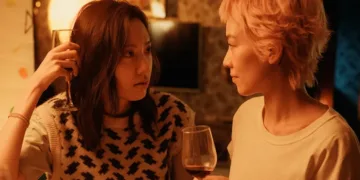




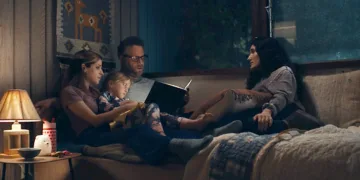

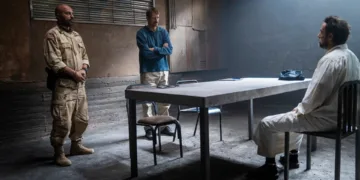











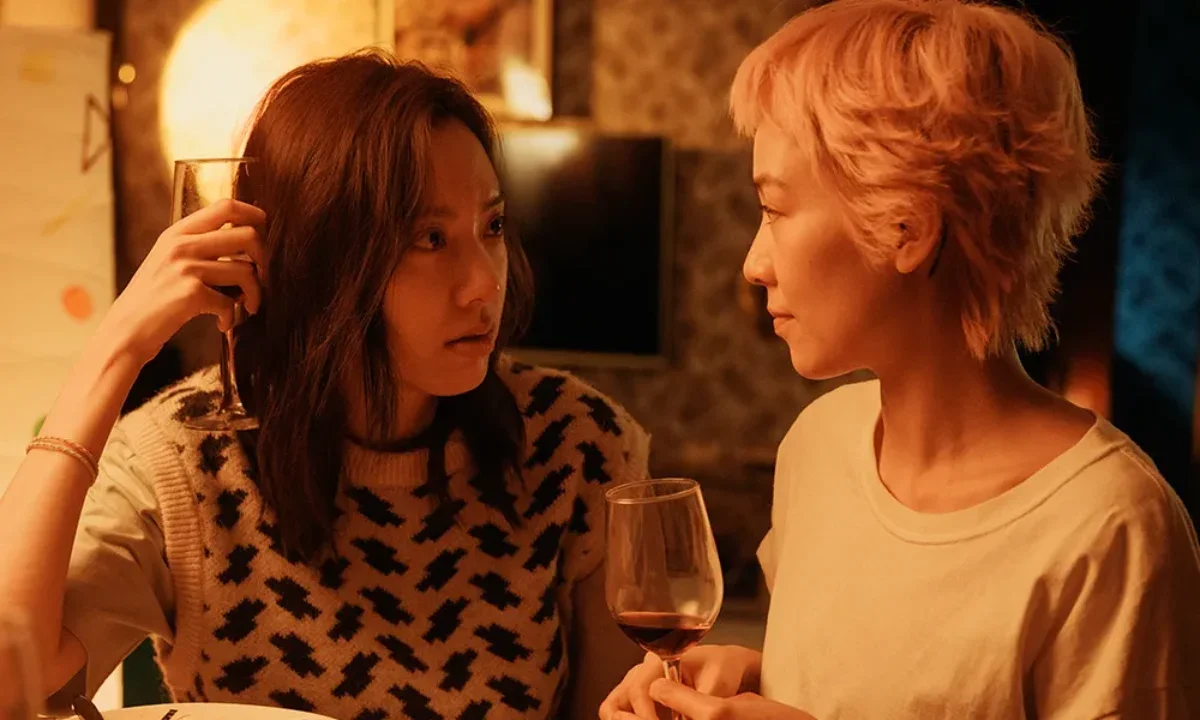

Lei’s mother can tolerate two women sharing an apartment so long as their intimacy can be translated into hygiene. Her warning that Lei and Li Bei should keep their toothbrushes and underwear separate to avoid “cross-infection” is funny because it is so absurdly practical, but the joke carries the social arrangement that Michelle Zhou’s Big Little Things sets out to examine. Lei’s family can see almost all of her adult life. They simply lack, or refuse, the language that would make the relationship in front of them legible.
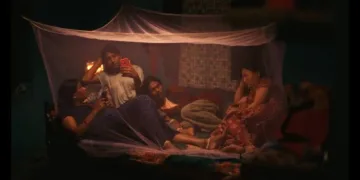
That gap between visibility and recognition gives Zhou’s debut its sharpest idea. Lei lives in Beijing with Li Bei, but as Lunar New Year approaches she returns to Harbin carrying a plan designed to preserve the fiction surrounding her life. Yao, a tattoo artist connected to her work helping students apply to overseas universities, will play the boyfriend. The arrangement looks flimsy, yet it fits perfectly into the family’s expectations. A male partner can be introduced, inspected, teased about marriage and absorbed into the holiday almost instantly. Li Bei, by contrast, can share Lei’s home and daily life and still be demoted to “friend.”
Zhou does not present heterosexuality as an explicit ideology handed down in speeches. It arrives through habit, family banter, questions about marriage, talk of children and the assumption that adulthood has a recognizable sequence. Yao is believable to Lei’s relatives because he already occupies a social category prepared for him. Li Bei’s relationship exists fully in private yet becomes socially unreal the moment family language takes over. Lei’s lie protects her from confrontation, but it also strengthens the system that makes the lie necessary.
The film is equally clear about the damage hidden inside that protection. Lei regards the fake boyfriend as temporary cover, a small performance that will quiet her mother and allow everyone to finish the holiday intact. Yao begins taking the role seriously, cooking, toasting the elders and worrying about the family’s opinion of him. Li Bei experiences the same arrangement from the opposite side. Every successful moment of the deception turns her real relationship into something that must remain invisible. What Lei calls caution starts to resemble control once other people are asked to perform around her fear.
Zhou’s restraint matters because this material could have been arranged as a sequence of confrontations, each one louder than the last. She chooses ordinary pressure instead. Family expectation accumulates through small comments and practical questions, while the romantic conflict develops through the unequal burden of secrecy. Lei’s mother is intrusive and controlling, but she is not flattened into a monster constructed for easy moral victory. Lei is sympathetic, but the film refuses to grant her every excuse. Li Bei’s anger forces the story to admit that concealment can wound the person it is supposedly meant to protect.
That moral balance gives the familiar coming-out framework fresh force. The most difficult conflicts around identity are often sustained by affection rather than open hostility. Lei fears hurting her parents because she loves them. Her parents exert pressure through the same language of concern. Li Bei asks for honesty because love without acknowledgment has started to feel like disappearance. Everyone claims protection, and each version of protection carries a cost.
Zhou’s formal choices make that condition physical. Repeated images of surveillance cameras turn observation into part of the film’s environment. Lei is trying to maintain separate versions of herself in a world where being watched is ordinary. The sound design extends that pressure by letting fragments of strangers’ private conversations drift into earshot, briefly exposing lives that were meant to remain contained. Privacy is never secure. Secrets travel through walls, family tables and public space.
Harbin sharpens the same idea through climate and emptiness. The cold gives the family reunion a brittle surface, while the snow and emptied spaces after the celebrations create emotional suspension. One of the film’s strongest images places Lei opposite her father in an empty restaurant after the conflict has broken open. The crowd has disappeared, the holiday performance is finished, and the two are left with a relationship that cannot be repaired through ritual. His relative silence gives the scene weight. When he finally tells her to live her life well and keep contact with her mother, the gesture is modest, incomplete and far stronger for refusing total reconciliation.
Hai Yu’s presence gives that scene an unusual charge. He is a non-professional actor and the real-life father of producer Chun Yu, Zhou’s partner, whose family history helped inspire the film. The casting folds the act of filmmaking back into the subject itself. A real father participates in a fictional version of a familial rupture and, through performance, enters a conversation that once existed outside the screen. Zhou has described this process as “radical reconciliation,” and the phrase fits because the reconciliation shown here is so limited. Nothing is solved cleanly. Something has still shifted.
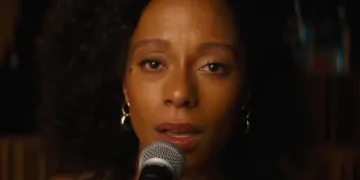
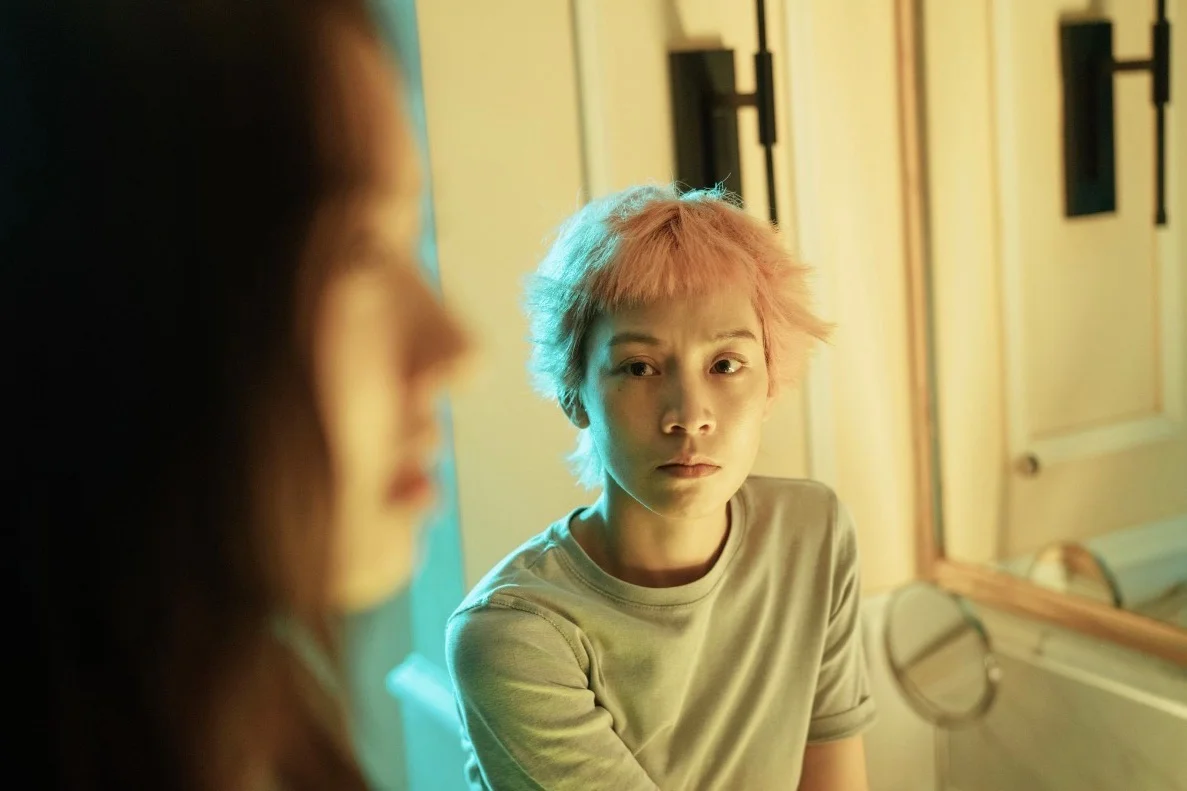
Cuishan Liang carries Lei through these contradictions without turning fear into passivity. Her pink cropped hair gives her an immediately self-defined appearance, which makes the distance between visible individuality and private caution especially productive. The film’s mint greens and neon accents often surround her with color even as the story closes in. Li Bei’s directness supplies the opposing energy the drama needs, forcing Lei’s evasions into the open without making the relationship feel like a device built to trigger a confession.
Big Little Things finds its strongest material in that tension between looking free and living cautiously, between being seen and being recognized. Zhou’s debut is familiar in premise but unusually exact about the social machinery that keeps a family’s expectations running long after everyone senses the truth. Lei leaves Harbin after the boyfriend fiction has collapsed, but the habits that made it useful remain in place, alongside a father willing to loosen his claim over her life and a mother whose expectations are still unresolved.
Big Little Things had its world premiere in the Orizzonti section of the 83rd Venice International Film Festival on September 11, 2026. The drama follows a young woman who introduces a fake boyfriend to her traditional family, only for chaos to ensue when her actual girlfriend unexpectedly arrives.
Full Credits
Title: Big Little Things
Distributor: Moebius Entertainment
Release date: September 11, 2026 (Venice International Film Festival)
Rating: Not Rated
Running time: 1 hour 49 minutes (109 minutes)
Director: Michelle Zhou
Writers: Michelle Zhou
Producers and Executive Producers: Junjie Zhai, Clarissa Zhang
Cast: Cuishan Liang, Jialing Sun, Bin Yu, Ling Hu, Hai Yu
Director of Photography (Cinematographer): Hark Xu
Editors: Xinzhu Liu
Composer: Gang Yu
The Review
Big Little Things
Big Little Things finds its force in the social arrangements surrounding Lei rather than in the mechanics of revelation itself. Michelle Zhou treats family expectation, secrecy and queer intimacy as pressures embedded in ordinary language, ritual and space, allowing the conflict to remain painful without becoming schematic. Its surveillance imagery, winter settings and restrained performances deepen that argument, while Hai Yu’s casting gives the father-daughter reconciliation an unusual emotional and cultural weight. Familiar territory becomes precise through careful observation.
PROS
- Sharp treatment of family expectation
- Restrained, humane direction
- Strong use of surveillance and sound
- Cuishan Liang’s controlled performance
- Hai Yu’s affecting father-daughter scenes
CONS
- Familiar coming-out framework
- Some thematic ideas are stronger than the plot
- Secondary relationships receive less development