




























Railway simulation has always carried a curious cultural problem. British commuter lines, German high-speed systems, and American regional rail all operate under different assumptions about distance, signaling, labor, and routine, yet a game has to translate them into a common language of buttons, schedules, and player input. Train Sim World 7 is most interesting when it acknowledges that translation rather than pretending every railway asks the same thing of its driver.
Dovetail Games approaches that problem by loosening the idea of how seriously a player must perform the role. The new Beginner Controls reduce much of the cab procedure to the basic act of accelerating, braking, and moving between stations, with other operations automated. Physics are adjusted to make stopping and acceleration more immediate as well. This sounds almost sacrilegious for a simulator built on procedural detail, yet the result works because the full systems remain available.
That distinction matters. Beginner Controls do not replace AWS, TPWS, PZB, LZB, SIFA, cab setup, signaling discipline, or the deeper locomotive-specific procedures. They sit beside them. A player can treat the railway as a technical discipline on one evening and as a slower, almost meditative form of virtual travel on another.
It is a surprisingly sensible solution to a problem simulation games often create for themselves. Fidelity becomes a status system, where mastering complexity can feel like the only legitimate way to play. Train Sim World 7 is less doctrinaire. Sometimes you want to understand the machine. Sometimes you want to watch Yorkshire slide past the window without spending ten minutes preparing the cab.
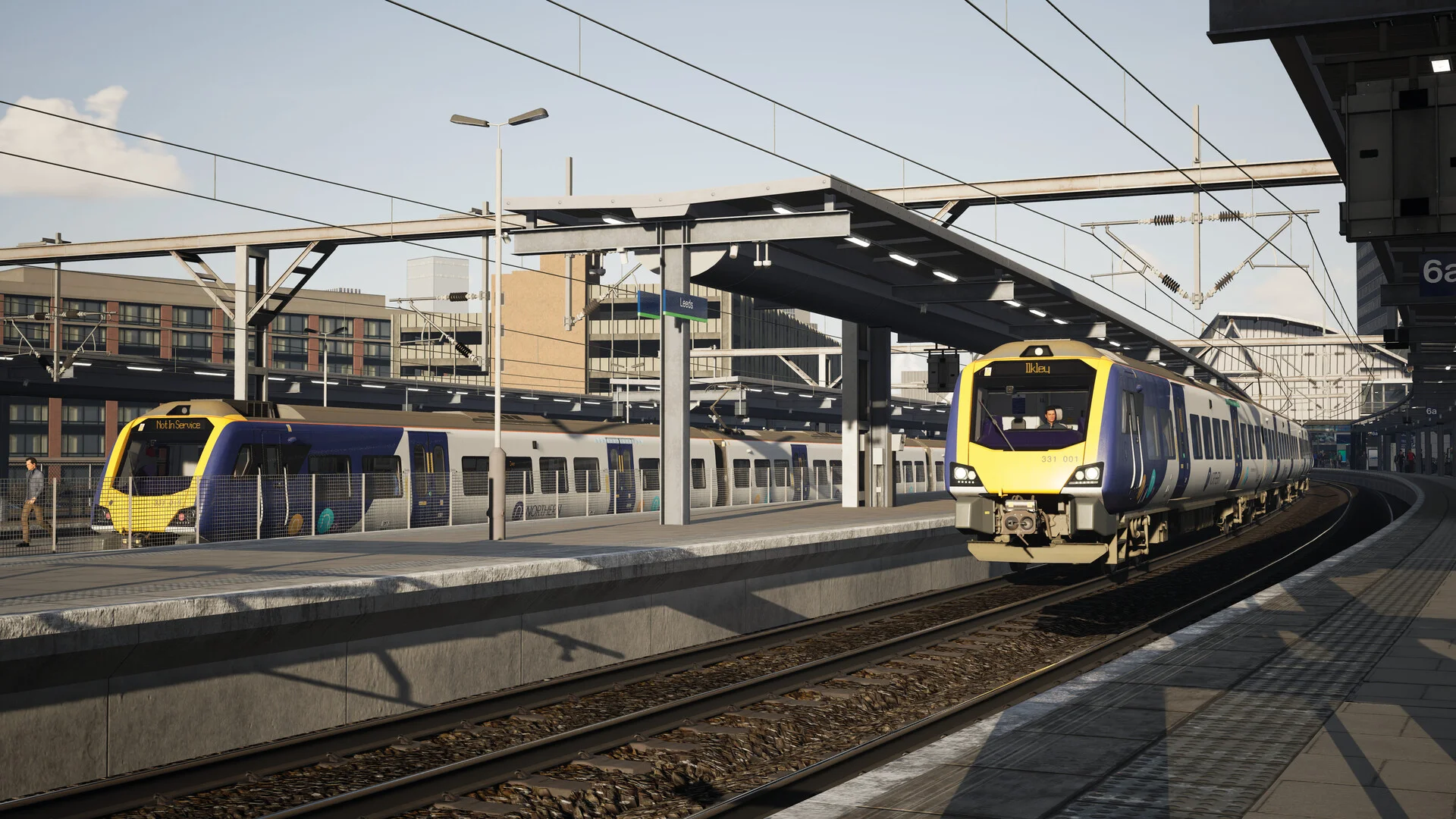
The three new routes strengthen that flexibility because they represent substantially different railway cultures rather than cosmetic changes of scenery. The Airedale & Wharfedale Network gives the game its strongest internal variety, linking Leeds, Bradford Forster Square, Skipton, and Ilkley while using the Rylstone Quarry Branch and Leeds Aggregate Terminal to fold freight into the same railway. The geography does not behave like a simple corridor. Passenger runs branch between several destinations, so the network feels interconnected instead of asking you to repeat the same track in reverse.
The Northern Class 331 and Class 333 reinforce that distinction through handling and sound. The 331 feels modern and responsive, well suited to repeated station stops and quick acceleration. The 333 has a rougher mechanical personality, especially through its motor noise, vibration, and cab sounds. Add LNER Class 801 services and Class 66 limestone operations, and the same British railway shifts from commuter regularity to faster passenger work and slow industrial movement.
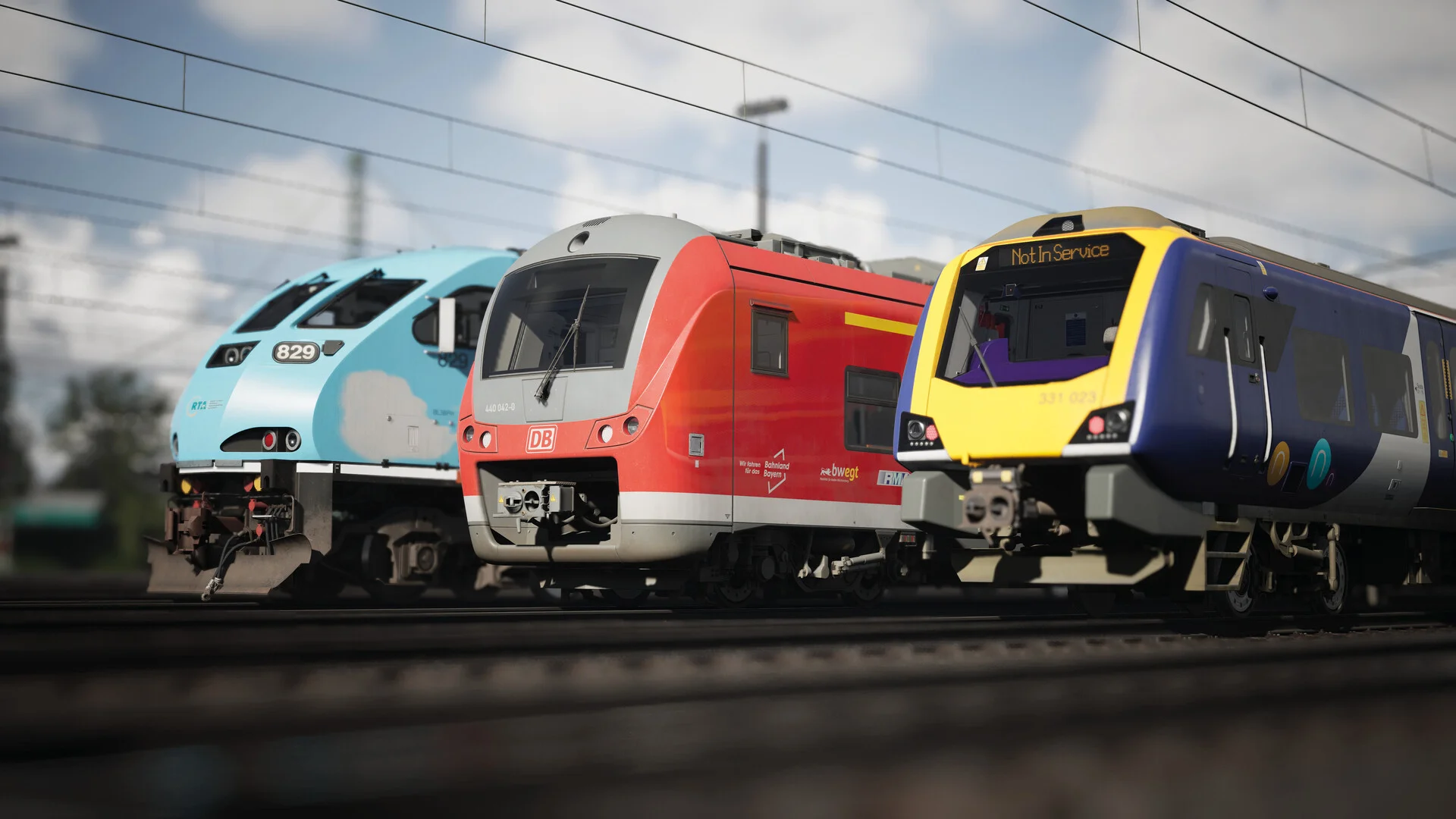
Florida changes the grammar entirely. The Tri-Rail route between Miami Airport and Boca Raton brings locomotive-hauled commuter services through the BL36PH and F40PH, alongside CSX freight work using the SD40-2 and GP38-2.
Details such as southbound services waiting before crossing the FEC line near Metrorail Transfer give it an operational identity beyond palm trees and sunshine. Its soundscape helps too. The development team reportedly spent ten days recording audio in Miami, an investment that makes sense in a simulator where regional identity is carried as strongly by engines, horns, braking, and track noise as by architecture.
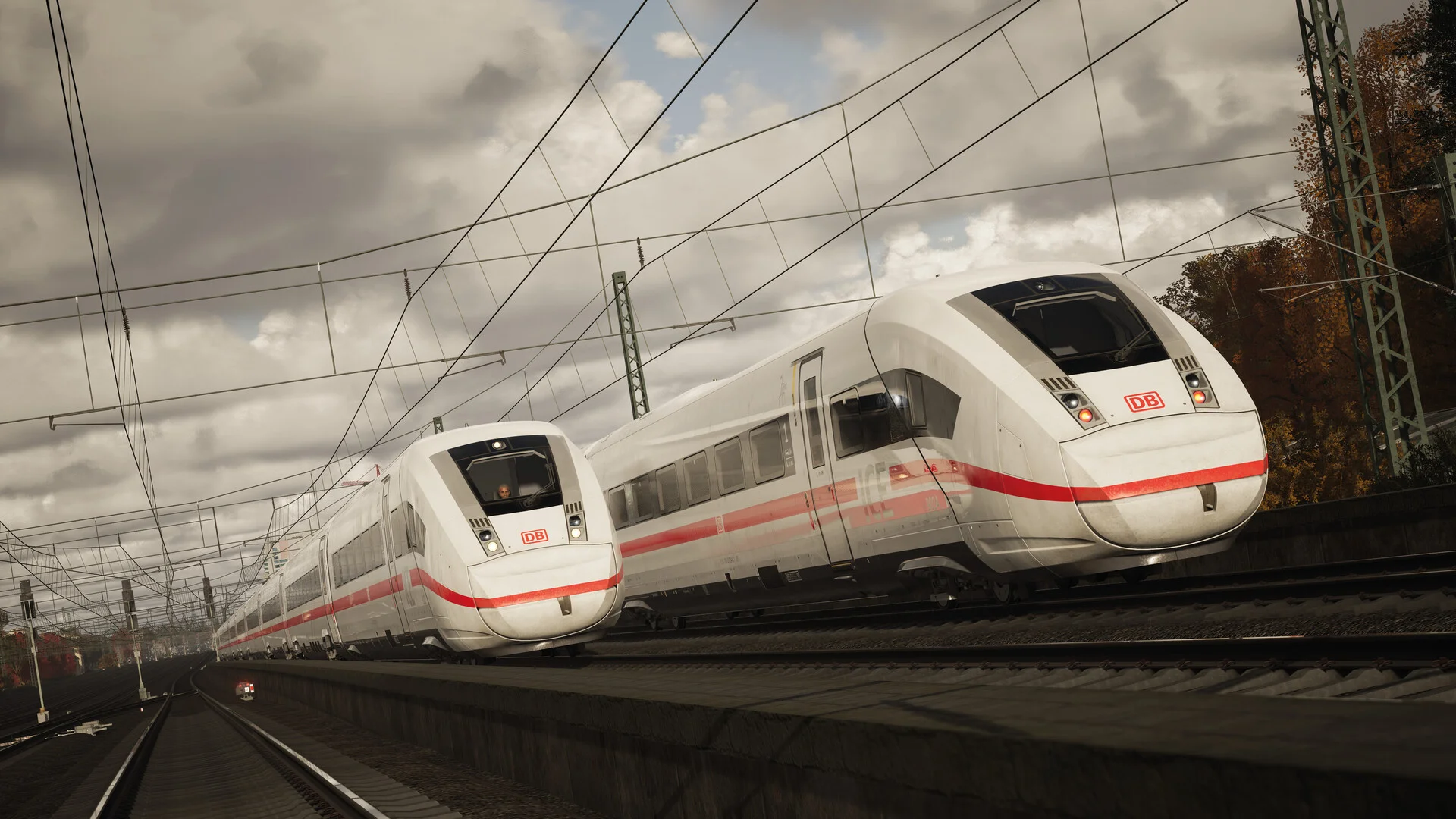
Germany introduces yet another philosophy of movement. Nürnberg to Würzburg supports regional services, ICE operation, and Vectron freight, while PZB, LZB, and SIFA change what attentive driving demands. German railway simulation traditionally asks for a particular relationship between driver and safety system, and Train Sim World 7 keeps that discipline intact while allowing services to begin with those systems already activated. Convenience does not erase authenticity here. It simply changes the point at which the player enters the ritual.
Freight Hauler pushes this idea of player-defined involvement much further. Traditional timetable services largely tell you where to go and what sequence to follow. Freight Hauler gives you cars distributed around a route, destinations to reach, and a logistical problem to solve. You locate the required stock, choose or spawn a locomotive, couple the cars, decide the order of collection, and establish paths through the signaling system.
The important change is not freight itself. Train Sim World has handled freight for years. The difference lies in shifting responsibility from execution toward planning. Which cars should be retrieved first? How should the consist be arranged? Where can the locomotive enter or leave? How will existing traffic affect the movement? The railway stops behaving solely as a scripted corridor and begins to act like infrastructure.
The problem is that the infrastructure does not always cooperate. Randomly placed cars can appear behind derails, buffers, invisible barriers, or awkward yard geometry. Some sidings can be entered without offering a practical way back out. Certain points cannot be changed, while some freight areas lack convenient spawn positions for inspecting the situation first. Map markers can indicate paths that are technically visible yet unusable, and reported brake or power inconsistencies add another complication.
Those problems expose the most interesting contradiction in Train Sim World 7. Freight Hauler asks the player to think freely inside environments originally designed around predetermined movements. The concept belongs to a railway sandbox. Parts of the route design still belong to a timetable simulator.
Its restricted compatibility at launch sharpens that contradiction, since Freight Hauler initially works only across the new Train Sim World 7 routes. A system built around improvisation feels naturally suited to a large legacy collection, yet much of that collection currently sits outside the feature.
Presentation follows a similar pattern of impressive detail surrounded by weaker edges. Improved lighting gives early morning and evening runs stronger atmosphere, while Live Weather can reflect real conditions at the route location through Dovetail Live. PC additions such as DirectX 12, Epic settings, DLSS, DLAA, and FSR give players extra control over image quality and performance.
The trains remain the visual focus, which is where the priorities should lie. Cab interiors, mechanical animation, controls, and locomotive models hold up well under close inspection. Environmental consistency is less reliable. Vegetation and distant objects can look comparatively plain, livestock around Rylstone may seem static, and Leeds can feel oddly subdued for a major station. Audio often repairs what the scenery cannot. Motors, brakes, announcements, horns, wheel noise, and individual cab sounds give each railway physical character. The difference between the Class 331 and 333 can be heard before it needs to be explained.
Train Sim World 7 works best when it treats simulation as a spectrum rather than an exam. British regional rail, Florida commuter operations, German safety systems, quarry freight, high-speed running, simplified controls, conductor duties, and open-ended logistics all ask for different kinds of attention.
Freight Hauler is still rough, and its current limitations show how difficult it is to add genuine freedom to a simulation platform built over many years. Beginner Controls solve the opposite problem with far greater ease. Together, those systems reveal where the series appears to be heading: toward a railway simulator less interested in proving that one level of authenticity is correct and increasingly willing to let each railway, and each player, establish its own rhythm.
The Review
Train Sim World 7
Train Sim World 7 earns its place by widening the ways players can inhabit the railway. Beginner Controls make its detailed simulation easier to enter, while the British, American, and German routes retain distinct operational identities. Freight Hauler is the bolder addition, turning freight work into a planning exercise, though restrictive yards, technical issues, and limited launch compatibility keep it from realizing its full promise. The result is a strong evolution of Dovetail’s platform, especially for players who value variety in both railway culture and simulation depth.
PROS
- Strong regional variety across three railway cultures
- Beginner Controls broaden accessibility without gutting simulation depth
- Freight Hauler adds meaningful planning and player choice
- Excellent locomotive audio and detailed cab work
- Improved lighting and weather strengthen atmosphere
CONS
- Freight Hauler can clash with restrictive yard layouts
- Launch compatibility for Freight Hauler is limited
- Environmental detail remains uneven
- Some technical roughness persists around freight operations