






























A child staring at a phone while adults insist that the real world is waiting outside can become a painfully familiar sermon. Woodo walks directly toward that setup, then has the good sense to soften it. Foxy arrives in the Village from the city convinced that her summer has been downgraded. Her phone is familiar, portable, predictable. The countryside is full of geese, strange animals, awkward encounters, and people who seem far too enthusiastic about fresh air.
The game could have turned this into a simple opposition between technology and authenticity. Instead, Tiny Monks Tale builds something gentler around the friction between the two. Foxy is never treated as corrupted by the screen, and the Village is not presented as some pure world waiting to cure her. Her phone remains part of her life and even enters the puzzle design. What changes is her range of attention.
That idea is embedded directly into the way Woodo asks you to play. Each level presents a wooden diorama that must be reconstructed piece by piece. Available objects sit beside the scene, and finding their proper locations is usually straightforward at first. Individual pieces do not need to be spun around in your hand. You rotate the entire environment instead, looking at furniture, buildings, animals, walls, and tiny recesses from different angles until something clicks into place.
It is a small design decision with a large effect. You are constantly changing perspective rather than manipulating an isolated object. A cupboard that seemed decorative reveals a hidden piece. The exterior wall of a room turns out to matter. A drawer opens. A magnifying-glass marker leads into a smaller puzzle nested inside the larger one. The act of looking becomes the game.
That gives Woodo an interesting place within the cozy genre. Many cozy games borrow their sense of reassurance from routine: planting, harvesting, arranging, managing. Here the pleasure is closer to assembling a toy set on the floor and slowly noticing what each piece contributes. The game is structured around completion, yet the satisfaction comes from examination.
The tactile quality helps enormously. Pieces snap into position with a soft certainty, and each successful placement gradually restores color and activity to the scene. Characters begin moving. Animals react to the cursor. Cupboards and houses reveal their interiors. The little wooden environments start to feel inhabited rather than displayed.
Woodo keeps extending that basic idea without making it aggressive. Later dioramas contain many more pieces. Some stages change shape as different parts of the same event are assembled. Other puzzles experiment with reflections, silhouettes, or restricted piece selection. Hidden components force you to search rather than match shapes mechanically.
The escalation occasionally works against the presentation. Larger scenes can become difficult to read when many similar objects crowd the same space, particularly on a smaller display. That makes sense given the design. Woodo wants its environments rich enough to invite inspection, but visual abundance can turn gentle searching into squinting. The hint system and adjustable snapping sensitivity keep that problem from becoming hostile, though the game is at its best when the answer feels discovered rather than supplied.
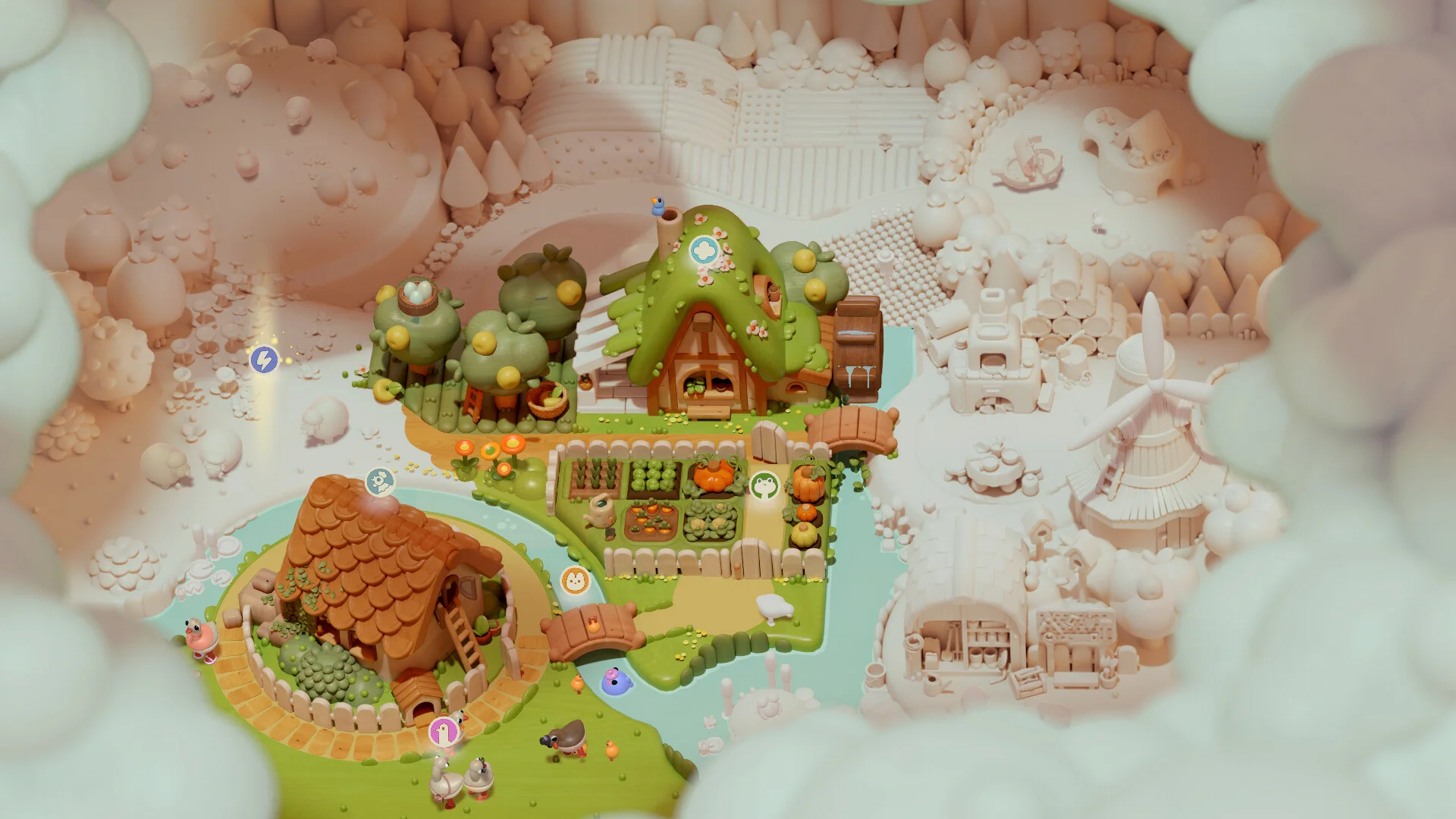
Foxy’s story grows out of the same rhythm. Her narration appears as the player reconstructs moments from her summer, so memory is delivered through physical restoration. Early encounters make the Village feel alien to her. Geese crowd her. A bull frightens her. A goat tries to escape with her backpack. The place is funny, mildly chaotic, and far removed from the controlled environment she understands.
Ben gradually changes that relationship. He does not confiscate the phone or lecture Foxy into enlightenment. He takes her outside. A simple hike becomes imaginative play. An ordinary trip can become a pirate expedition. The stronger idea is that imagination needs material to work with, and Foxy has stopped noticing how much material is around her.
That tension gives the story a wider cultural reach. The city-country divide is familiar territory for coming-of-age stories, yet Woodo refuses to make the Village a moral corrective to modern life. The phone stays useful. Rural experience gains value through companionship, play, and attention rather than through some fantasy of technological purity. A piece of wood becomes a house. A trail becomes an expedition. A summer that initially looks empty becomes the period Foxy will remember.
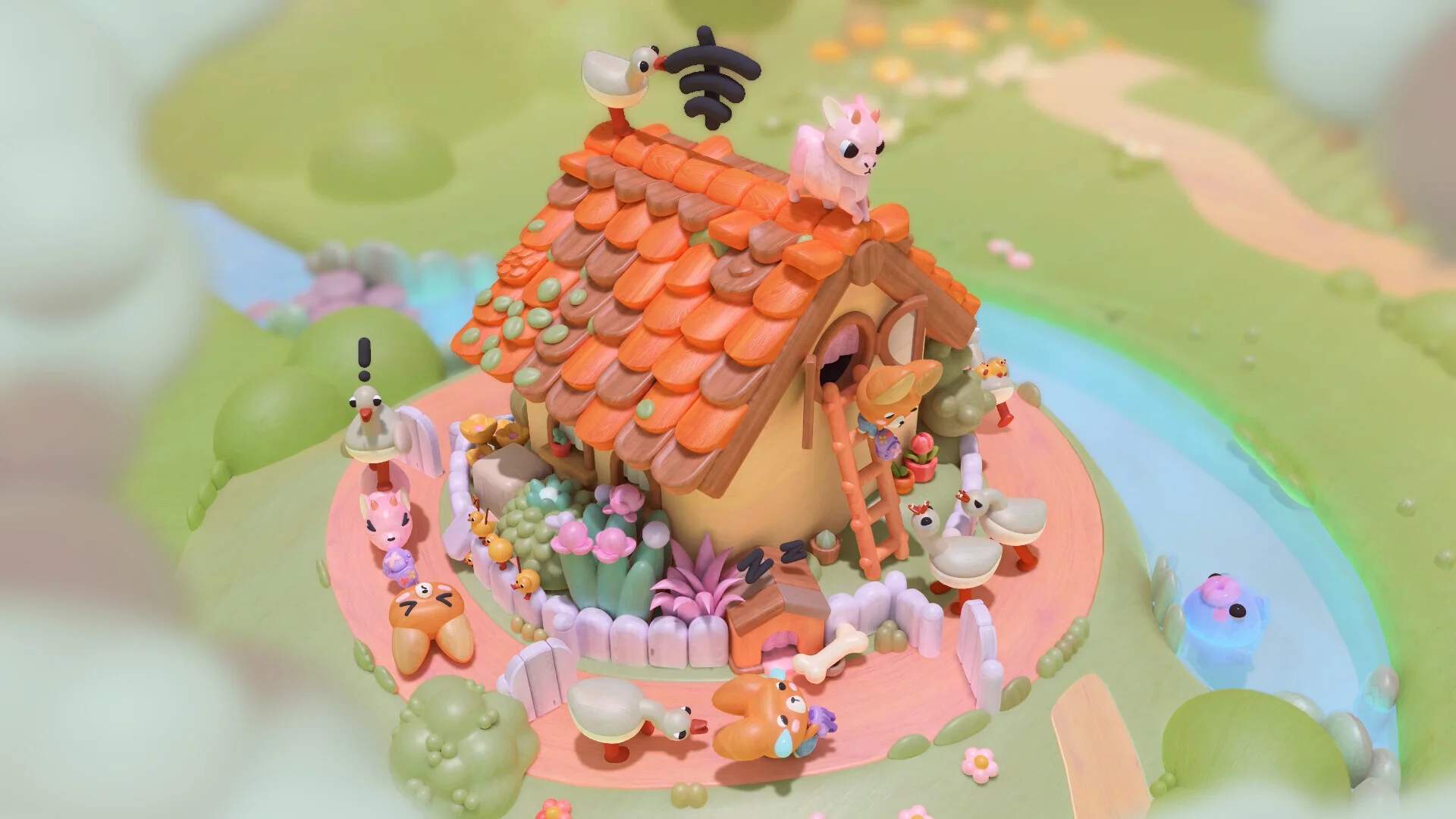
The handcrafted presentation makes that theme almost literal. Characters, furniture, buildings, and scenery resemble carved wooden toys, sanded smooth and colored with a soft palette. Birdsongs, cheerful music, and voiced narration give the scenes warmth without drowning them in sentiment. Completing a level feels like restoring a miniature memory box.
There is little reason to pretend Woodo has endless mechanical depth. The experience lasts only a few hours, and replay value appears limited once the scenes are solved and the story is known. Achievements and replayable levels exist, but discovery carries much of the pleasure the first time through.
Its modest size suits the material. Foxy learns to appreciate experiences because they pass, and the player does much the same thing. A diorama fills with color, comes alive for a while, then gives way to another memory. Woodo understands that attention can be a form of affection. That is why rotating a tiny wooden room until one missing chair finally makes sense feels oddly meaningful. You are looking carefully enough to notice what belongs there.
The Review
Woodo
Woodo turns a modest puzzle loop into an argument for paying closer attention. Rotating its wooden dioramas, uncovering hidden pieces, and watching each scene regain color ties neatly into Foxy’s changing relationship with the Village. The later stages can become visually crowded, and replay value is thin once discovery is gone, but the game understands the value of keeping its scale small. Its warmth comes from observation rather than sentimentality, and that restraint gives its brief summer story lasting charm.
PROS
- Tactile, satisfying diorama assembly
- Mechanics reinforce the story’s themes
- Beautiful handcrafted presentation
- Gentle but effective puzzle variety
- Warm treatment of technology and childhood
CONS
- Larger scenes can become visually crowded
- Limited replay value
- Short runtime may leave some players wanting extra material