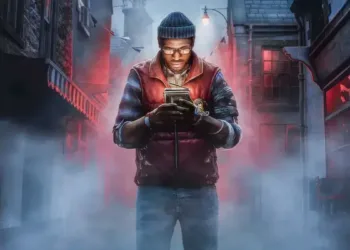
















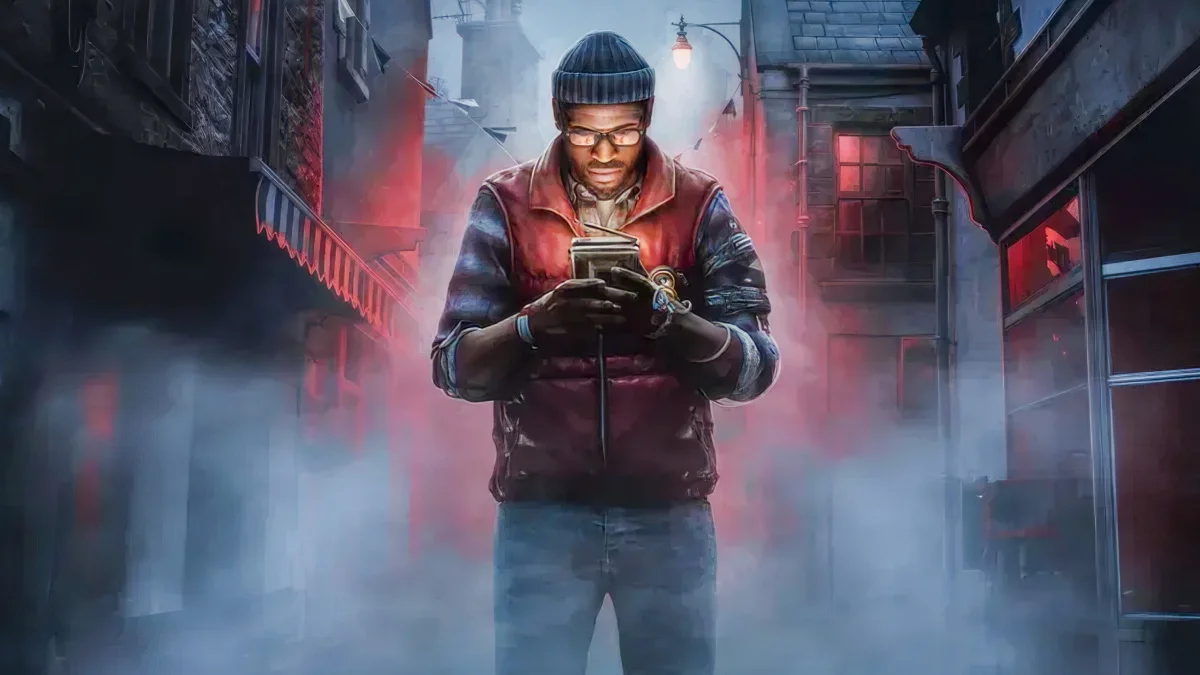

The CRTV gives you just enough information to make a bad decision with confidence. Step into an enemy-heavy stretch of St. Amelia and the handheld unit begins picking up frequencies, each tied to a nearby creature. Tune one correctly and a silhouette swims through red static. You know something is out there. You can watch its movement. What you do not get is a clean map, an exact distance, or any guarantee that the route you are planning is safe.
That gap between information and certainty is where Silent Hill: Townfall does its best work. Screen Burn Interactive has built a first-person Silent Hill around reading incomplete systems, then asking the player to act before those systems become comfortable. The CRTV is the clearest example, but the same logic runs through stealth, puzzles, exploration, and the game’s shifts between playable characters. Townfall keeps handing you fragments, and the tension comes from deciding what those fragments mean.
Combat exists, though the game spends most of its time teaching you why avoiding it is smarter. Melee weapons can get you out of trouble, and a revolver eventually gives Simon some real stopping power, but enemies hit hard, direct fights are messy, and gunfire can attract attention from elsewhere. Rocks and bottles are often more useful because they let you distract or stun something long enough to slip past. Simon’s IV-based revive gives you a margin for error, yet it never turns a failed read into a trivial one.
That makes the CRTV feel less like a gadget and closer to the center of Simon’s play loop. Before entering a hostile space, you stop, tune frequencies, track movement, and build a route from partial evidence. Multiple enemies mean switching between channels and remembering where each threat was moving. The device can be finicky about distance, and its picture is deliberately limited, but that uncertainty is productive for most of the game. It asks you to think like someone trying to survive with bad data.
Townfall gets even smarter when it takes that data away. Simon is not the only playable character, and the change in perspective matters mechanically before it matters narratively. Once the CRTV disappears, habits built around it suddenly stop working. Zoe’s stretches demand greater reliance on sound, corners, environmental cues, and cautious movement. A flickering light or a noise from somewhere ahead carries a different kind of weight when the game has removed the tool that used to translate danger into something measurable.
The shift works because Townfall treats perspective as a rules change instead of a camera swap. Zoe’s hospital sequence is the strongest example. She is a nurse and first responder caught in the aftermath of the disaster that damaged St. Amelia, and her section makes the player participate in that responsibility through procedure.
Taking readings, running tests, and administering treatment creates stress from routine actions. The scene does not need a giant monster crashing through the wall to explain her guilt. The pressure comes from being asked to perform care correctly while the surrounding situation is already falling apart.
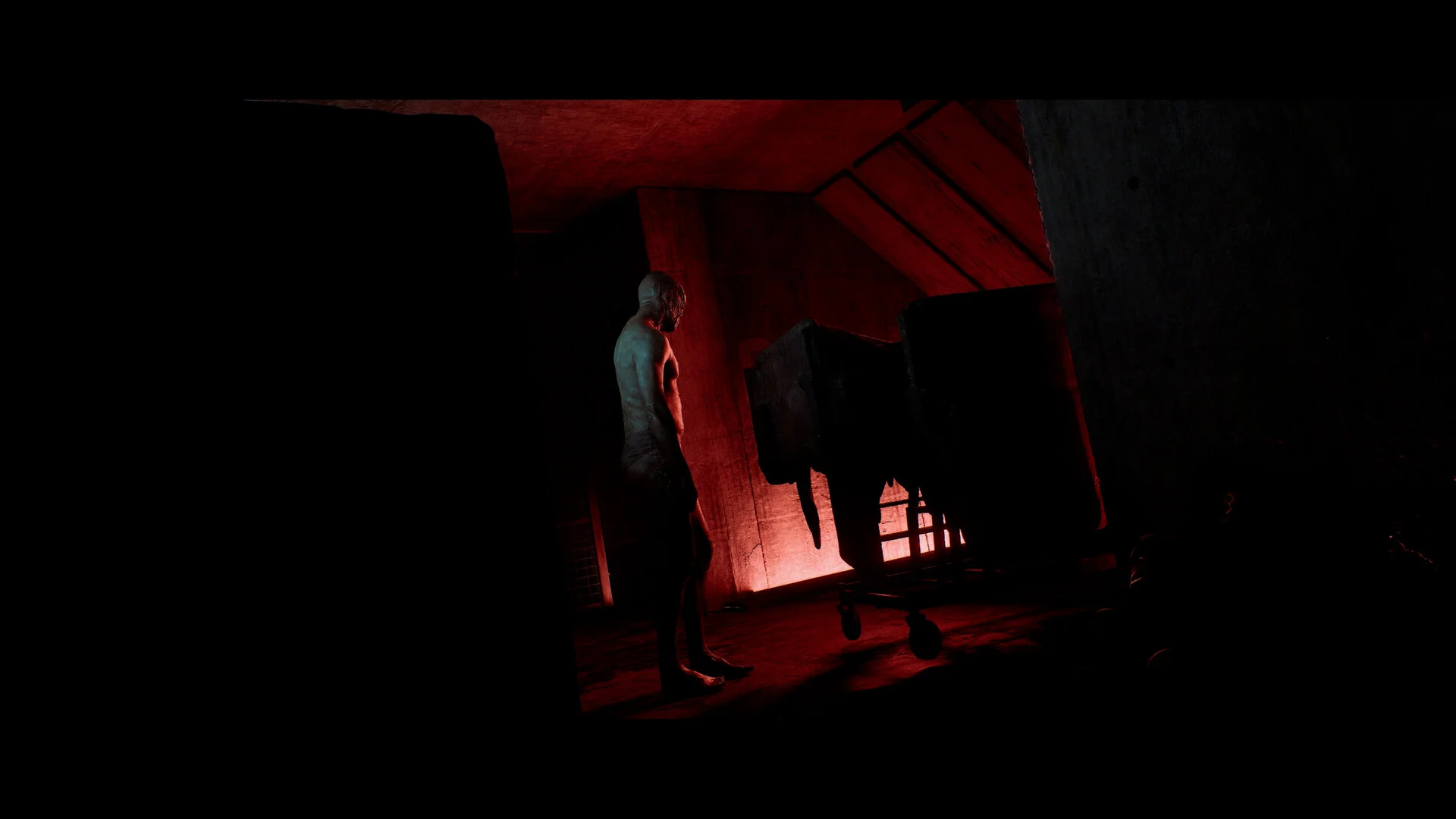
Richard’s playable material pushes the same idea in another direction. His relationship to the catastrophe is different, his moral position is different, and the player is asked to reconsider events through someone whose connection to the town carries its own weight.
Simon, by comparison, begins as a cipher. That makes him useful as an entry point, but Zoe and Richard initially have the stronger dramatic pull because their histories are tied directly to the place around them. As their sections accumulate, Simon’s blankness becomes easier to read as part of the structure rather than a lack of characterization.
St. Amelia supports that structure because exploration rarely feels detached from the story. Its weathered coastal streets, little shops, pubs, flats, hospital spaces, corporate buildings, handwritten notices, boarded properties, and rows of signs marking businesses for sale all communicate a community that was already under pressure before the supernatural horror took over. The fog fits the geography so naturally that it feels less like franchise branding than weather that has decided to become hostile.
The important design choice is that looking around usually teaches you something. Townfall does not flood the town with disposable collectibles. Searching a room tends to produce health, a weapon, a distraction, or information about the people who lived there. As the old town gives way to newer development and harsher architecture, exploration starts explaining the economic and social fracture underneath the catastrophe. St. Amelia is beautiful enough to make wandering tempting, then specific enough to make that wandering useful.
The puzzles extend the same behavior. Early solutions teach you to treat notes, markings, nearby objects, and environmental details as connected pieces rather than isolated clues. Later, the game expects you to carry that habit forward.
A wall covered in blood-type information stops looking like set dressing once Townfall has trained you to suspect that the arrangement itself is asking a question. Another room uses signal-like information and a set of levers to demand a less obvious reading. A house that shifts across different points in time turns spatial observation into part of the solution.
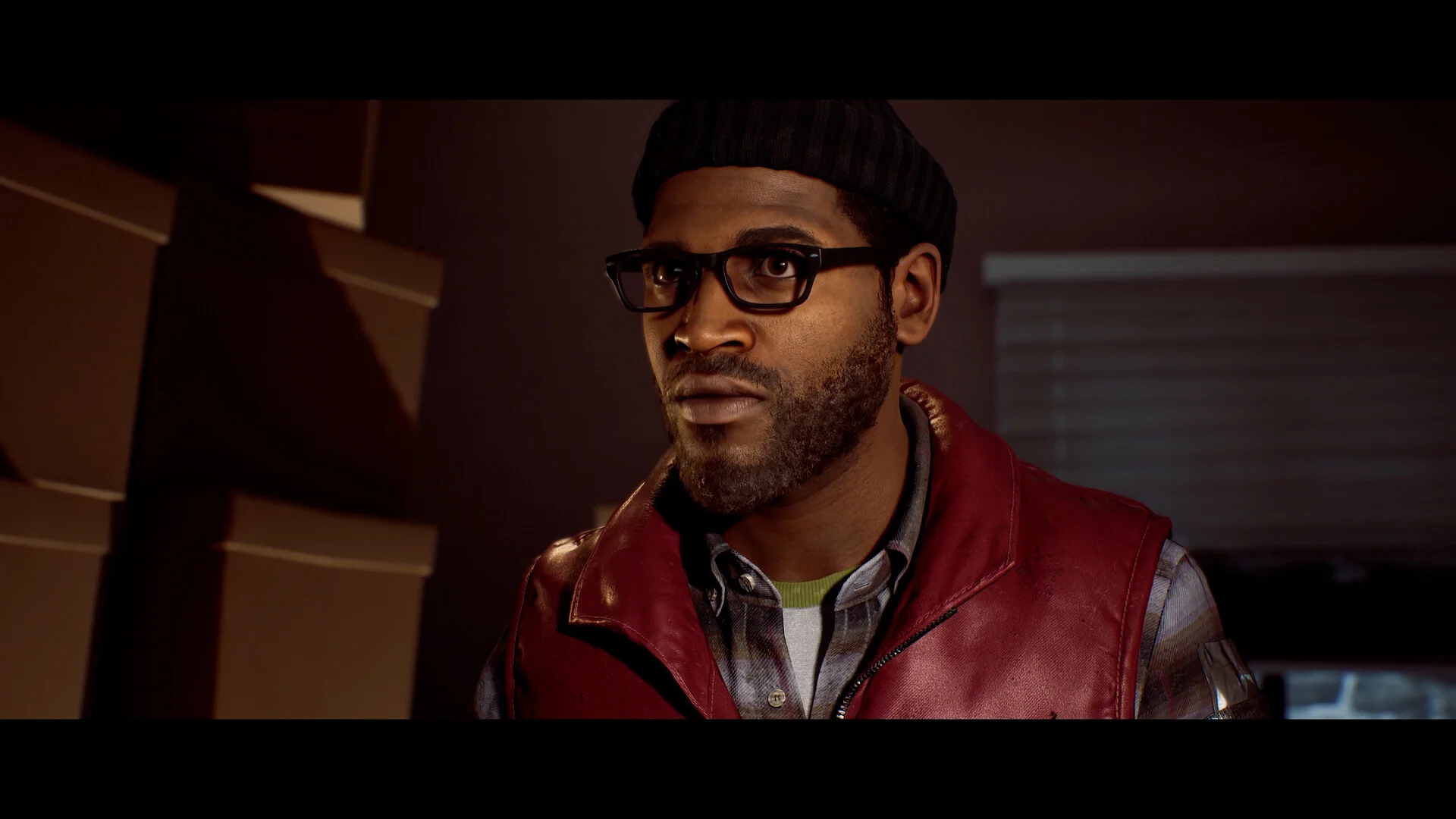
These puzzles work because solving them feels like learning how Townfall thinks. Simon is piecing together a broken history, and the player is doing the same thing through systems that reward observation, memory, and revision. A wrong assumption is rarely wasted effort if it teaches you what kind of relationship the game expects you to notice next.
Townfall is less successful when that pressure stops developing and simply stays high. After its patient opening, later chapters spend long stretches forcing repeated movement through hostile spaces, extended stealth runs, and backtracking under threat.
One late sequence repeatedly sends you through a corpse-filled environment while asking you to notice changes. Another leans hard on near-darkness and hide-and-seek scares. Both have strong individual ideas. The problem is accumulation. Once the player understands the rules, extra passes through the same kind of danger can create fatigue instead of sharper fear.
The closing stretch suffers most from this. Repeated enemy encounters, fussy traversal, locked routes, and a few obscure puzzle demands arrive at a point where the story needs momentum. Some of that friction is clearly intentional, since Silent Hill has always made doors, corridors, and blocked paths part of its pressure. Townfall occasionally crosses the line from making you question a route to making you wish the route would stop wasting your time.
Even there, the game’s strongest systems keep pulling the experience back into focus. The CRTV never makes Simon safe. It gives him a reading. Zoe’s sections change the method for reading danger, and the puzzles train you to see relationships you would have ignored hours earlier.
That is why the first-person shift works as well as it does. Townfall does not treat the perspective as a shortcut to louder scares. It uses proximity to make interpretation feel personal. You are close enough to the static to trust it, close enough to the fog to doubt it, and close enough to St. Amelia’s history that every system starts feeling like another damaged piece of the same place.
The Review
Silent Hill: Townfall
Silent Hill: Townfall understands that fear works best when the player has enough information to act and never enough to feel secure. The CRTV, stealth, character-specific rules, exploration, and puzzles all reinforce that design. St. Amelia gives those systems a place worth studying, while Zoe and Richard deepen a story Simon initially struggles to carry alone. Later chapters stretch the same pressure too long, with backtracking and repeated encounters dulling some of the tension. Even so, Screen Burn Interactive has built a Silent Hill whose mechanics understand the series as well as its fog does.
PROS
- Excellent CRTV and stealth loop
- Strong mechanical use of playable perspectives
- St. Amelia rewards close exploration
- Puzzles train observation and interpretation
- Systems reinforce the psychological horror
CONS
- Late-game pressure becomes repetitive
- Backtracking can become frustrating
- Simon takes time to become interesting
- Some puzzle solutions become obscure