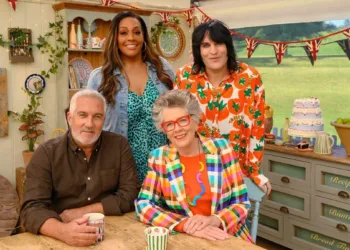
















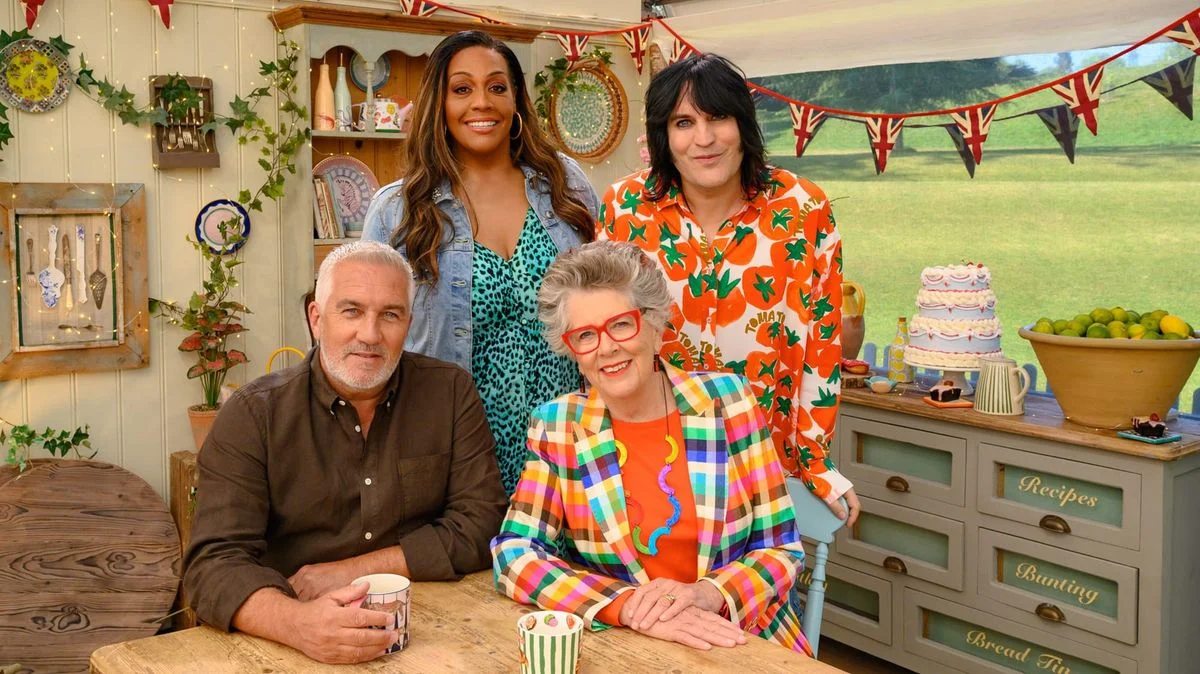

Alison Hammond hears Nigella Lawson ask for a “sumptuous” cake and immediately spots an opportunity. Noel Fielding follows with a pregnancy joke. The hosts are enthusiastically supplying the sort of response they seem to expect from their new colleague, while Nigella participates without turning the exchange into a performance of Nigella. It is a small comic adjustment, and a useful one. The Great British Bake Off’s seventeenth season has acquired a judge whose reputation arrives ahead of her, but whose conversational pace is rather less excitable than the welcoming committee’s.
That difference becomes funnier when hairdresser Tom returns a compliment about his cake with one about her appearance. Nigella gives an amused, bashful laugh instead of extending the flirtation. The exchange finishes before it becomes a routine. Across these early encounters, her restraint leaves the hosts doing much of the comic pushing, which makes their eagerness visible and gives her room to respond as a person. A programme so practiced at producing double entendres can benefit from someone occasionally leaving one unattended.
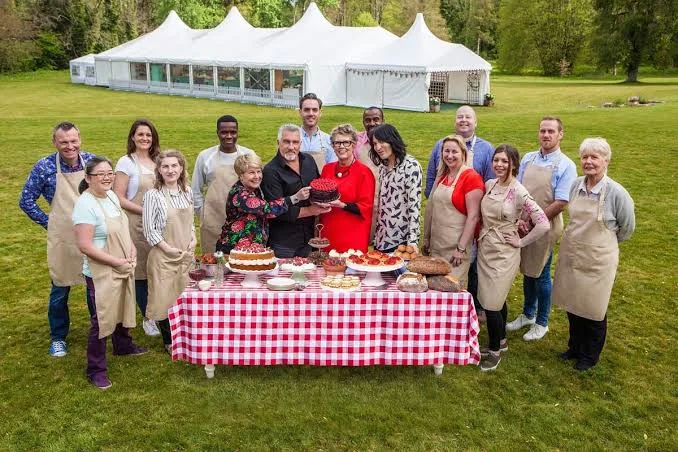
Replacing Prue Leith beside Paul Hollywood, Nigella gets a welcome and then gets to work. The first signature challenge, a chocolate stout cake, acknowledges her cooking identity while keeping the twelve contestants occupied with something considerably less glamorous: cooling times. A cake needs to bake slowly, then become cool enough to decorate. Celebrity admiration cannot negotiate with buttercream. This is sensible introductory television, allowing the new judge’s presence to register through the bakers’ decisions and her responses rather than suspending the competition for a tribute.
The episode’s strongest story belongs to Molly, whose cake falls to the floor after leaving the oven. Bake Off has supplied enough collapsed creations to make the accident immediately recognizable, but the important beat comes next. Molly switches from a bundt tin to sandwich tins for her replacement bake, reducing the time it needs. That decision gives the setback a practical continuation. We watch someone reassess the task under pressure, with the clock still running, rather than simply waiting for distress to become moving.
Her disappointing coffee-and-walnut technical then prevents that recovery from settling into an easy success story. The self-portrait showstopper, with mango and lemon curd, finally earns praise for its lightness and tartness. Three challenges give the episode three opportunities to alter our expectations of her. The architecture is familiar, but it remains effective because each stage supplies fresh evidence about what she can do. Getting another cake into the oven is one achievement; producing a good cake after another poor result is a different test.
Tom follows a shorter version of that pattern, recovering from excessive bicarbonate of soda in his signature to make a technical Nigella loves. Mo’s peanut-and-caramel signature, praised by both judges, supplies success without a preceding catastrophe. Those different trajectories keep the opening from becoming a procession of disasters awaiting consolation. They also establish contestants through work rather than a roll call of occupations and quirks. Molly’s choice of tins tells us something a biographical introduction could not: how she thinks when the plan has become floor decoration.
The technical challenge supplies the premiere’s clearest alteration to the competition itself. Asked to produce a three-tier coffee-and-walnut cake, the bakers receive an elaborate sketch instead of a conventional written recipe. A drawing offers a destination while withholding much of the route. They still need to judge the balance between flour and crushed walnuts and deliver enough coffee flavour. The picture cannot answer those questions for them. It is an efficient way to turn a recognizable cake into an unfamiliar assignment.
There is a limit to what this change establishes, however. Seeing a finished cake and knowing how to construct it are separate skills; uncertainty can test knowledge, but it can also make the nature of the test harder to read. Tom, Gabe, and Gary do well, while Molly struggles, yet the altered instructions alone cannot tell us how cleanly the challenge distinguishes understanding from successful improvisation. The novelty is real and modest. Signature, technical, and showstopper still determine the episode’s progress, and the last challenge still offers the most conspicuous chance of a comeback. Removing the recipe changes the contestants’ predicament without changing our appointment with the recovery arc.
The self-portrait showstopper gives that established final act a particularly useful subject. Gabe builds a mirror concealing his drag persona, and Nigella responds to the idea of a person beneath the visible surface. Her interest follows something the baker has physically made. It allows personal expression into the judging conversation without requiring a separate speech about identity. Mo’s cake, featuring his cat Simba, operates at a lighter pitch: asked what type of cat he owns, he identifies it as ginger. The task has invited self-revelation, and Mo has supplied cat administration.
Nigella’s pleasure in gooeyness beside Paul’s preference for neatness suggests another productive difference in emphasis. So does her sympathetic acknowledgment of the fear involved in removing a cake from its mould. These responses connect judgment to the act of making, recognizing intention and anxiety while still discussing the finished food.
Her warmth feels useful because it has a subject. One premiere offers limited evidence of how firmly that warmth will hold when praise becomes harder to give. Gabe’s concealed persona gives her something generous to discover; how would she explain sending a baker home after responding so warmly to their most personal offering?
The Great British Bake Off Season 17 premiered on Channel 4 on September 22, 2026, with streaming available internationally on Netflix. The beloved culinary competition series returns to the iconic tent with a fresh batch of amateur bakers and the addition of new judge Nigella Lawson.
Where to Watch The Great British Bake Off Season 17 Online



Full Credits
Title: The Great British Bake Off Season 17
Distributor: Channel 4, Netflix
Release date: September 22, 2026
Rating: TV-PG
Running time: 75 minutes per episode
Director: Jeanette Goulbourn, Amanda Westwood
Producers and Executive Producers: Richard McKerrow, Kieran Smith, Simon Cook, Molly Milton
Cast: Noel Fielding, Alison Hammond, Paul Hollywood, Nigella Lawson
Director of Photography (Cinematographer): Chris Yacoubian, Ralph Alcock
Editors: Steve Armstrong, Dan Bowhers, Toni Miró
Composer: Tom Howe, Tim Garland
The Review
The Great British Bake Off Season 17
Nigella Lawson gives Season 17’s premiere a welcome change of pace, refusing to behave like a walking compilation of her greatest hits. Her restrained humor and attentive judging leave room for bakers whose recoveries supply the episode’s real drama. The sketch-based technical introduces fresh uncertainty, though its test of skill is less clear than its novelty. Familiar comeback machinery remains firmly installed, but the people working inside it make this an engaging return.
PROS
- Nigella’s restrained humor refreshes the hosting dynamic.
- Contestant recoveries reveal practical skill under pressure.
- The sketch-based technical changes the baking challenge.
- Self-portrait cakes integrate personality into judging.
CONS
- Familiar recovery arcs limit structural surprise.
- The technical’s balance of knowledge and improvisation remains unclear.