

























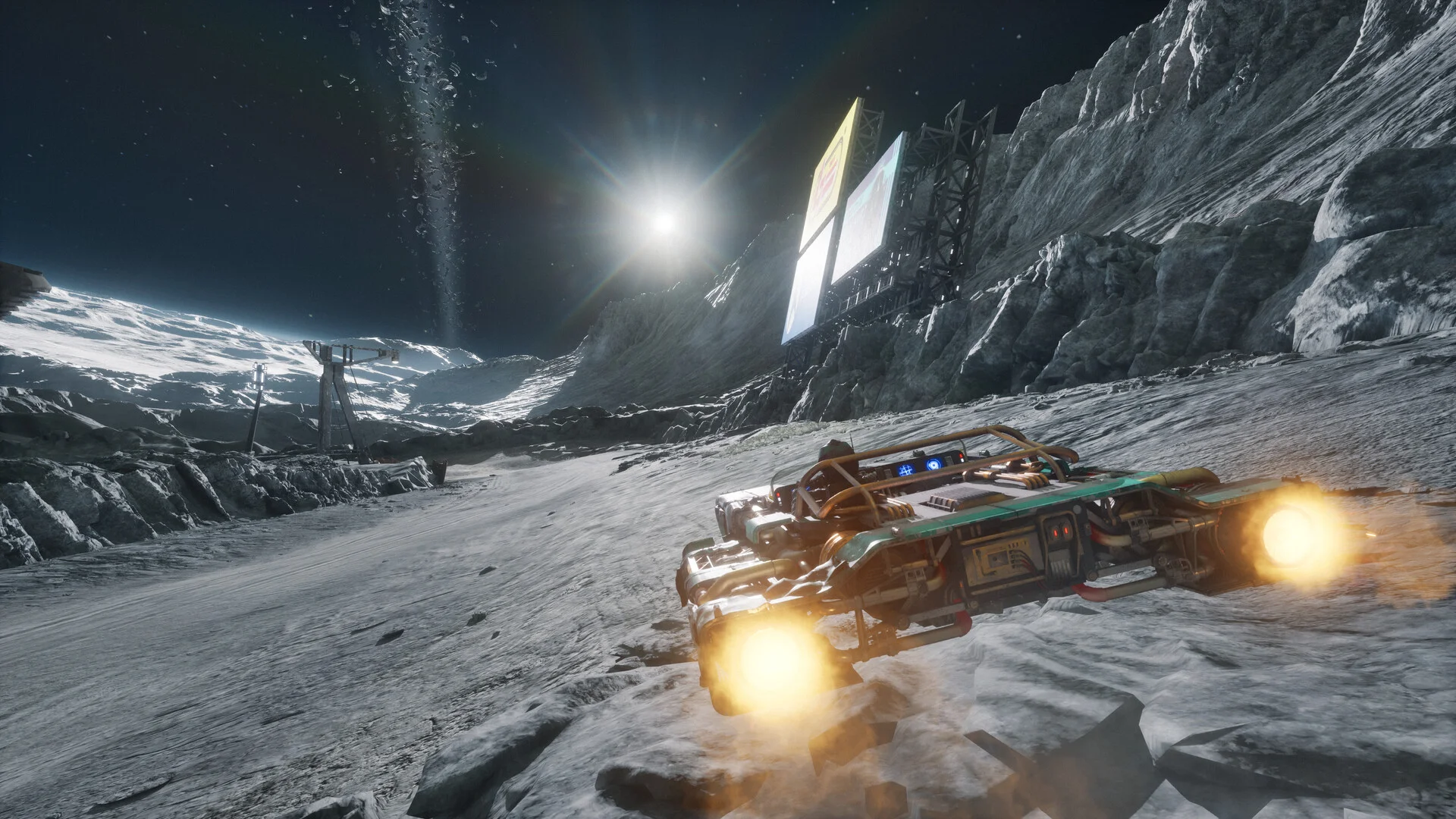

The Ramjet’s warning alarm arrives while you still want the speed. Star Wars: Galactic Racer gives you a perfectly serviceable Afterburner, with a reserve that replenishes after use, then tempts you into engaging a faster engine that can destroy your vehicle if you leave it running too long. Switching over has an audible mechanical force, making the extra acceleration feel like something the craft must physically endure. Hearing it approach its limit puts an awkward responsibility in your hands: the machine is asking you to stop, and the race is giving you reasons to refuse.
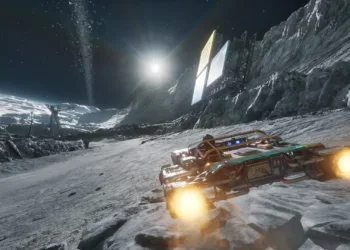
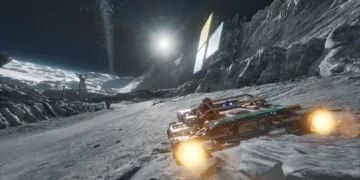
That temptation changes shape on different planets. The icy stretches of Ando Prime cool the vehicle, allowing longer bursts of Ramjet use and making sustained acceleration feel briefly permissible. Sentinel I’s lava pools push temperatures upward, turning the same impulse into a liability. The landscape affects how brave you feel. Learning a course includes learning where you can indulge yourself, where to ease off, and how much of the engine’s warning you can afford to tolerate.
The tracks give those decisions a satisfying physical rhythm. Confined passages require small, urgent corrections around obstacles; open stretches provide room to accelerate after that concentration. Skim speeders sharpen the sensation by tilting onto their sides for tight turns, though learning to use that movement takes some adjustment. Landspeeders offer a steadier foothold. These differences matter because they change your confidence approaching a corner. A familiar bend can become an invitation or something to survive, depending on what you brought to it.
Fuse Games understands the pleasure of operating Star Wars machinery. The pre-race system activation and crowded dashboards let you participate in preparing a vehicle before asking it to withstand unreasonable treatment. Engine sounds and heat warnings continue that relationship once the countdown ends. The setting’s appeal comes through these small acts of use. Recognizing the universe helps, but managing its equipment supplies an intimacy that a familiar skyline alone cannot.
Aggression carries the unmistakable influence of Burnout. Ramming an opponent into a wreck turns proximity into an opportunity, and the cinematic takedown camera gives that contact an extravagant reward. It also occasionally compromises the confidence the handling has earned.
The camera leaves your craft to admire the damage, then returns you to a race still moving at considerable speed. Reacquiring your position can feel like an extra hazard imposed by the celebration. With weapons, boost states, and heat competing for attention, the interface has its own clarity problems. Enough danger already comes from the driving; uncertainty about the information needed to manage it is less satisfying.
The campaign makes those brief losses of control increasingly consequential. Playing as Shade after the Empire’s fall, you enter the underground Galactic League and work toward challenging reigning champion Kestar Bool. Across three acts, a branching map offers races, eliminators, trials, and encounters with other competitors. The importance of that structure becomes apparent after you have spent several events building a vehicle you understand. A mistake can now threaten a particular arrangement of parts and abilities, assembled through decisions you wanted to see pay off.
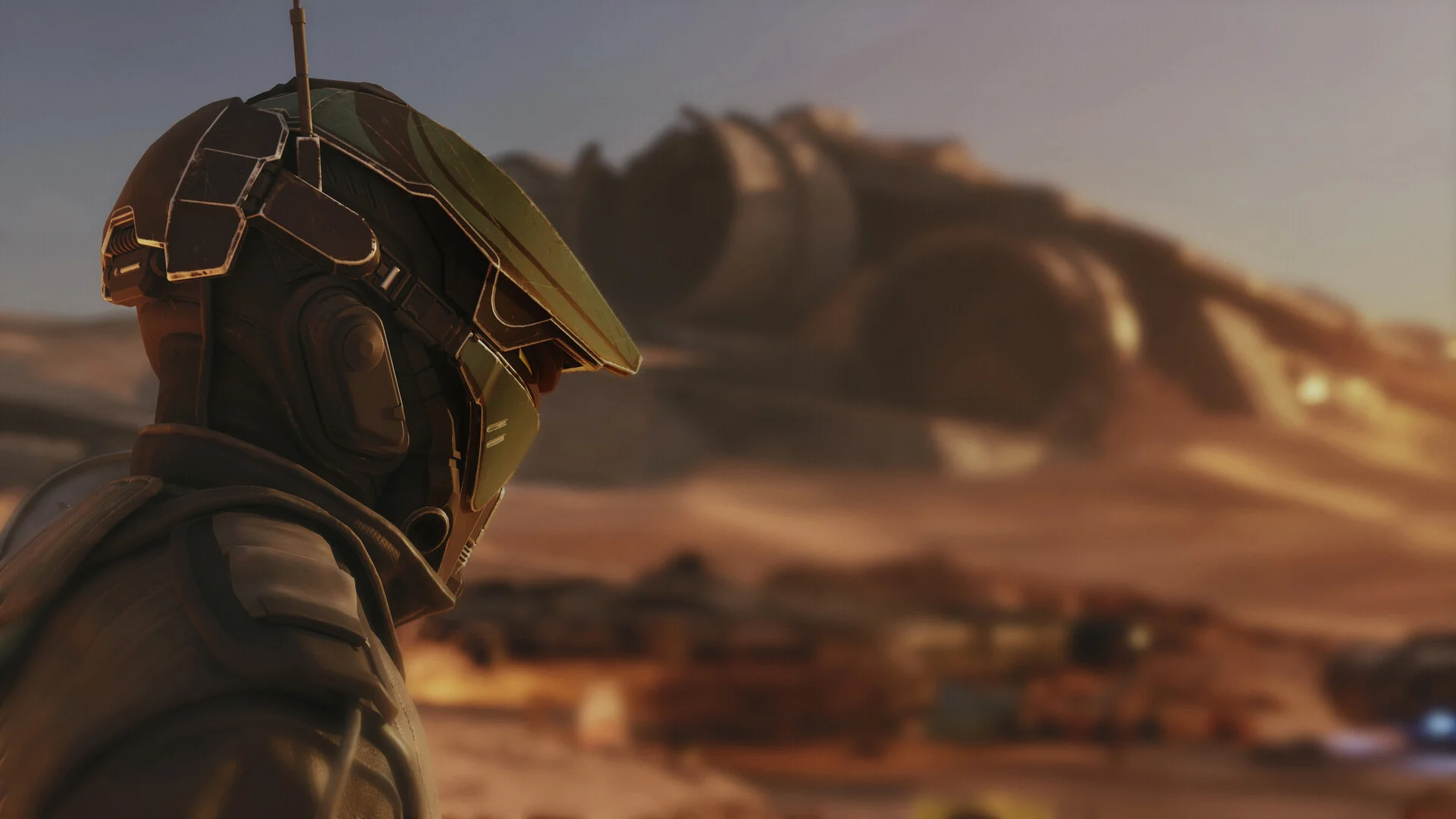
There is real affection in that process. Buying a part that extends Afterburner use or improves its recovery changes how much acceleration you expect to have available. Repairs restore advantages you have begun to depend on. Damage can take a useful component out of service, forcing you to race with the memory of how the machine used to perform. The attachment develops through habit: the craft earns your trust in one respect, exposes a weakness in another, and encourages the next purchase.
Route choices then acquire an emotional weight beyond their rewards. A trial that leaves your league token safe offers a chance to improve the build without putting the run on the line. An eliminator, steadily removing the racer at the back, promises a harsher test and better compensation. Taking the safer event can feel sensible until you consider the stronger opponents ahead. Ordinary races allow limited crashes, and failing an event can cost a token. Exhausting your tokens ends the run, with early attempts allowing very little margin.
Failure returns you to the beginning of the current act, stripping away the build accumulated during that attempt. Permanent improvements to starting statistics and access to additional parts give the next attempt a stronger foundation. They soften the loss without making it painless. Defeat against a difficult circuit-ending opponent such as Sebulba can leave a stretch of familiar events between you and another chance. Different builds and routes help renew those races, but the limited range of event types still becomes noticeable. Wanting another attempt and wanting to repeat its preliminaries are separate feelings.
The freedom to assemble an eccentric build is a strong reason to return, though some combinations strain the relationship between confidence and skill. Extended Afterburner use paired with Autopilot can produce long stretches of assisted, boosted driving. Discovering that combination has the pleasure of getting away with something. It also reduces participation in the steering that makes the racing rewarding, and its disappearance on the next run can expose habits formed around assistance. Experimentation sometimes produces a machine that succeeds while teaching you less about driving it.
Shade’s rivalry with Bool supplies direction, while encounters with fellow racers give the repeated competition a social dimension. Deals, part exchanges, and developing rivalries affect how you regard the people sharing the track. That is a useful narrative contribution in a campaign built around returning to familiar opponents. The melodrama gives the championship a personal target; the encounters let individual runs acquire their own relationships alongside their own vehicles.
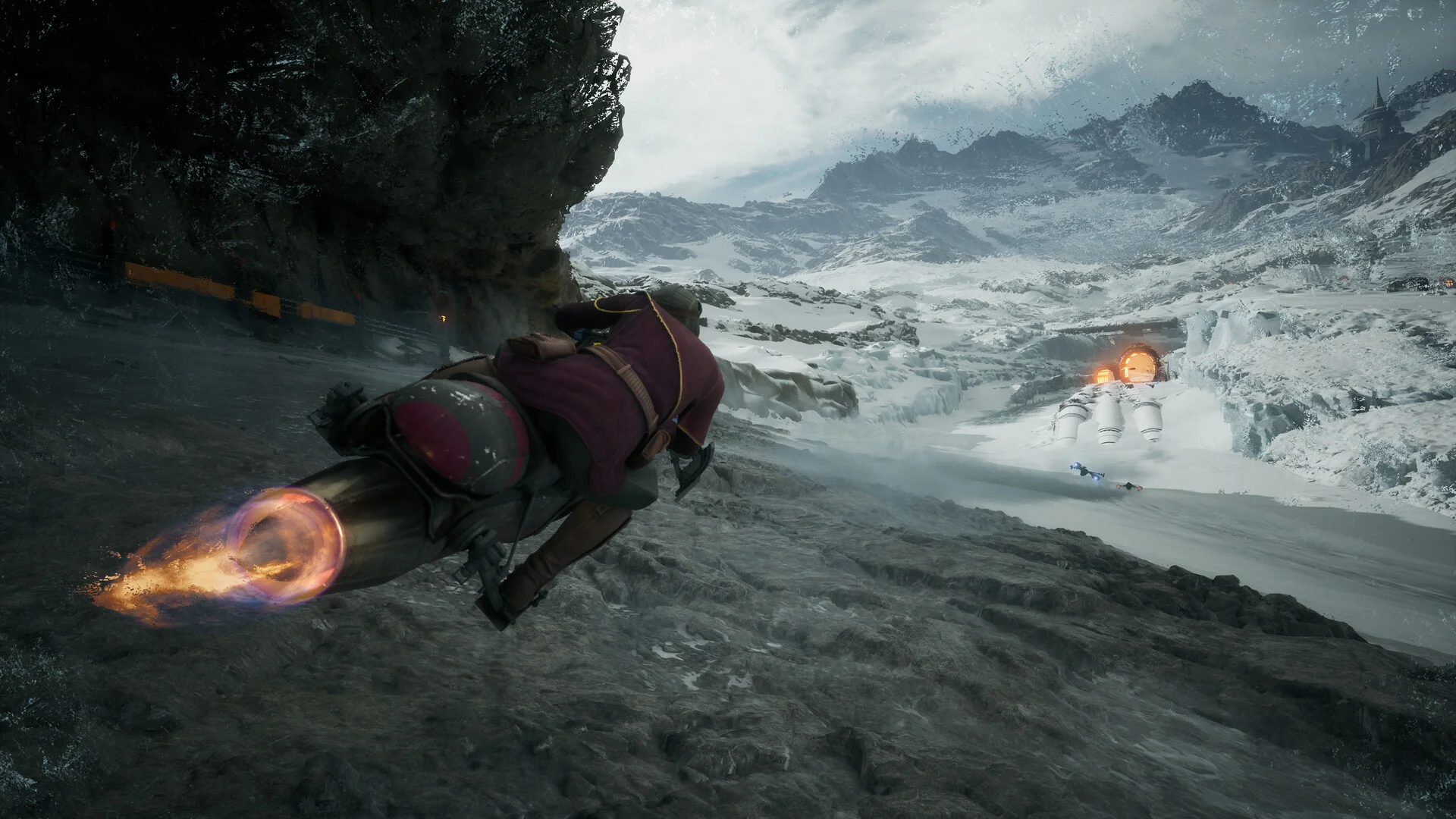
Multiplayer Tours extend that accumulating investment across a six-race series. Upgrading between events creates an unfolding competition in which your opening build need not determine your final prospects. Placement bets, head-to-head challenges, and broker bounties provide smaller objectives that can earn credits and parts without a race victory. A disappointing finish can still leave something useful to carry forward. That makes the tour inviting even when the front of the field is out of reach.
Arcade time trials and racer-specific Scenario challenges offer shorter commitments, while podracing supplies another handling experience at still higher speeds. The package has worthwhile ways to pursue improvement, but little freedom to arrange an offline session around your own preferences. A custom race with a chosen vehicle, track, and rules would let players revisit the precise combination they enjoy without accepting a prescribed challenge or another campaign route.
Sharing that combination casually is harder still. There is no split-screen, so a friend beside you cannot simply take a second controller. Cross-platform support offers a route for friends playing elsewhere, but assembling the party involves friction before the racing begins. Players on different platforms need Epic Games accounts linked to their respective systems, followed by additional steps to join up.
The Review
Star Wars: Galactic Racer
Star Wars: Galactic Racer makes speed feel tempting, dangerous, and increasingly personal. Managing engine heat supplies immediate tension; building a craft across several races gives you something to protect. Planet conditions and evolving multiplayer tours keep that excitement alive, though repetitive restarts, disorienting presentation, and restrictive play options interrupt it. The strongest attachment grows through driving: learning what your machine can withstand, trusting its upgrades, and risking the whole arrangement for a better finish.
PROS
- Thrilling acceleration with meaningful overheating risks.
- Planet conditions change racing decisions.
- Run-based builds create attachment and experimentation.
- Multiplayer Tours reward progress beyond race victories.
CONS
- Takedown cameras and interface clutter disrupt orientation.
- Late-run defeats require repeating familiar events.
- Autopilot combinations reduce steering involvement.
- No custom offline races or split-screen.
- Cumbersome cross-platform party setup.