
























Coleen Rooney is considering a fashion deal with Primark, and television is considering how long it can make her consider it. The first episode of Disney+’s The Real Rooneys gives us meetings, assurances of her suitability and warnings about the pressure to deliver, then attempts to wring a cliffhanger from her answer at a Dublin steak restaurant. Everyone appears to want the partnership. Nobody has supplied a persuasive reason it might fall apart. The suspense rests on Coleen taking her time, which is an awkward foundation for an episode break.
Elsewhere, she tells an interviewer how pleasant it is to have some time to herself. A son calls for her almost immediately. Her eyebrow goes up, and the entire situation changes without anybody needing to explain the stakes. It is a compact sitcom setup with an unusually efficient supporting cast: the interruption contradicts the statement, while Coleen’s response suggests she could have predicted it. The business scenes labor to make us anticipate an answer; this exchange makes us anticipate her reaction. That is a much stronger reason to keep watching.
The ten-part series catches the family during a redistribution of work. Wayne has left his managerial role at Plymouth Argyle and is pursuing broadcasting and podcasting; Coleen, following her I’m a Celebrity appearance and Wagatha Christie court victory, is taking up commercial opportunities. Their Cheshire home supplies the setting, their four boys the disturbances. Asked about the plan for his increased domestic involvement, Wayne points out that they discussed Coleen doing extra work, without planning for him to get sacked. The answer neatly punctures the tidy career-transition story being offered to him. Unemployment has declined its supporting role.
Wayne’s dry responses are useful because they leave room for somebody else to enjoy the joke. During a sofa interview, Klay launches into an exaggerated football-pundit tribute to his father’s playing days, complete with stretched-out enthusiasm. The boys bounce and fidget, and Coleen laughs at the impersonation.
A conventional family testimonial becomes a scene with competing rhythms: the interview’s orderly request for information, the children’s restlessness and Klay’s performance. We learn something about how they amuse each other without receiving another solemn assurance that they are normal. The family briefly takes over its own publicity appointment.
Coleen is equally good when the producers supply the provocation. Handed a tablet displaying her past public outfits, she accepts the invitation to laugh at herself. The gallery is plainly a prepared device, but her willingness to engage gives it a useful informality. Here the show finds a better use for her fashion history than another meeting about marketability. It also complicates the easy assumption that arranged sequences must feel lifeless. Somebody has to put the photographs on the tablet; Coleen still has to make looking at them entertaining.
The domestic arrangement is less comfortably funny. Coleen’s diary keeps the household organized, and Wayne’s calls about the boys’ belongings and preparations reveal how much of that organization remains hers when he takes over a task.
The calls can play as familiar parental befuddlement, yet each one returns an instruction to the person supposedly getting a break. His sleeping through a school-run responsibility makes the cost plainer. These incidents give the career shift an ongoing problem to work through: Wayne has additional time at home, but Coleen still seems to be supplying the operating instructions.
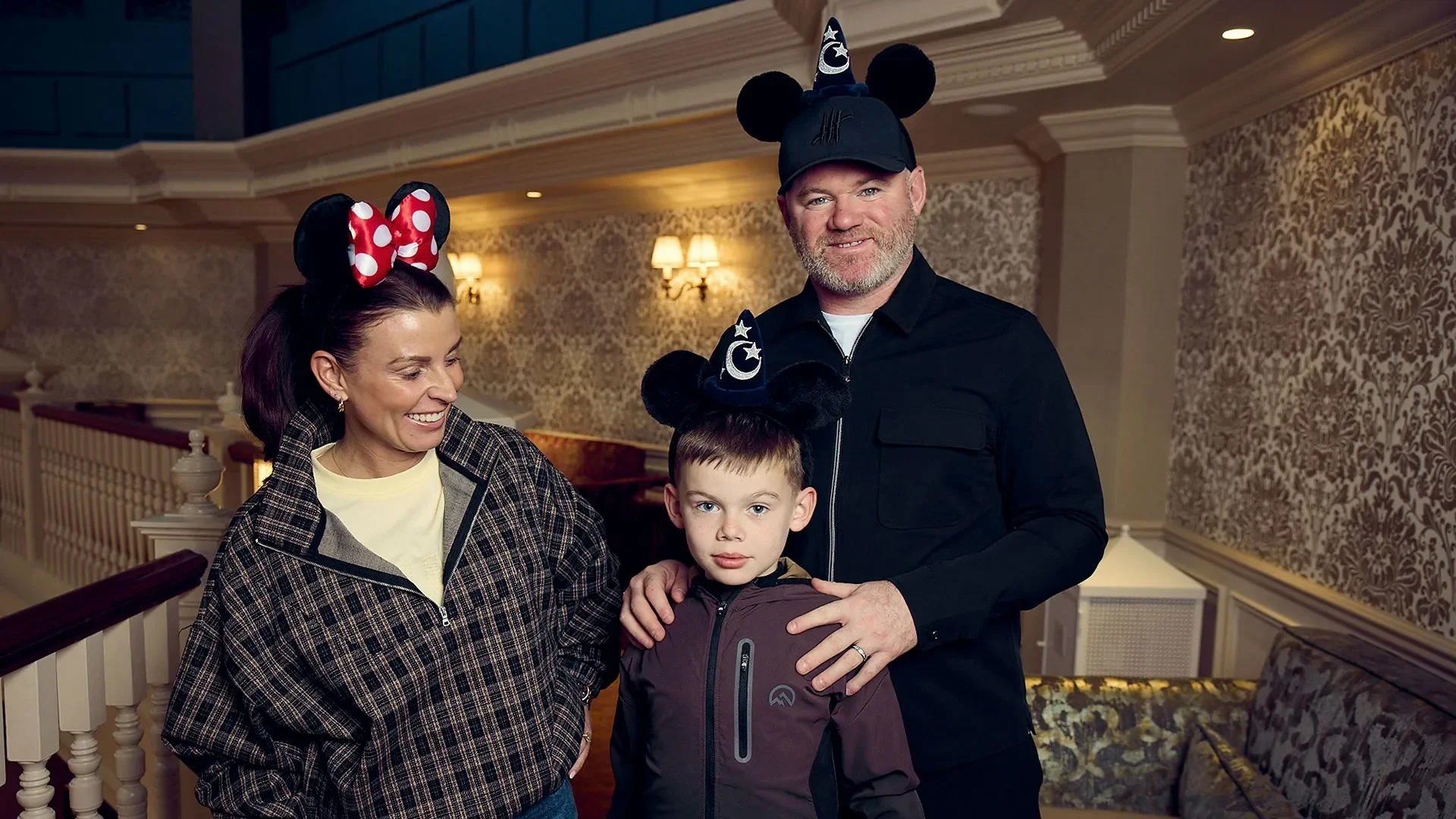
The Scotland trip gives that problem a stronger episode engine than the Primark negotiations. A romantic departure is delayed while Wayne drinks at a golf clubhouse, leaving Coleen waiting for two hours. There is an objective, an obstruction and somebody paying for the obstruction in lost time. Their argument and reconciliation in the car have interest because the delay has already established a grievance. The attraction lies in watching irritation and affection occupy the same conversation, rather than in wondering if an obviously desirable business agreement will receive a signature.
Wayne explains that his technique for escaping arguments involves annoying Coleen while making her laugh. It is an effective description of their comic partnership, and a less reassuring description of resolving a dispute. After another drinking session, Coleen tells him that only he can fix the problem and that she hopes things change. Her directness puts pressure on the show’s relaxed treatment of his habits. Laughter may restore the atmosphere, but her request concerns what happens next time. The opening episodes allow that discomfort to register without establishing that a warmer mood amounts to changed behavior.
The production’s own friendliness deserves similar scrutiny. Interviewer questions remain audible, and the camera sometimes turns around to show the interviewer and crew. These gestures loosen the formal testimonial, presenting the conversation as an encounter rather than an immaculate statement delivered into a lens. They also advertise openness. Seeing the people asking questions tells us how the scene is being made; it cannot tell us which questions never get asked. Coleen promises an unfamiliar side of the family, but the opening episodes devote little sustained attention to the older marital scandals. The available candor is specific, not comprehensive.
The children make that distinction particularly interesting. Their participation supplies some of the liveliest exchanges, yet it also brings them into the family’s public presentation. Kai provides the most useful interruption of the show’s authenticity pitch when he comments on Wayne being awake unusually early for the cameras. His joke identifies a change that the adult interviewees have less incentive to underline. We need not assume every family scene is false to recognize the effect of being filmed. When a child can spot the adjusted routine, why should the audience accept the routine as evidence merely because the camera crew has introduced itself?
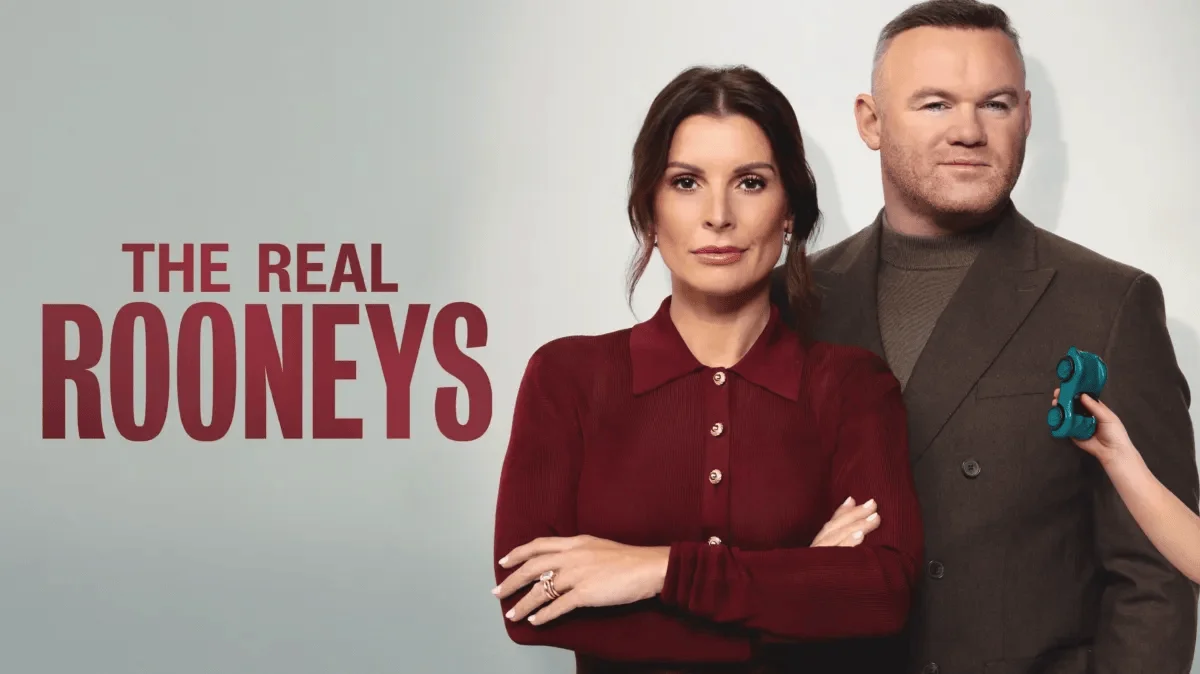
The Real Rooneys premiered on Disney+ and Hulu on September 24, 2026. The documentary series offers a candid glimpse into the family’s daily life, following football legend Wayne and television personality Coleen as they balance high-profile careers with raising their four children.
Where to Watch The Real Rooneys Online

Full Credits
Title: The Real Rooneys
Distributor: Disney+, Hulu
Release date: September 24, 2026
Rating: TV-MA
Running time: 45 minutes per episode
Director: Martin Webb
Writers: Not publicly specified
Producers and Executive Producers: Not publicly specified
Cast: Wayne Rooney, Coleen Rooney, Kai Rooney
The Review
The Real Rooneys
The Rooneys supply better television than their career plans. Wayne’s dry replies, Coleen’s reactions and the boys’ interruptions give this familiar format an appealing comic rhythm. Domestic disagreements add weight, though laughter cannot settle the problems they expose. The Primark cliffhanger strains for suspense, and visible cameras hardly guarantee complete candor. Still, the family can make a publicity appointment entertaining, especially when someone refuses to stick to its agenda.
PROS
- Responsive family banter and self-deprecating humor.
- Interviews become lively ensemble scenes.
- Domestic disputes give the career changes practical stakes.
CONS
- Manufactured suspense around the Primark partnership.
- Humor can soften unresolved domestic problems.
- Promised intimacy exceeds the opening episodes’ scrutiny.