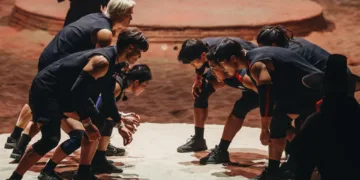







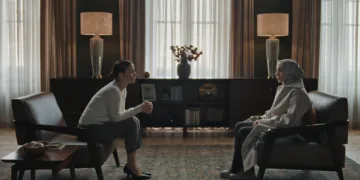
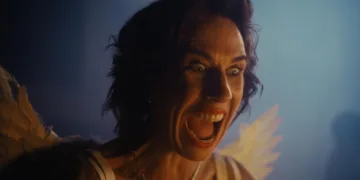
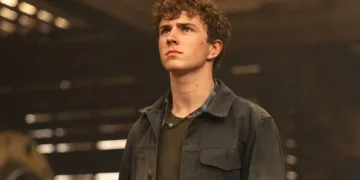










The sound-deprivation chamber in “Heartbeat” offers a particularly nasty kind of confinement: you want relief from the film’s sensations, and the characters cannot escape the place producing them. David Moreau sends vloggers into an abandoned Bulgarian military facility, then uses distressing sound and a distorted camera perspective to make their predicament physically uncomfortable. The room’s purpose becomes a cruel promise. Silence ought to offer respite, yet this enclosed space makes listening feel dangerous. The unstable visual presentation denies us the reassuring distance from which to watch someone else panic.
That discomfort arrives faster than the story can develop it. Adjusting to the warped perspective takes attention that might otherwise go toward anticipating danger, and sustained sensory pressure eventually loses some of its force. I admire the segment’s willingness to make confinement unpleasant rather than pleasantly spooky. But once the chamber has established its hold, the experience needs a change beyond continued endurance. “Heartbeat” leaves a stronger impression of being trapped than of discovering something increasingly frightening inside the trap.
V/H/S/Mixtape surrounds that ordeal with invitations to have a much sillier time. Music and sound connect the collection, while a vintage MTV-style program hosted by GWAR supplies its framing. Flying Lotus directs these interludes, which give the anthology room for narrative shorts, animation, and music videos without pretending they all belong to one continuous story. The monster costumes, chewed cassettes, and obscene treatment of hot dogs establish the mood efficiently. You are watching performers enjoy being repulsive, with little expectation that their antics will become believable danger.
The difficulty is staying amused through repeated visits. GWAR’s loose gross-out exchanges allow the feature to reset between contributions, but they also keep interrupting the effort of settling into another filmmaker’s atmosphere. Their presence makes the different formats intelligible; their comic persistence makes the emotional transitions harder. After the bodily distress of “Heartbeat,” another round of monster-host buffoonery asks for a quick recovery. The framing provides continuity of presentation while doing little to help one feeling give way to the next.
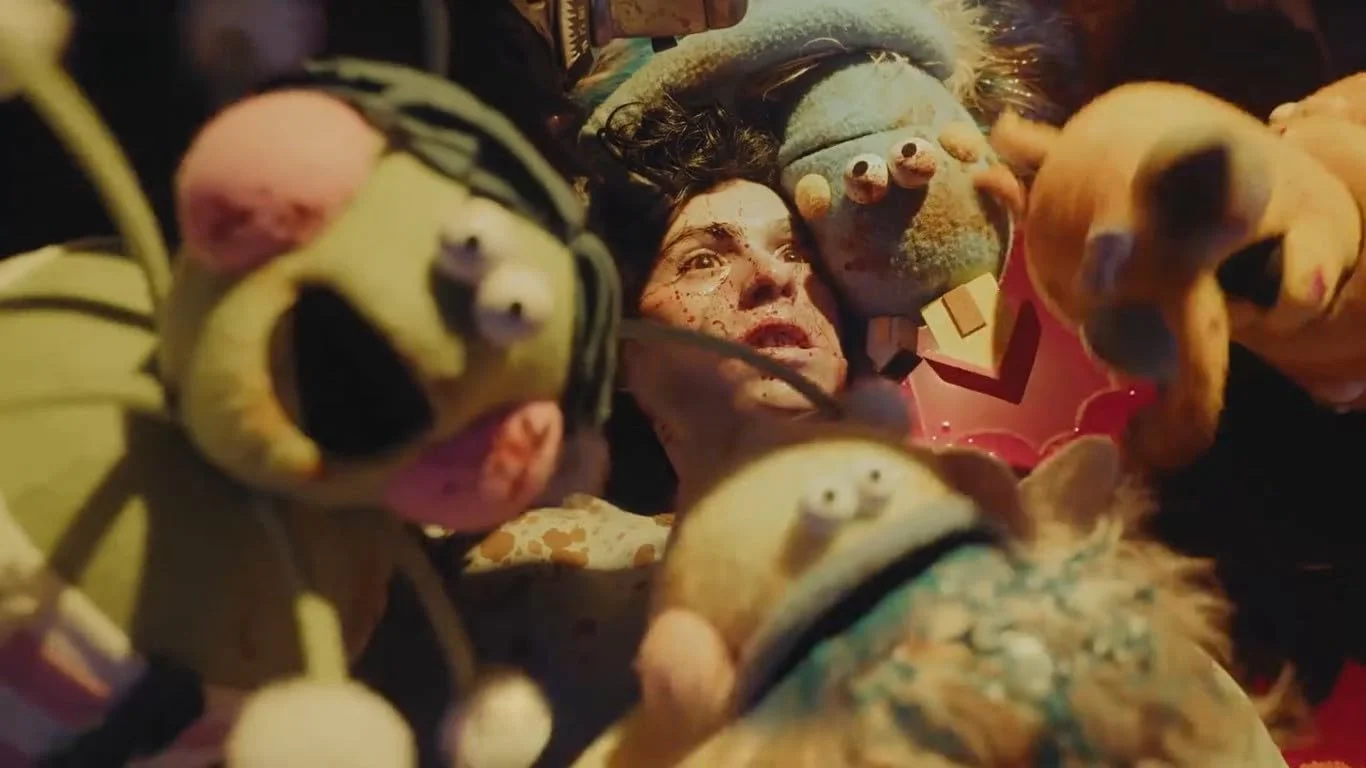
Renée Zhan’s “Dance, Dance, Dance, Dance” makes the invitation to laugh much easier to accept. Written by Zoe Cooper and filmed at Jim Henson’s Creature Shop, it sends studio visitors, including Barbara Crampton, into the world of a canceled children’s program they want to revive. The puppets have other plans. A cheerful song about mortality turns the familiar reassurance of children’s entertainment against its adult visitors. The musical brightness matters because it preserves the creatures’ friendliness long enough for their violence to feel gleefully inappropriate. Their apparent innocence becomes something they can keep wearing through the attack.
There is a wait before that promise fully pays off. The discussion of reworking the program establishes targets for the puppets, but spends too long preparing an encounter whose appeal is already clear. Once the extended attack arrives, the segment finds its pace through physical invention.
Little Shop of Gore’s effects help make the carnage something to inspect with delighted disbelief. The felt creatures and extravagant bodily damage belong to the same handmade spectacle. Fright is only one possible response here; appreciating the horrible ingenuity is another, and the short becomes much livelier once it trusts that pleasure.
Ernest Dickerson asks for a different kind of attention in “The Music of Mr. Sze.” Jihad Brent’s aspiring filmmaker becomes drawn to violin melodies from his upstairs neighbor, played by Alex Hsu. Listening begins as curiosity about another person, which gives the gradual buildup an intimate point of entry.
The eventual expansion into cosmic imagery replaces that small encounter with a threat difficult to comprehend. There is real appeal in feeling an ordinary building become inadequate to contain what its music suggests. The monstrous imagery rewards that curiosity, even when the dramatic progression supplies less clarity than the visual spectacle.
Placed around the middle of the feature, that patient introduction also exposes Mixtape’s difficulty with tempo. After comic attacks and sensory aggression, the violinist’s mystery needs time for our attention to settle. Its buildup can feel like a loss of momentum before it becomes absorbing on its own terms. “Heartbeat” demands adjustment through immediate discomfort; Mr. Sze requests it through gradual fascination. Both approaches have a place here, but the surrounding presentation treats the audience’s readiness for each as something that can simply be switched on.
The music videos make these changes of scale even sharper. Flying Lotus’s stop-motion “Another Cabin” has a wonderfully unpleasant little setup: a boy, a hostile grandmother, and a tentacled creature tearing into their rural home. The animation invites close attention to its fabricated world, then the brevity leaves little time for that interest to grow into dread.
Tobias Forge’s “Premature Burial,” featuring Repugnant, fits its revenge story into vintage death-metal presentation with a clearer sense of the form it wants to inhabit. These pieces provide quick bursts of visual and musical energy, though “Another Cabin” feels curtailed just as its threat becomes worth exploring.
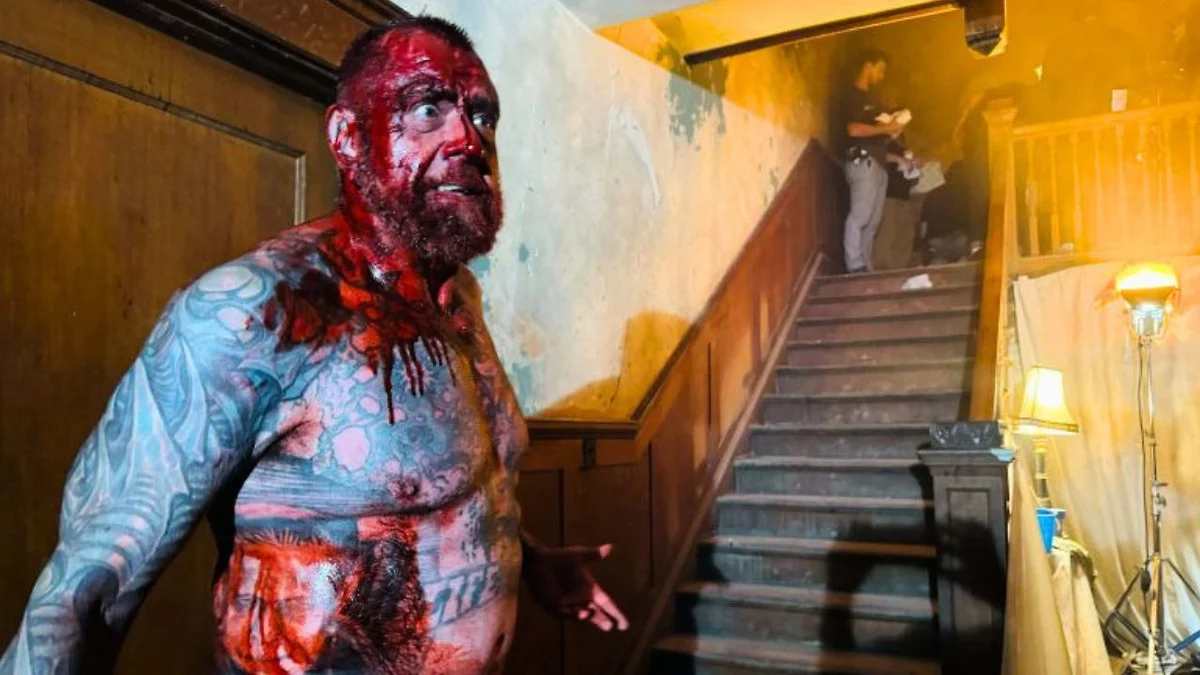
RZA’s closing “Death Tone” gives listening a purpose nasty enough to sustain the film’s comic appetite. Neela Jolene plays the daughter of a deceased music producer, following his instructions to create a perfect song from the suffering of her victims.
An axe and a chainsaw become tools of musical production. Her energetic commitment to the killings keeps the idea moving, while the practical effects preserve the ugly bodily source of what she wants to record. The joke has an immediate repetition problem, since each new victim risks confirming something we already understand. The variety of violent execution supplies much of the necessary renewed interest.
The recording premise also changes how that interest feels. Once screams become material for a composition, the viewer is encouraged to consider what the cruelty might contribute to the music. Zhan’s puppets let us enjoy the collision between cheerful song and bodily damage; RZA gives that enjoyment a task within the story.
Jolene’s character is collecting sounds, and the spectacle encourages us to listen along with her. The axe and chainsaw remain recognizably horrible, but their usefulness to her project makes the next victim an anticipated contribution. Our curiosity about the song starts depending on the harm required to make it.
V/H/S/Mixtape premieres on Shudder on October 9, 2026. The horror anthology film cranks the volume with a blood-soaked collection of cursed music videos, terrifying performances, and found footage.
Where to Watch V/H/S/Mixtape (2026) Online








Full Credits
Title: V/H/S/Mixtape
Distributor: Shudder
Release date: October 9, 2026
Running time: 1 hour 38 minutes (98 minutes)
Director: Ernest Dickerson, Flying Lotus, Tobias Forge, David Moreau, RZA, Renee Zhan
Writers: Not publicly specified
Producers and Executive Producers: Shudder Original Films, Bloody Disgusting
Cast: GWAR, Tobias Forge, RZA, Flying Lotus, Ernest Dickerson, David Moreau, Renee Zhan
The Review
VHSMixtape
V/H/S/Mixtape is easiest to enjoy when it lets grotesque invention become the attraction. The murderous puppets and “Death Tone” turn music into gleefully ugly entertainment, while “Heartbeat” supplies discomfort that outlasts its suspense. GWAR’s repeated interruptions and the uneven middle make it harder to settle into each short’s atmosphere. There is enough tactile creativity and sonic mischief to reward horror fans, but the collection’s changes of mood often require recovery time it refuses to give.
PROS
- Inventive practical gore, especially in the puppet attack.
- “Heartbeat” creates forceful sensory discomfort.
- Mr. Sze’s cosmic imagery rewards curiosity.
- - “Death Tone” makes musical creation gruesomely playful.
CONS
- GWAR’s recurring bits disrupt immersion.
- The puppet short’s setup delays its strongest material.
- “Heartbeat” sustains pressure without enough development.
- - “Another Cabin” ends before its threat fully develops.