

![Kingdom Hearts Collection [I-III] Review](https://gazettely.com/wp-content/uploads/2026/10/Kingdom-Hearts-Collection-I-III-1-75x75.webp "Kingdom Hearts Collection [I-III] Review: KHII Holds Steady as Newer Entries Fluctuate 4")



















![Kingdom Hearts Collection [I-III] Review](https://gazettely.com/wp-content/uploads/2026/10/Kingdom-Hearts-Collection-I-III-1-360x180.webp "Kingdom Hearts Collection [I-III] Review: KHII Holds Steady as Newer Entries Fluctuate 32")








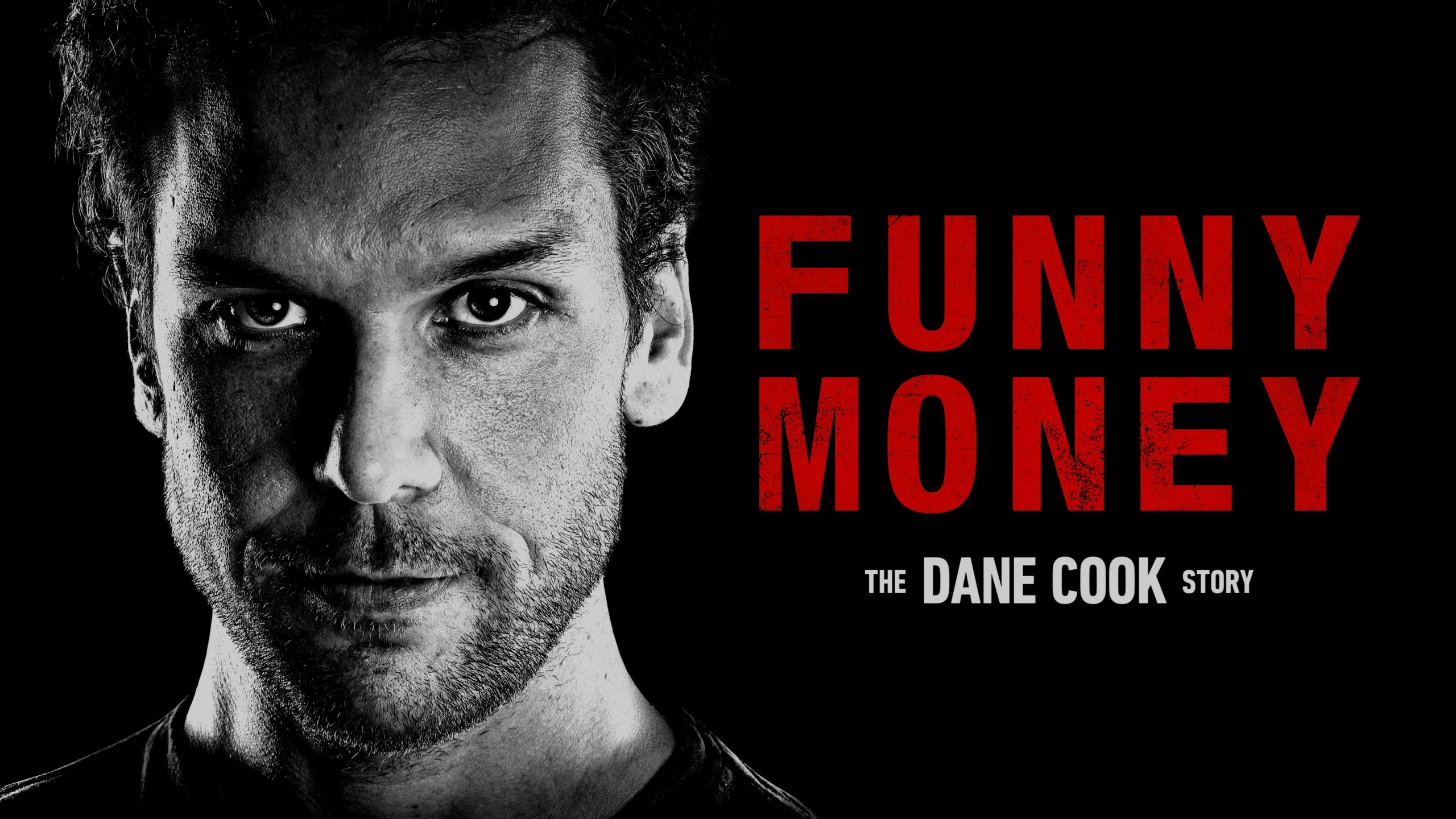

Dane Cook offered Erika McCauley relief from the restitution she owed him if she would sit for an interview. That arrangement deserves attention before anything she says. In Brett Harvey’s Funny Money: The Dane Cook Story, access to an account of financial betrayal is itself negotiated through money. Cook can relinquish a debt and gain testimony in the same transaction. Generosity and influence occupy the same chair.
Erika’s former husband, Darryl, does not participate, which makes her presence especially valuable. She can describe parts of their life Cook never witnessed. But she also enters the documentary through an agreement with the person harmed by the theft. I found myself suspicious of that arrangement: what kind of challenge can an interview offer when its subject’s creditor has helped make it possible? The film gives us reasons to keep asking, and reasons to distrust the simplicity of the question.
Darryl McCauley was Cook’s half-brother and business manager. The two roles were entangled long before the discovery of roughly $12 million in embezzlement. After Darryl suffered an attack while working as a corrections officer, Cook brought him into the business. It was a protective gesture that became a financial arrangement. His brother could leave a dangerous job; Cook could place his affairs in familiar hands. A professional appointment carried the emotional weight of a rescue.
Harvey’s account of Cook’s beginnings makes that decision intelligible. Returning to his old Boston neighborhood, Cook describes success as a way to secure his family’s future. The arena crowds and enormous album sales supply the money, but the neighborhood visit supplies its intended purpose. Wealth meant being able to help. When Darryl and Erika began enjoying expensive houses, cars, clothes, and holidays, their prosperity could fit the story Cook wanted his earnings to tell.
That is an uncomfortable advantage of stealing inside a family: spending can look like evidence that generosity is working. The documentary’s family interviews give this idea an emotional cost. Cook and his sisters recall the earlier Darryl with distress, trying to retain memories of closeness alongside knowledge of what he did. Their accounts resist the convenience of a villain who was always visibly villainous. Betrayal reaches backward. It makes a person reconsider the ordinary confidence with which they once accepted help, affection, or reassurance. Harvey is effective here because the remembered relationship remains substantial enough to damage.
The financial discovery arrives through a change in Cook’s professional arrangements. During his transition toward California and a home purchase, a new financial team uncovered what Darryl had been doing. External scrutiny entered a relationship that had functioned through personal confidence. The distinction matters. Cook’s error becomes understandable without the film needing to suggest that affection excuses unchecked financial authority, or that the victim’s lack of scrutiny caused another person to steal.
Receipts, fraudulent checks, law-enforcement documents, and photographs give the investigation a firmer basis than retrospective testimony alone. The image of cash recovered from Darryl’s safe is startling partly because it makes the scale physically legible. Millions can become an abstract celebrity number. Stacks of currency connect that number to accumulated, concealed actions. Cook’s lawyers, agents, and relatives contribute different kinds of proximity to the events, allowing the film to build its case through records and experience together.
Here my initial suspicion needs revising. I had begun treating Cook’s influence over access as a reason to doubt the account too broadly. The investigative material cannot be dismissed through that suspicion. There is considerable evidence here that exists apart from the interview bargain.

Its authority has limits, though. A fraudulent check can establish a transaction. It cannot explain everything Erika understood about her household’s wealth, or settle the motives behind every answer she gives. Her participation matters precisely because the documents leave questions that a person might help answer.
Harvey’s interviewing occasionally acknowledges that responsibility. When Erika disparages Cook, an interviewer corrects her. The intervention makes a claim available for challenge instead of allowing the interview setting to confer credibility automatically. A camera is a recording device (a surprisingly necessary distinction in some documentaries), and the person speaking in front of it still owes an account of what they say.
The film’s identification of Erika as a witch is a less defensible choice. Her beliefs receive little exploration and supply no demonstrated explanation for the financial conduct under discussion. Left undeveloped, the information becomes a credibility cue: viewers are handed a reason to regard her as strange before evaluating her account. Her words, her proximity to the spending, and the evidence already give Harvey material to examine. The spiritual detour weakens the rigor of that examination by introducing suspicion the investigation does not substantiate.
This unevenness extends to the subtitle’s promise. The documentary gives detailed attention to the betrayal while leaving Cook’s work comparatively thin. Career archive establishes commercial scale; his comedy receives little sustained analysis, and Tourgasm barely registers. Across a film approaching two hours, fame becomes chiefly a measure of what Darryl could take. That concentration produces a substantial family-crime account, but a restricted portrait of the comedian. Understanding what happened to Cook does not necessarily bring us close to understanding how he thinks onstage.
His expressions of forgiveness open a different question. I am reluctant to interpret the restitution offer solely as leverage when relinquishing money is also a concrete action, one consistent with his stated wish for people to find redemption. Yet the film leaves that generosity operating within an arrangement that benefits his account. Both facts remain relevant. Forgiveness can be sincere while the person offering it still has an interest in how the past is told.
Cook continues performing, but continued work supplies limited evidence about the repair of trust. The family’s recollections leave a harder task unfinished: deciding how to live with affection for someone whose conduct has changed the meaning of that affection. His sisters can remember their brother warmly and speak of him through tears. Forgiveness does not tell them which parts of the earlier relationship were dependable, and the financial records cannot answer that question for them.
Funny Money: The Dane Cook Story premiered via digital platforms on September 29, 2026. The gripping documentary explores the meteoric rise of comedian Dane Cook and the devastating betrayal he faced when a trusted family member stole millions of dollars from him.
Where to Watch Funny Money: The Dane Cook Story (2026) Online





Full Credits
Title: Funny Money: The Dane Cook Story
Distributor: Prime Video, Apple TV
Release date: September 29, 2026
Running time: 1 hour 59 minutes (119 minutes)
Director: Brett Harvey
Writers: Brett Harvey, Pollyanna Hardwicke-Brown
Producers and Executive Producers: Adam Scorgie, Rocky Mudaliar, Shane Fennessey, Christopher Tavlarides, Pollyanna Hardwicke
Cast: Dane Cook, Al Del Bene, Kelsi Cook, Richard Pollmann, Richard Grundy, Erika Montsesi, Courtney Cook, Luke Ernenwein
Director of Photography (Cinematographer): Brett Harvey, Shae Paterson
Editors: Stephen Green, Pollyanna Hardwicke-Brown, Brett Harvey
Composer: Alec Harrison
The Review
Funny Money The Dane Cook Story
Funny Money earns confidence through financial records and painful family testimony, then weakens its scrutiny by treating Erika’s unexplored spiritual identity as a credibility cue. I remain persuaded by its account of the theft, less satisfied by its portrait of the comedian. Harvey makes the damaged relationship intelligible without making forgiveness a tidy repair. Cook’s generosity remains sincere, useful to the documentary, and difficult to separate from his influence over its telling.
PROS
- Financial records give the investigation substantial evidentiary weight.
- Family recollections convey betrayal’s damage to earlier memories.
- Challenges to Erika’s statements keep testimony open to scrutiny.
CONS
- Erika’s spiritual identity encourages suspicion without relevant examination.
- Limited analysis of Cook’s comedy restricts the biographical portrait.