

![Kingdom Hearts Collection [I-III] Review](https://gazettely.com/wp-content/uploads/2026/10/Kingdom-Hearts-Collection-I-III-1-75x75.webp "Kingdom Hearts Collection [I-III] Review: KHII Holds Steady as Newer Entries Fluctuate 4")











![Kingdom Hearts Collection [I-III] Review](https://gazettely.com/wp-content/uploads/2026/10/Kingdom-Hearts-Collection-I-III-1-360x180.webp "Kingdom Hearts Collection [I-III] Review: KHII Holds Steady as Newer Entries Fluctuate 32")








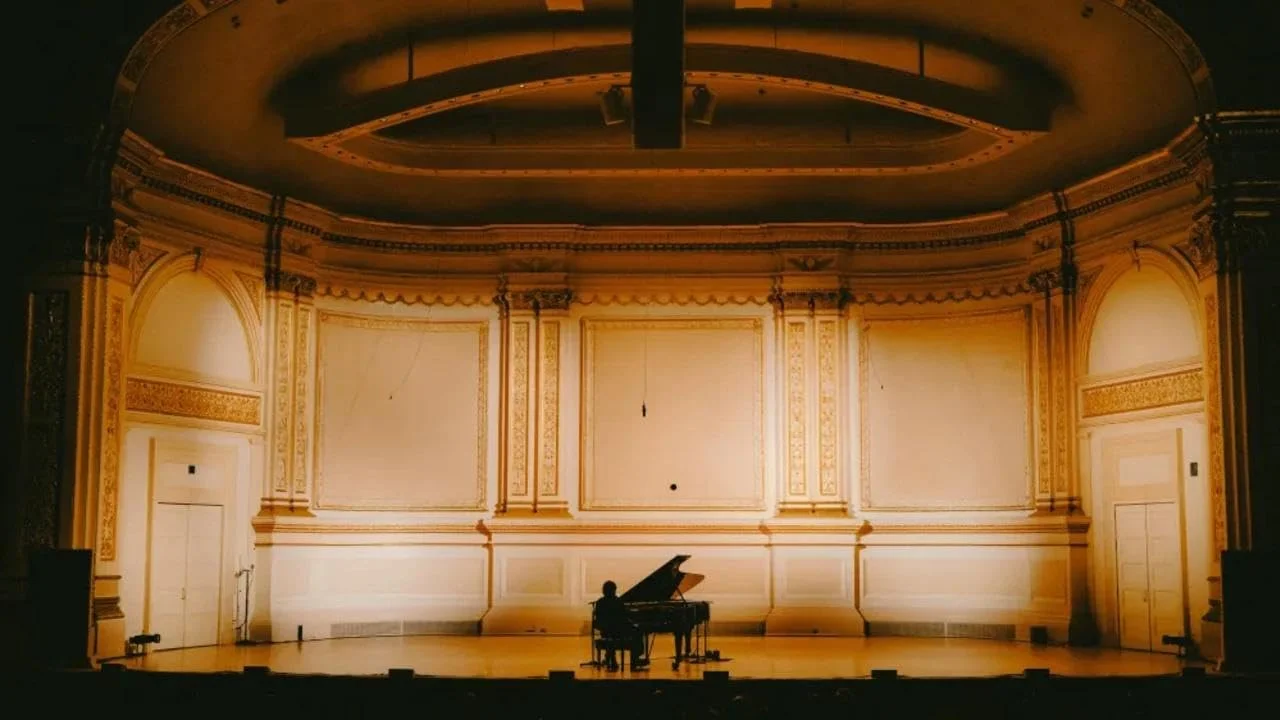

Before Cameron Winter sings, there are ticket scanners, footsteps on wooden floors, bodies making room for other bodies. Paul Thomas Anderson allows these small sounds into Cameron Winter at Carnegie Hall without asking them to announce a moment of cultural importance. People have come to hear someone play. They must first get through the doors and find somewhere to sit. The brevity of this arrival matters: listening emerges from the ordinary business of occupying a room, and the room has a sound of its own before Winter begins to fill it.
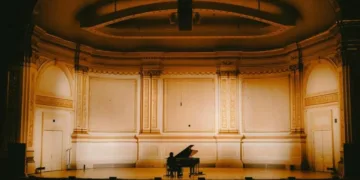
Once he settles behind the Steinway, the surrounding space becomes strangely unstable. A wide frame leaves him small beneath the light; a slow zoom allows his face and hands to occupy our attention until Carnegie Hall’s architecture has almost slipped away. Then the balconies return. We are close, then far away again, with Winter still folded over the same instrument. Anderson makes distance something we repeatedly feel losing and recovering. His camera can bring us within sight of a twitch or crooked smile while leaving the person responsible for the sound quietly inaccessible.
The film records the Geese frontman’s December 2025 solo concert, with songs from Heavy Metal reduced to piano and voice. Anderson offers little biographical assistance, and the camera’s approach never becomes a promise of explanation. During one number, we move from backstage through the wings as a camera is carried out, then watch Winter from across the piano. The passage briefly exposes the labor behind our apparent proximity. Someone has to cross that stage to give us this view. Winter continues playing, eyes closed, while the film finds another place from which to attend to him.
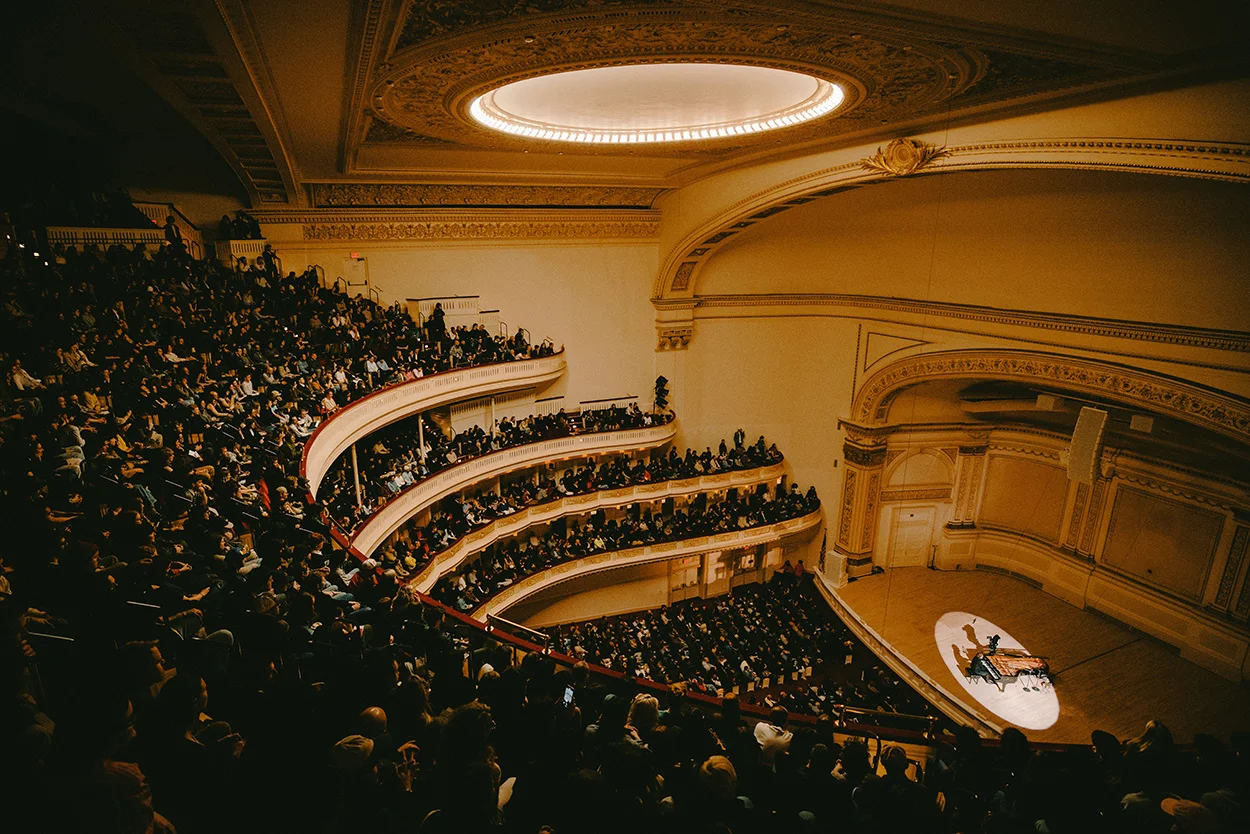
He was twenty-three that evening. His baritone makes the fact difficult to keep in mind: low, wavering, occasionally breaking, it gives phrases a weight that his young face cannot account for. The close views preserve that discrepancy instead of resolving it into a story about precocious genius. His long body bends inward; his hands remain occupied. Singing becomes a peculiar form of exposure here, allowing feeling to travel into the hall while the singer keeps much of himself out of reach. Ariel Rechtshaid’s music production preserves the force of that exposed voice against the piano, with few places for either to hide.
In “$0,” the language of money gives romantic diminishment a humiliating precision. The song’s speaker experiences another person’s affection as an assessment of his worth, something that can be held, spent, or reduced to nothing. With the arrangement stripped back, the monetary conceit acquires an uncomfortable intimacy. Winter lets the words inhabit his low register long enough for the joke in the denomination to sour. The performance suggests how thoroughly another person’s estimate can enter one’s own sense of existence, even while the song remains too strange and mobile to function as a straightforward confession.
His melodies often seem reluctant to leave a feeling behind. Phrases stretch, return, circle toward a destination that becomes clear only gradually. Anderson gives those movements time, and the patience of the image allows the songs’ hesitations to become perceptible. During “Love Takes Miles,” the camera approaches closely enough to register the small movement of Winter’s hair. Such detail keeps the song attached to a living body. In “Try As I May,” the reference to private ceremonies in dark rooms finds an answering image in a face that the stage lighting reveals only partially. We can witness the ceremony without receiving the explanation.
Solemnity, however, would be a poor description of everything happening at that piano. Winter’s profane announcement that he is absent from the very gathering listening to him draws laughter, putting a small tear in the evening’s reverence. His songs accommodate grotesque images and ungainly jokes alongside longing and religious language. Those interruptions matter because they prevent withdrawal from becoming a single, flattering portrait of artistic suffering. The person bent over the keys can be evasive, funny, self-dramatizing. His occasional stretches and drinks of water give the grand occasion its necessary bodily inconveniences.
The audience supplies another kind of presence, visible in reactions and in the hall’s wider views. When Winter declares that God is real, the lighting brings listeners’ faces into view, though the film gives that collective moment relatively little emphasis. Its attention remains weighted toward the person producing the sound. This is a meaningful limit on the access Anderson creates: we can study Winter from positions unavailable to a seated spectator, yet receive less of the experience of looking around and finding other people caught by the same phrase. The religious language can make the gathering feel ceremonial. The faces establish shared attention without explaining what anyone believes.
That sustained attention sometimes grows heavy. The single instrument, low register, and similarly wandering song structures can soften the distinctions between numbers until a passage feels suspended inside an already familiar mood. Small changes in phrasing and framing reward concentration, but they cannot always supply a fresh sense of movement. Anderson’s refusal to interrupt the set with interviews keeps the performance intact while leaving viewers dependent on their response to Winter’s voice. For someone unmoved by its peculiar gravity, the film offers little other foothold; even an absorbed listener can feel the atmosphere settling rather than deepening.
Carnegie Hall lends permanence to all these provisional gestures. A young man stretches, returns to his instrument, and eventually thanks everyone for coming, while the setting and the film’s careful attention threaten to turn the evening into an image of a career already completed. The post-title appearance of “Dead at 23” gives that threat a mordant expression. I take the gag as a jab at the speed with which admiration can start speaking the language of memorials. Yet recording has its own temporal cruelty: someone discovering these images years later will encounter twenty-three as a fixed present, long after Winter has had to leave it.
Cameron Winter at Carnegie Hall arrives in select theaters via Janus Films and Criterion starting November 20, 2026. The concert film captures the Geese frontman’s intimate, sold-out solo performance recorded live at the historic New York venue.
Full Credits
- Title: Cameron Winter at Carnegie Hall
- Distributor: Janus Films, Criterion
- Release date: November 20, 2026 (United States)
- Running time: 1 hour 12 minutes (72 minutes)
- Director: Paul Thomas Anderson
- Producers and Executive Producers: Paul Thomas Anderson
- Cast: Cameron Winter
- Director of Photography (Cinematographer): Paul Thomas Anderson
- Composer: Cameron Winter
The Review
Cameron Winter at Carnegie Hall
Anderson’s patient camera brings Winter close while preserving the strangeness that makes him difficult to know. Voice, piano, and shifting darkness give longing a physical presence; absurd humor keeps reverence from hardening around the young performer. The musical texture occasionally settles into sameness, and the audience’s collective experience receives less attention. Yet the film’s intimacy remains powerful: we can study a face, hear its voice break, and still leave its private life intact.
PROS
- Shifting camera distances create intimacy without explanatory biography.
- Exposed vocals and piano give longing tangible force.
- Winter’s humor interrupts the solemn atmosphere.
- The closing gag complicates premature mythmaking.
CONS
- Similar musical textures sometimes weaken momentum.
- Collective audience responses receive limited emphasis. 1.