

![Kingdom Hearts Collection [I-III] Review](https://gazettely.com/wp-content/uploads/2026/10/Kingdom-Hearts-Collection-I-III-1-75x75.webp "Kingdom Hearts Collection [I-III] Review: KHII Holds Steady as Newer Entries Fluctuate 4")





![Kingdom Hearts Collection [I-III] Review](https://gazettely.com/wp-content/uploads/2026/10/Kingdom-Hearts-Collection-I-III-1-360x180.webp "Kingdom Hearts Collection [I-III] Review: KHII Holds Steady as Newer Entries Fluctuate 32")




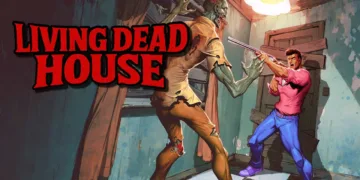
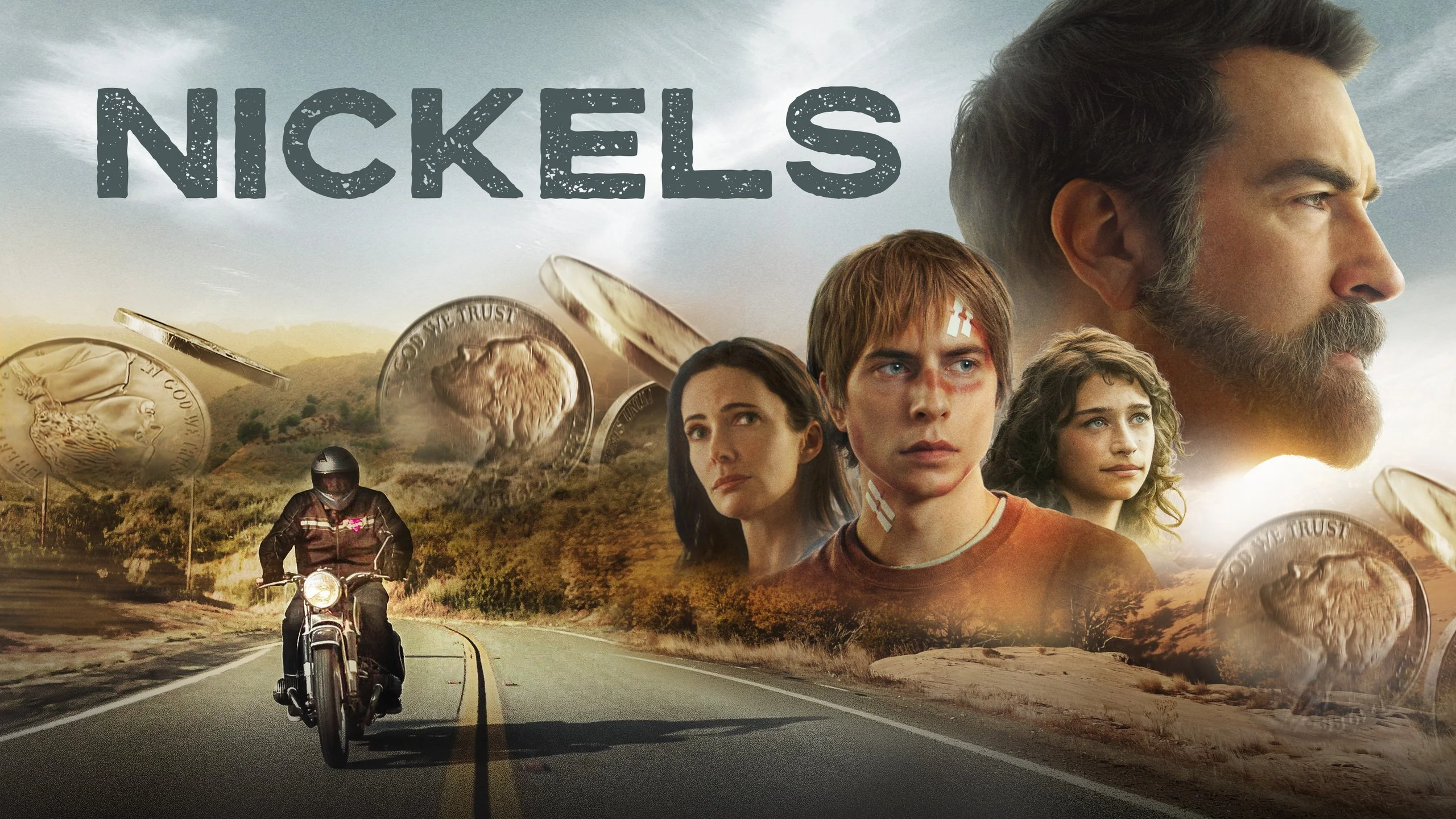

Mitch Diller asks for a private word with his older neighbor in the hospital, then addresses him as “Tommy.” The familiarity is misplaced. Mitch is a college student recovering from a motorcycle accident; Tom Monroe is a branding executive visiting someone his family knows. Yet nobody has used that name for Tom in decades.
Spencer King’s Nickels gives this small exchange room to become uncomfortable, because the two men seem to be participating in different conversations. Aaron Holliday’s Mitch asks questions. Rob Riggle’s Tom begins hearing someone he thought he would never hear again.
The nickname gains weight through a series of coincidences. Tom’s older brother died in a motorcycle accident when Tom was a teenager. His approaching birthday falls on the anniversary of that death. He has recently found nickels in a garbage bag, and the coins carry a private significance.
Tim Tuchrello’s screenplay gathers these details around the hospital encounter until Tom starts believing his brother might somehow be present within Mitch. The audience receives the same pieces Tom does, but his history supplies an emotional connection we cannot independently verify. We can understand the pattern’s attraction while remaining uncertain about its meaning.
That is a useful way to build a supernatural drama. The clues explain why a person might believe before establishing anything the rest of us must accept. The difficulty lies in how long the film takes to articulate the possibility toward which those clues point.
Delayed exposition means holding back the background information that would make an encounter intelligible. Here, it initially lets us experience Mitch’s strangeness alongside Tom. As the mystery lingers, however, the delay becomes less productive. The film spends too much time approaching an explanation whose emotional implications deserve the greater attention.
Riggle supplies some of that missing development through performance. His familiar comic energy is largely absent, and Tom’s pain emerges through restrained expression and small changes in delivery. I liked the absence of an automatic joke whenever a scene threatens to become uncomfortable.
Tom has a business, a marriage, and a daughter; he has learned to function, and Riggle allows that competence to coexist with an old vulnerability. His growing investment in Mitch feels like something capable of interrupting a settled life. The performance makes his conviction emotionally accessible without lending it supernatural authority.
Holliday helps by keeping Mitch’s behavior difficult to settle. The young man never plainly declares himself to be Tom’s brother, so the familiarity between them remains open to interpretation. Their exchanges can feel tender and disquieting at the same time. King’s slow dialogue delivery, though, gives too many interactions a similar gravity.
A pause can let us register someone reconsidering a question or struggling to answer it. When speech stays uniformly deliberate, that distinction becomes harder to hear. The hospital encounter has a specific source of unease; carrying its solemnity into ordinary domestic conversations sometimes makes the film feel stalled.
The screenplay’s clearest problem arrives through a birthday present. Tom’s wife Liz, played by Elizabeth Tulloch, and their daughter Harper, played by Odessa A’zion, arrange to give him a motorcycle of the same kind his brother was riding when he died.
The object neatly connects the birthday, the fatal accident, and Mitch’s recent injury. As a piece of dramatic construction, its purpose is easy to grasp. As a choice made by people who know Tom intimately, it is much harder to believe. Other characters even question Liz’s knowledge of the death, acknowledging the problem without supplying an adequate explanation.
This matters because Tulloch and Riggle suggest a marriage with an established warmth. Liz’s early concern gives Tom’s home life a credible foundation, and her later frustration with his absorption in Mitch has an understandable starting point. A spouse can care about old grief and still be hurt by present neglect.
The motorcycle gift scrambles those responsibilities. Liz participates in recreating a painful association, then becomes angry with the man whose distress the association intensifies. The script needs to develop the thinking behind that decision. Instead, its thematic arrangement pushes ahead while the relationship has to absorb the contradiction.
The film is on firmer ground when it resists appointing someone to explain the afterlife. Tom never consults a priest or a reincarnation specialist, and there is no definitive confirmation that his brother has returned. This places Nickels in an uneasy space between a supernatural mystery and a drama about personal faith.
Mitch’s behavior raises the expectation that something extraordinary will be disclosed, while Tom’s attachment directs attention toward the everyday effects of belief. That uncertainty can be valuable. It gives the audience room to question Tom without treating his longing as foolish.
Deborah, Tom’s estranged sister, complicates that openness. Rebecca Gayheart’s character is presented as an apparent psychic, and her unspoken recognition of something in Mitch appears to offer corroboration. Yet her own ability remains unestablished. Using her intuition to support Tom’s conviction introduces another supernatural proposition into a story already asking us to sit with one.
Their shared history could make the encounter emotionally persuasive regardless of any psychic explanation. The estrangement receives too little development, though, leaving the film’s possible confirmation clearer than its account of what these siblings still owe each other.
Mitch’s place within his own family remains similarly underexplored. His parents, Bill and Lorraine, played by Tom Arnold and Vinessa Shaw, are dealing with a son recovering from an accident while Tom increasingly understands that son through a separate family’s loss. Holliday’s refusal to resolve Mitch’s identity preserves the mystery, but it also leaves the young man’s own needs faint beside Tom’s.
There is a difficult relationship taking shape here: Tom’s affection may be sincere, yet it is attached to someone Mitch might represent. Bill and Lorraine still have a living son to care for, and the film gives too little attention to what Tom’s hoped-for reunion asks of him.
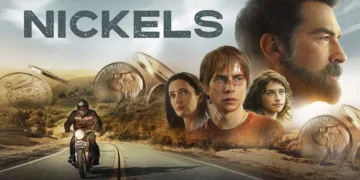
Nickels arrived in select theaters and digital platforms via Briarcliff Entertainment on October 2, 2026. Inspired by a true story, the supernatural drama follows a grieving entrepreneur who suspects his late brother’s spirit has returned after a neighborhood teenager survives a motorcycle accident.
Where to Watch Nickels (2026) Online





Full Credits
Title: Nickels
Distributor: Briarcliff Entertainment
Release date: October 2, 2026
Running time: 1 hour 42 minutes (102 minutes)
Director: Spencer King
Writers: Spencer King
Producers and Executive Producers: Tom Ortenberg, Danielle Goodman, Jordan Dykstra, Andrew Ortenberg
Cast: Rob Riggle, Aaron Holliday, Elizabeth Tulloch, Vinessa Shaw, Rebecca Gayheart, Odessa A’zion, Tom Arnold
Director of Photography (Cinematographer): Luke Dyra
Editors: Amir Mosallaie
Composer: Isaac Middleton
The Review
Nickels
Nickels makes Tom’s longing understandable through Rob Riggle’s restrained performance and a hospital encounter that turns familiarity into unease. Its refusal to settle the supernatural question leaves useful room for doubt. The storytelling around that uncertainty is less assured: prolonged mystery slows the drama, the motorcycle gift strains family credibility, and the living relationships receive too little development. I believed Tom’s need to find his brother in Mitch; the screenplay left me less convinced by the people surrounding that hope.
PROS
- Riggle makes Tom’s grief emotionally accessible.
- The hospital exchange builds unease through specific details.
- Spiritual uncertainty permits independent interpretation.
CONS
- Prolonged mystery and slow dialogue impede momentum.
- The motorcycle gift undermines believable family behavior.
- Deborah’s estrangement and Mitch’s own needs remain underexplored.