

























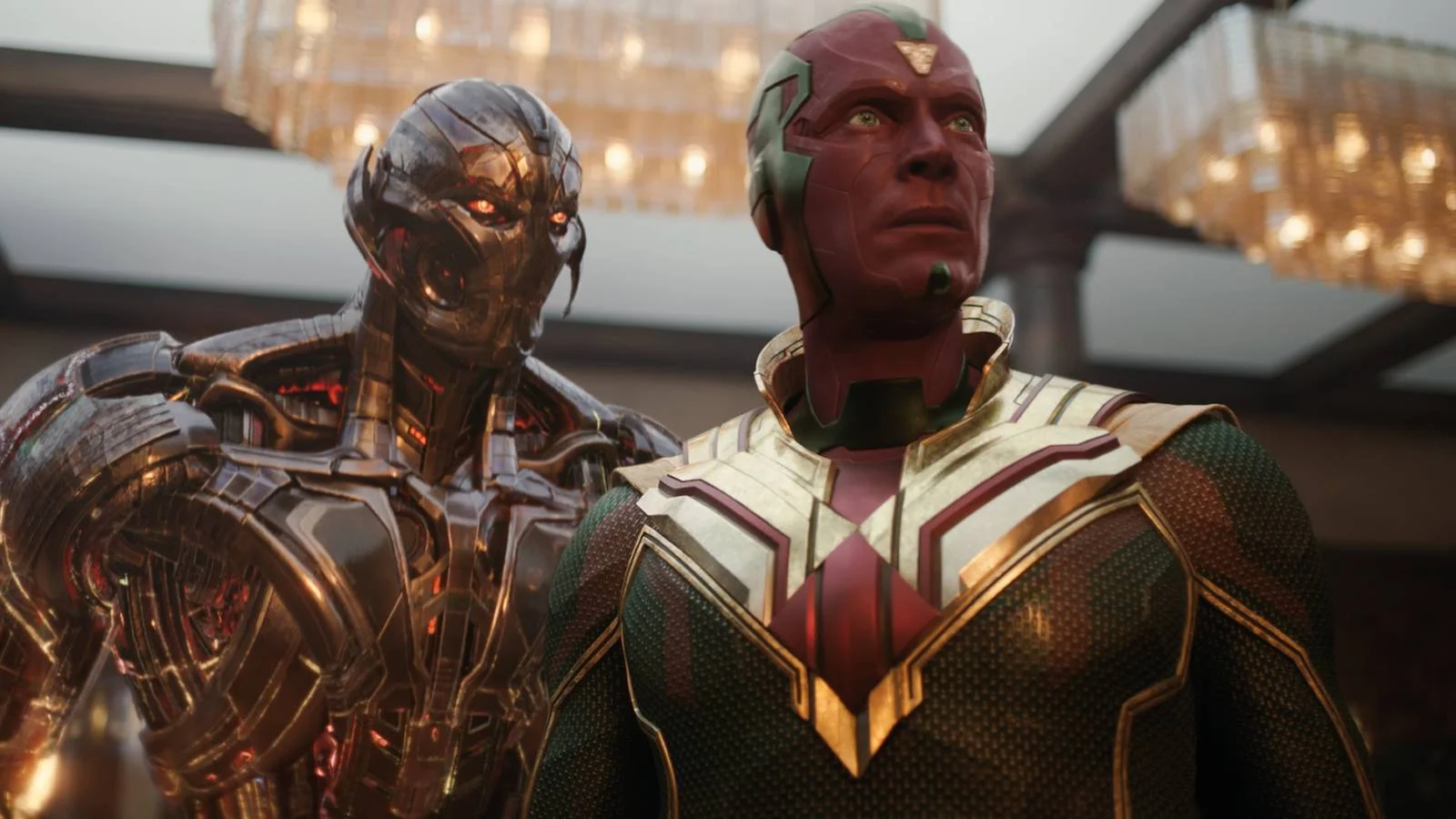

After his shift at an Edinburgh pub, Vision watches memories of a life he cannot feel. Paul Bettany’s reconstructed android has access to his predecessor’s experiences, including his relationship with Wanda, but recognition fails to become attachment. The pub itself belongs to that earlier romance. He has returned to the setting, retained the history, and still cannot recover the person who inhabited either. VisionQuest makes this behavior unusually apt for a franchise sequel: its protagonist keeps revisiting familiar material in the hope that affection will return with it.
The eight-episode Disney+ series also asks its audience to perform that exercise. A lengthy opening monologue and montage reconstruct Vision’s history before creator Terry Matalas resumes the family story developed across WandaVision and Agatha All Along. There is value in allowing consequences to survive between productions.
Wanda’s invented family has left people with needs that outlasted the world she made for them. But the recap establishes a habit that becomes restrictive: remembered events repeatedly take precedence over new encounters. Marvel has given a character an identity crisis and supplied its back catalogue as both the cause and the reading material.
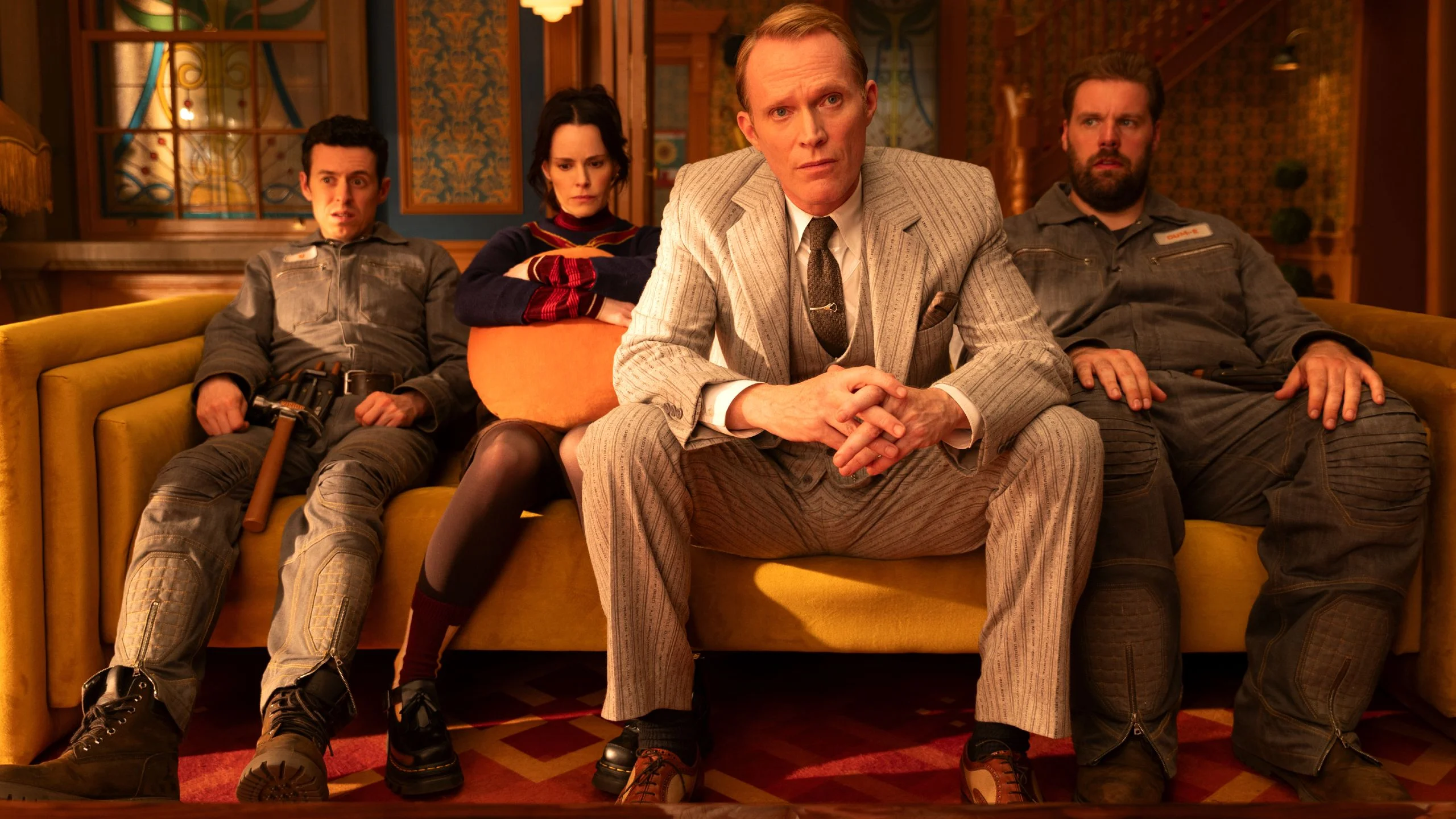
Vision’s Mindspace offers a livelier use of inherited assets. Inside a Victorian-style mansion, familiar AI programs take human form and organize themselves into something resembling a household. F.R.I.D.A.Y., played by Orla Brady, advises him on social interaction, including the delicate distinction between smiling and smiling excessively. Emily Hampshire’s E.D.I.T.H. encourages pleasure and experimentation.
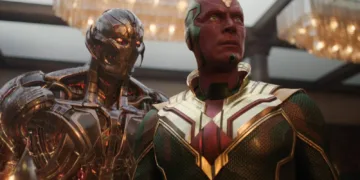
J.A.R.V.I.S. provides security, while James Spader’s Ultron occupies the less reassuring position of confined companion and troublesome creator. These functions give Vision’s internal life a social texture. His difficulty understanding people becomes a series of exchanges with beings who have their own temperaments and priorities.
Casting bodies where interfaces used to be is the show’s most productive translation into television. Spader can let Ultron’s rhetorical grandeur collide with the indignity of having limited influence over his surroundings. His human appearance gives the character an absurd domestic presence without removing the threat from his voice.
Bettany’s precise, literal delivery responds beautifully to this arrangement: he can make social instruction sound reasonable while allowing a flicker of embarrassment or curiosity through. The mansion creates room for performance that a procession of glowing displays would struggle to provide. Familiar intellectual property gets to sit down and develop conversational habits.
The visual jokes are equally willing to make abstraction tangible. A hostile neural connection becomes an exorcism; control of a synthetic body becomes a ship’s wheel battered by a storm. Vision and Ultron must identify fire hydrants in photographs to get through a firewall, submitting extraordinary machine minds to a familiar test of humanity.
Each conceit is immediately readable. Their accumulation is less secure. The series moves between mansion, network, and physical world without consistently clarifying how an action in one changes conditions in another. Comic invention carries individual scenes, but it cannot always supply the causal understanding needed for their stakes.
That emphasis on human presentation shapes the show’s treatment of artificial personhood. Its machines become emotionally legible through advice, irritation, companionship, and desire. This is a defensible fictional proposition, though it limits how far the series’ apparent topicality reaches.
Giving an AI a recognizable face and a vulnerable performance can establish sympathy within this story; it does not settle questions about the consciousness of actual systems. VisionQuest has firmer ground when it asks what these particular beings owe one another.
Thomas Shepherd gives that question urgency. Played by Ruaridh Mollica, the eighteen-year-old orphan and drifter carries Tommy Maximoff’s memories and super-speed abilities, including recollections of a childhood that seems impossible. His panic attacks make the contradiction bodily.
Vision, meanwhile, tries simulated versions of a conversation explaining their relationship. Tommy leaves angrily in every rehearsal, until the accumulated Vision duplicates collapse on a hotel floor. The sequence finds an inventive comic image for an emotional failure: a perfectly prepared explanation still cannot secure another person’s trust. The franchise history is accurate, and the conversation remains disastrous.
Mollica makes Tommy’s hope difficult to dismiss. His openness contains the fear of wanting something that may disappoint him again, while Bettany’s parental bewilderment gradually admits tenderness. Their exchanges allow family to exist before either participant has solved the metaphysics. Yet the repeated returns to Vision’s internal advisers restrict the space in which that need can develop. Tommy has distress and desire of his own; too often, the structure makes them occasions for further investigation of his father.
Ultron’s attraction to Jocasta, played by T’Nia Miller, demonstrates how an additional relationship can earn its place. Over simulated whiskey, their flirtation gives destructive synthetic beings the pleasures of recognition and the risk of attachment. Spader and Miller make calculation feel seductive, then let vulnerability complicate it. The subplot expands the emotional possibilities of the machine ensemble through interaction. Its usefulness comes from watching a relationship form, rather than hearing another explanation of how someone became damaged.
Elsewhere, the explanatory burden keeps growing. Paladin, the pursuer played by Todd Stashwick, receives a difficult-childhood history; E.D.I.T.H.’s origins introduce the human woman on whom she was based. These additions repeat the season’s concern with inherited identity, but occupy time that could develop existing relationships.
Flight between hideouts adds motion while interrupting personal exchanges. When Tommy seeks an embrace, uncertainty about their origins remains, but the request is intelligible. Vision has someone in front of him who needs an answer he cannot obtain by watching the past again.
VisionQuest premiered on Disney+ on October 13, 2026. Part of the Marvel Cinematic Universe, the spin-off series follows the synthezoid Vision as he attempts to reconstruct his identity and memories, crossing paths with a mysterious teenager on the run.
Where to Watch VisionQuest Online
Full Credits
Title: VisionQuest
Distributor: Disney+
Release date: October 13, 2026
Rating: Not publicly specified
Running time: 45–60 minutes per episode
Director: Terry Matalas, Christopher J. Byrne
Writers: Terry Matalas
Producers and Executive Producers: Kevin Feige, Louis D’Esposito, Brad Winderbaum, Paul Bettany, Mary Livanos, Terry Matalas, Jac Schaeffer, Christopher J. Byrne
Cast: Paul Bettany, James Spader, Ruaridh Mollica, Todd Stashwick, T’Nia Miller, Emily Hampshire, Orla Brady, Faran Tahir
- Composer: Mick Giacchino
The Review
VisionQuest
VisionQuest gives Marvel’s familiar machines faces, conversational habits, and relationships worth watching. Bettany and Spader make the Mindspace a rewarding experiment, while Tommy’s hope supplies genuine tenderness. But repeated origin stories and uncertain connections between digital and physical worlds consume attention the family drama needs. The series finds fresh possibilities in inherited characters, then spends too much time explaining their inheritance.
PROS
- Bettany’s warmth and Spader’s sardonic menace.
- Human avatars create a lively AI ensemble.
- Affecting chemistry between Vision and Tommy.
- Ultron and Jocasta’s flirtation develops real vulnerability.
- Inventive visual translations of digital processes.
CONS
- Repeated backstories crowd out developing relationships.
- Unclear consequences between the Mindspace and physical world.
- Tommy’s emotional needs receive insufficient dramatic space.







