




























Getting his foot out of the toilet is Luc’s first successful escape attempt. It also puts him within reach of the cocaine that will make his evening considerably worse. His shoe remains wedged in the floor-level squat, and retrieving it exposes somebody else’s stash.
He takes the drugs, denies the theft when confronted, and loses control of the situation. Grégory Morin’s Flush moves through this sequence quickly, but screenwriter David Neiss gives each development a cause. Luc’s first predicament is an accident. The next one requires several decisions, all of them his.
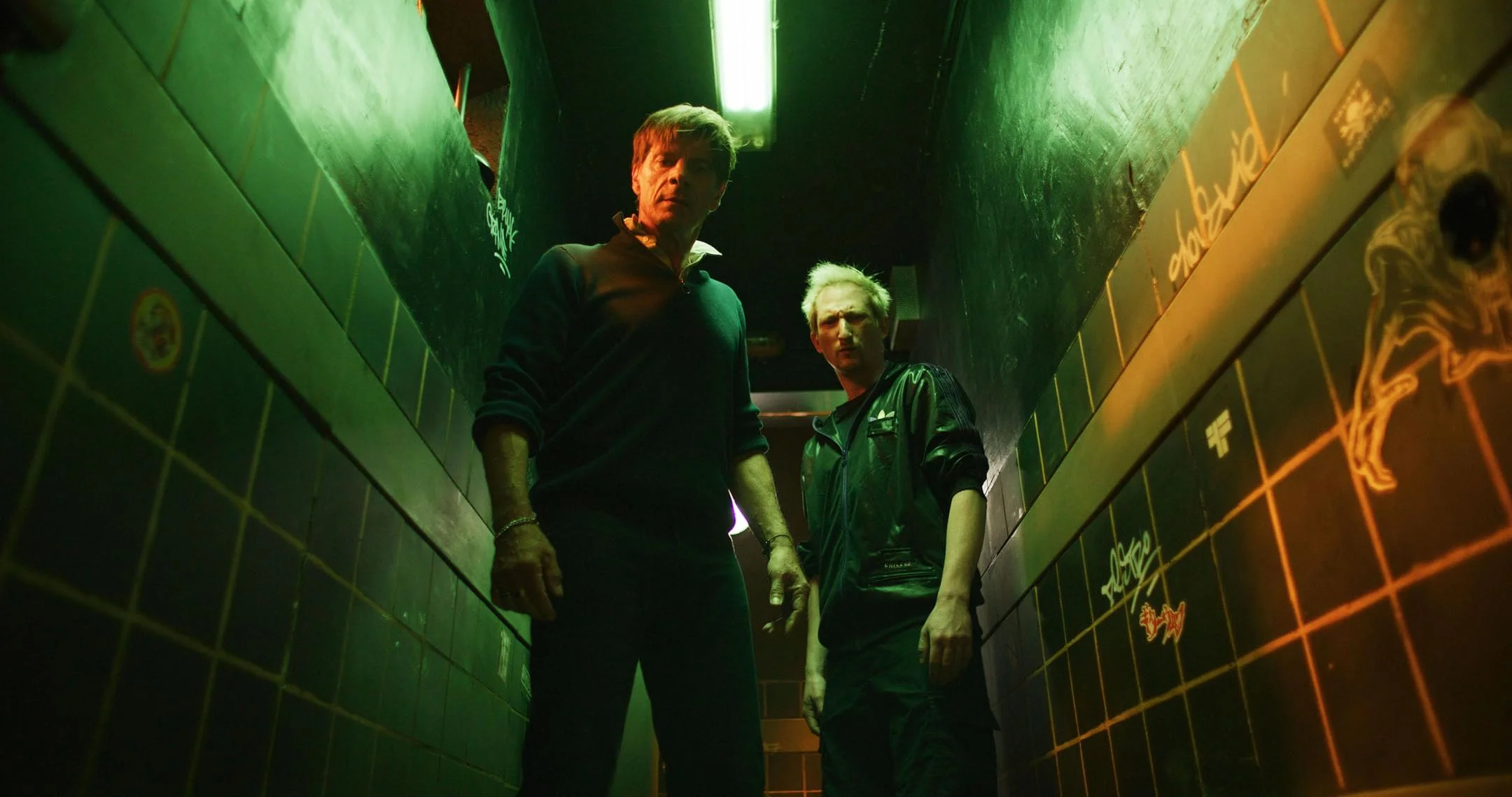
The dealer and club owner beat Luc and force his head into the toilet, then close the bathroom after deciding he is dead. They intend to return after business hours to remove his body. This changes the story’s operating conditions: struggling free would still leave Luc in a building with men who have already tried to kill him.
The closed bathroom offers temporary protection while obstructing rescue. Within a few minutes, an embarrassing inconvenience has become a survival problem with danger on both sides of the porcelain. The film spends its opening establishing those conditions rather than laboriously preparing the audience for the advertised trap.
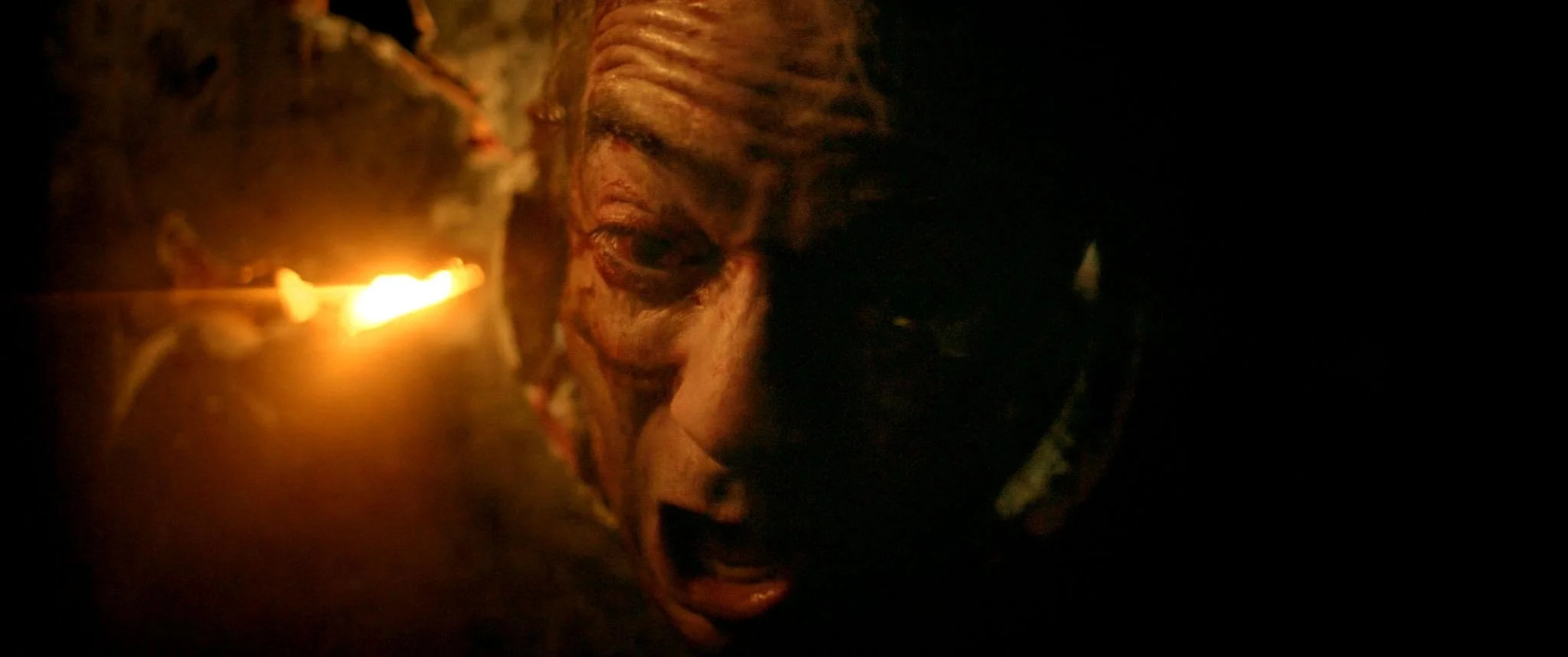
Once Luc regains consciousness, Morin divides the action between his head beneath the floor and his body above it. That arrangement gives the cramped setting a useful dramatic geography. Luc can reach things he cannot see, while the audience can observe threats his hands must respond to blindly.
Jonathan Lambert’s performance holds the two views together. His facial panic and the exertions of his limbs remain parts of the same effort, so the cutting rarely reduces him to separate comic exhibits. A fight with an attacker becomes particularly effective through this restricted coordination. Luc has functioning arms and legs; information is the missing equipment.
The plumbing keeps changing its role, too. Voices carried through the pipes suggest contact with the outside world, encouraging Luc to call for attention. A flush then turns the same connection into a drowning threat. Later, a rat obstructing a pipe combines two hazards that could easily have occupied unrelated episodes.
These sequences give the action somewhere to go without moving its protagonist. Each adjustment forces a fresh calculation: whom he can reach, what he can touch, how much water he can survive. The film’s ingenuity lies in these practical changes, which prevent the premise from becoming seventy minutes of identical struggling.
The phone supplies a different kind of obstruction. Luc attempts to summon the police through its voice assistant and gets music by The Police instead. The joke is broad, but it works because the mistake sabotages a recognizable plan. Reaching the device has required effort; using it introduces another failure he must overcome.
Lambert makes this progression readable through mounting frustration and renewed attempts. Luc’s resourcefulness provides a reason to follow him even when his conduct supplies little reason to admire him. The screenplay earns attention by giving him tasks, and the performance makes their difficulty matter.
Other people’s presence complicates the familiar isolation of a confinement thriller. Luc is discovered, approached, and left in danger, which repeatedly brings assistance close enough to seem possible. The club owner’s return carries a different expectation from Val’s eventual appearance, since one helped create the predicament and the other knows the life preceding it.
These encounters let Morin vary the pressure without inventing an entirely new physical hazard each time. They also make Luc’s helplessness uncomfortable in a specific way: his condition can be visible to somebody else and still fail to produce the response he needs.
That encounter-driven construction becomes less persuasive when an incident stops changing anything. A sexual gag built around gay panic interrupts the otherwise purposeful exchange of hazards, tools, and failed solutions. Its cheapness is less damaging than its expendability.
The film has paused its escape problem to service a joke that could be removed with little disturbance. Even a man immobilized in a toilet apparently has time for a sketch break. At seventy minutes, Flush limits the damage, but the detour exposes how easily this structure could become a queue of visitors delivering unrelated humiliations.
The rat’s bloody death creates a separate tonal difficulty. Its earlier involvement in the drug business and plumbing gives the animal a place in the action; turning its destruction into comic spectacle pushes the humor toward punishment for its own sake.
Morin usually gets stronger effects from consequences Luc must manage, especially the flooding and blind combat. Here, the nastiness briefly becomes the attraction itself. The film can sustain disgust, but this moment weakens the balance between an absurd situation and the serious possibility of death that makes Luc’s responses worth watching.
His encounter with Val brings the personal stakes back into view. Luc came to the club amid a dispute involving access to their seven-year-old daughter, and his cocaine use, theft, and lying hardly support his claim to reliability. With Val in the bathroom, the person whose judgment he wants to change can see how desperate he has become.
Lambert gives that desperation sufficient force to make renewed attachment to life credible. A reformed father is a larger proposition. His persistence establishes an urgent desire to survive; it leaves the responsibilities awaiting him less settled. Val’s presence keeps those responsibilities attached to somebody who will have to live with his choices after the immediate emergency.
Flush premiered at the Fantasia International Film Festival and expanded to VOD platforms via Dark Sky Films. The French dark comedy horror film follows an addict attempting to reconnect with his family, whose night takes a wildly absurd and grotesque turn when a violent encounter leaves him trapped with his head stuck inside a public restroom toilet.
Where to Watch Flush (2025) Online


Full Credits
Title: Flush
Distributor: Dark Sky Films, Fantasia International Film Festival
Release date: July 2025 (Fantasia International Film Festival), October 9, 2026 (United States VOD)
Running time: 1 hour 10 minutes (70 minutes)
Director: Grégory Morin
Writers: David Neiss, Grégory Morin
Producers and Executive Producers: Not publicly specified
Cast: Jonathan Lambert, Élodie Navarre, Elliot Jenicot, Rémy Adriaens
The Review
Flush
Flush sustains its absurd premise through connected hazards, clear spatial staging, and Jonathan Lambert’s determined physical performance. Luc’s failed solutions usually give the story its next problem, keeping the seventy-minute ordeal moving. A disposable sexual gag and the rat’s bloody death weaken that discipline. The family stakes give his survival emotional weight, though his persistence establishes a desire to live more securely than personal reform.
PROS
- Escape attempts generate fresh, connected dangers.
- Clear staging makes the confined space dramatically useful.
- Lambert unifies facial panic and blind physical effort.
- Family stakes sustain investment in an abrasive protagonist.
CONS
- A gay-panic gag interrupts the escape narrative.
- The rat’s bloody death favors punitive spectacle.







