























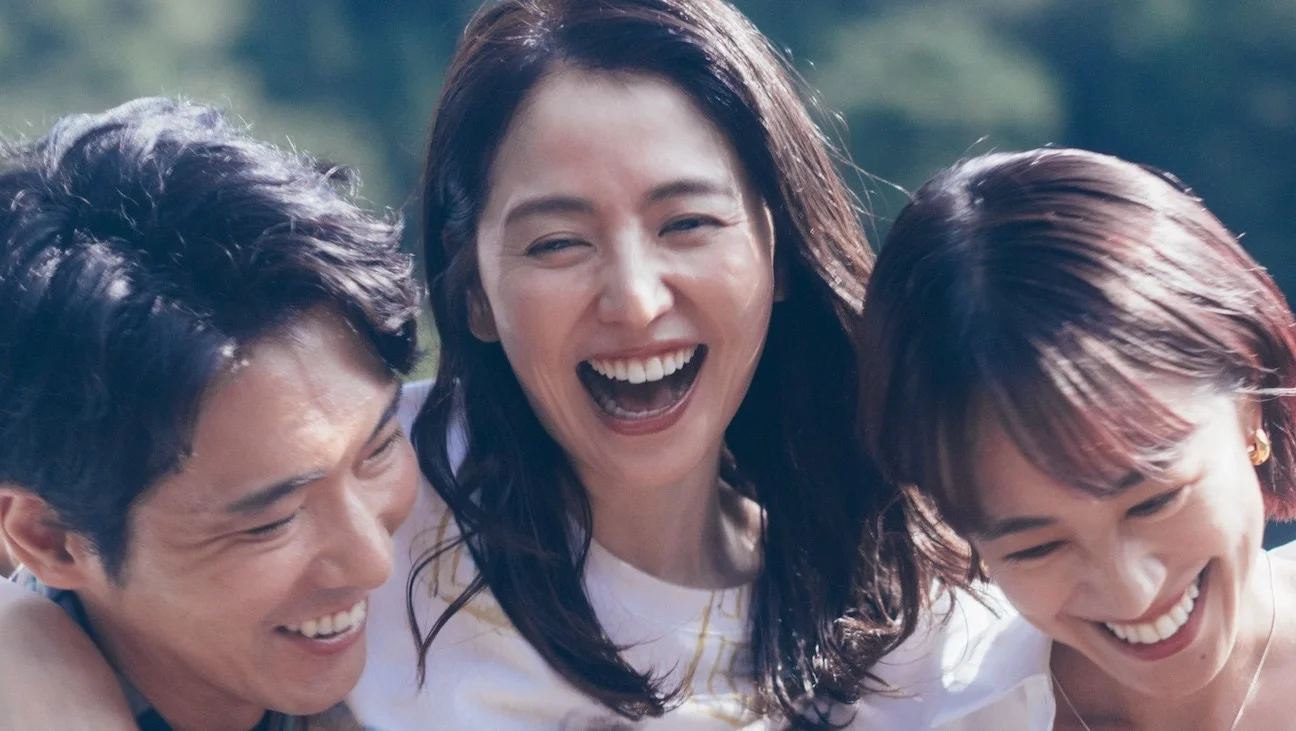

Uta brings extra guests to a reconciliation that already has plenty of people to accommodate. Sitting with her husband and girlfriend in a record bar, she has invited a gay couple expecting a child. Their presence offers a possible future before she has to explain how she intends to get there. The encounter has an appealing warmth, with parenthood becoming something people can imagine together. Yet Uta has arranged the company carefully. Even her attempt to repair the damage comes with a little pressure to accept her preferred solution.
The person I feel for here is Morio, her husband, who is being asked to reconsider his life while Uta supplies an example of how flexible he could be. His wish for children suddenly looks compatible with circumstances he never chose. Nanako Hirose makes that possibility inviting enough to understand its appeal, while leaving Uta’s self-interest visible. It is an effective way into Between Two Lovers: affection encourages these people to keep listening, even when they have good reasons to leave the conversation.
Uta, played by Masami Nagasawa, writes successful picture books, including the “Little Miss Mushroom” series. She has little desire to become a mother herself, despite Morio’s repeated interest in having children. Her editor and secret girlfriend, Junna, also wants a child, along with a relationship that can exist openly. Uta’s solution is for Morio to provide sperm, Junna to become pregnant, and all three to share a household. The six-year affair has allowed Uta to move between relationships whose demands she could keep apart. Her proposal asks everyone else to help preserve the life she enjoys.
Nagasawa makes it possible to remain interested in Uta without finding excuses for her. The same refusal to behave as expected that attracts her partners becomes painful when she dismisses what they need. Her unwillingness to have children is perfectly legible as a preference; her habit of treating other people’s wishes as problems she can rearrange is another matter.
Nagasawa holds those qualities together. Uta can be appealing, childish, and exasperating within the same relationship, which gives Morio and Junna’s attachment some credibility. They love a person whose faults have become difficult to live with.
Tasuku Emoto gives Morio’s awkwardness a similar emotional usefulness. His flustered response to discovering the affair carries both comedy and injury. He struggles to understand his wife’s sexuality, but the immediate hurt is also that he has misunderstood his own marriage.
Junna’s frustration can make her dismissive of that hurt, especially when she reads his resistance as disapproval of her relationship. Shizuka Ishibashi gives her seriousness enough sensitivity to keep it from becoming a claim to automatic moral authority. Both partners have needs Uta has neglected, and both can become careless with someone else’s feelings while trying to secure their own place.
The film becomes especially absorbing once pregnancy changes the household’s emotional balance. Morio grows protective of Junna, and their shared involvement in creating a child gives them something that does not depend on Uta. Watching Uta find herself outside that connection brings a different kind of discomfort.
Her exclusion is easy to understand even though she devised the arrangement. She wanted to keep both partners close, with herself as the link between them. She did not account for the possibility that living together would let them discover a closeness of their own.

Hirose gets considerable tenderness from these shifting alliances. Morio and Junna can seem comfortable together in ways that unsettle Uta, while Uta can regain importance without every earlier frustration disappearing. The cast’s chemistry makes those changes worth following.
Ryo Sugimoto’s production design also helps establish what Uta fears losing: the married couple’s suburban home and the women’s separate living space are both warm, subtly different places of attachment. There is comfort in each half of her divided life. Bringing everyone into one home forces those comforts into contact with the needs she has been avoiding.
The restrictions the film presents around adoption and assisted conception give Junna’s desire for a child an urgency Uta cannot simply charm away. Morio’s participation offers a practical route to parenthood, but it also ties Junna to someone whose position in her life keeps changing. These obstacles matter most through that emotional consequence. Becoming a parent requires her to accept an arrangement shaped partly by Uta’s evasions and partly by the options available to her. The household’s gentleness never entirely removes the unequal pressures that brought it together.
That is why the later movement toward familiar family roles feels disappointing. Junna increasingly occupies a maternal and spousal position beside Morio, leaving Uta as the resentful, adolescent presence. There is credible feeling in Morio and Junna’s bond, but the romantic gesture Junna accepts from him asks for a change that the writing makes too easy. The earlier pleasure came from people discovering uncomfortable attachments and having to live with their consequences. Here, reassurance begins to take over, and Junna’s commitment to Uta becomes harder to reconcile with the direction the story encourages.
Uta’s picture books offer a revealing way to understand that impulse toward reassurance. The ending connects her creations to her own life, making authorship an extension of how she imagines family. There is something touching in her attempt to give an unconventional household a form she can understand.
It also leaves a difficult question inside the comfort: Morio and Junna have wishes that resist the roles Uta would give them. Their capacity to surprise her has been the film’s richest source of feeling, and her ability to turn their shared life into a story does not settle what they still need from her.
Between Two Lovers had its world premiere at the Busan International Film Festival on October 11, 2026, and is scheduled for a Japanese theatrical release on November 27, 2026, distributed by K2 Pictures. The Japanese polyamorous drama follows a married picture-book creator who begins an affair with her female editor and proposes that all three partners live together, testing conventional notions of affection and family structures.
Full Credits
Title: Between Two Lovers
Distributor: K2 Pictures, Bunbuku
Release date: October 11, 2026 (Busan International Film Festival), November 27, 2026 (Japan)
Running time: 2 hours 8 minutes (128 minutes)
Director: Nanako Hirose
Writers: Nanako Hirose
Producers and Executive Producers: Muneyuki Kii, Daiju Koide
Cast: Masami Nagasawa, Tasuku Emoto, Shizuka Ishibashi, Shunsuke Kazama, Kiyohiko Shibukawa, Motoki Ochiai, Kemuri Matsui, Reiko Kataoka, Noserin, Reika Onishi
Director of Photography (Cinematographer): Yao Hung-i
Editors: Nanako Hirose
Composer: Himi
The Review
Between Two Lovers
Between Two Lovers makes its imperfect household easy to care about. The cast gives jealousy, awkwardness, and shifting affection enough tenderness to sustain an arrangement built on unequal needs. Its strongest passages let those attachments surprise everyone involved. Later moves toward conventional family roles feel less emotionally convincing, especially when Junna’s romantic response outruns the writing. Still, the changing closeness among these three people gives the film a warmth worth spending time with.
PROS
- Strong chemistry across the central trio.
- Sympathy that preserves each character’s faults.
- Shifting alliances create believable tenderness.
- Warm domestic settings reinforce emotional attachment.
CONS
- Junna’s romantic turn lacks sufficient development.
- Familiar family roles simplify the household’s difficult differences.







