




























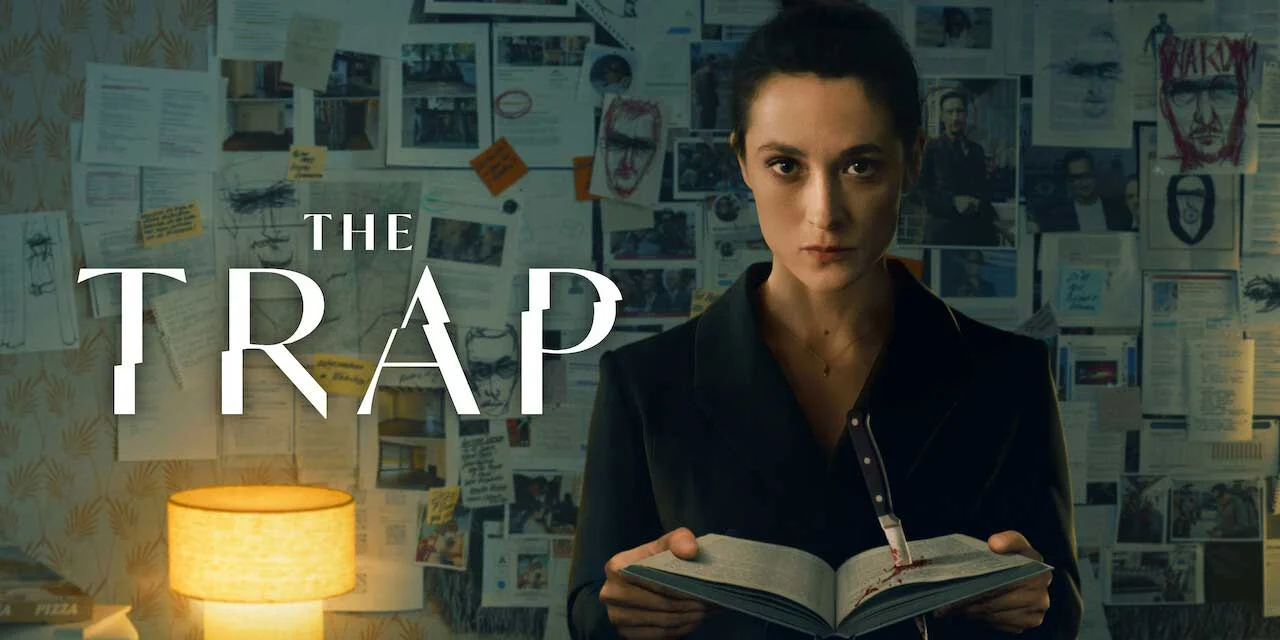

Lisa Konrad insists that her new manuscript be published without editing. Her publisher worries about the change of genre; she wants a particular journalist to interview her. The disagreement concerns a crime novel built from her sister’s murder, and Lisa intends the book to provoke the man she suspects. An editor’s usual questions about plausibility would be rather inconvenient here. She needs the story to hold together because she plans to act on it.
Her publisher, Norbert Rudow, already has a considerable stake in the stories she tells. After Lisa’s psychiatric hospitalization, he offered her his guest villa in exchange for over half the royalties from her next five books. Her writing helped rescue his struggling company. Ten years later, she still lives within the property, while her books go out into the world and earn money for both of them. His anxiety about the thriller makes commercial sense. It also exposes how comfortably everyone’s arrangements have accommodated her disappearance.
My first impulse was to regard Norbert’s generosity as a business model with guest towels. That feels too easy. He gave Lisa somewhere to live after a devastating crisis, and the arrangement allowed her to keep working. Matthias Brandt’s publisher occupies the awkward space where practical care and financial advantage can coexist. The disturbing detail is his resistance when she changes what she writes. A refuge can serve its purpose so well that the people sustaining it become nervous when its occupant wants something else.
Directed by Isabel Kleefeld and adapted from Melanie Raabe’s novel, the six-part German series The Trap gives Lisa’s attempt at change a dangerous objective. She recognizes Robert Lenzen, a respected journalist, during a television broadcast and collapses in panic. She believes he is the man she saw leaving the room where her sister Anna lay dying. Her proposed interview will let her obtain his DNA and, she hopes, a confession. To reach him, she must make a public spectacle of the experience that drove her into hiding.
Writing is the one activity through which she can approach that experience on her own terms. Her novel, My Sister, gives her a fictional counterpart called Sophie, played by a different performer. Kleefeld dramatizes passages from the manuscript alongside memories and imagined encounters. The separate embodiment matters: Lisa can look at a version of herself, put her through the scene again, and decide how it should proceed. Fiction offers a manageable distance from material that otherwise overwhelms her. It also offers the satisfaction of arranging things.
In Lisa’s reconstruction of finding Anna, she approaches her bloodied sister, takes the knife, and sees the departing man near the window. The actions acquire sequence and direction as she writes them. Elsewhere, Sophie’s confrontation with detective Leon Weber at the funeral gives shape to Lisa’s frustration at being unable to identify the killer. These passages make her anger intelligible, while leaving their status unsettled. A scene can express something emotionally exact without supplying an accurate record. Lisa’s danger lies in the authority that a finished narrative seems to confer on its author.

Friederike Becht keeps that distinction alive through the gap between Lisa’s panic at the broadcast and her deliberate preparations afterward. The same woman who collapses can write, negotiate, install surveillance, and undertake self-defense training. Her distress does not erase her capacity to act. This is where the series earns its interest in an unreliable perspective: we have reasons to question Lisa’s account and reasons to take her seriously. Treating her illness as automatic evidence against her would flatten the problem the performance sustains.
Her recollections of Anna complicate the writing further. Affection gives way to memories of jealousy and resentment, although Anna had also helped bring Lisa’s talent to Norbert’s attention. The relationship resists the tidy roles that a murder narrative supplies. Lisa can remember being hurt by her sister and still be devastated by her death. Those revisions matter because they alter the person she is mourning. The repeated imagined interviews are less productive. Once Lisa’s fixation is clear, another rehearsal can leave us waiting for the encounter rather than discovering something new about her need for it.
Robert’s preparations initially answer that impatience with a different kind of pressure. He asks an IT colleague to investigate Lisa’s identity, obtains a photograph of the villa, and watches the property from the woods. Hans Löw’s journalist becomes threatening through activities adjacent to his profession: researching someone, finding an address, arriving prepared. Lisa imagines that granting access will put him under scrutiny. He uses the invitation to scrutinize her.
Showing his preparations can create useful dread. We see vulnerabilities Lisa has missed, including the exposure of the place she considers safe. Yet the series becomes increasingly explicit about Robert’s intentions while continuing to revisit her uncertainty. His acquisition of private medical information and plan to misuse her medication narrow the psychological possibilities sharply. The audience is now anticipating coercion while Lisa is still trying to establish whom she has invited. The repeated preparation occupies space that his motives could use.
His willingness to attend is particularly underdeveloped. He knows Lisa suspects him and anticipates possible police involvement, yet accepts the meeting. Research and countermeasures explain how he prepares for danger; they leave his appetite for that danger less persuasive. The interview remains an effective situation, but the writing makes the situation easier to understand than the decision that brings him there.
The medical information gives Robert’s intrusion its ugliest specificity. He can turn knowledge of Lisa’s treatment into a means of manipulating her, using the history she has protected to interfere with her ability to confront him. Her manuscript was supposed to make him answer for the past. Inviting its subject into her home has given him access to the conditions under which she can speak at all.
The Trap premiered globally on Netflix on October 13, 2026. The German psychological thriller series follows a reclusive author who, after spending a decade indoors following her sister’s murder, spots the suspected killer on television and lays an intricate trap using herself as bait.
Where to Watch The Trap Online
Full Credits
Title: The Trap
Distributor: Netflix
Release date: October 13, 2026
Rating: TV-MA
Running time: 45–55 minutes per episode
Director: Isabel Kleefeld
Writers: Isabel Kleefeld
Producers and Executive Producers: Isabel Kleefeld, Melanie Raabe
Cast: Friederike Becht, Hans Löw, Matthias Brandt, Miriam Ohlmeyer, Josephine Thiesen, Malaya Stern Takeda, Anna Schudt, Michael Klammer
The Review
The Trap
The Trap understands the attraction of turning grief into a story whose ending you can control. Becht gives Lisa’s distress and determination equal credibility, while the manuscript scenes expose the uncertain distance between recollection and evidence. The thriller machinery is less assured: repeated rehearsals stall the encounter, Robert’s preparations disclose too much, and his willingness to attend needs firmer motivation. Its psychological questions reward attention even when its suspense starts answering them too readily.
PROS
- Becht preserves Lisa’s vulnerability and capacity to act.
- Manuscript scenes make unreliable memory dramatically meaningful.
- Norbert’s arrangement complicates the relationship between care and profit.
- Robert’s investigative methods turn access into a credible threat.
CONS
- Repeated imagined interviews lose dramatic purpose.
- Explicit counterplot disclosures narrow the uncertainty.
- Robert’s decision to risk the meeting lacks persuasive development.







