























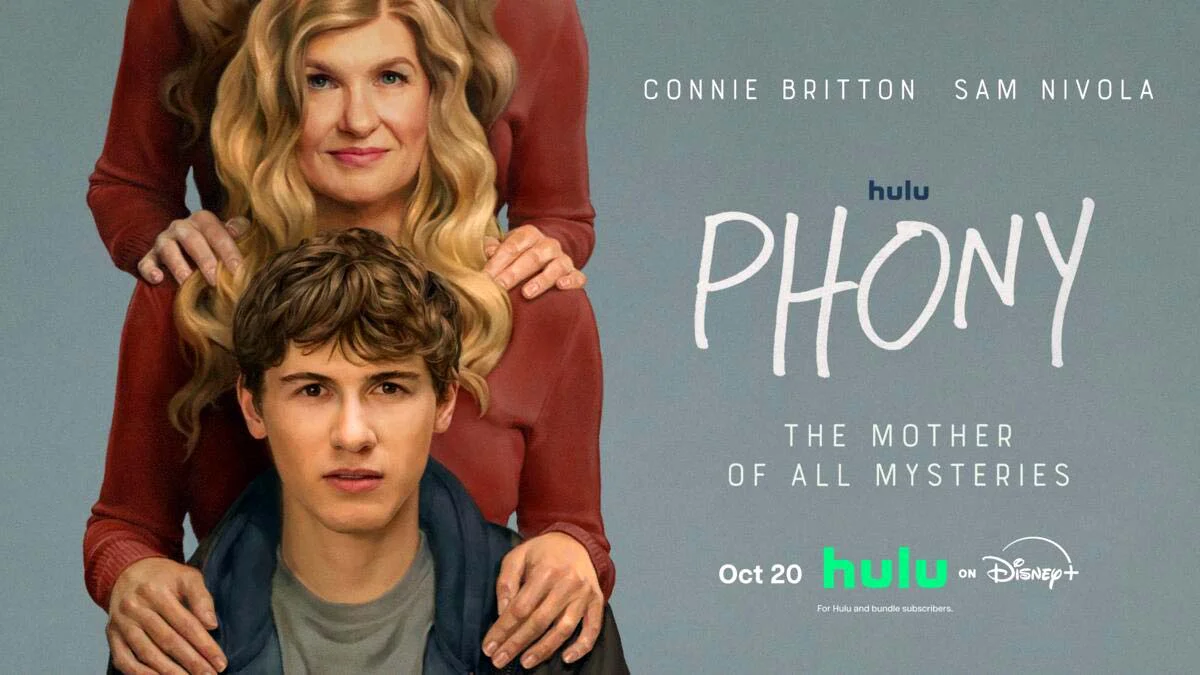

Sonny Cooke keeps being nice to people who would quite like him to stop. Played by Sam Nivola in Hulu’s Phony, he is attentive, helpful, friendly across school social groups, and faintly exhausting. When classmates challenge his relentless pleasantness, the comedy comes from the distance between his intentions and their reception. Nivola makes the friendliness sincere enough that the irritation stings without making the other teenagers seem monstrous. Sonny has learned how to offer people attention. He has rather less experience of people declining it.
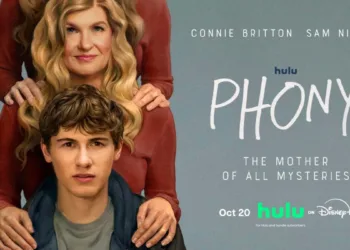
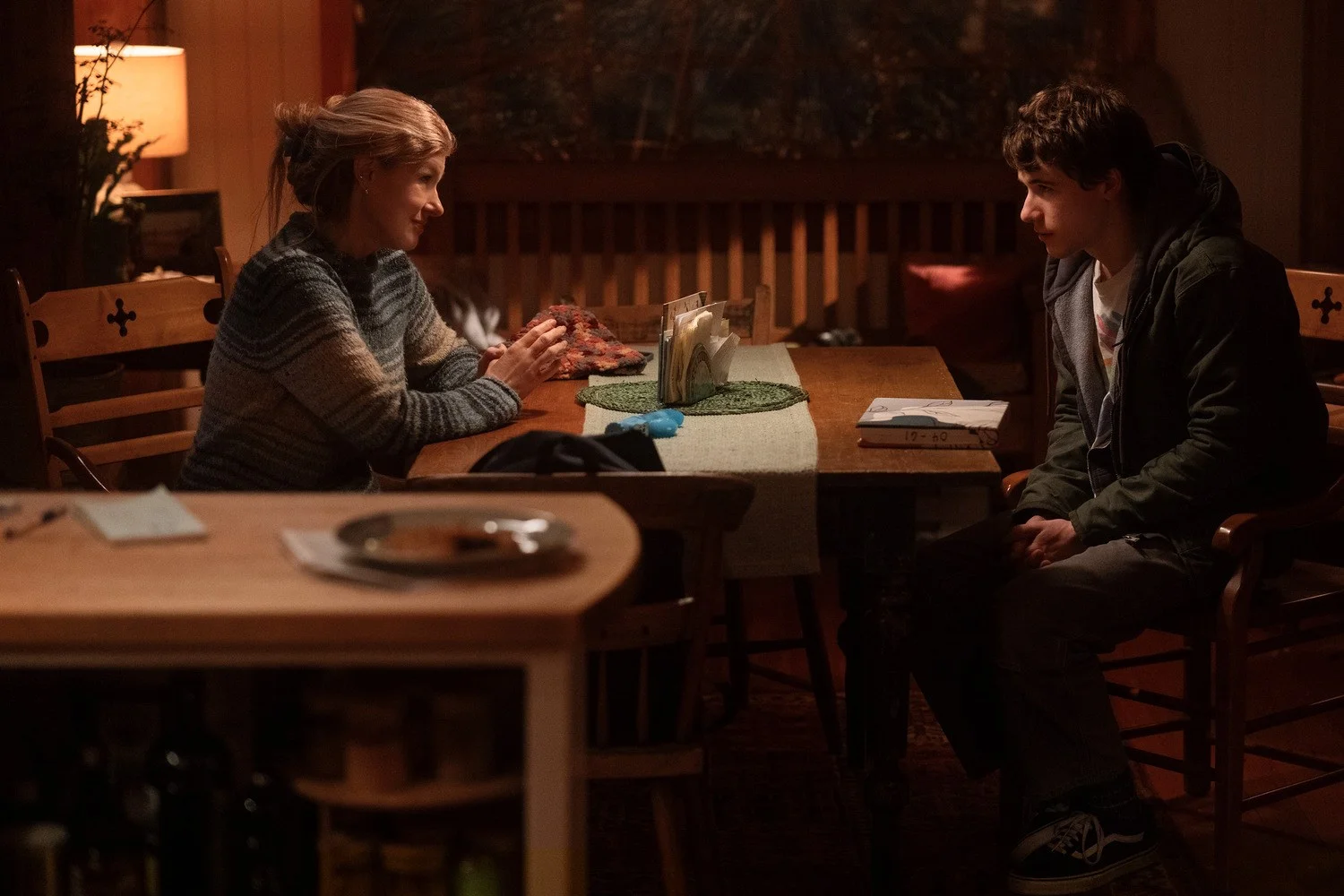
His closest relationship comes with no such problem. His mother, Ellen, is delighted to have him around, and her position as his school principal gives her excellent opportunities. Connie Britton makes their affection easy to accept: these two enjoy each other’s company, share private rituals, and seem comfortable with an arrangement that leaves remarkably little space between them. The double casting of Ellen as parent and principal does useful structural work. Leaving the house offers Sonny no automatic escape from maternal supervision. His mother already works there.
Then a car accident turns that closeness into an investigative problem. Sonny wakes in hospital convinced that Ellen has been replaced by someone who looks wrong to him and perfectly normal to everybody else. Creator Nick Paley builds a half-hour mystery around the discrepancy, but the first four episodes of this eight-episode season are often funniest when Sonny discovers how poorly an agreeable reputation translates into credibility. People can like him and still think his theory is ridiculous. Nivola carries the change well, letting his former social ease give way to anxious insistence without losing the kid whose chief ambition was previously to get along.
The most persuasive evidence is a missing response. Sonny and Ellen express affection through two shoulder squeezes, a gesture she fails to return after the accident. That tiny interruption gives his fear a recognizable basis before any elaborate explanation arrives. Britton keeps apparent concern in her words while introducing guardedness into her expressions and physical behavior.
Her performance invites scrutiny without providing a convenient villainous signal. Sonny has a Costco-card photograph of the mother he remembers, but the private gesture is harder to dismiss than a disputed resemblance. The membership card can establish a face. It cannot establish familiarity.
There is a pleasingly uneven distribution of competence among the people he recruits. Mallory, an old friend returning from homeschooling, and her cousin Weldon join an investigation whose mistakes remain appropriate to the investigators’ ages.
They make faulty leaps instead of acquiring professional deduction skills alongside their suspicions. Grace Brennan’s awkward delivery and Colter Lee’s enthusiastic support preserve the feeling that these are teenagers attempting something alarming with inadequate preparation. Their involvement lets scenes move between investigation and social discomfort without requiring a separate comic subplot to arrive and relieve the tension.
Meera Syal supplies a different rhythm as Sharla, a conspiracy-minded private investigator whose dubious reputation makes her willingness to listen both useful and discouraging. Her dry responses resist Nivola’s escalating agitation; she gives his alarm something to collide with.
The show finds similar comic resistance elsewhere at school. A student called Shovel responds to a possible body discovery by organizing a themed party, converting potential evidence into an event. It is an absurd reaction, but a legible one within this social world: Sonny sees a crisis, while somebody else sees an opportunity to invite people over. The mystery never gets exclusive use of the teenagers’ attention.
Those interruptions matter to the episode construction. With runtimes around half an hour, Phony moves briskly toward fresh clues and threatening developments, often reserving a significant turn for an episode’s closing stretch. Christopher Bear’s synth score maintains unease, while the recurring beaver material gives the strangeness a comic outlet.
The show seldom becomes solemn enough to make a teenage blunder feel like a violation of its atmosphere. Its humor is usually a steady supply of awkward judgments and inappropriate priorities rather than a barrage of punchlines. That suits a story in which the protagonist’s frightening discovery still has to compete with everybody else’s school day.
The economy is less successful when relationships need development instead of an efficient comic impression. Sonny’s girlfriend, Chloe, and his best friend, Vogel, remain outside the investigative group, while his attraction to Mallory complicates the romance. Yet the competing attachments are insufficiently defined to give that triangle much weight.
His willingness to risk the relationship with Chloe registers more clearly than what draws him toward either girl. Likewise, repeated misunderstandings with Vogel provide recurring friction without developing their friendship at the same rate. A background student can survive on one excellent eccentricity. The people Sonny might hurt need firmer claims on him.
There is also a structural cost to the mystery’s progress. Early on, Britton’s altered manner makes the audience perform some of Sonny’s scrutiny: how much has changed, and how much does the accident affect his interpretation? As scenes leave his perspective and suggest suspicious activity independently of him, that uncertainty narrows. The story gains information but gives up some discomfort.
The question shifts toward explaining a scheme, even as its motives remain unresolved. This is a workable suspense engine, but a less distinctive one than watching a familiar parental response become impossible to read. Clues keep the episodes moving; they do not necessarily make Ellen harder to understand.
Her earlier warmth presents a different difficulty. The opening gives Sonny and Ellen enough affectionate behavior to establish what he misses, but relatively little time to establish the relationship’s history or its restrictions.
Her position at school suggests control, and his distress reveals dependence, yet the show has spent much longer testing her identity than examining their original arrangement. The failed shoulder squeeze hurts because Sonny knows exactly what his mother should do. What has he allowed her to do that he should have started questioning?
Phony premieres globally on Hulu today, October 20, 2026. Created by Nick Paley, the comedy-mystery series follows a teenager who wakes up from a car accident convinced that his mother has been replaced by an impostor.
Where to Watch Phony Online

Full Credits
Title: Phony
Distributor: Hulu
Release date: October 20, 2026
Rating: TV-14
Running time: 27–37 minutes per episode
Director: Nick Paley
Writers: Nick Paley
Producers and Executive Producers: Nick Paley, Anthony King, Charlie Alderman, Drew Goddard, Sarah Esberg, Connie Britton, Arielle Boisvert, Holly Redford
Cast: Connie Britton, Sam Nivola, Grace Brennan, Maliq Johnson, Meera Syal, Colter Lee, Mahaela Park
Director of Photography (Cinematographer): Andy Rydzewski
Editors: Nick Paley, Sascha Stanton-Craven
Composer: Christopher Bear, Disasterpeace
The Review
Phony
Phony gets useful comic mileage from teenagers who approach a frightening mystery without acquiring detective qualifications. Across its first four episodes, Nivola’s anxious sincerity, Britton’s guarded warmth, and Syal’s dry skepticism sustain a nimble balance of unease and awkwardness. The brisk storytelling shortchanges important relationships, though, and confirming suspicious activity makes Ellen’s apparent transformation less unsettling. The investigation is moving faster than our understanding of the family it threatens.
PROS
- Nivola’s convincing shift from friendliness to anxiety.
- Britton’s restrained, unsettling performance.
- Syal’s dry comic interplay with Nivola.
- Teenage mistakes keep the investigation funny.
- Brisk episodes balance awkwardness and suspense.
CONS
- Wider perspectives reduce the mystery’s uncertainty.
- Romance and friendship receive insufficient development.
- Limited history weakens the mother-son relationship’s emotional weight.