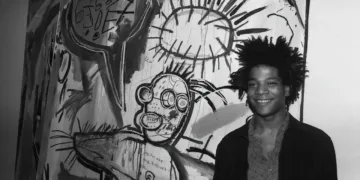






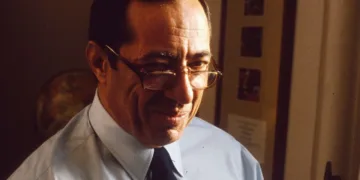









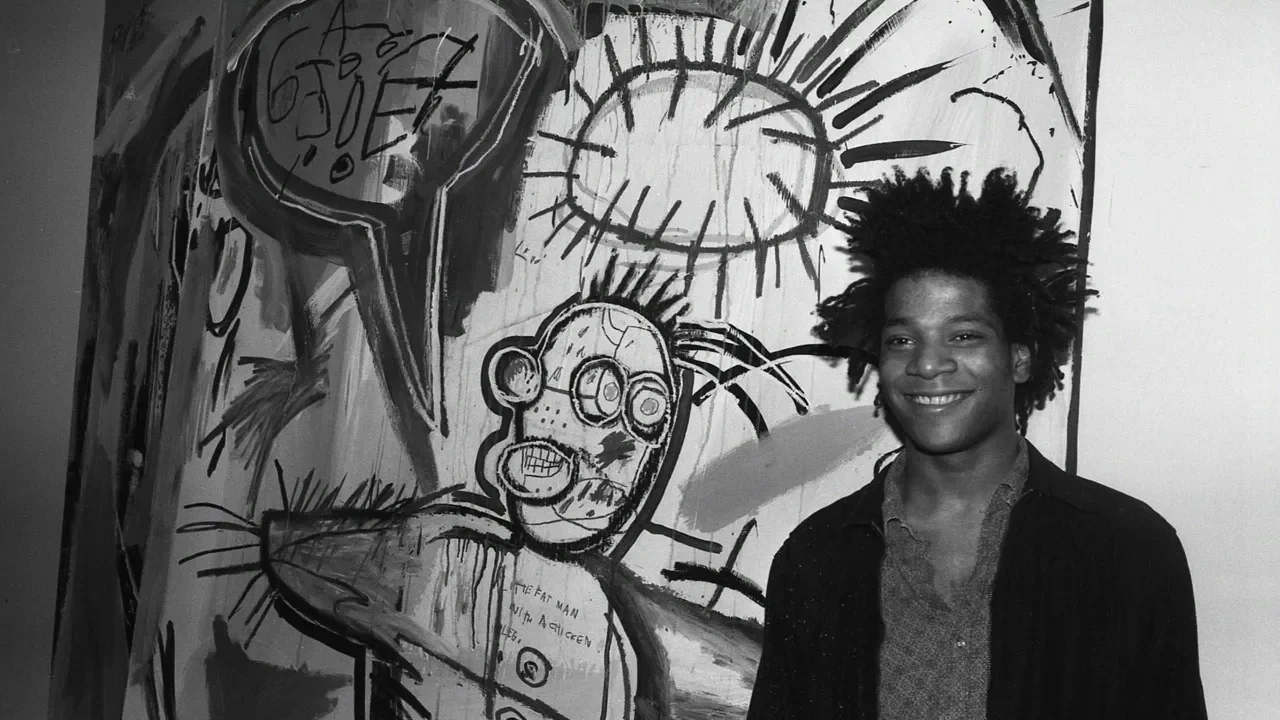

The interviewer keeps asking Jean-Michel Basquiat to explain himself. In the extended studio footage retained by directors Quinn Whitney Wilson and Viridiana Lieberman, questions about artistic decisions acquire the tone of a legitimacy hearing. The racial condescension is difficult to miss; the duration makes it difficult to dismiss. Basquiat must remain before the camera while someone else determines what counts as an adequate answer. His reserve, under these conditions, looks less like an inscrutable personality trait than a reasonable response to being examined.
Elsewhere, footage from the public-access programme TV Party gives us a sociable Basquiat, available to the people around him without that defensive pressure. Placing these appearances within the same portrait changes how the later guardedness reads. A camera can record a withdrawal while concealing its own part in causing it. Jean-Michel is particularly alert to this problem, assembling enough competing images to challenge the authority of any single encounter. The man subjected to the studio interrogation has already existed comfortably in another frame.
The documentary’s own interviews adopt a different arrangement. For much of its 95 minutes, witnesses speak without appearing onscreen. Their recollections accompany photographs, home movies, archival footage, and sustained attention to paintings and drawings. This division of sound and image gives the people remembering Basquiat an interpretive role while keeping their faces from becoming the portrait’s visual centre. The work remains available to inspection: crowns, recurring words, collage elements, scrawled marks. We hear recollection while looking at decisions he made.
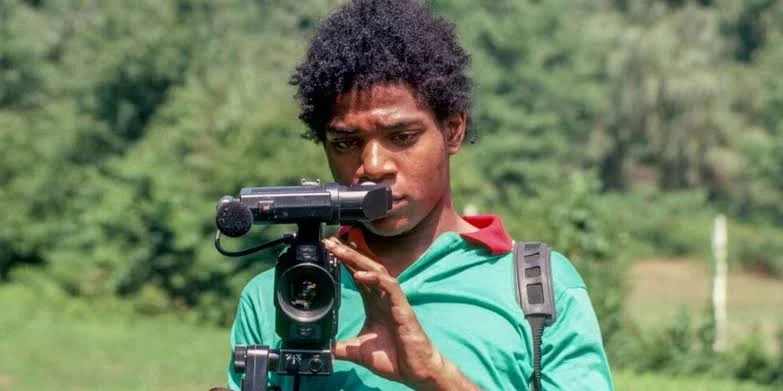
Rebecca Adorno and Lieberman’s fragmented editing finds a useful affinity with those accumulated words and marks. Brief passages of downtown New York imagery bring movement and density to the account, allowing the artwork to belong to a lived environment rather than sit decorously between anecdotes.
The montage can suggest the paintings’ energy without explaining each element. That restraint matters. An image of a painting beside testimony about distress is an invitation to interpret, but it cannot certify a diagnosis. The film is strongest when its visual abundance leaves room for the work to resist the biography attached to it.
Family photographs and home movies perform a quieter correction. Basquiat’s Haitian father, Gerard, and Puerto Rican mother, Matilde, raised their children in a Brooklyn brownstone they owned. Childhood drawings, private schooling, and his ambition to become a cartoonist establish sustained curiosity before the galleries arrive. These details disturb the convenient fiction of a rootless talent materialising fully formed on the street. Artistic development, apparently, can involve a childhood. The domestic archive supplies the time and relationships that the public mythology finds easier to discard.
That correction carries its own risks, which the family account largely avoids by preserving fracture. His parents separate; his mother experiences mental illness; conflict with his father precedes his departure from home. The later SAMO identity belongs to someone actively making himself, with hardship and invention operating together. The brownstone does not invalidate the street years. Nor does his participation in constructing a public persona excuse the racial assumptions subsequently imposed upon it. The photographs complicate the available story without claiming to settle him.
The film’s treatment of Andy Warhol also benefits from making a familiar relationship reciprocal. Their affection and collaboration include Basquiat encouraging Warhol to paint by hand again, giving artistic consequence to a friendship so easily reduced to celebrity proximity. Hostility towards their joint work then places strain on that exchange. Here the documentary lets the relationship register through what the two men enabled and injured in each other, rather than treating Warhol’s presence as a certificate of Basquiat’s importance.
Affection becomes less sufficient when Basquiat takes a pen to a Julian Schnabel painting at a Whitney opening. Including the defacement preserves an act that sympathy cannot comfortably absorb. The surrounding account of prejudice and vulnerability offers circumstances, but the damaged painting remains someone else’s work. This is a valuable interruption in a portrait whose witnesses have ample reason to protect its subject. Basquiat’s exposure to cruelty does not make his own destructive conduct morally weightless.
Jennifer Goode’s recollections bring addiction into similarly concrete territory through their shared heroin use and trips to Hawaii intended to help him get clean. These are habits and attempted changes within a relationship, rather than a diagnosis delivered retrospectively over images of success.
Warhol’s death precedes a worsening period, yet it cannot explain the addiction by itself. The documentary’s familiar ascent-and-decline structure is less searching than its arrangement of voices and images. As the chronology approaches Basquiat’s death in 1988, at 27, the danger is that every earlier pleasure will become evidence for an ending we already know.
A limousine visit to his family, during which he distributes money, resists that narrowing. Generosity and material success remain visible, with no assurance that either provides security. Other areas receive thinner attention: his sexuality is lightly explored, and Suzanne Mallouk is absent while Goode receives substantial space. These choices limit the reach of the personal portrait. They do not establish concealment, and a documentary has no automatic entitlement to exhaust a person’s private life. Still, the concentration of testimony shapes which attachments become available for understanding him.
The eventual appearance of his sisters, Lisane and Jeanine, makes that concentration emotionally forceful. Their voices have helped sustain Basquiat’s presence across the archive; their faces now require attention to the people doing the remembering.
The reveal is carefully constructed, its timing dependent on the film having taught us to listen without looking at the speaker. It also changes the burden of the images. Family photographs no longer serve only as evidence against a public myth. They belong to women who have spent the intervening years living beyond the childhood those pictures preserve, and who must now recall their brother before another camera.
Jean-Michel premiered at the Tribeca Film Festival on June 6, 2026, and streams via Netflix. Directed by Quinn Whitney Wilson and Viridiana Lieberman, the documentary explores the private life and artistic genius of iconic painter Jean-Michel Basquiat through rare archival material and intimate recollections from his sisters.
Where to Watch Jean-Michel Basquiat (2026) Online
Full Credits
Title: Jean-Michel Basquiat
Distributor: Netflix
Release date: June 6, 2026 (Tribeca Film Festival)
Rating: R
Running time: 1 hour 35 minutes (95 minutes)
Director: Quinn Whitney Wilson, Viridiana Lieberman
Writers: Quinn Whitney Wilson, Viridiana Lieberman
Producers and Executive Producers: Not publicly specified
Cast: Lisane Basquiat, Jeanine Basquiat
The Review
Jean-Michel Basquiat
Jean-Michel finds its authority in the distribution of attention: paintings occupy the screen, witnesses remain voices, and hostile archival questioning exposes the pressure behind Basquiat’s guardedness. Family images restore a childhood to the public legend without absolving the adult’s destructive choices. The familiar rise-and-decline trajectory and selective account of his relationships restrict the portrait, but the sisters’ eventual visibility gives its formal restraint an emotional consequence.
PROS
- Artwork retains visual priority over interviewees.
- Family archives complicate the street-genius mythology.
- Hostile interview footage exposes racial condescension.
- The sisters’ delayed appearance carries emotional weight.
CONS
- Familiar rise-and-decline structure.
- Uneven exploration of intimate relationships. 1.