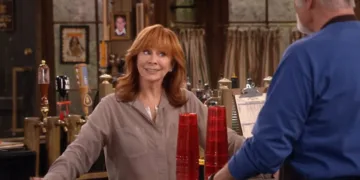






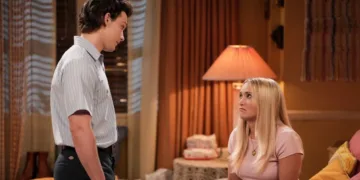

















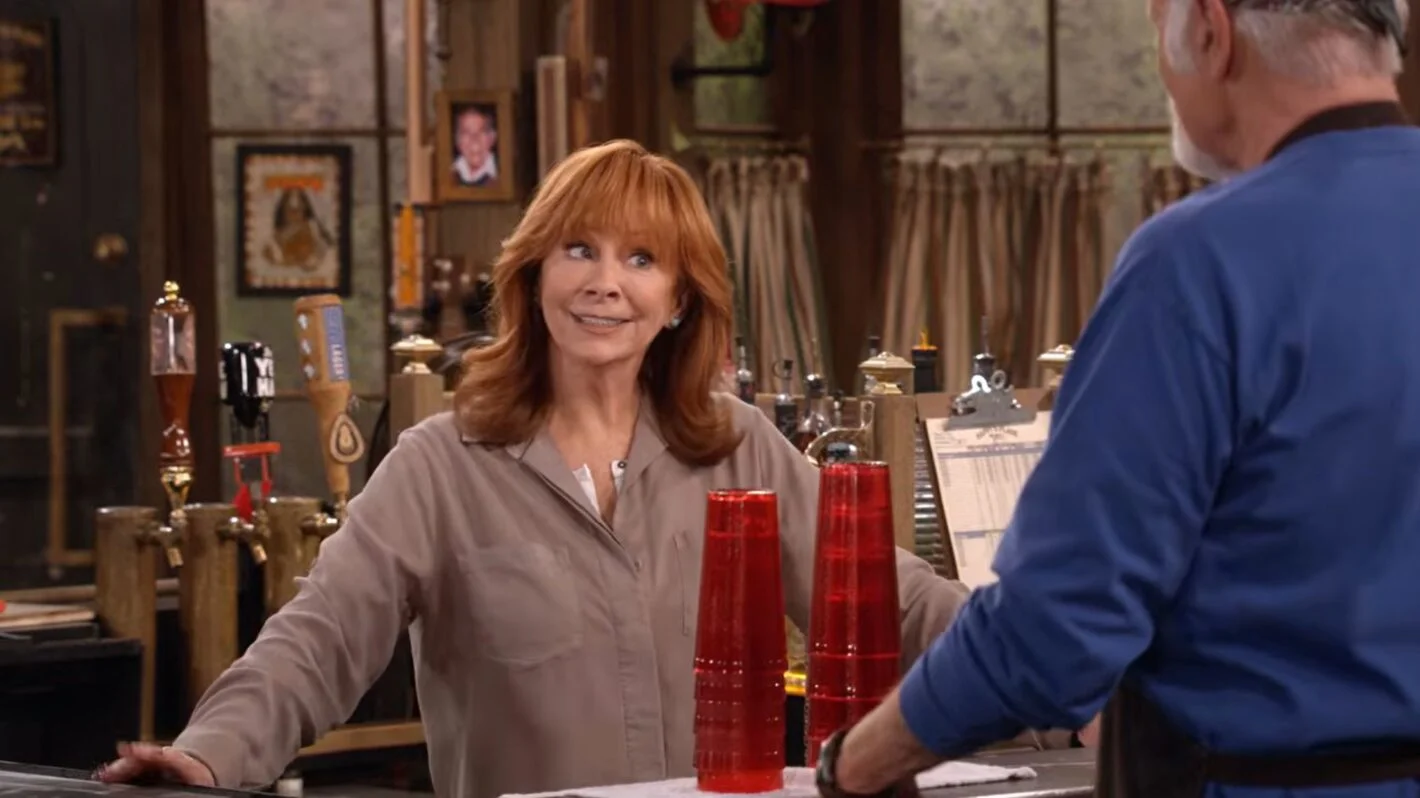

Bobbie assumes that Isabella will welcome an office of her own. Isabella assumes their shared office has become an irritation to Bobbie. Neither interpretation is malicious, yet between them they turn a practical arrangement into a question about belonging. In “Office/Space,” the third-season premiere of Happy’s Place, giving someone room to work becomes unexpectedly difficult for people accustomed to treating proximity as proof of affection.
For NBC’s Reba McEntire vehicle, that difficulty has a useful second meaning. An ensemble built around an established star needs its supporting characters to develop purposes that occasionally pull them away from her. Isabella’s separate workspace makes that negotiation part of the story. Bobbie can support her sister’s independence and still feel unsettled by its consequences. The writing finds something worth examining in that discomfort, without needing to turn either woman into an obstacle the other must defeat.
Isabella’s alcohol-free speakeasy upstairs, established in Season 2, gives this separation a practical foundation. She has a venture through which to define her contribution to Happy’s. The sisters’ connection already carries unresolved feelings about their late father, whose legacy brought them into this complicated arrangement. Their disagreement over the office lets that history register through an ordinary workplace decision. Belissa Escobedo’s Isabella needs somewhere to direct her ambitions; Bobbie needs to discover what their relationship looks like when constant involvement stops being its default setting.
The premiere is perceptive about the difference between struggling with change and begrudging someone else’s success. Bobbie’s urge to intervene comes from affection, loneliness, and a habit of making herself useful. Those motives can coexist with behavior that others find exhausting. Keeping that distinction visible gives the comedy a humane basis: a loving person can misunderstand what love requires of her. It also gives McEntire’s central role a productive limitation. Bobbie’s concern does not automatically make her the person best equipped to manage everyone else’s affairs.
Takoda supplies the most welcome resistance to that arrangement. He has helped fix up the office, and his responses to Bobbie insist that the work he is doing deserves recognition. He cannot be expected to carry out his responsibilities while possessing complete knowledge of everybody’s business. His pushback has a specific source, which makes it satisfying. The sarcasm belongs to someone with a task, a point of view, and reasonable limits on his availability.
That matters to the ensemble’s construction. Takoda gets to interrupt Bobbie’s expectations without having to withdraw his affection or become a disciplinary problem for the script to resolve. A star vehicle can make everyone around its lead seem permanently on call for her emotional needs. Here, the person who helped prepare the room has a claim on the scene too. The office has required actual labor while the sisters have been assigning it emotional meanings. Takoda’s objections bring those two understandings into contact.
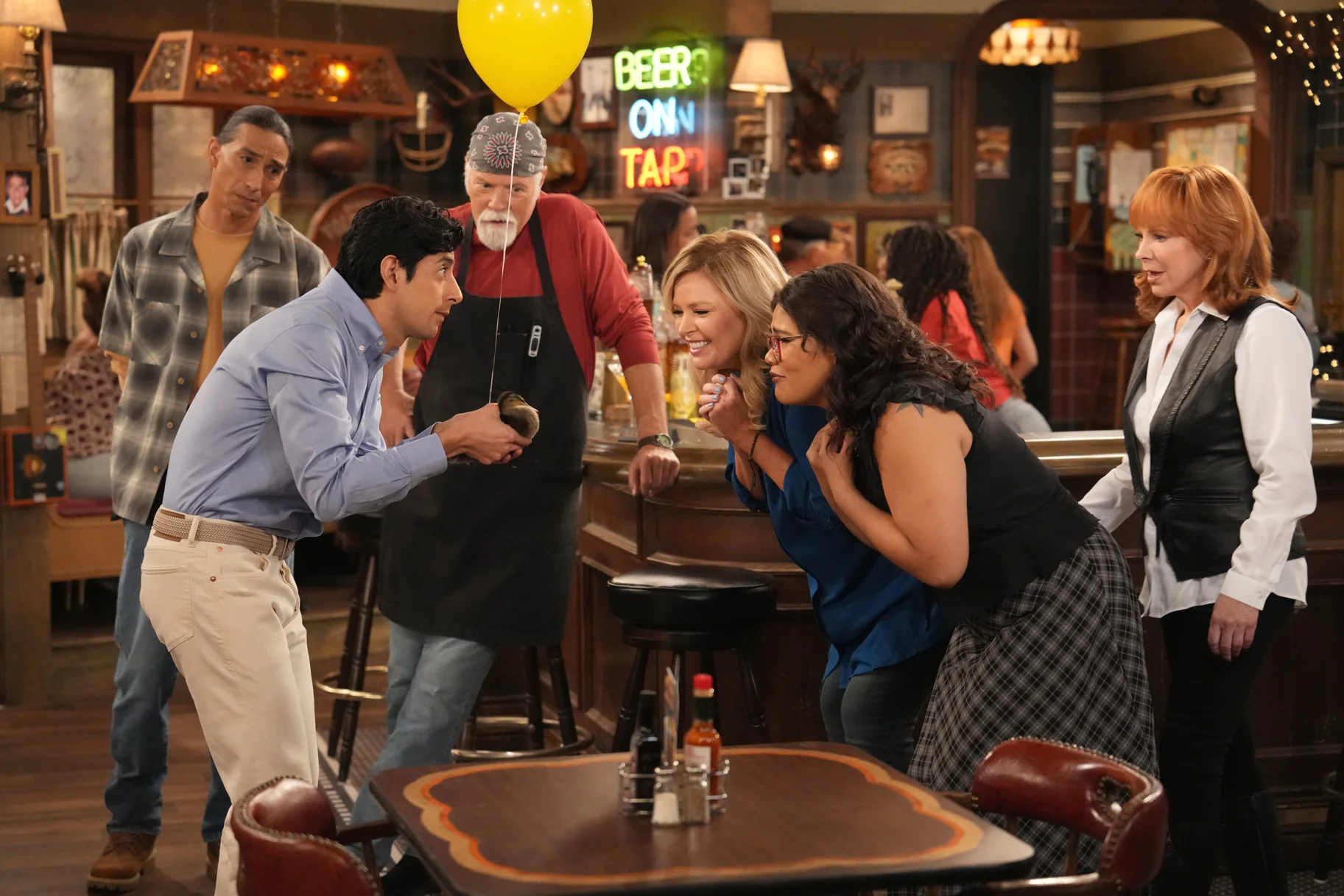
Gabby’s difficulty perfecting a drink extends the confusion between professional performance and personal worth. She takes a problem with something she is making as evidence of something wrong with her. Beside Bobbie’s assumptions about Isabella, this gives the premiere a coherent concern with people making private judgments they have not checked with anyone else. It also exposes a limitation. Several characters arrive at different problems through closely related misunderstandings, narrowing the range of friction available to the episode. The emotional logic is clear; the variations can feel too neatly coordinated.
Bobbie’s response to her unsettled relationship with Emmett gives that pattern its strongest personal stakes. Keeping herself occupied with other people allows her to postpone attending to her own disappointment. Her helpfulness becomes a form of avoidance, and its unwelcome consequences prevent the episode from treating constant involvement as an uncomplicated virtue. Being needed offers her something dependable at a moment when her romantic life and her sister’s growing independence have disturbed familiar sources of reassurance.
There is worthwhile territory here for a sitcom led by an older woman. Bobbie has work, family, and people she loves, yet those attachments do not settle the question of what she wants for herself. The premiere makes that absence legible through her behavior rather than giving her a newly announced ambition. It is a promising use of McEntire’s place in the series: the leading woman gets to feel lonely inside the community organized around her. The episode has identified that pressure, though recognition alone has yet to give Bobbie another way to spend her energy.
With Emmett, played by Rex Linn, the difficulty becomes reciprocal. Each assumes the other needs space, leaving an untested interpretation to govern their contact. Romantic delay is familiar sitcom machinery, and this instance draws its interest from the peculiar politeness sustaining it. Bobbie can involve herself in everyone else’s concerns while holding back from asking Emmett what he actually wants. He is making the same accommodation on her behalf. Their efforts to avoid imposing on each other leave both responding to a request neither has made.
Happy’s Place Season 3 premiered on NBC on October 23, 2026, with new episodes available to stream the following day on Peacock. Created by Kevin and Julie Abbott and starring Reba McEntire, the multi-cam workplace comedy continues following half-sisters Bobbie and Isabella as they run their late father’s Knoxville tavern alongside their quirky, tight-knit staff.
Where to Watch Happy’s Place Season 3 Online










Full Credits
Title: Happy’s Place Season 3
Distributor: NBC, Peacock, Universal Television
Release date: October 23, 2026
Rating: TV-PG
Running time: 22 minutes per episode
Director: Pamela Fryman, Gloria Calderón Kellett, Victor Gonzalez
Writers: Kevin Abbott, Julie Abbott, Matt Berry, Jon Haller, Pat Bullard, Erin Berry
Producers and Executive Producers: Kevin Abbott, Reba McEntire, Michael Hanel, Mindy Schultheis, Pamela Fryman, Julie Abbott, Matt Berry
Cast: Reba McEntire, Belissa Escobedo, Melissa Peterman, Rex Linn, Pablo Castelblanco, Tokala Black Elk, Justina Machado, Jane Lynch
Editors: Kris Trexler, David Garver
The Review
Happy's Place Season 3
Happy’s Place enters Season 3 with a useful challenge for its star-led ensemble: letting people care about Bobbie without organizing their lives around her. The premiere handles Isabella’s independence and Takoda’s resistance with affection, while giving Bobbie’s loneliness real weight. Similar misunderstandings limit the comic variety, and the romance remains stalled, but the attention to an older woman’s unmet desires gives this familiar workplace comedy something worth pursuing.
PROS
- Isabella’s independence creates meaningful tension.
- Takoda’s pushback gives the ensemble greater agency.
- Bobbie’s loneliness receives thoughtful attention.
CONS
- Several subplots use closely related misunderstandings.
- The romance relies on familiar delayed clarification. 1.