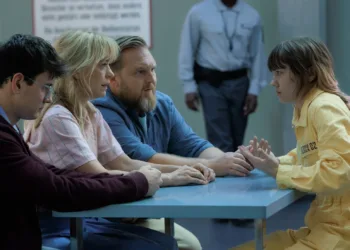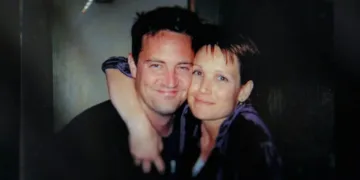


























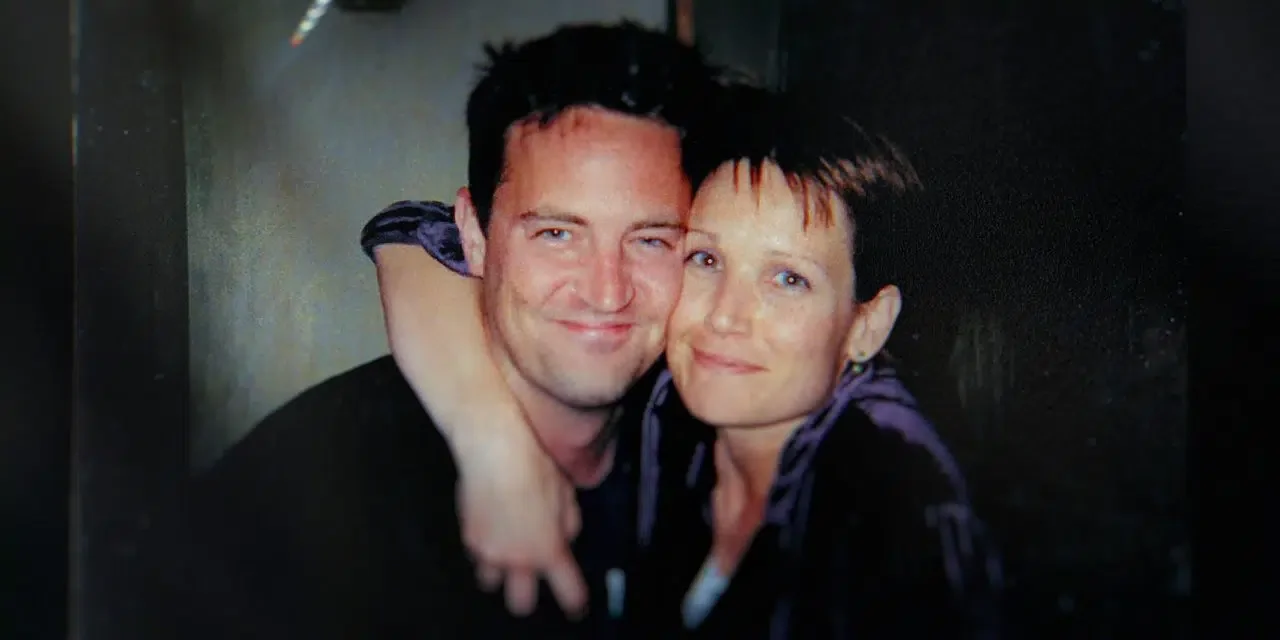

Mia Perry Bowick learned about her brother’s first stay in rehab from a tabloid headline. Someone had turned a family crisis into a public announcement before the family had caught up. In Mary Robertson’s The One About Matthew Perry, this recollection carries a particular humiliation: being close enough to suffer, yet receiving the news through the same machinery that supplies strangers with gossip. Mia remembers her brother as someone she loved and someone whose suffering repeatedly exceeded what she knew.
Years later, viewers watched Perry at the Friends reunion and inspected his speech, appearance, and mannerisms. Robertson places that scrutiny against his recovery from a 2018 coma and its complications. The audience possessed a vast archive of his face and very little knowledge of his condition.
Familiarity had become a license to interpret. Taken alongside Mia’s experience, the episode complicates the comforting belief that knowing someone’s history makes their present legible. A sister could be kept outside important parts of his life. Millions of viewers could feel they had been invited in.
Robertson’s three-part Netflix documentary works best in that uncomfortable space between recognition and understanding. Its interviews include longtime friends Roger Castillo and David Pressman, former partners, and people Perry met through recovery.
None of his fellow Friends leads sits for a new interview. Whatever produced that absence, its effect is useful: the documentary has room for relationships that require explanation. Castillo and Pressman’s recollections of their early Los Angeles friendships, including evenings at the Formosa Cafe, establish a shared life before the public acquired its own version of him.
Mia supplies the film’s most difficult perspective. A psychotherapist, she can discuss family dynamics without sounding detached from their consequences. Her account accommodates the brother she adored and the distress he caused. Robertson lets those experiences occupy the same portrait. Childhood movement between his parents’ households offers context for Perry’s feelings of insecurity, though it cannot settle the question of why he became addicted. Mia’s professional vocabulary never cancels her position as a younger sister still trying to understand what happened.
Perry’s archival testimony adds another complication. He wanted fame, achieved it, and discovered that the unhappiness he expected success to remove remained available every morning. The disappointment is plain in his own account. Robertson follows his ambitions from early acting work into Friends and beyond, allowing professional achievement and personal instability to coexist across the chronology. The sitcom’s original run is finished around the series’ midpoint. There is still a substantial portion of his life to account for. The trouble is that television does enjoy hearing that television mattered.
Warren Littlefield’s account of Friends becoming a phenomenon, broad appreciations of Perry’s appeal, and familiar talk-show anecdotes sometimes delay the more searching material. Those passages provide orientation, especially for viewers with limited knowledge of his career.
Yet they seldom alter our understanding as decisively as Mia learning about rehab from a newspaper does. The straightforward interview-and-archive construction depends heavily on the value of each contribution. When a passage merely re-establishes that Perry was famous and funny, the three-hour length becomes conspicuous.
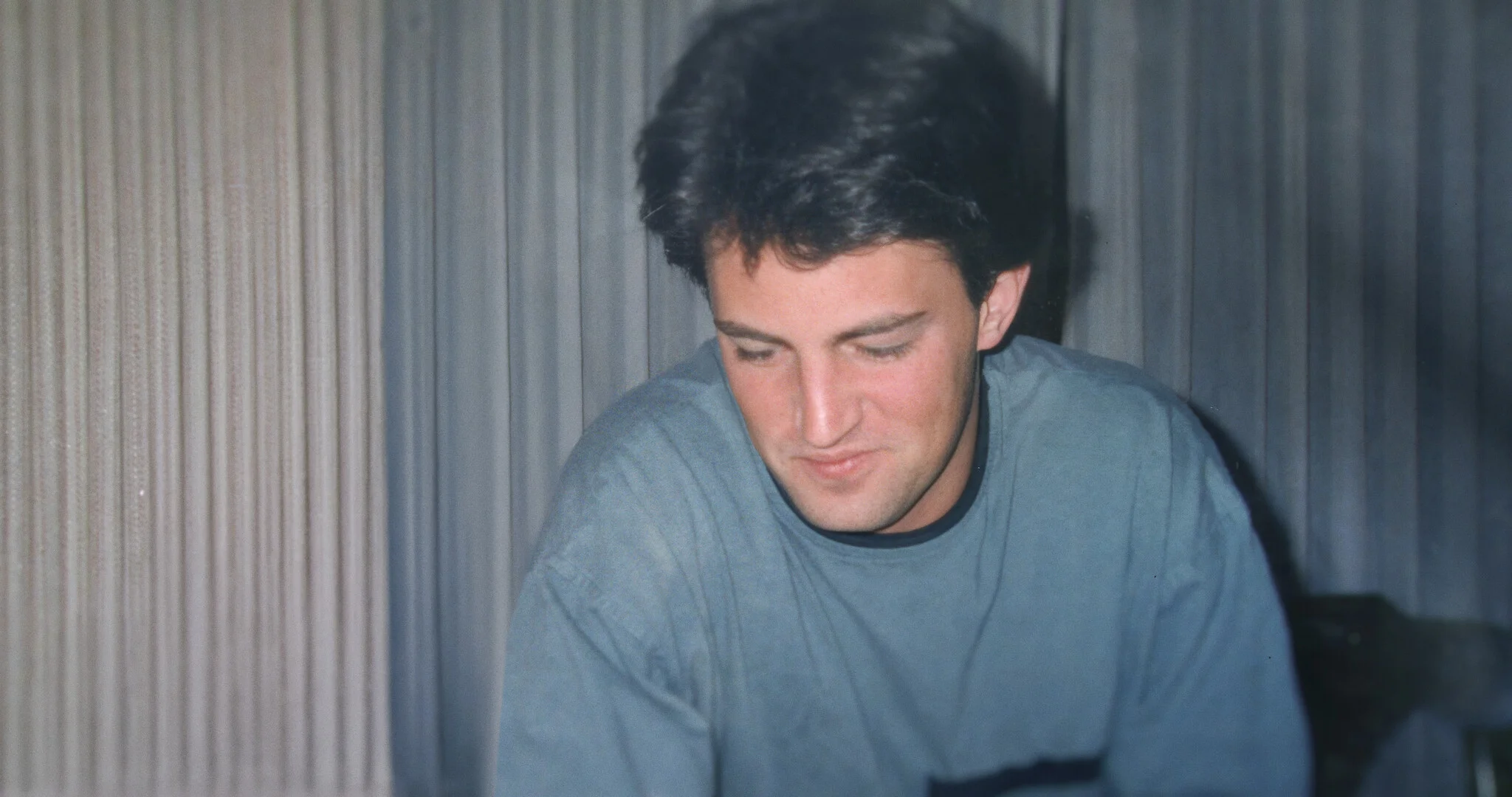
I am tempted to call repetition the problem, then find that objection too convenient. Treatment, sobriety, relapse, another attempt: compressing those cycles into an efficient biographical passage would distort the experience Robertson is trying to convey.
Each attempt required time and hope from people who already knew disappointment. The accumulated accounts give those efforts weight. My impatience needs a narrower target. The recurrence of recovery carries an argument about how Perry lived; another explanation of why audiences liked Chandler Bing often supplies information the film has already made usable.
That distinction matters because Perry’s death can otherwise reorganize every preceding event into a warning sign. Robertson gives the intervening years enough space to resist that reading. Work continued. Relationships developed. People received help. These things happened during a life whose ending the viewer already knows, and the testimony asks us to attend to them without making survival their sole measure of value.
Timothy Harrington’s account is especially persuasive. Perry met him through recovery and offered him a place to live for about a year. The detail gives generosity a duration and a practical function. A house became somewhere another person could stay while trying to get sober. West Huddleston’s recollections of Perry’s drug-court advocacy extend that concern into public action, while Rome’s memory of Perry taking her to a chiropractor for neck problems returns it to an ordinary scale. Such accounts let kindness appear as something done for a particular person with a particular need.
There is a risk of turning these stories into character references submitted against an unfair death. Mia’s testimony keeps that impulse under pressure. Affection includes memories of frustration, fear, and the damage repeated crises can cause. Perry’s capacity to help someone else did not guarantee control over his own addiction. His suffering did not make every action harmless. Robertson’s portrait has room for these contradictions because the people speaking had to live with them, often without the reassurance that an improvement would last.
The closing turn toward the circumstances of his death is less smoothly handled. A former U.S. attorney introduces legal explanation after the documentary has spent so long establishing the uncertain knowledge of friends and relatives. The change in register feels abrupt. Still, accountability belongs here. The difficulty is preserving distinctions between people who could not secure his recovery and people whose conduct around his drug use demands a different kind of scrutiny.
Mia’s condemnation of assistant Kenneth Iwamasa gives that distinction an anguished specificity. She believes he should have alerted the family to Perry’s ketamine abuse. Her demand returns us to the problem of information, now with a proposed action attached: someone who knew could have contacted people who did not. Robertson leaves limited room to examine that demand after introducing the legal account. Mia is left naming a warning she believes her family should have received, carrying both her grief and an accusation that affection alone cannot resolve.
The One About Matthew Perry premiered globally on Netflix on October 27, 2026. Directed by Mary Robertson, the three-part documentary series explores the life, career, and legacy of the beloved Friends star, highlighting his personal triumphs, his long-standing battles with addiction, and his advocacy work through intimate interviews with his family and closest friends.
Where to Watch The One About Matthew Perry Online


Full Credits
Title: The One About Matthew Perry
Distributor: Netflix
Release date: October 27, 2026
Rating: TV-MA
Running time: 45–60 minutes per episode (3 episodes)
Director: Mary Robertson
Producers and Executive Producers: Jessica Call, Mary Robertson, Lisa Kalikow, Eli Holzman, Aaron Saidman
Cast: Matthew Perry, Mia Perry Bowick, Roger Castillo, David Pressman, Tim Harrington, West Huddleston, E. Martin Estrada
The Review
The One About Matthew Perry
Robertson’s documentary understands that Perry’s death cannot erase the years he spent working, loving, and helping other people. Mia Perry Bowick’s testimony gives that understanding its emotional and intellectual weight. I would lose some of the familiar career exposition, though the recurring recovery accounts earn their space. The abrupt legal ending leaves difficult questions underexamined. What stays with me is the practical generosity: someone given a home while trying to get sober, with no guarantee that either man would remain well.
PROS
- Mia’s candid, emotionally complex testimony.
- Concrete accounts of Perry’s care for others.
- Recovery receives meaningful time and attention.
- Archival context challenges assumptions about his public appearances.
CONS
- Familiar career exposition weakens the focus.
- The late legal shift leaves accountability insufficiently examined.