
















The drive up to Bürglkopf comes with an instruction about where the camera must stop. As the mountain passes outside the car window, a telephone conversation establishes that Lisa Polster cannot film inside the return centre for asylum seekers she has come to investigate. Her documentary, Out of Sight, must therefore build its account from outside the grounds. Before we hear the residents describe their isolation, the production has encountered a restriction of its own.
Polster responds by assembling the film around interviews, exterior views and encounters with the surrounding community. The centre, situated approximately 1,300 metres above sea level in the Austrian Tyrol, remains a distant presence. Its residents supply the information the camera cannot gather directly. This gives their testimony considerable responsibility: it must describe conditions, explain their consequences and sustain a documentary whose central location is largely inaccessible. The refusal establishes a serious obstacle to scrutiny. It does not, by itself, answer the questions that scrutiny would raise.
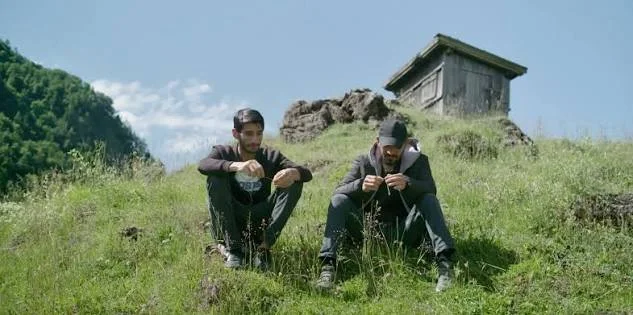
The landscape provides Polster with her clearest way of connecting those accounts to something visible. Skiers, holidaymakers and après-ski activity belong to a mountain economy built around the pleasure of getting away. For the men housed at Bürglkopf, distance means arduous journeys, difficulty obtaining assistance and separation from ordinary social life. The same geography serves sharply different purposes depending on how much control someone has over their stay. Polster makes that distinction legible without needing to enter a bedroom or corridor.
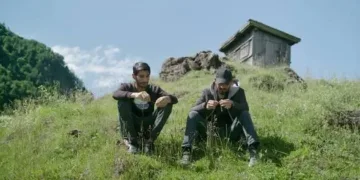
Her framing also gives the mountain a practical scale. The men appear small against expansive surroundings, an arrangement that initially seems to offer the familiar documentary image of vulnerable people overwhelmed by their environment. A resident watching nearby cattle makes the relationship more specific. He envies their freedom of movement. The comparison comes from someone assessing what he can do with his own day, and it gives the scenery a function beyond illustrating loneliness. Open space offers little reassurance when access to it is governed by restrictions.
Other contrasts are more immediately readable and less productive. A rainbow-decorated ski lift displaying “Tolerance” and “Diversity” supplies an unmistakable contradiction between the region’s welcoming language and the experiences described nearby. The point registers quickly. The broader tourism material sometimes provides further emphasis where the argument needs another layer of explanation.
Interviews with local villagers offer more room for development because they bring the centre into contact with the community around it. Distance and indifference emerge, but the sympathetic farmer prevents that community from becoming a single, conveniently hostile character. Physical proximity does not produce a common understanding of what is happening up the mountain.
The residents’ interviews carry the film beyond this opposition between visitors and unwanted arrivals. Accounts of poor living conditions, limited legal support, curfews and few recreational activities describe a daily existence with little scope for initiative. Difficulties maintaining telephone and internet contact make the isolation more consequential still. These details reinforce one another: restricted movement reduces opportunities for contact, while poor communication makes the distance harder to overcome. Polster’s straightforward presentation allows that relationship to emerge through what the men say.
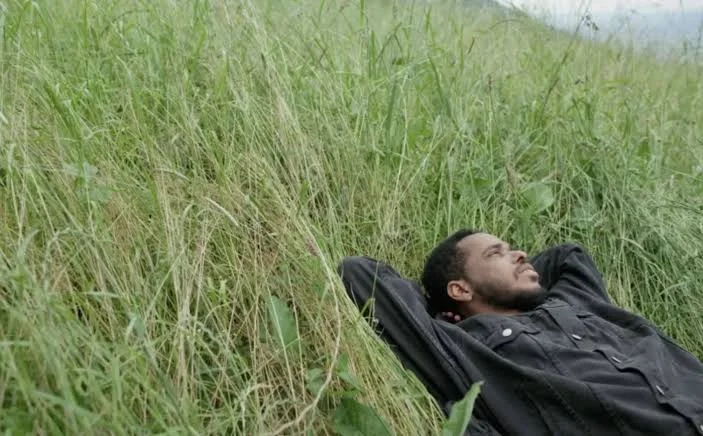
The discrepancy between the stated expectation of a roughly two-week stay and accounts of months, sometimes approaching two years, gives those daily restrictions a different weight. A short period of inconvenience and an indefinite interruption of one’s life require very different explanations. The film is persuasive about what that extension feels like. With little to occupy the day and no reliable endpoint, waiting begins to organize everything else. Contact with loved ones offers relief, but it also reveals how much ordinary connection has been reduced to something that must be managed from a distance.
Polster is attentive to moments when the men can express more than distress. One resident’s ironic statement thanking Austria turns the language of gratitude into a means of objection. His control of the account matters. He understands how a reassuring description of the centre might sound and uses that description against itself. Such moments give the interviews an individual voice beyond their collective evidentiary role. The restrained approach works best here, allowing a speaker’s choice of words to change the scene’s direction without editorial insistence.
The interviews are less consistent as a means of explaining the institution. They establish the experience of isolation more clearly than the procedures sustaining it. That limitation cannot fairly be reduced to Polster’s inability to obtain interior footage. Images of the accommodation might clarify physical conditions; they would not necessarily explain how someone remains there for months. The opening refusal creates an investigative expectation that the film’s accumulation of testimony only partly satisfies.
The men’s accounts make it possible to understand why a phone call, a journey or permission to move can acquire such significance. They also create a need for greater administrative precision: which decisions keep these lives suspended, and who has the power to change them?
Out of Sight (released internationally as Bürglkopf) is a documentary feature that explores the contrasting realities surrounding the Tyrolean landscape around the Bürglkopf mountain. The film contrasts peaceful Alpine scenery with the presence of a refugee center situated at the summit. Screenings take place through international film festivals and independent cultural venues.
Full Credits
Title: Out of Sight (Original title: Bürglkopf)
Distributor: Festival Release / Independent
Release date: 2025
Running time: 1 hour 18 minutes (78 minutes)
Director: Lisa Polster
The Review
Out of Sight
Polster builds a persuasive account of isolation from a location she cannot fully enter. The landscape establishes the restrictions; the residents’ testimony makes their consequences tangible. Her restrained approach gives individual voices room, though the tourism contrasts sometimes repeat an established point. The film explains what prolonged waiting takes from people more clearly than it explains the machinery keeping them there.
PROS
- Landscape makes physical isolation legible.
- Concrete details give prolonged waiting emotional weight.
- Restrained interviews preserve individual voices.
- Local encounters complicate the tourism contrasts.
CONS
- Some visual contrasts repeat rather than develop the argument.
- Institutional procedures receive insufficient explanation.