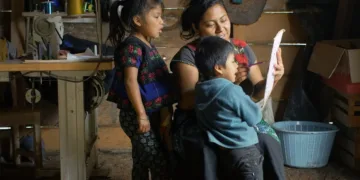

















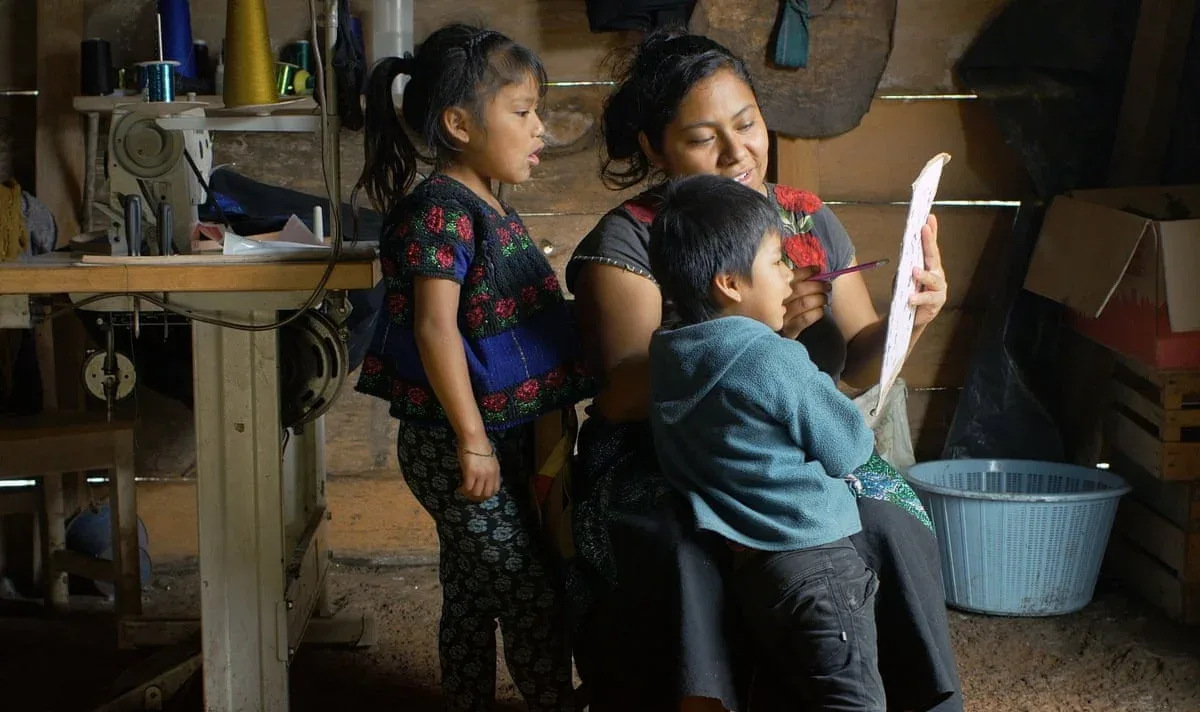

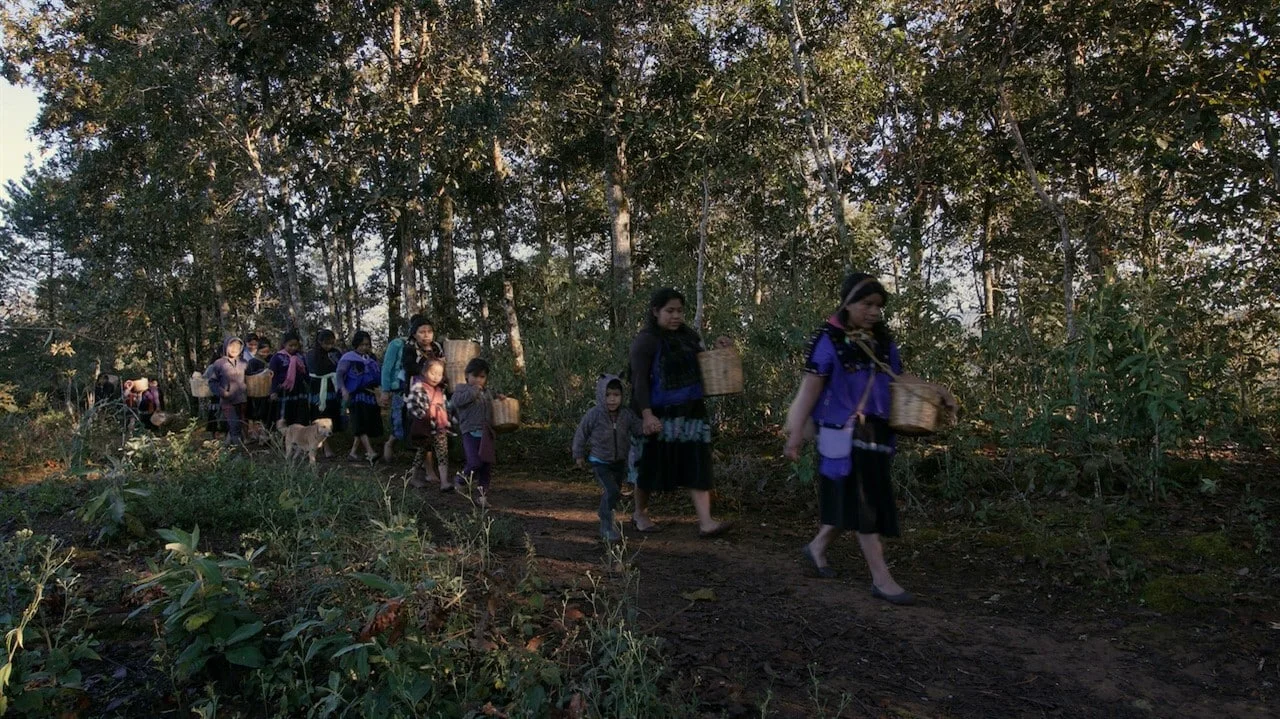
Cooking, grinding corn, tending children: the images in Ana Ts’uyeb’s I Died keep returning to tasks that require another task after them, while the voices remember experiences in which life seemed to stop. Filmed in the director’s home village of Naranjatic Alto, in Mexico’s Chiapas highlands, the documentary accompanies three Tsotsil women, Margarita Hernández Hernández, Juana Vázquez Gómez, and Faustina Cruz Ruíz. Their recollections travel through images of their present activity. The hands remain occupied. What we hear gives those ordinary movements the burden of a second, less visible time.
The deaths evoked by the title, Li Cham, belong to the women’s descriptions of suffering that exceeded their capacity to endure it. Fathers withheld schooling; inheritance customs favored sons; marriage demanded obedience and exposed them to violence. These recollections make the loss of a possible life painfully tangible. Education could be interrupted because the harvest required labor. A girl’s future could be settled by people who expected her to work, marry, and bear children. The women speak from the years after those decisions, carrying knowledge of what was taken from them without having been allowed to discover what it might have become.
Ts’uyeb leaves the violence within their telling. There are no reenactments to give remembered abuse a new body for the camera, and the women do not sit facing us in conventional interviews. Their narration in Tsotsil inhabits images of farming, cooking, and care. This separation allows an unsettling freedom: a woman can recall what was done to her while remaining visible as someone whose existence extends into other activities and attachments. The images do not provide relief from the testimony. Once heard, the words accompany the work, disturbing any easy pleasure in the textures of cloth or the appearance of cultivated land.
That disturbance needs the film’s patience. A nearly static shot of a woman cutting down a banana tree lasts approximately two minutes, long enough for the viewer’s attention to settle into the stubborn duration of effort. Across the film, corn must be harvested, shelled, cooked, ground, and prepared for tortillas. Food arrives through a succession of demands on the body. Ts’uyeb gives those demands room, making it difficult to regard the women’s surroundings as scenery detached from the labor required to live there. The time spent watching can feel heavy, particularly as tasks accumulate, but that weight belongs to the life being recorded.
Work also becomes a way of registering change without pretending that change has made existence gentle. The women now cultivate land they can own, including coffee crops that provide income for their households. Earlier accounts of exclusion from inheritance remain audible behind that ownership. An action repeated across a lifetime can acquire a different emotional meaning when the person performing it gains some authority over its purpose. The woman who insists on using a hoe while men have begun spraying weeds offers a modest, telling expression of preference. She can describe how she chooses to work, with satisfaction in the choice itself.
The film preserves the limits of that authority. Coffee income is seasonal, sufficient for basic needs but requiring other employment and leaving little room for emergencies. There is scarcely any release from work in these images. To call this existence healed would make the women’s continuing exertion disappear beneath a comforting word. Their circumstances permit pride and exhaustion to occupy the same space. Ts’uyeb’s attention is strongest when it allows both to remain perceptible, without asking an image of someone working her own land to settle everything that image cannot tell us about security.
The Zapatista movement enters this account through its influence on equality, cooperation, and women’s access to land. Freedom has a local political history here; the possibilities being described grew within the territory the film observes. Yet the connection between political principles and changed conditions receives limited explanation.
We understand the significance of owning land more clearly than the process through which ownership became possible. This is a real weakness, since the film’s movement from remembered subordination toward present autonomy depends partly on that change. A little greater precision could have strengthened our understanding without displacing the intimate voices with a history lesson.
Closeness creates another, smaller difficulty. The speaking voice does not always have an unmistakable connection to the woman on screen, and individual recollections can become hard to assign. Shared experience gives the narration a gathering emotional force, but I sometimes wanted to retain a clearer sense of whose memory I was hearing. The distinction matters when each woman has already described a life constrained by expectations imposed on women collectively. Their proximity need not dissolve their differences. Ts’uyeb’s refusal of formal interviews brings us into a familiar space, while leaving occasional uncertainty about the people moving through it.
That familiarity becomes especially affecting when the narration addresses the filmmaker herself. Her return is welcomed, and her decision to study cinema is valued. Margarita, her mother, speaks within a film made possible by an education that earlier generations were denied. The daughter’s presence behind the camera gives that difference an observable form. Someone who could once have been required to leave school for work has been able to study, return, and make something with the women whose labor helped sustain her. The documentary carries the uneven tenderness of that relationship: gratitude exists beside opportunities that cannot be returned to those who lost them.
When Margarita clears an uneven path ahead of her daughter, the care is immediate and practical. The ground requires attention; she gives it. The gesture carries the same concern visible in the film’s feeding, bathing, and educating of children, now extended toward an adult who has come home with a different kind of work to do. There is no need to decide that the past has ended in this exchange. The daughter has been able to leave and learn, while her mother still attends to where she will place her feet.
I Died premiered on the international festival circuit in late 2024 and expanded to digital and select platforms. Directed by Ana Ts’uyeb, the documentary portrays the emotional rebirth of three Tsotsil women who reclaim their independence, land, and hope following profound personal losses.
Full Credits
Title: I Died (Tsotsil: Li cham)
Distributor: Bolomchon Films / EPF Media
Release date: October 2024 (Festival premiere)
Running time: 1 hour 14 minutes (74 minutes)
Director: Ana Ts’uyeb
Writers: Ana Ts’uyeb
Producers and Executive Producers: Benjamin Fash, Ana Ts’uyeb
Cast: Ana Ts’uyeb
Director of Photography (Cinematographer): José A. Jiménez Pérez
Editors: Ana Ts’uyeb
Composer: Valeriano Gómez Díaz
The Review
I Died
I Died gives memory the weight of a working body. Through patient observation and testimony that leaves violence unstaged, Ana Ts’uyeb makes autonomy tangible without disguising the exhaustion that survives alongside it. Unclear voice attribution occasionally blurs individual histories, and the political changes deserve sharper explanation. Yet the film’s intimacy endures, especially where a daughter’s education carries possibilities her mother was denied, and care continues across that distance.
PROS
- Patient shots preserve the physical duration of labor.
- Testimony conveys abuse without sensational reenactments.
- Land ownership gains meaning through everyday choices.
- Familial intimacy gives educational opportunity emotional weight.
CONS
- Individual voices can be difficult to identify.
- Political change receives limited explanation.