






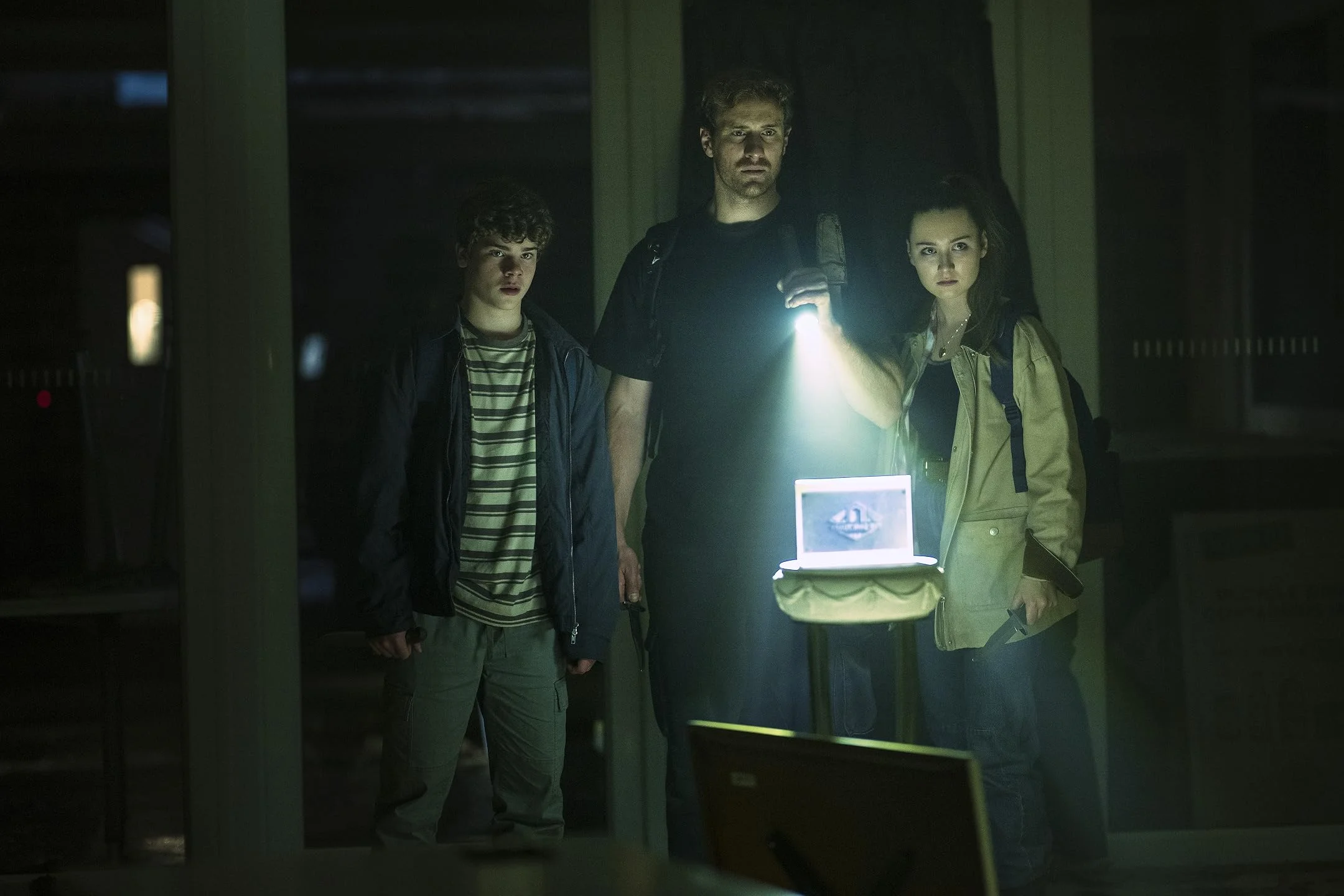

Carter’s harshest act of protection takes place in an abandoned school gymnasium, where he makes Megan and Billy confront zombies without his help. He could intervene. As a man capable of turning into a werewolf, he has an unusually persuasive method of clearing a room. Instead, he insists that the teenage siblings learn to kill for themselves. The scene gives Dead Howling a useful problem: keeping these children alive today may leave them helpless tomorrow. It also makes their guardian’s judgment, rather than his strength, something worth watching.
That distinction matters because Carter’s powers otherwise simplify a considerable portion of the film. A former scientist, he developed a serum while attempting to fight the zombie plague and acquired the ability to transform deliberately. There is no lunar timetable to accommodate. The creature can be summoned when trouble arrives, giving director John V. Soto an efficient source of carnage and his screenplay a difficult suspense calculation. Once Carter becomes the likely solution to an encounter, the film needs something beyond the arrival of another group of zombies to make that encounter uncertain.
The destination provides a steadier narrative engine. After their uncle dies in an attack, Megan and Billy seek a rumoured refuge within Perth, and Carter reluctantly agrees to accompany them. He doubts that safety awaits them there. They continue to believe it might. This disagreement gives their cooperation a little friction without requiring constant arguments or foolish betrayals. The siblings have a purpose before Carter joins them, which helps prevent their existence from being entirely organized around his bereavement. He has lost his wife and child; they have somewhere they want to go. His decision to help brings those separate needs into contact.
The trouble is that the werewolf premise changes the group’s fighting capacity much more decisively than it changes the familiar survival story around them. Carter remains the wounded, reluctant guardian escorting younger people through a hostile landscape. The evolving undead and dangerous fellow survivors offer further threats, but the film’s distinctive creature pairing does limited work in reshaping that underlying arrangement.
There is pleasure in watching an apparent monster defend vulnerable people. There is less uncertainty when the next attack seems principally to be waiting for him to become sufficiently hairy. Several confrontations feel settled before the editing has finished announcing them.
The action’s presentation compounds that problem. Tight views of the werewolf attacking zombie heads provide bloody fragments without always establishing the movement connecting them. We see the business end of the creature, but get a weaker sense of how a fight occupies its surroundings or shifts from one participant to another. That matters in a story built around a protector and two people who remain exposed to danger.
Their positions could make Carter’s strength insufficient, or force him to choose where to intervene. The close montage approach gives us damage more readily than it gives us those relationships. The effects deliver a creature suitable for this modest production; the staging gets limited dramatic mileage from having it available.
Soto does keep the film moving between attacks and quieter exchanges, and the clear destination helps the movement feel purposeful. Yet travel and development are different measures of progress. The familiar business of killing someone facing infection arrives carrying much of its emotional meaning ready-made. Such situations can still hurt, but they need particular attachments or difficult decisions to distinguish them. Here, the recognition of a survival-horror situation occasionally has to stand in for its full dramatic development.
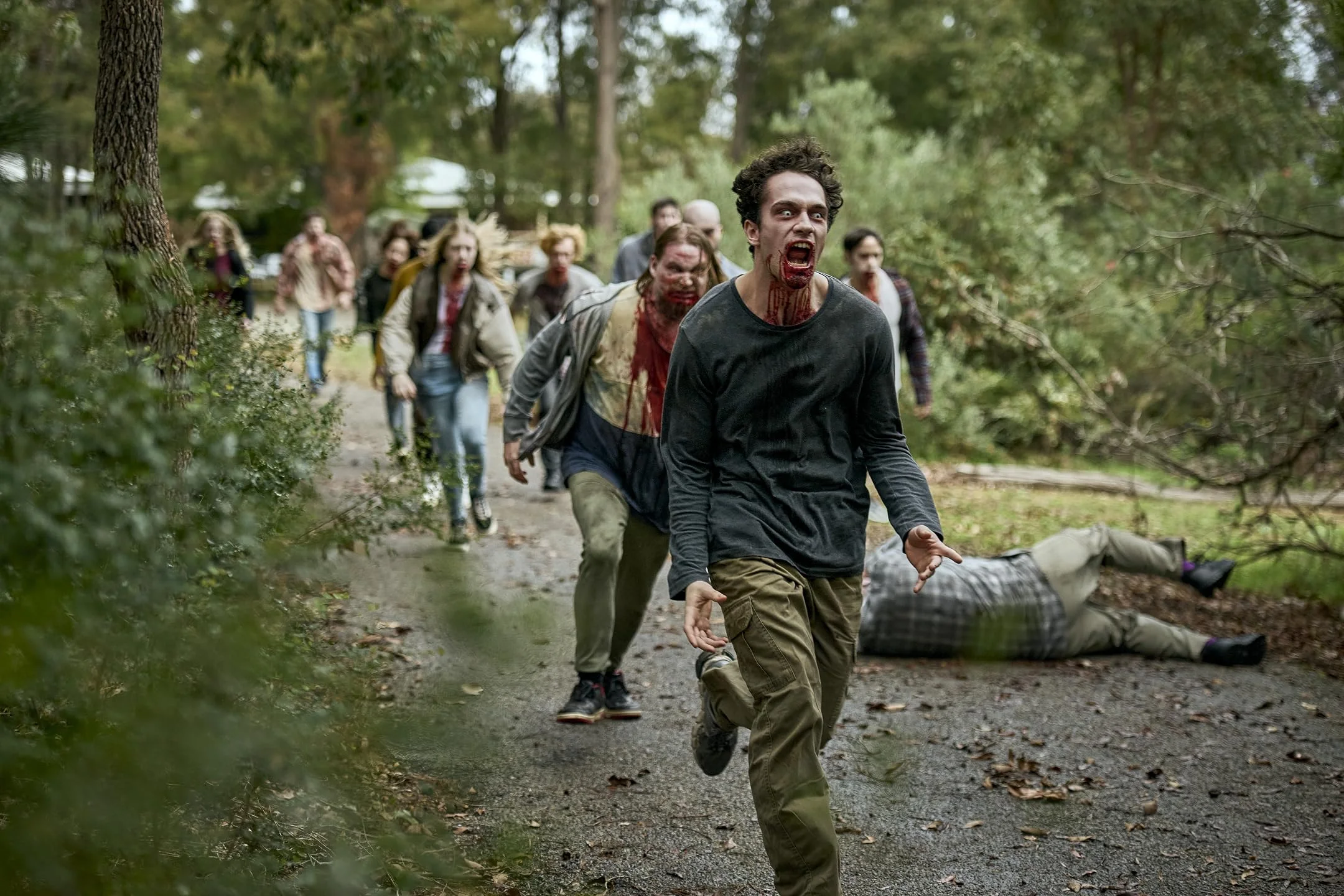
The central cast gives that conventional material a welcome degree of credibility. Joel Jackson has to carry Carter’s imposing usefulness alongside the reluctance that complicates his role as guardian. The gymnasium encounter gives those qualities a shared purpose: his severity belongs to the man trying to keep the siblings alive, rather than being a separate trait attached to a grieving action hero. Téa Heathcote-Marks and Riley Stiles, as Megan and Billy, help make the developing companionship worth following. Their continued pursuit of the refuge gives them a reason to remain active within the story, even when Carter’s physical abilities threaten to take responsibility for every immediate problem.
The absence of prolonged bickering is a small but meaningful advantage. Cooperation allows the film’s pauses to contain companionship instead of another dispute that must be resolved before the group can leave. It makes Carter’s gradual acceptance of responsibility easier to believe, though it cannot make every discussion of his loss equally productive. His agreement to accompany the siblings and his decision to teach them are stronger evidence of change than repeated statements of suffering. Those actions require him to alter how he lives. The dialogue is less effective when it merely confirms how badly his earlier life ended.
Megan and Billy’s faith in the refuge also places a limit on Carter’s authority. His experience gives him practical knowledge, but it does not make his pessimism a reliable forecast. The film has room here for a useful distinction between knowing how to survive and having a reason to continue. The siblings supply a destination he would not have chosen alone. Accompanying them requires him to act on a possibility he cannot endorse with confidence, and their dependence on him gives that decision consequences beyond his own willingness to be disappointed.
Dead Howling was released on digital and physical formats in the UK on November 2, 2026, following its premiere at FrightFest. Directed by John V. Soto, the horror-thriller follows a lone werewolf who joins forces with human survivors to protect them during a brutal zombie apocalypse.
Where to Watch Dead Howling (2026) Online
Full Credits
Title: Dead Howling
Distributor: Kaleidoscope Home Entertainment
Release date: November 2, 2026 (UK VOD and Physical)
Running time: 1 hour 43 minutes (103 minutes)
Director: John V. Soto
Writers: John V. Soto, James Pickering
Producers and Executive Producers: John V. Soto, Tom Reeve, Matthew Helderman
Cast: Ryan Kwanten, Temuera Morrison, Tom Burlinson, Téa Heathcote-Marks, Joel Jackson
Director of Photography (Cinematographer): David Le May
Editors: Lawrie Silvestrin
The Review
Dead Howling
Dead Howling finds its strongest material in Carter’s uneasy responsibility for Megan and Billy. Their companionship gives the familiar survival plot some warmth, and the gymnasium encounter turns protection into a difficult choice. The werewolf action is less satisfying: Carter’s strength reduces uncertainty, while fragmented staging limits the spectacle. An appealing trio keeps the film watchable, but the creature premise rarely changes the storytelling as decisively as it changes the fights.
PROS
- Appealing central trio.
- Clear destination gives the story direction.
- Cooperation develops without prolonged bickering.
- Survival training complicates Carter’s protective role.
CONS
- Carter’s powers weaken suspense.
- Fragmented action obscures movement and positioning.
- Familiar survival situations receive limited development.
- Grief dialogue sometimes repeats established information.