







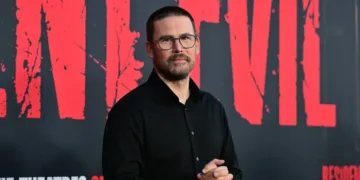














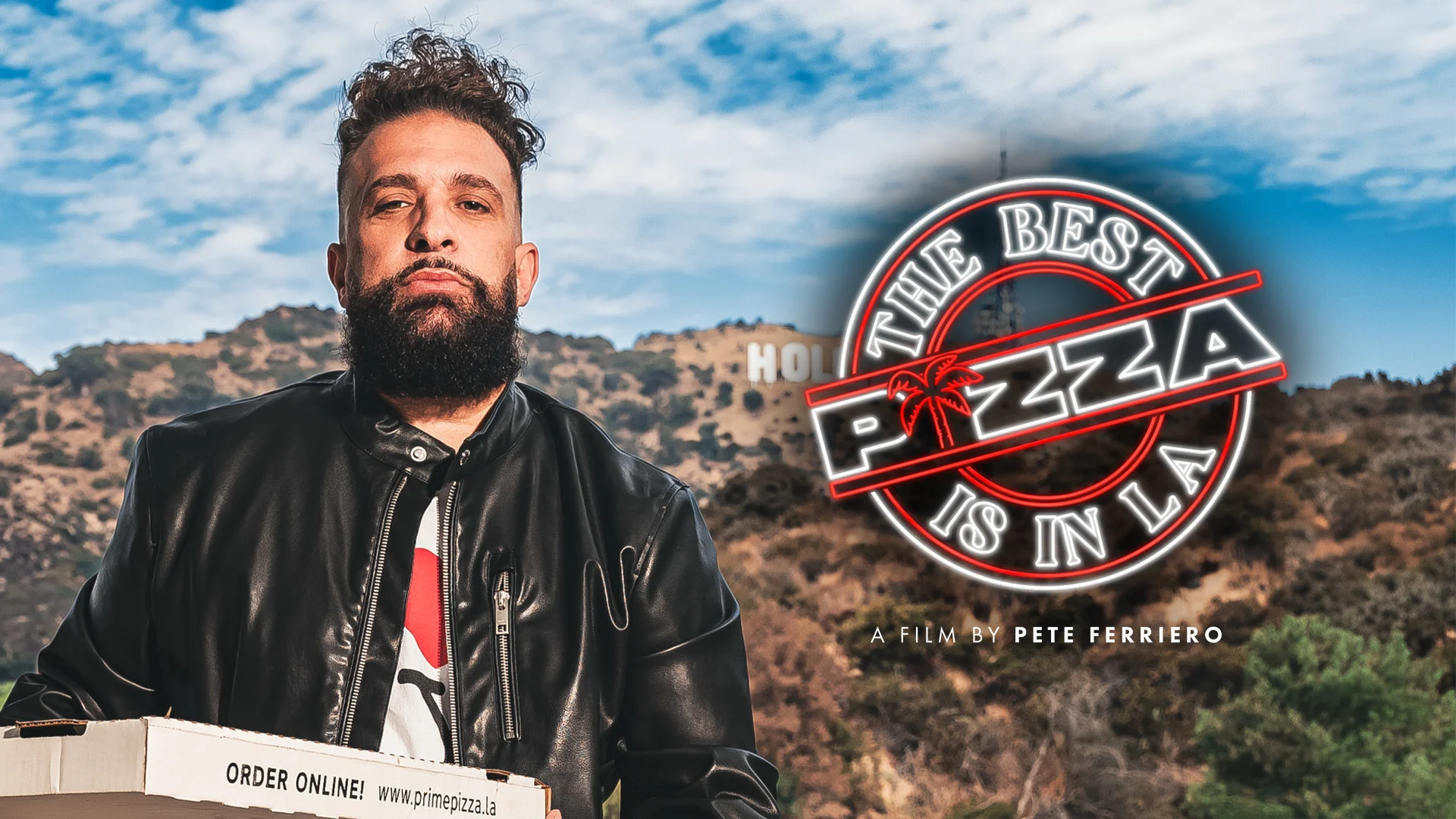

Peter Ferriero establishes his East Coast pizza loyalties before asking anyone to take Los Angeles seriously. His attachment to Brothers Pizza on Long Island, accompanied by his New Jersey credentials, gives his appetite a respectable pedigree. He understands the slice against which other slices are measured. His enthusiasm for California can therefore be admitted into evidence.
This little ritual of qualification gives The Best Pizza Is in LA a revealing starting point: regional taste has become an authority that even its challengers feel obliged to consult. Ferriero approaches the argument with affection, carrying a favorite pizza into a film that promises to reconsider the hierarchy.
The Detroit, Chicago, Tokyo, and New York styles encountered across Los Angeles complicate that hierarchy through their coexistence. A city accommodating these different approaches offers several versions of satisfaction, each with its own expectations of dough, texture, and proportion. Ferriero’s restaurant visits make culinary belonging look portable.
Familiar food can be recreated elsewhere, adjusted to another setting, or placed beside something its original audience would scarcely recognize. The documentary is persuasive when it allows this variety to count as a quality of the city itself. Los Angeles need not produce a single representative pizza to possess a pizza culture worth exploring.
Yet the film remains attached to the prestige it wants to redistribute. Some makers pursue the qualities associated with an East Coast slice, using ingredients and preparation to reproduce an established ideal. Elsewhere, departures from convention become evidence of local ingenuity.
Both pursuits can produce excellent food, but they ask different questions of the person eating it. Faithfulness and invention cannot automatically validate the same ranking. The difficulty belongs to the documentary’s competitive premise: a selection of appealing alternatives demonstrates range, while the title invites a comparison that requires some agreement about what excellence means.
The trip to collect New York water gives this wandering argument a welcome point of concentration. Ferriero brings it back to Los Angeles for pizzas made with water from the two cities, followed by a tasting involving actors and food critics. Here, a frequently repeated explanation for New York’s reputation becomes something participants can encounter through food.
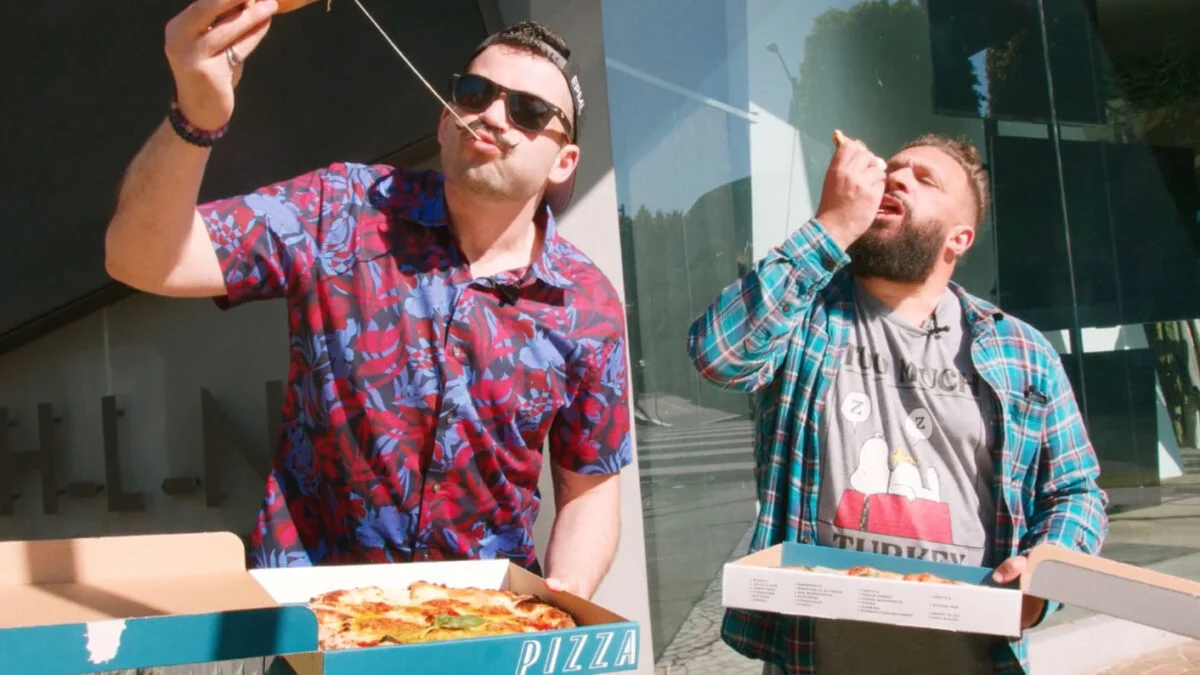
The sequence has an investigative purpose beyond finding another enjoyable lunch. It also makes the authority of the water story visible. A belief strong enough to send the filmmaker across the country has already shaped expectations before anyone takes a bite. Tasting can address a particular difference; it cannot settle every preference gathered under the word “best.”
Wolfgang Puck’s smoked-salmon-and-caviar pizza poses a different problem. The Spago takeaway costs $130, and the discussion turns toward its right to be called pizza at all. At this point, a dispute about quality becomes a dispute about membership. Someone can dislike the toppings without needing to expel the dish from the category.
Equally, expensive ingredients supply no automatic defense of the food beneath them. Ferriero has found a useful test of the tolerance celebrated elsewhere in his tour: openness becomes harder when an unfamiliar version asks to share a familiar name. Puck’s absence from the interviews leaves the pizza and the responses to it carrying that exchange.
The price deserves attention alongside the argument over authenticity. A luxury takeaway and an everyday slice serve different appetites, occasions, and budgets. Placing them within one enthusiastic survey can make those differences seem incidental, especially when novelty supplies so much of the pleasure. The $130 purchase does not establish anything sweeping about eating in Los Angeles. It does expose an ambiguity in the film’s invitation to explore. A city may contain pizza for many tastes without making all those experiences equally available. Variety describes the selection; choosing from it involves practical judgments that a regional championship can obscure.
Ferriero’s hosting keeps these questions from turning the film into an exercise in culinary policing. Chefs including Brooke Williamson, Stephanie Izard, Mei Lin, and Joe Sasto bring professional experience into a social setting where enjoyment remains permissible.
The company is part of the attraction. His enthusiasm gives the restaurant visits an ease that a stern ranking exercise would struggle to preserve, and the pleasure of trying food together becomes a legitimate subject. The documentary works as an invitation because its host appears interested in having a good meal with people. Disagreement can occur without requiring anyone to defend an entire city at every table.
His affection for Beverly Hills 90210 also shapes the encounters with Tori Spelling and Brian Austin Green, making another kind of remembered pleasure part of the itinerary. Green’s warning about provoking a regional conflict fits the film’s friendly exaggeration, while the presence of familiar performers gives the tastings an appeal separate from culinary expertise. Ferriero’s personal attachments help assemble the gathering. That is an engaging basis for a hosted documentary, though celebrity recognition and experience evaluating food contribute different things. The film benefits from both without always making the distinction especially useful to its argument.
The recurring positive reactions eventually create a more immediate limitation. Successive tastings offer enjoyment with too little differentiation, so the restaurant tour begins to repeat its emotional reward. Hospitality sustains the mood while reducing the friction that might clarify a judgment. For viewers tempted to follow Ferriero’s route, distinctions between crusts, prices, and culinary ambitions would matter, especially once the decision involves choosing one lunch from all the lunches he gets to enjoy.
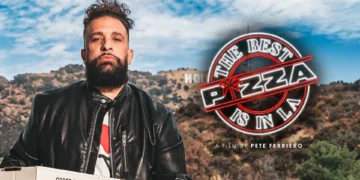
The Best Pizza is in LA was released digitally on July 28, 2026, and is available to stream on platforms like Prime Video and Apple TV. Directed by Peter Ferriero, the food documentary follows the filmmaker on a culinary quest to challenge traditional East Coast dominance by exploring the booming, diverse pizza culture across Los Angeles.
Where to Watch The Best Pizza is in LA (2026) Online




Full Credits
Title: The Best Pizza is in LA
Distributor: Freestyle Digital Media
Release date: July 28, 2026 (Digital / VOD)
Rating: TV-PG
Running time: 1 hour 10 minutes
Director: Peter Ferriero
Writers: Peter Ferriero
Producers and Executive Producers: Sarah Sobek, Kathleen Robertson, Peter Ferriero
Cast: Pete Ferriero, Joe D’Amore, Tori Spelling, Ray Romano, Brooke Williamson, Allen Salkin, William Joo, Herbert Yuen, Nancy Silverton
The Review
The Best Pizza is in LA
Ferriero’s enthusiasm makes The Best Pizza Is in LA an inviting portrait of culinary belonging. Its regional styles and water comparison give familiar arguments about authenticity something tangible to test. The championship claim remains shakier: imitation and invention receive competing authority, while repeated approval blurs distinctions between restaurants. Celebrity company keeps the meals sociable, though the film’s generosity leaves its judgments short of precision. There is ample pleasure in this survey, especially when Los Angeles is allowed to accommodate different appetites without winning every argument.
PROS
- Engaging, enthusiastic hosting.
- Water comparison gives the investigation focus.
- Regional variety supports thoughtful cultural questions.
CONS
- Inconsistent standards for culinary superiority.
- Repeated praise makes tastings feel repetitive.
- Celebrity familiarity sometimes blurs culinary authority.