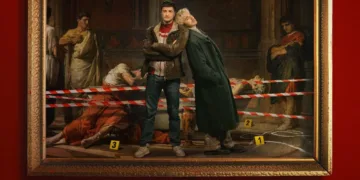





















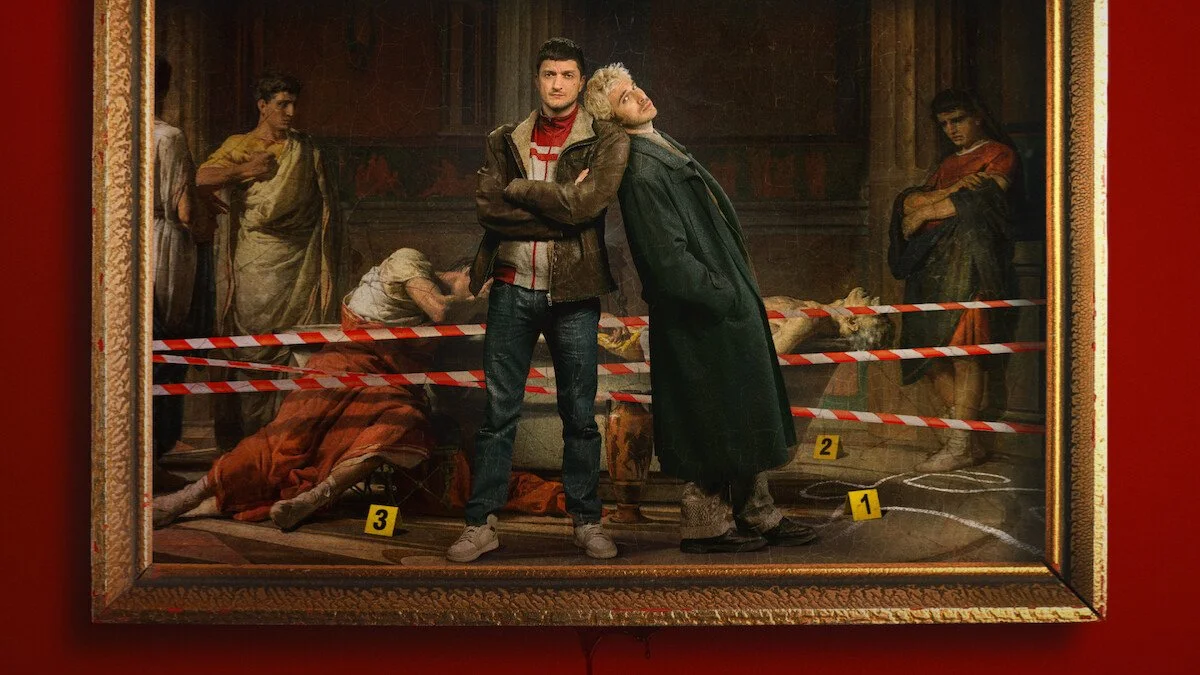

Cosmo Speranza exposes a fake Titian at an art reception, then headbutts a museum official who mentions his father. The two gestures establish the peculiar privileges attached to expertise in ChiaroScuro. Cosmo can puncture an institution’s authority and lose control of himself within the same encounter; his gift remains valuable enough for the police to offer consultancy as an escape from prosecution. The arrangement turns personal misconduct into a recruitment opportunity. This is a familiar indulgence of the eccentric male detective, dressed for a room in which everyone has supposedly learned to recognize quality.
His usefulness becomes concrete at the National Gallery. Confronted with its director’s body, Cosmo recognizes an arrangement drawn from an Artemisia Gentileschi painting and identifies the significance of a wound made with a square-shank nail. The relevant canvas has disappeared from restoration.
A room organized for contemplating art becomes a crime scene whose meaning requires an educated spectator. The pleasure lies in watching apparently separate things, a body’s position, an injury, a missing painting, become readable together. Cultural knowledge earns its place in the investigation through the connections it allows Cosmo to make.
That process gives the series an appealing relationship with its audience. When Cosmo studies paintings, his deductions take visual form within the works, allowing viewers to follow the movement of his attention. Expertise can be a closed door in dramas about rarefied professions, with everyone waiting for the specialist to announce an answer.
Here, the paintings offer an entry into his reasoning. The investigation’s trip to an auction house, with its authentication records and personal connections, also places judgment inside a network of people and transactions. A confident eye operates alongside paperwork, reputation, and access.
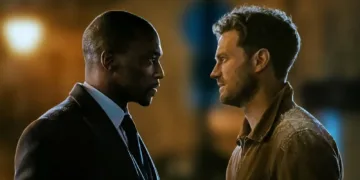
Inspector Angelo Tiberi provides resistance to Cosmo’s assumption that recognition should settle everything. Andrea Lattanzi’s restraint gives Pierpaolo Spollon’s theatrical assurance something solid to push against, and their disagreements make the exchange of knowledge entertaining. Cosmo’s refusal to carry a phone is a particularly economical expression of his desire to set the conditions of every encounter.
Working with a procedural, cautious policeman requires him to accommodate another person’s methods. Spollon keeps enough sadness beneath the swagger to prevent this refusal of ordinary obligations from becoming the character’s entire personality. Lattanzi, in turn, makes Angelo’s reserve an active presence in their exchanges, giving their developing warmth a credible starting distance.
The Roman setting suits this circulation between privileged spaces and ordinary demands. Museums and auction rooms belong to the same city as traffic and busy neighborhoods; artistic inheritance has addresses, employees, and practical arrangements attached to it.
The series gains from moving through those environments without requiring every location to announce its grandeur. Its art world is accessible enough to sustain a light crime comedy, while the opening forgery keeps institutional confidence under suspicion. The authentication records matter because an impressive room and an assured declaration have already proved unreliable.
The most consequential education Cosmo received came from Rufo, his father, an art teacher and accomplished forger played by Alessandro Preziosi. This inheritance gives the mystery a sharper emotional question than the identity of a killer. Cosmo’s skill preserves a bond with the person whose history he must investigate.
Rufo concealed two families, and the death understood as suicide during Cosmo’s childhood begins to invite other explanations. The father who taught him to discriminate between genuine and fabricated objects also left him an incomplete account of their own lives. Affection makes that account difficult to examine without making Cosmo foolish for having believed it.
A painting of his childhood home appearing at a crime scene brings the disturbance into an intimate register. The subject has ceased to be safely contained within professional knowledge: someone else can select his home, reproduce it, and make it part of a message.
The square-shank nail left in Rufo’s old studio similarly carries the current investigation into a place shaped by memory. These details give the flashbacks a purpose beyond supplying a tragic explanation for an amusing man’s behavior. They establish what is being put at risk when Cosmo’s eye for evidence turns toward his father. The facts may become clearer while his attachment becomes harder to describe.
Across eight episodes, individual investigations give that family uncertainty a workable rhythm. There are crimes to interpret while the larger history remains unsettled, and the partnership supplies comic friction between disclosures. The limited reliance on graphic violence also leaves conversation and personal reactions room to carry the drama.
This arrangement is conventional, yet familiarity serves a useful function: viewers can settle into the investigative routine while Cosmo loses the reassurance of his own remembered past. The murders bring professional opportunities for his unusual knowledge and increasingly uncomfortable reasons to use it.
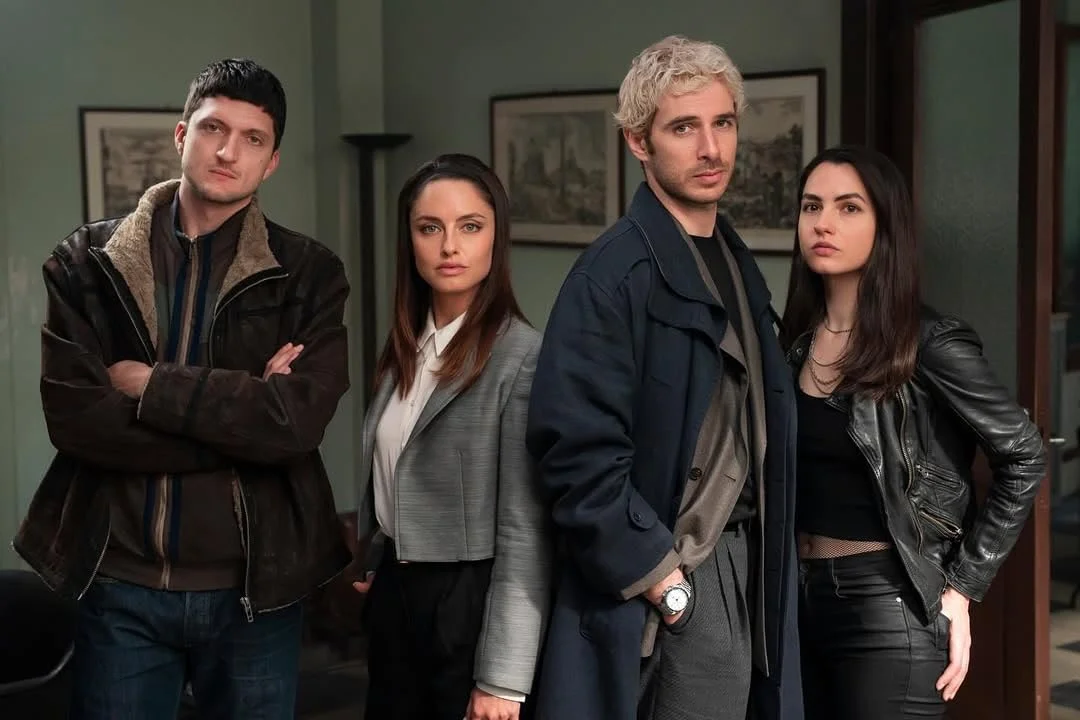
The people around the men have professional identities that could widen this account of knowledge and trust. Eleonora, the medical examiner played by Romana Maggiora Vergano, is also the object of Angelo’s feelings and the former partner of his dead colleague and friend. Mia, played by Aurora Giovinazzo, works in the art world alongside her mother Beatrice Keller.
Their introductions give relationships immediate dramatic currency, while leaving their own working lives comparatively lightly developed early on. Matilde Gioli’s Leda has the richest intersection of obligations: she is a lawyer, Cosmo’s half-sister, and romantically involved with Angelo. Rufo’s divided family makes her a participant in the same damaged inheritance Cosmo is investigating. Her legal identity offers another way of thinking about evidence and responsibility, one that deserves space beside the brother whose expertise has already secured him an exemption.
ChiaroScuro premiered globally on Netflix on November 11, 2026. Directed by Jan Maria Michelini, the Italian crime comedy-drama series follows an unlikely duo navigating high-stakes investigations where famous works of art intersect with dark criminal underworlds.
Where to Watch ChiaroScuro Online


Full Credits
Title: ChiaroScuro
Distributor: Netflix
Release date: November 11, 2026
Rating: TV-MA
Running time: Approx. 60 minutes per episode (8 episodes)
Director: Jan Maria Michelini
Writers: Umberto Gnoli, Michela Straniero, Francesco Arlanch, Elena Bucaccio, Silvia Leuzzi
Producers and Executive Producers: Lux Vide, Fremantle
Cast: Romana Maggiora Vergano, Alessandro Preziosi, Matilde Gioli, Aurora Giovinazzo, Pierpaolo Spollon, Corrado Invernizzi, Gabriele Falsetta, Andrea Lattanzi
The Review
ChiaroScuro
ChiaroScuro turns the trained eye into a source of pleasure and uncomfortable authority. Its paintings make deduction visible, while Spollon and Lattanzi give the investigative routine warmth and friction. Cosmo’s inherited skill becomes especially affecting when it challenges the father who taught him. The writing grants his misconduct familiar exemptions and gives the women’s working lives limited early attention, but its combination of art, comedy, and compromised family knowledge remains engaging.
PROS
- Paintings become readable investigative evidence.
- Spollon and Lattanzi’s contrasting performances sustain the comedy.
- Rufo’s concealed history gives Cosmo’s expertise emotional stakes.
- Rome connects prestigious art spaces with everyday urban life.
CONS
- Cosmo’s misconduct receives familiar eccentric-genius indulgence.
- Women’s professional lives receive limited early development.







