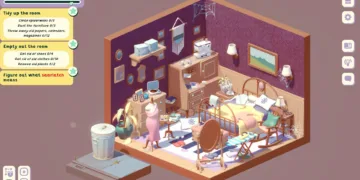




























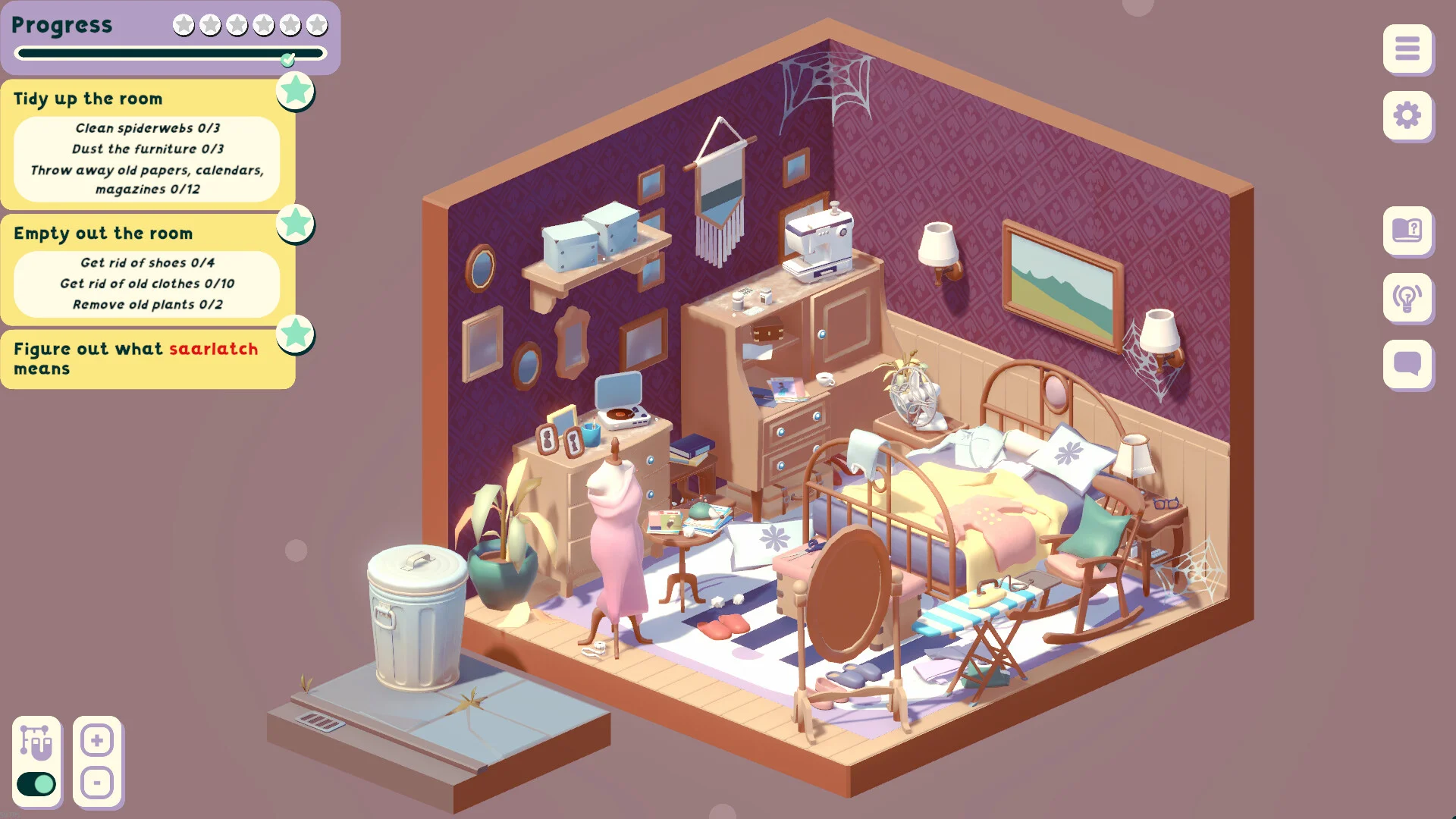

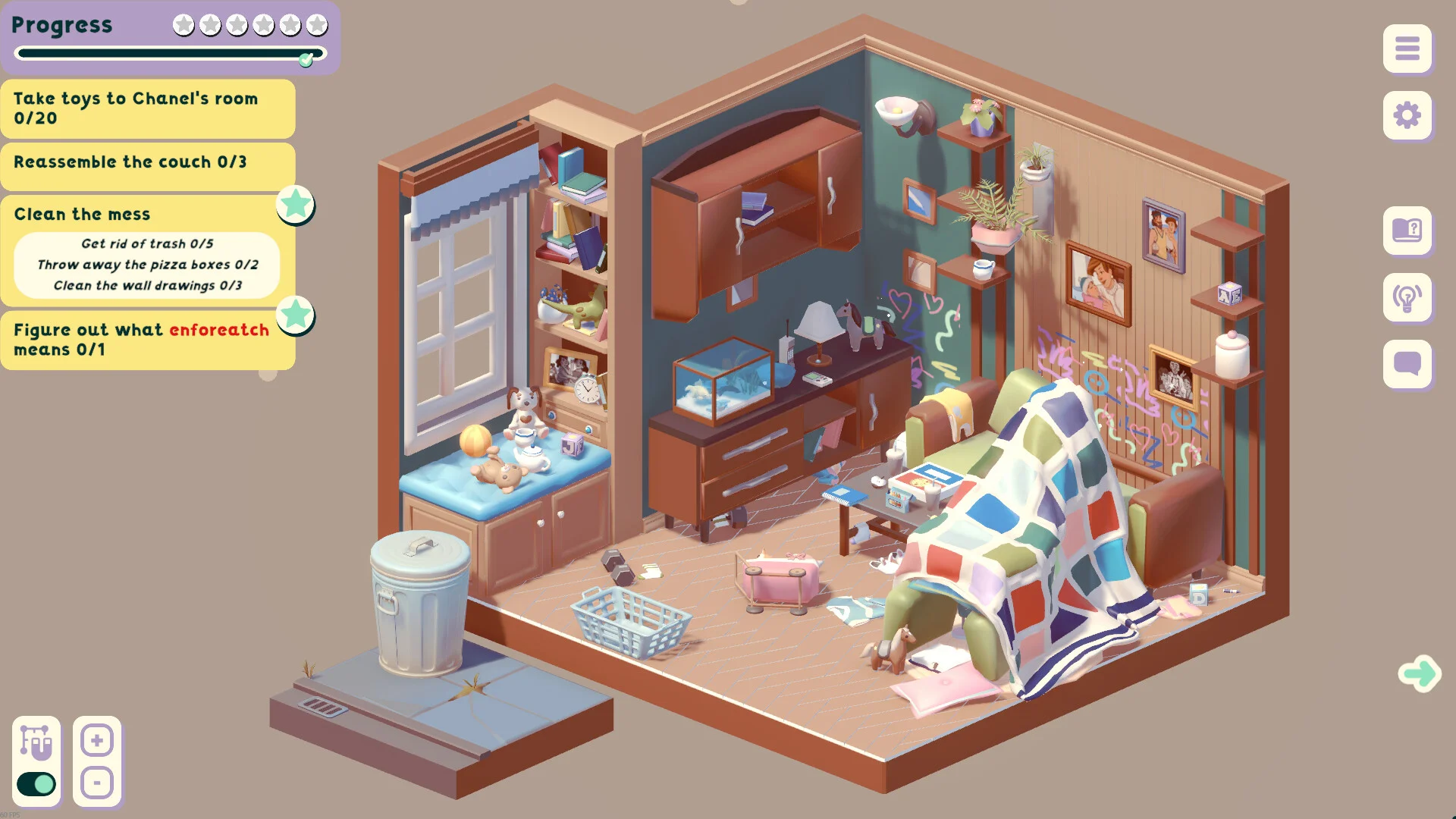
Lena’s clients sometimes give her instructions containing words she cannot understand, and Clean Start makes those words meaningless to the player too. An unfamiliar term sits inside an otherwise ordinary request. You can read around it, examine the room, and look for an object that makes sense of what you have been asked to do. Finding it brings a small, surprisingly personal relief. You knew how to do the work. You needed to understand what somebody wanted. For a moment, the distance between those two things becomes something you have to experience yourself.
There is time to sit with that uncertainty. Nobody grades your cleaning or starts a countdown while you search. A task list keeps the job legible, and a hint can highlight an object needing attention in purple. These concessions make the language puzzles feel inviting without removing the need to look closely. Calm music helps hold that mood: you can linger over a cupboard without feeling that the game is waiting impatiently for its next story scene. Understanding grows through the same attention you give the room, so the pause belongs to the work.
For Lena, though, these jobs carry obligations that extend well beyond the apartment she is cleaning. She has moved west in the 1990s, after the opening of borders between Eastern and Western Europe, leaving her mother and two young children behind. The money she earns must support her and help her family. She hopes to rent somewhere suitable for bringing her children over. Knowing this changes the emotional temperature of a request. An unfamiliar word becomes an obstacle in work she needs, and a client’s patience becomes something you appreciate on her behalf.
The game keeps that anxiety at a careful distance. Rent matters to Lena, yet you never have to reserve money for it, decide what to send home, or calculate what she can afford to keep. Her financial insecurity reaches you through the story rather than through decisions with competing costs. That makes her situation easier to sympathize with than to inhabit. There is a slight loss of pressure here, especially beside the language puzzles, which give you something specific to struggle through alongside her. The reassuring rhythm protects the pleasure of cleaning, while leaving part of the hardship motivating it outside your hands.
The cleaning itself has an agreeable directness. Clear the objects from a surface, drag the cursor across the dust, then find places for the belongings. Items rotate, drawers open, and cupboards offer somewhere to put the things you have been moving around. There are no specialist products to select or tools to improve. The pleasure comes from seeing space become usable and deciding how to arrange it. Homes have at most two rooms to switch between, which keeps that satisfaction concentrated. It can feel restrictive, too. Just as the handling becomes comfortable enough to invite a longer organizing session, the size of the job limits how far you can take it.
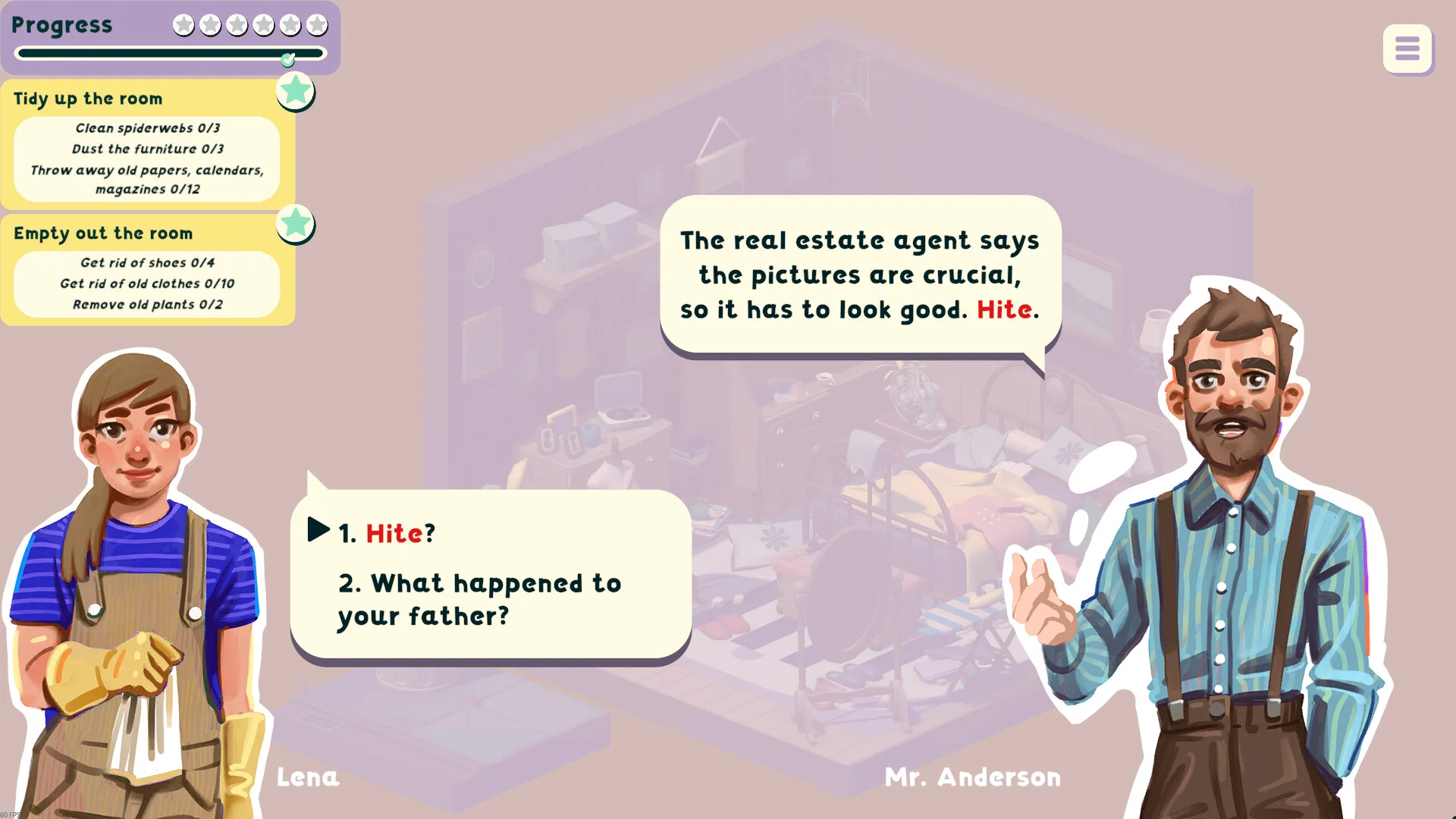
The requests help those modest spaces retain their personalities. One man wants his sailing possessions hidden so his enthusiasm will not embarrass his son’s new boyfriend. It is an affectionately awkward reason to hire a cleaner, and it gives the rearranging a social purpose.
You are helping someone prepare for a meeting he cares about. Helping a grandmother move into sheltered accommodation gives sorting a different emotional weight, since the belongings are part of a home being left behind. The physical actions remain familiar across these jobs. What changes is your sense of what handling the objects means to their owners.
An early opportunity to preserve belongings becomes particularly effective when a character later arrives to collect possessions and acknowledges what you kept. The response is small enough to feel credible. It also changes the attention you bring to the next pile of things: disposal can have a consequence somebody else will recognize. Clean Start earns tenderness through that connection between an action and a later encounter. The acknowledgment gives your earlier care a recipient, allowing the satisfaction of a completed job to continue after you have stopped cleaning that room.
Lena becomes easier to care about through the different kinds of attention she receives in return. Appreciative clients make her work feel welcome; a character hostile to her immigrant status makes that welcome feel less secure. Her own responses to unfamiliar surroundings matter, too. Her surprise at a toaster briefly interrupts the assumption that every ordinary kitchen object carries the same associations for everyone.
These details let her circumstances emerge alongside the work without turning every conversation into an explanation of her past. Gradually, wanting another space to tidy becomes entangled with wanting to know how she is getting on.
Recurring people and objects give that interest somewhere to go. A finished property does not necessarily mean a finished relationship, and later encounters reward remembering the people attached to earlier jobs. Across roughly three or four hours, this continuity makes the small scale feel intimate, even when the limited room layouts leave you wanting a bigger task.
The story can move forward through recognition: someone familiar returns, or an object gains significance after you have already handled it. The next conversation offers a reason to continue that a freshly dusty surface could not supply alone.
Back in Lena’s apartment, gifts collected through work can become decorations. With no shop selling a succession of improvements, these additions to her space arrive through contact with other people. You choose where to put an object while remembering the job or relationship that brought it there. Some of those keepsakes gain meaning as the story continues, so their presence can change without their appearance changing at all.
The Review
Clean Start
Clean Start makes looking after somebody’s belongings feel personal. A kept object remembered later, an instruction slowly deciphered, a gift brought home: these small interactions build an affecting connection to Lena and the people she meets. The cleaning is welcoming and satisfying, though small rooms limit the pleasure of settling into a larger task. Her financial worries also remain easier to understand than to feel through play. Still, this is a warm, thoughtful game whose modest actions give you good reasons to care.
PROS
- Decisions about belongings gain emotional weight in later encounters.
- Language puzzles connect the player to Lena’s uncertainty.
- Relaxed, direct cleaning leaves time to explore.
- Recurring characters sustain interest in Lena’s life.
CONS
- Small rooms restrict the scope for extended organizing.
- Financial insecurity remains largely outside the player’s decisions.







