





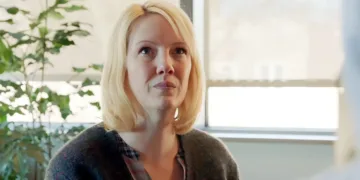


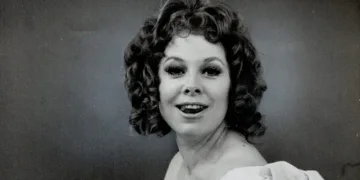





















Returning to footage from earlier Utah parties lets The Secret Lives of Mormon Wives: Orange County give its new cast a small promotion. Women who previously occupied the background become faces worth picking out. This is retrospective storytelling in its simplest form: an old image acquires a new subject because we have been given a reason to notice her. I enjoyed the recognition game. It gives this Hulu spinoff a connection to the original series without requiring every participant to explain her history, and briefly makes the expanded franchise feel like a place we already know.
Getting people into the same frame is easier than getting them to agree on an outfit. McCall DaPron wants a Palm Royale theme for a gathering during a group trip; Bobbi Althoff has little interest in cooperating. Their disagreement is pleasantly small enough to accommodate competing sympathies.
McCall is trying to arrange something everyone can enjoy together, but her enthusiasm starts to require obedience. Bobbi has every right to choose her clothes, though her refusal makes joining in seem beneath her. The scene supplies the friction that those party flashbacks cannot: a reason to wonder how these women will manage one another.
Returning cast member Jen Affleck describes combining two social circles she encountered around Dancing with the Stars. The resulting ensemble shares influencer work and varying connections to Mormonism, rather than the established collective identity of Utah’s #MomTok. McCall, sister of Mayci Neeley from the original show, becomes a focal point for the observant “Molly Mormon” contingent.
Bobbi’s religious connection includes her brother’s conversion. Those are substantially different relationships to a faith, and the series’ sorting of women into opposing camps can make the group easier to follow while flattening its differences. Arguments about participation and loyalty arrive before the friendships have acquired enough history to give every grievance weight.
The household scenes offer firmer ground. Madison Bontempo has five children and produces sponsored content, while her husband Kyler makes questionable investments and objects to feeling diminished by her. Paid content gives their financial disagreement something tangible to revolve around: we can see the work supporting this household.
Madison also wants time to care for her children, so pressure to keep earning competes with another demand on her attention. The frustration builds through incompatible expectations. Her productivity is needed, yet the power attached to it becomes a complaint. This makes her position painfully legible without requiring us to diagnose the marriage or decide that earning money has already given her control.
Aspyn Ovard’s coparenting therapy session develops a related conflict under different conditions. An offer to support her ex financially helps turn a discussion intended to improve cooperation into a shouting match. The setting matters because it gives the conversation a practical task, then lets us watch that task become harder as money enters it. Aspyn is negotiating life after separation, including a relationship with a married couple; Madison is still managing the competing obligations inside her marriage.

The contrast shows how independence can develop unevenly: a woman may gain options faster than the people around her adjust to them. Aspyn’s changed romantic life can attract attention, but the offer of financial help exposes the stubborn question of how two parents will accept assistance from each other. Her ability to pay does little to make that conversation easier.
Professional occasions pull the women back into the group’s less settled obligations. When they attend Bobbi’s comedy appearance at the Netflix Is a Joke festival, McCall’s criticism of the performance becomes another dispute about support. The useful storytelling device here is the shared event: everyone can attend the same occasion and leave with a different account of what participation required.
Does showing up satisfy the obligation, or must friendship include enthusiasm for the work? Bobbi’s comedy gives that disagreement an entertainingly awkward setting. McCall can have reservations about a performance, and expressing them can still damage a relationship. The uncertainty about how close these women actually are makes the demand for loyalty feel premature.
That demand becomes harder to enjoy when the group presses Madison to say what she thinks and seeks information about her marriage from someone outside its circle. Her domestic strain has already given us a reason to take concern seriously. But searching for further information shifts the activity from listening to investigation, leaving Madison with another set of people asking her to account for herself. Late in the season, Jordan’s disclosure about Avery Woods’s past OnlyFans account gives the same impulse a different subject.
A personal history becomes a proposed problem for the group’s reputation, with little established reason that Avery’s former account should create an obligation to the others. Both storylines generate confrontation efficiently. They give less substance to the claim that such confrontation constitutes friendship.
I found Jen’s conversation with Aspyn about separation and obtaining legal information more satisfying because it gives their connection a useful function. Jen is considering leaving Zac, whose offscreen presence still bears on her financial stress. Aspyn has experience relevant to that decision, and Jen can begin considering steps without presenting her future as settled. The prospect of separation carries financial and emotional work that a change of scenery cannot complete. In their exchange, she has room to ask what taking the next step would involve, before she has to explain that decision to everyone else.
The Secret Lives of Mormon Wives: Orange County premiered globally on Hulu and Disney+ on November 12, 2026. The reality television spin-off follows a new circle of social media influencers and mothers living in Southern California as they navigate complex friendships, personal faith, and public scrutiny.
Where to Watch The Secret Lives of Mormon Wives: Orange County Online

Full Credits
Title: The Secret Lives of Mormon Wives: Orange County
Distributor: Hulu, Disney+
Release date: November 12, 2026
Rating: TV-MA
Running time: Approx. 45–50 minutes per episode (8 episodes)
Producers and Executive Producers: Jeff Jenkins, Russell Jay-Staglik, Amanda Weinstein, Melissa Bidwell, Brandon Beck, Ross Weintraub, Reinout Oerlemans, Georgia Berger, Lisa Filipelli, Danielle Pistotnik
Cast: Jen Affleck, Bobbi Althoff, Aspyn Ovard, Avery Woods, Salomé Andrea, McCall DaPron, Ashleigh Pease, Madison Bontempo, Jordan McClanahan
The Review
The Secret Lives of Mormon Wives Orange County
Orange County’s flashbacks make new faces familiar, and its petty disputes are fun to follow. Madison’s workload and Aspyn’s coparenting conflict supply the emotional weight, showing how financial independence can leave a relationship’s power struggles unresolved. I was less persuaded by demands for loyalty from friendships still taking shape, especially when concern becomes an excuse for exposure. Jen’s practical exchange with Aspyn offers a warmer, more convincing reason to keep these women together.
PROS
- Earlier party footage gives the new cast an accessible franchise connection.
- Small disputes allow competing sympathies and entertaining friction.
- Household scenes ground financial power struggles in concrete demands.
- Jen and Aspyn’s practical conversation gives their connection substance.
CONS
- Demands for loyalty outpace the development of the friendships.
- Religious factions flatten differences between the women.
- Scrutiny of Madison and Avery weakens the group’s claims of support.