





















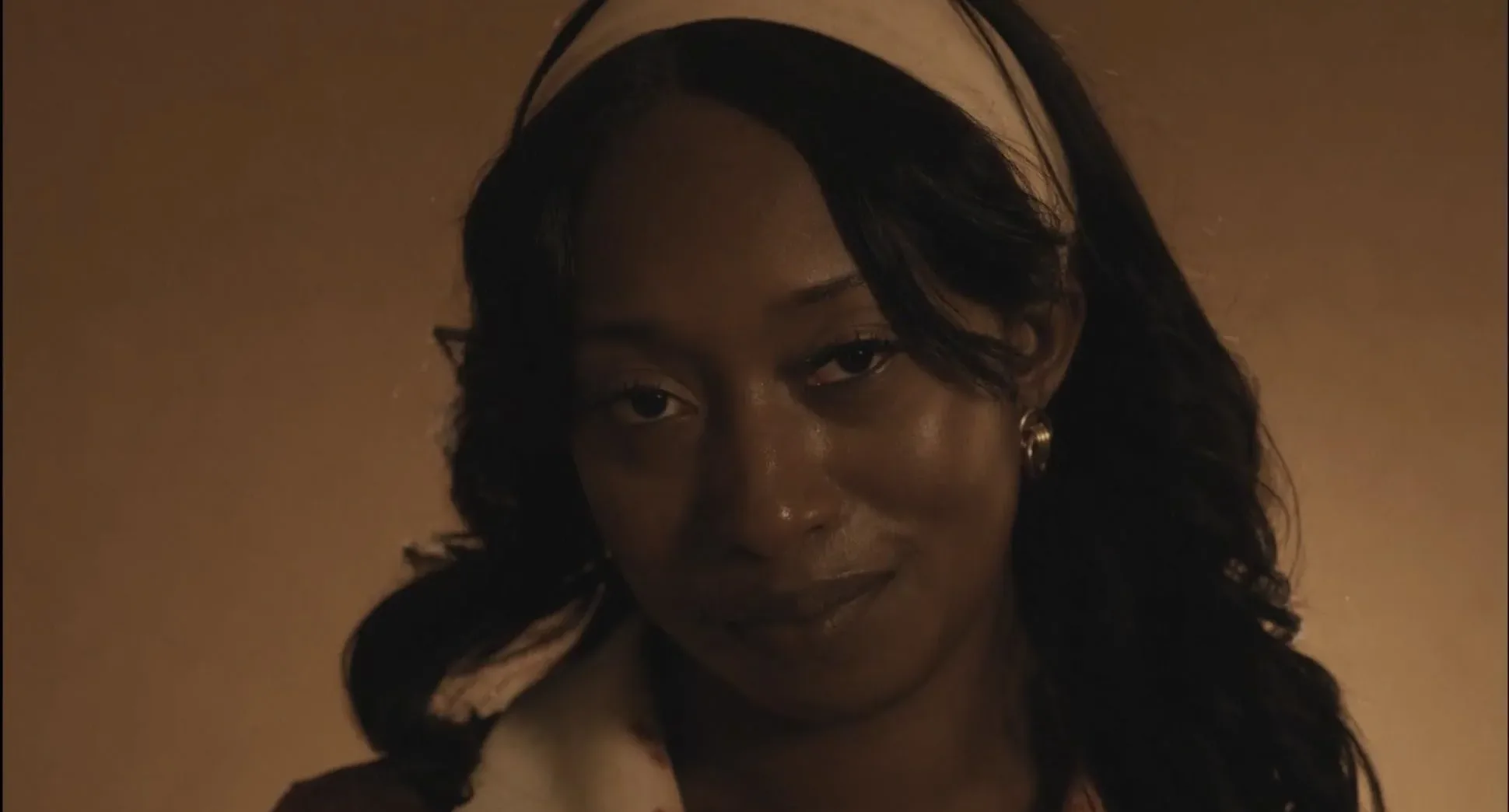

“Not bad, but not special.” Bubbles, one half of the Harmony Brothers, delivers his assessment of Jordan’s song with the casual authority of someone who can afford to forget the encounter. Jordan has considerably less protection. A bellhop at Detroit’s Tropicana Motel in 1967, he has used a brief opening in his shift to offer visiting musicians something of himself. The tune has the sweetness and assurance of a credible Motown number. Bubbles hears it, judges it, and leaves its singer where he found him, carrying other people’s luggage.
Francis Edemobi gives Jordan’s eagerness an uncomfortable exposure. His hope is visible enough to make the dismissal hurt, while the uncertainty in his delivery suggests a young man still negotiating permission to believe in himself. Later, as he commits to an increasingly dangerous plan, his manner becomes softer and firmer. The change is unsettling. A voice that sought approval begins to assume authority, and Edemobi lets us feel the distance closing between a wounded aspiration and the conviction that other people must accommodate it.
Deanté Gray’s Voices: The Musical gives that conviction a terrible opportunity. After a crisis leaves the Harmony Brothers unavailable, Jordan summons his cousin Derrick (Ezekiel Ajeigbe) and Derrick’s girlfriend Mia (Raél Ba), fellow singers who arrive without understanding what awaits them. Jordan proposes that he and Derrick take the brothers’ place onstage, with Mia opening the show. The act’s name has travelled farther than its members’ faces, leaving room for substitution. Jordan can imagine being heard by an audience, provided the audience believes it is hearing somebody else. The promised discovery already contains a disappearance.
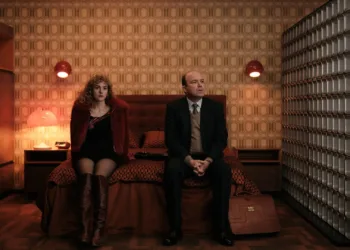
Gray keeps most of this bargaining inside the brothers’ motel room, where every proposed solution must be spoken within reach of the people who will bear its consequences. The confinement gives ambition an unpleasant physical intimacy. Jordan cannot pursue his future at a comfortable distance from Derrick’s hesitation or Mia’s alarm. Changing angles keep the room from settling into a static theatrical space, while the warm, lacquered palette lends the night a beauty that can look inviting or nearly scorched. The surface retains its glow as the decisions underneath it deteriorate.
When Jordan sings while holding a gun, the film finds its most disturbing expression of that closeness. Edemobi’s voice offers access to feeling while the weapon places a limit on everyone else’s freedom. We are invited to hear him with sympathy under circumstances in which sympathy has become difficult to give freely. The music does not cleanse the image. It prolongs our exposure to it, allowing need and menace to occupy the same sustained emotional space. Gray understands how a musical number can make a confrontation harder to escape.
The songs have less consistent force across the film. Jordan’s desire-setting solo gives his ambition shape, and the Harmony Brothers’ recurring hit has an easy buoyancy whose celebration of persistent dreamers grows uncomfortable beside his refusal to relinquish this opportunity. Its pleasure survives the change in meaning. Elsewhere, extended passages of dialogue leave the musical form dormant, and some returns to sung declarations of desire add little to feelings already established. The difficulty lies in the uneven development of those feelings. A song need not move anyone out of the room, but it needs to make remaining there feel different.
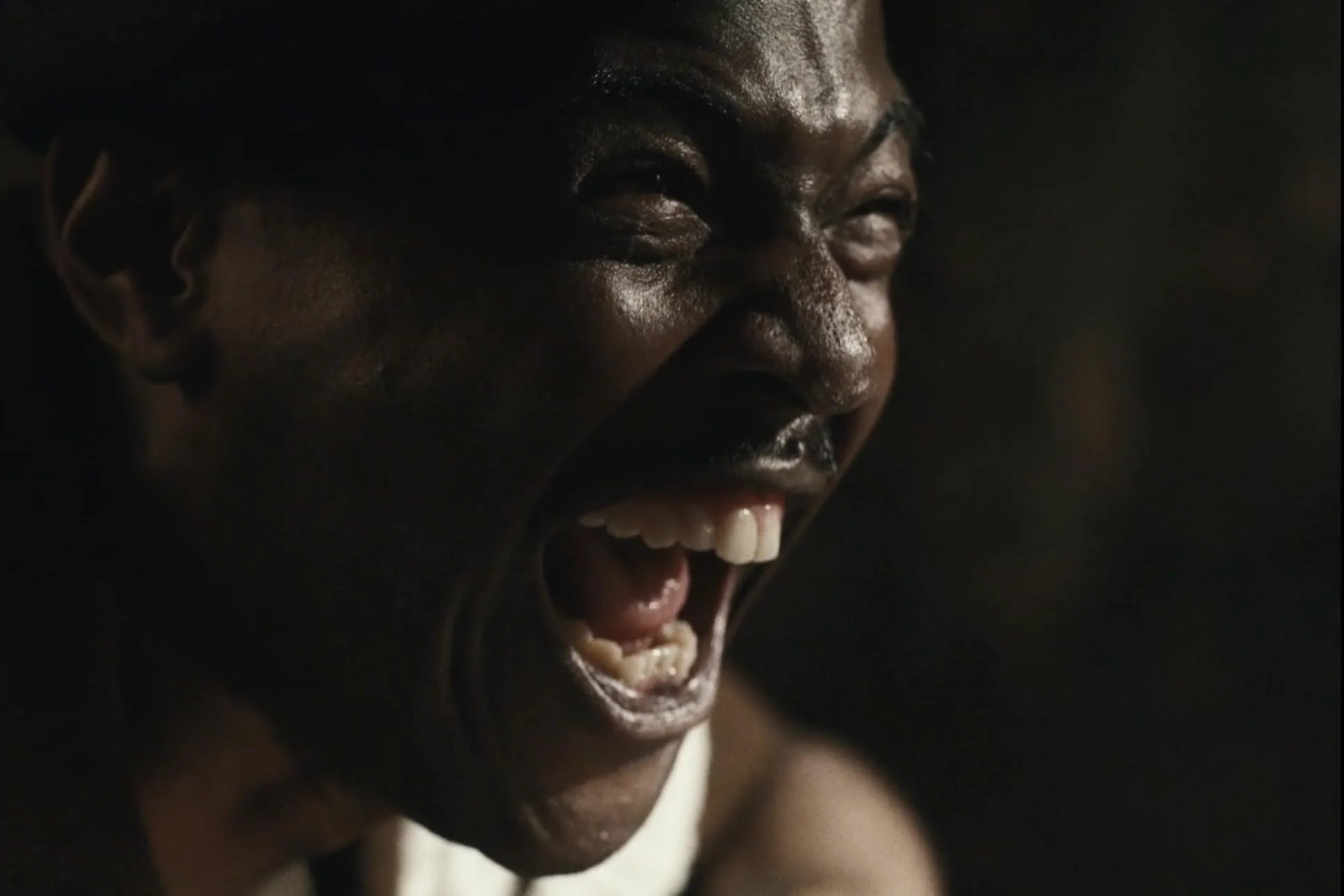
Derrick and Mia supply the most persuasive changes in emotional temperature. Ajeigbe and Ba measure their responses carefully, giving their exchanges the mutual awareness of lovers who must consider what a decision will do to both of them. Their attraction to success is credible; so is their resistance to the route Jordan has offered. This keeps their hesitation alive as something painful and active. Loyalty to a cousin, care for a partner, and the wish for a career make competing demands on the same conversation, with no clean division between the selfish choice and the protective one.
Their rendition of “The Voices in My Head” gives those divided impulses room to sound together. The intimacy comes from hearing conflict shared without being settled. Beside Jordan’s armed expression of need, their performance permits an emotional closeness that does not depend on one person directing the others. Ba also preserves Mia’s investment in the opportunity itself. She has a voice she wants heard and a proposed place on the bill; her future cannot be reduced to keeping Derrick safe. The couple’s bond makes the possible cost of the scheme tangible, while their separate ambitions prevent that bond from becoming an easy moral refuge.
The room’s spell is fragile in smaller ways. Modern currency pulled from a wallet briefly dislodges the period illusion, and occasional abrupt edits disturb the continuity that makes confinement effective. These imperfections matter because so much depends on accepting this room as a sustained present. Yet the greater rupture comes through expansion. Two late arrivals and accumulating violence redirect attention from the trio’s negotiations toward a succession of external complications. The screenplay, by Sam Buckner III and Charlie T. Savage, becomes busier while leaving less space for the relationships that gave its danger weight.
The later emphasis on being Black in 1960s America also arrives with an explicitness the earlier drama has not prepared. That history was already present in Jordan’s position, his musical aspirations, and the question of who gets to recognize talent. Giving it further expression could deepen the characters’ predicament. Here, the additional framing competes with their immediate choices, asking them to carry a larger argument as their individual conflicts receive less attention. Derrick and Mia’s uncertainty, so carefully made audible in their shared song, has to contend with a plot increasingly unwilling to stay and listen.
Voices: The Musical was released on September 11, 2026. Set against the vibrant soul backdrop of 1967 Detroit, the psychological crime thriller follows a desperate bellhop and his friends who seize a life-changing opportunity after a rising soul duo overdoses just hours before their big break.
Full Credits
Title: Voices: The Musical
Distributor: Independent Release
Release date: September 11, 2026
Running time: 1 hour 39 minutes (99 minutes)
Director: Deantè Gray
Writers: Charlie T. Savage
Producers and Executive Producers: Sam Buckner III, Charlie T. Savage
Cast: Francis C. Edemobi, Ezekiel Ajeigbe, Raèl Ba, Pedro Louis, Joe Maye, Jamal R. Averett, Charlz Williams, Victorian Keaton
Director of Photography (Cinematographer): Damola Ajanaku
Editors: Deantè Gray
Composer: Joe Maye, Jamal R. Averett
The Review
Voices: The Musical
Deanté Gray finds unsettling intimacy in a motel room where singing can expose need and enforce control. Francis Edemobi gives ambition a frightening quiet, while Ezekiel Ajeigbe and Raél Ba make their lovers’ divided loyalties painfully credible. The songs reach their greatest force when emotional openness becomes dangerous. Uneven musical development and late plot complications weaken that concentration, leaving the central relationships with less space than their performances deserve.
PROS
- Edemobi’s persuasive shift from hopeful singer to quiet coercion.
- Ajeigbe and Ba’s intimate, conflicted partnership.
- Musical confrontations that intensify the motel room’s tension.
CONS
- Songs sometimes repeat feelings without developing them.
- Late complications and social framing displace the central relationships.
- Period inaccuracies and abrupt edits disrupt immersion.